DbcultAccessing Vault...
Cult Review
Senior Film Conservator
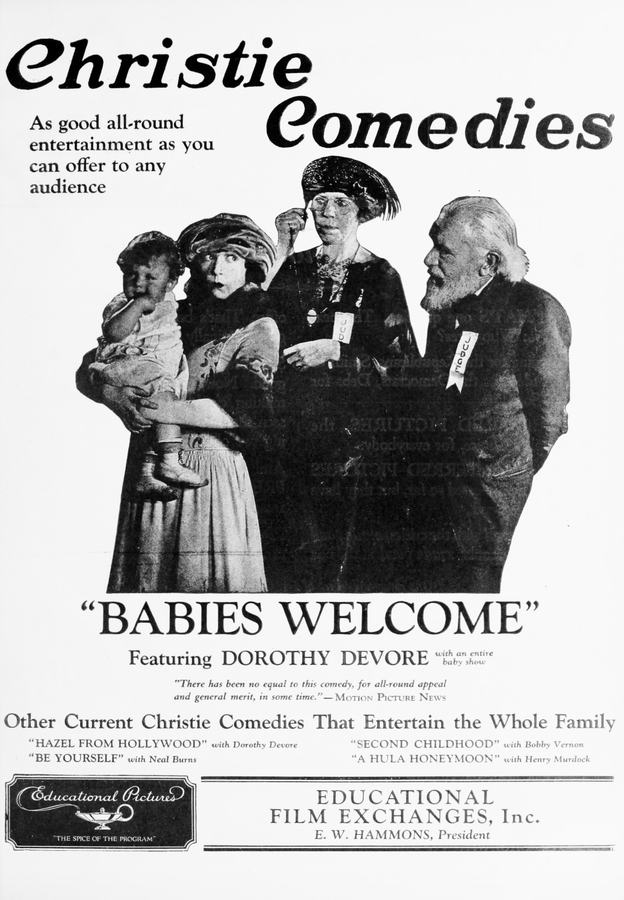
Stepping back into the golden, or perhaps more accurately, the sepia-toned, age of cinema, we encounter a gem of silent-era comedy: Babies Welcome. This film, a delightful confection of frantic energy and improbable coincidences, stands as a testament to the ingenuity and charm of early filmmaking. It’s a narrative that, on paper, sounds utterly preposterous, yet on screen, it blossoms into a truly engaging and often uproarious experience. The premise alone – a desperate woman, a lost fortune, a stolen baby, and a triumphant, yet perilous, return – promises a rollercoaster of emotions and laughs. And indeed, it delivers with a verve that belies its age, showcasing the timeless appeal of well-executed physical comedy and character-driven chaos.
At its heart is Dorothy, portrayed with an endearing blend of wide-eyed innocence and burgeoning desperation by the talented Dorothy Devore. Her journey begins with the seemingly straightforward task of purchasing her engagement ring, a symbol of impending bliss and domestic tranquility. Entrusted with a substantial five hundred dollars, a sum not insignificant in that era, Dorothy’s world is abruptly upended when the money vanishes into the cavernous, indifferent interior of a black-and-white taxi. This initial setback isn't merely a plot device; it's the catalyst that propels our protagonist into a moral quandary, forcing her hand in ways she could never have imagined. The loss isn't just financial; it's an immediate threat to her future, her happiness, and her very sense of self-worth as a bride-to-be. The weight of this predicament hangs heavy, even amidst the film's lighter moments, grounding the ensuing farce in a relatable human struggle.
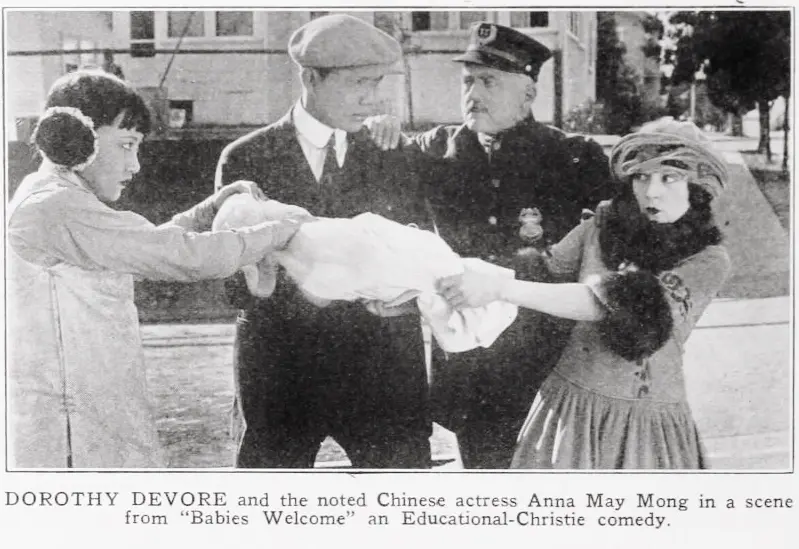
The solution to Dorothy's predicament arrives in the most unexpected and, frankly, ethically dubious form: a baby show. With a grand prize mirroring her lost sum, the temptation proves irresistible. Here, the film takes a bold, comedic leap. Dorothy, driven by a potent cocktail of panic and pragmatism, resorts to an act of audacious 'borrowing' – she absconds with her unsuspecting janitor's infant. This is where Babies Welcome truly distinguishes itself, moving beyond simple slapstick into a realm of high-stakes, morally ambiguous humor. The baby, played by the remarkably composed Mary Marguerite, becomes an unwitting pawn in Dorothy's desperate gambit. The sheer audacity of the act, coupled with the innocent charm of the infant, creates a delightful tension that fuels the entire mid-section of the film. It's a testament to the film's writing and Devore's performance that we, as an audience, find ourselves rooting for Dorothy, despite the questionable nature of her actions. Her plight is so acutely felt that her desperate measures, however misguided, seem almost justifiable in the moment.
The baby show itself is a masterclass in silent film comedic timing. The tension builds as judges scrutinize each cherubic contestant, all while Dorothy tries to maintain a facade of maternal pride, her heart undoubtedly pounding with the fear of discovery. The triumph, when it comes, is a moment of pure, unadulterated relief, quickly followed by the dawning realization of the even greater challenge that lies ahead: returning the 'borrowed' infant without a soul being the wiser. This transition from audacious theft to frantic stealth forms the backbone of the film's most exhilarating sequences. The prize money, while solving her immediate financial crisis, simultaneously plunges her into a new, far more complicated one. It's a brilliant narrative twist, demonstrating that even a 'win' can come with unforeseen, hilarious complications.
The subsequent attempts to return the baby are where the physical comedy and frantic pacing truly shine. Dorothy's efforts are a ballet of near-misses, close calls, and increasingly absurd contortions. She dodges suspicious neighbors, avoids the vigilant janitor, and navigates crowded streets, all while trying to keep the baby calm and out of sight. The film expertly utilizes the visual language of silent cinema to convey her escalating panic and the sheer logistical nightmare of her task. Every shadow seems to harbor a potential witness, every creaking floorboard a harbinger of discovery. This segment of the film could easily be compared to the frenetic energy and ingenious solutions found in other chase-driven silent comedies, such as the delightful Keep Moving, where characters are constantly on the run, employing cunning and physical prowess to evade capture. Devore's expressions, her body language, and the rapid-fire editing combine to create a sense of breathless urgency that keeps the audience on the edge of their seats, chuckling all the while.
The climax of Babies Welcome is nothing short of inspired, a perfect example of narrative symmetry and the delightful embrace of pure coincidence. After a prolonged, nerve-wracking ordeal, Dorothy, at the absolute brink of exhaustion and despair, quite literally tumbles into a taxi. And who should be inside but her sweetheart, returning home? But the revelation doesn't stop there. In a twist that feels both utterly improbable and entirely earned, she discovers that this very taxi is the one in which she originally lost her engagement ring money. It's a moment of cinematic brilliance, bringing the entire chaotic journey full circle. This kind of serendipitous resolution, where fate intervenes in the most unexpected ways to untangle a seemingly insurmountable knot, is a hallmark of many films of the era, echoing the narrative structure seen in titles like When Fate Decides, where destiny plays a crucial, often surprising, role in shaping characters' lives. The sheer relief, combined with the poetic justice of the situation, provides a wonderfully satisfying conclusion to Dorothy's frantic adventure.
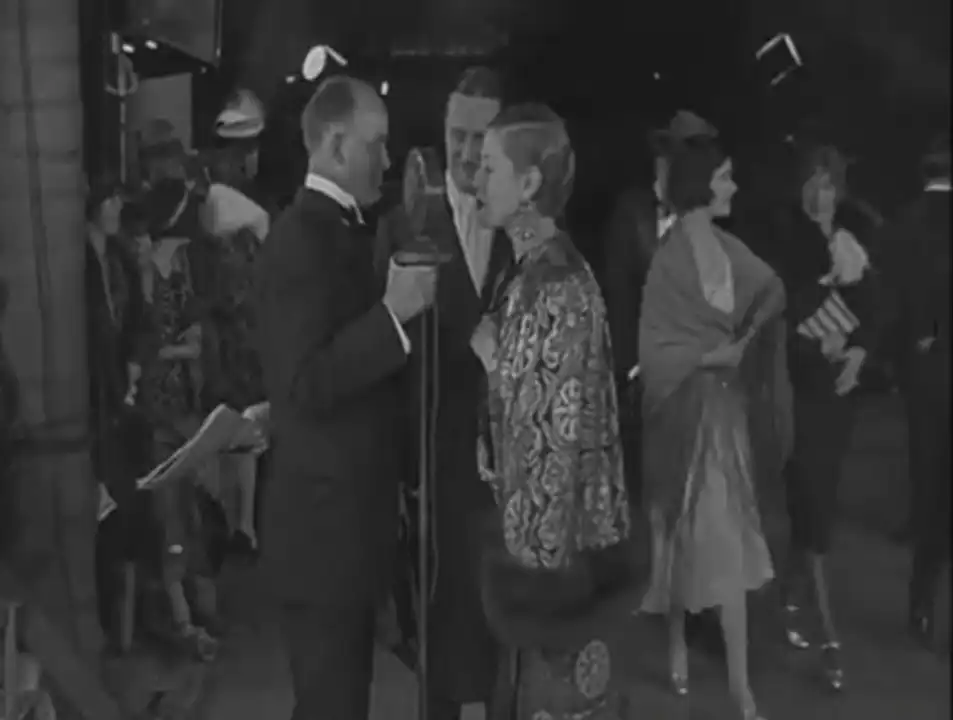
The performances in Babies Welcome are uniformly charming, with Dorothy Devore leading the charge. Her ability to convey a wide spectrum of emotions – from initial joy to crushing despair, frantic panic to eventual relief – without uttering a single word is truly remarkable. Her physical comedy is precise, her expressions nuanced enough to make her character both sympathetic and hilariously desperate. Mary Marguerite, as the unwitting infant accomplice, is surprisingly effective, often serving as a calm, curious counterpoint to Devore's escalating frenzy. The supporting cast, including Henry Murdock as the sweetheart, George B. French as the janitor, and the brief but impactful presence of Anna May Wong, all contribute to the film's vibrant tapestry. Even in smaller roles, their facial expressions and gestures speak volumes, a testament to the highly visual nature of silent film acting. George Stewart and Babe London round out the ensemble, each adding their distinct flavor to the bustling, comedic world of the film.
Beyond the immediate laughs, Babies Welcome offers a fascinating glimpse into the social anxieties and comedic sensibilities of the era. It subtly touches upon themes of desperation, the pressure to conform to societal expectations (like getting married with a proper ring), and the lengths to which individuals might go when faced with seemingly insurmountable obstacles. While ostensibly a lighthearted comedy, there's an underlying current of social commentary on the precariousness of life and the often-absurd solutions people devise. The film’s reliance on coincidence, while a common trope of the time, also highlights a certain worldview where fate and chance play significant, sometimes whimsical, roles in human affairs. It’s a narrative that, despite its farcical premise, manages to resonate with a surprising degree of emotional truth, reminding us that even the most well-intentioned plans can go wonderfully, hilariously awry.
Technically, the film, like many of its contemporaries, would have relied heavily on intertitles to convey dialogue and crucial plot points, though the visual storytelling is so strong that one can follow the action with remarkable ease. The direction, though uncredited in its specific details for this entry, demonstrates a keen understanding of comedic pacing and visual composition. The use of close-ups to capture Devore's frantic expressions, and wider shots to establish the chaotic environment, would have been expertly deployed. The implied musical accompaniment, a crucial element of the silent film experience, would have undoubtedly underscored the comedic beats, the moments of tension, and the final, heartwarming resolution, guiding the audience's emotional journey. The cinematography, while perhaps not groundbreaking for its time, effectively captures the bustling cityscapes and intimate moments, allowing the performances to shine through with clarity and impact.
In the grand pantheon of silent cinema, Babies Welcome might not possess the epic scope of a D.W. Griffith masterpiece or the profound social commentary of a Chaplin drama, but it carves out its own delightful niche. It's a film that prioritizes joy, laughter, and the simple pleasure of a well-told, if utterly improbable, story. Its enduring appeal lies in its infectious energy, its charming performances, and its expertly crafted comedic scenarios. For anyone seeking a dose of pure, unadulterated escapism, delivered with the unique artistry of the silent era, this film is an absolute treat. It reminds us that sometimes, the most complex problems can be solved by the most outlandish means, and that a little bit of fate, a dash of daring, and a whole lot of babies can make for an unforgettable cinematic experience. Its legacy is not in breaking new ground, but in perfectly executing a timeless formula of comedic confusion and eventual, heartwarming resolution. It's a film that truly lives up to its titular promise, welcoming audiences into a world where chaos reigns supreme, but ultimately, happiness prevails.
Ultimately, Babies Welcome is more than just a relic from a bygone era; it’s a vibrant, living piece of cinematic history that continues to entertain and enchant. It’s a compelling argument for the enduring power of visual storytelling and the universal language of laughter. The journey of Dorothy, from a woman facing financial ruin to one who, through a series of increasingly frantic and morally ambiguous choices, ultimately finds her way back to happiness and her lost funds, is a testament to the resilience of the human spirit – and the comedic potential of a well-placed baby. If you have an affinity for the ingenious simplicity of early cinema, the expressive power of silent actors, or simply a craving for a genuinely funny and heartwarming tale, then this film should be high on your watchlist. It’s a delightful reminder of how much charm and wit could be packed into a few reels of film, proving that some stories, like a perfectly timed comedic pratfall, never truly lose their impact. Dive in and let the endearing chaos of Babies Welcome wash over you; you won't regret it.
IMDb —
1922
Community
Log in to comment.