DbcultAccessing Vault...
6/10
Senior Film Conservator
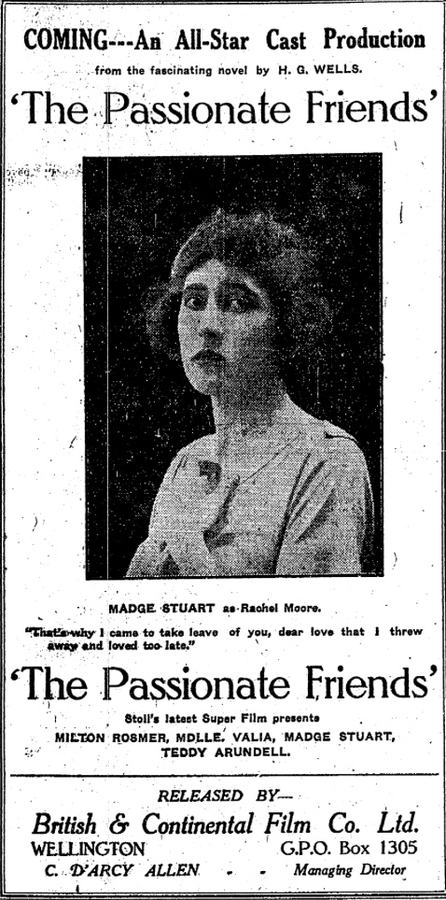
A definitive 6/10 rating for a film that redefined the boundaries of cult cinema. The Passionate Friends remains a cornerstone of transgressive art.
The 1922 iteration of The Passionate Friends stands as a monumental, if occasionally overlooked, pillar of British silent cinema, capturing a specific zeitgeist where the Victorian hangover collided violently with the burgeoning modernity of the post-Great War era.
Directed with a keen eye for architectural claustrophobia by Maurice Elvey, the film translates H.G. Wells’ prose into a visual language of longing and societal entrapment. While many associate Wells primarily with the speculative wonders of science fiction, this narrative interrogates the visceral, often messy realities of human fidelity and the mercantile nature of marriage. It is a world where emotions are audited like ledger entries, and the protagonist, Mary Christian (played with a luminescent fragility by Madge Stuart), finds herself the most precious commodity in a cold domestic empire.
At the heart of the drama is the dichotomy between the two men vying for Mary’s essence. Justin, the armament king, portrayed with a stoney, impenetrable gravitas by Milton Rosmer, represents the old world’s obsession with ownership. His love is not a liberation but an acquisition. In stark contrast, Stephen Stratton (a role handled with earnest intensity) represents the potential of the future—parliamentary progress, intellectual vigor, and a love predicated on mutual understanding rather than legal bondage. This thematic conflict mirrors the tensions found in other contemporary dramas of the era, such as The Shadow of Suspicion, where the weight of one’s reputation acts as a secondary, invisible character.
The film’s pacing is deliberate, allowing the audience to feel the slow-motion car crash of Mary’s social standing. Unlike the lighter, more escapist fare of the period like The Amazing Quest of Mr. Ernest Bliss, there is no whimsical reprieve here. Every frame is saturated with the looming threat of the "scandal," a word that carried the weight of a death sentence in the 1920s political landscape.
The cinematography utilizes the chiaroscuro effects common to the early 20s, yet it applies them with a psychological precision that anticipates the noir movement. Mary is often framed through windows, balustrades, or the heavy silhouetted furniture of Justin’s mansion, emphasizing her status as a gilded bird in a cage of steel. The performance of Madge Stuart is a revelation; she eschews the histrionics often associated with silent melodrama, opting instead for a simmering, internalised grief that resonates through the lens. Her eyes convey a lexicon of pain that dialogue cards could never fully encapsulate.
When we compare this to the theatricality of Othello (1922), released the same year, we see a distinct shift toward a more nuanced, naturalistic mode of screen acting in the British production. Stuart’s Mary is not a victim of a villain, but a victim of a system—a nuance that makes the eventual tragedy feel inevitable rather than merely unfortunate.
The narrative climax, involving Mary’s decision to commit suicide to prevent a divorce suit, is handled with a devastating lack of sentimentality. In an era where divorce was synonymous with professional annihilation, her act is framed not as a surrender to despair, but as a tactical strike against a society that refused to grant her agency. It is a dark inversion of the romantic tropes seen in A Divorce of Convenience, where the legal dissolution of marriage is treated with far less existential dread.
Wells and the screenwriters, Leslie Howard Gordon, meticulously build the pressure. The armament king’s power is not just in his munitions, but in his ability to command the law. The film interrogates the morality of a man who would rather destroy the woman he loves than see her exist outside his orbit. This possessive jealousy finds a spiritual, albeit more decadent, cousin in the themes of The Libertine, though The Passionate Friends remains grounded in the sober realities of the upper-middle-class British elite.
One cannot discuss this film without acknowledging its critique of the "Armament King." By making Justin a merchant of war, the film subtly links the domestic violence of his control over Mary to the global violence of his profession. His wealth is blood-stained, and his marriage is merely another front in his campaign for total hegemony. This adds a layer of political subtext that elevates the film above standard melodrama. It shares a certain grim outlook on the human condition with Irrende Seelen, exploring the lost souls navigating a world that has discarded its moral compass.
Furthermore, the film’s exploration of the "passionate friendship"—a bond that transcends the physical but is destroyed by the physical world’s insistence on labels—is profoundly modern. It asks whether two people can ever truly be "just friends" when the world demands they be either property or strangers. This tension is far removed from the simplistic moralizing of Why I Would Not Marry, offering instead a complex, gray-scale view of human intimacy.
Technically, The Passionate Friends is a showcase for the sophistication of the Stoll Picture Productions. The sets are opulent yet oppressive, utilizing deep focus to show the vast distances between characters even when they occupy the same room. The editing, particularly in the sequences leading up to Mary’s final decision, creates a sense of mounting panic, an internal rhythm that mimics a heartbeat. While it lacks the kineticism of The Three Musketeers (1916), it substitutes action for psychological depth, proving that the silent medium was more than capable of handling high-concept intellectual drama.
Even in the smaller moments, like the brief glimpses of domestic life that echo the sentimentality of Their First Vacation, the film maintains its somber tone. It never flinches from its trajectory. The supporting cast, including Lawford Davidson and Annie Esmond, provide a solid foundation of social artifice against which the protagonists’ passions are measured and found wanting.
In the pantheon of silent film heroines, Mary Christian deserves a place of honor. She is not a damsel in distress waiting for a hero like the characters in The Dawn Maker or a comedic foil in Tootsies and Tamales. She is a woman of profound intellect who realizes that the only way to win a rigged game is to stop playing. Her suicide is a radical act of reclamation—reclaiming her lover’s career and, in a dark way, reclaiming her own soul from Justin’s ledger.
The film’s ending remains one of the most haunting in early British cinema. It doesn't offer the easy catharsis of Together or the moral clarity of a traditional fable like Novoye platye korolya. Instead, it leaves the viewer with a profound sense of loss and an indictment of a world that values the appearance of virtue over the reality of love. It is a masterpiece of restraint, a tragedy of manners that cuts deeper than any sword-fighting epic like Hitting the Trail ever could.
IMDb —
1920
Community
Log in to comment.