DbcultAccessing Vault...
6.6/10
Senior Film Conservator
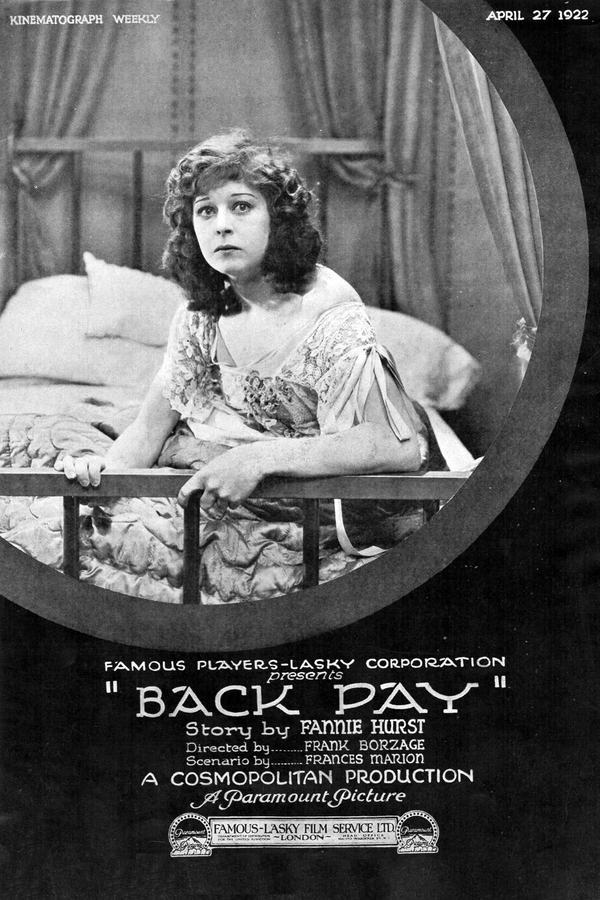
A definitive 6.6/10 rating for a film that redefined the boundaries of cult cinema. Back Pay remains a cornerstone of transgressive art.
You can almost smell the starch in Hester Bevins’ first city frock: it reeks of ambition pressed to a lethal crease. Frank Borzage, that poet of yearning, opens Back Pay on a threshold—half-open farmhouse door, wind teasing gingham like a flirt who won’t stay for supper. Within sixty seconds we know the girl will bolt; the camera lingers on her thumb rubbing the doorframe the way a gambler caresses a lucky coin before the final toss.
The 1922 film, adapted from Fannie Hurst’s Saturday Evening Post novella and scripted by the prodigiously empathic Frances Marion, is a master-class in narrative shorthand. Every intertitle lands like a telegram you dread to open: “I want to swallow the whole sky,” Hester scrawls on a scrap that will later be used to wrap stale bread back home. In that single line we get appetite without nutrition, the American Dream as empty-calorie manna.
Seena Owen, all cheekbones and candle-flame eyes, plays Hester as a woman who learns to weaponize her gaze. Watch her first night in the Manhattan restaurant: a monocled roué watches her watch the oysters Rockefeller. She doesn’t simper; she inventories the room like a general mapping terrain. Borzage cuts to a close-up of her gloved hand slipping a fork into her purse—an act half-souvenir, half-shoplifting—signalling that ethics have become negotiable currency.
Enter Charles Craig as the magnate C. Mortimer Gibson—a name so gilded it clangs. He glides downstairs in a topcoat the color of wet coal, a walking metaphor for capital that devours its own smoke. Their courtship is conducted in taxis back-lit by nitrate flares; every time he hands her a jewelry box, the film jump-cuts to a battlefield nurse unwrapping gauze from Jerry’s face. The montage predates Eisenstein by four years yet feels fluid, not dialectic—grief and pleasure braided into a barbed garland.
Which brings us to Jerry Sinclair, the rejected rural swain, played by Matt Moore with a softness that refuses to calcify into stoicism. When he ships off to the trenches, the film detonates its most radical device: instead of battle scenes, we get a blank screen and the thud of artillery timed to the heartbeat of a metronome. War is absence, war is negative space—only when Jerry returns, pupils milked over like frosted glass, do we understand the price of absence.
The homecoming sequence is pure Borzage: snow on the depot platform, a dog barking at the wrong man, a crumpled letter blown against a lamppost like a moth that’s learned to read. Jerry’s fingers grope the air until they find Hester’s fur collar—now matted with champagne and another man’s cigars. The moment is silent yet it screams louder than any talkie could.
Because it refuses the catharsis we crave. Hester’s dilemma is not between love and money but between two versions of debt: the ledger of affection Jerry never stops adding to, and the overdraft of self that city life demands. When she finally chooses, the film withholds both triumph and punishment; instead we get a tableau of her standing in a hospital corridor as electric bulbs flicker like faulty conscience. The camera dollies back until she becomes a figurine inside a snow globe nobody remembers to shake.
Compare it to Draft 258, another 1922 release that also sends a boy to war and a girl to the city. That picture lets the couple reunite under a triumphal arch of roses, the war merely a plot inconvenience. Back Pay knows better: once Jerry’s retinas are scarred, the film implies, so is every future kiss. The damage is the story.
Seena Owen’s face is a palimpsest: every close-up reveals earlier takes, tears wiped away yet chemically re-ignited under the klieg lights. In the climactic shot her lower lip trembles like a curtain in front of a condemned theatre. It’s a gesture so microscopic you’ll miss it if you blink, but it contains whole treatises on regret.
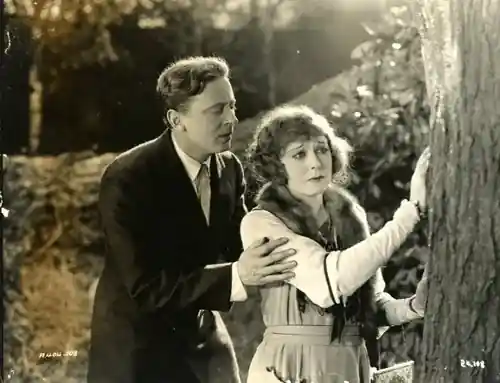
Matt Moore, often derided as a pretty-juvenile relic, here accesses a rawer frequency. When Jerry learns Hester has become another man’s mistress, his hand floats upward as if gravity just increased the rent. The moment is less acting than physics lesson: how does a body register betrayal when it can no longer see the betrayer?
Charles Craig has the thankless role of capitalist ogre, yet under the greasepaint he hints at self-loathing—watch how he fingers the condensation ring on a champagne glass, as though measuring the diameter of his own hollowness.
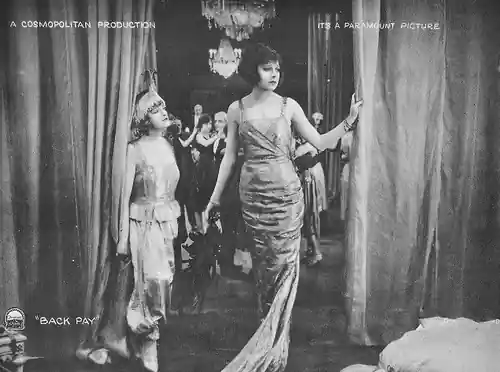
Cinematographer Chester A. Lyons lights the city like a jewelry store after hours: every window is a potential crime scene. When Hester steps into her first electric-lit ballroom, the image blooms with over-exposure, whites bleeding into whites until the screen becomes a snowstorm of privilege. Conversely, the war hospital is under-lit; faces emerge from charcoal gloom like engravings on a tombstone. The contrast is moral, not merely technical.
Note the recurring motif of doors. Farmhouse door, taxi door, boudoir door, operating-theatre door—each threshold marks a transaction of soul. By the final sequence, Hester hesitates at yet another doorway, this one leading back to the village she fled. The camera holds on her hand mid-knock, cut to black. We never see the door open; the film ends on the hush before forgiveness, a silence more lacerating than any slam.
Frances Marion’s script slyly equates sexuality with liquidity. Hester’s first gift from the magnate is a diamond bracelet clasped so tight it leaves bruises—an accessory that doubles as handcuff. When she tries to remove it, the bracelet snags on her pulse point, drawing a bead of blood the color of sealing wax. The metaphor is unmissable: female body as promissory note, interest accruing nightly.
Meanwhile the war is treated less as geopolitical event than as cosmic debt collector. Every telegram arriving in New York carries the metallic scent of pennies on the eyes of the dead. The film’s original title card read: “To the boys who paid the bill for the dance they never joined.” Studios later trimmed it, fearing box-office poison, but the sentiment lingers like cordite.
Though released without synchronized dialogue, Back Pay toured with a commissioned score for violin and celesta. The cue sheets instructed orchestras to play the lovers’ theme in A-major during city scenes, then modulate to F-minor whenever Jerry’s blindness intrudes on Hester’s conscience. Most theatres ignored the directives, opting for generic hearts-and-flowers, which may explain why contemporary reviewers dismissed the film as “another soapy triangle.” Yet if you mentally overlay those key changes while watching, the story gains Wagnerian undertones: every glittering skyscraper is built atop a foundation of diminished chords.
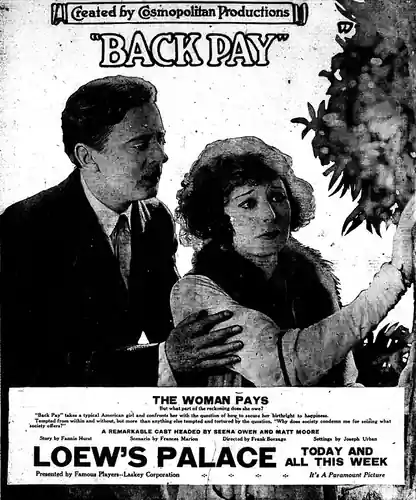
Trade papers of 1922 praised Seena Owen’s gowns more than her acting. Variety quipped that the film “makes a fellow want to enlist just to desert.” Modern viewers, armored by ninety years of anti-war cinema, will find the restraint more chilling than any gore-splatted battlefield. In the age of PTSD awareness, Jerry’s blank eyes feel like a premonition—what today we’d call moral injury, though the intertitles dare not name it.
Curiously, the picture fared better in rural states where women recognized Hester’s hunger as their own mirror. Letters archived at the Library of Congress show farmwives enclosing dime-store perfume in envelopes, apologizing to their husbands for “wanting too much sky.” The film became a confessional booth without priests.
A 4K restoration premiered at Pordenone in 2019, scanned from a Dutch print discovered in a disused church organ. The nitrate had shrunk, causing the image to shiver like a fever victim; digital stabilization removed jitter but retained the emulsion cracks that resemble lightning over the characters’ heads—fitting for a story about permanent internal storms.
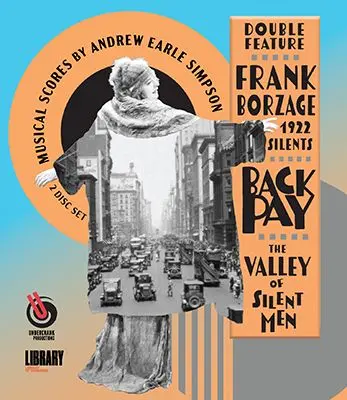
Streamers have yet to license the restoration; your best bet is a Blu-ray from Edition Filmmuseum, complete with a new score by Maud Nelissen that replaces the lost celesta with glass harmonica, turning every waltz into a fragile exhale.
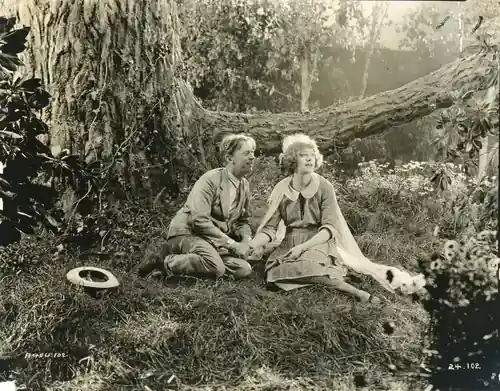
Set Back Pay beside Molly’s Millions and you see how differently the decade treated female ambition. Molly ultimately marries wealth and reforms it from within, a capitalist fairytale. Hester’s arc is bleaker: she gains the world and loses the only ledger that ever balanced.
Or stack it against Voices of the City, where the metropolis itself is a benevolent matchmaker. In Borzage’s universe the city is a loan shark with silk gloves, interest compounding nightly.
Even Les Misérables (1917), steeped in redemption, allows its fallen woman a sacrificial exit. Hester gets no such halo—only the echo of her heels down a corridor that might lead home or to another gilded cage.
Back Pay is less a relic than a raw nerve varnished in nitrate. It asks what remains when you’ve traded every negotiable piece of yourself and still find the balance sheet bleeding red. The answer, Borzage suggests, is yearning—a currency that never inflates, never reconciles, and never, ever clears.
Watch it alone, lights off, volume of the glass harmonica turned just high enough to feel like tinnitus. When the final frame cuts to black, count how long you can hear your own pulse—that’s the interest still accruing.
IMDb 4
1935
Community
Log in to comment.