DbcultAccessing Vault...
Cult Review
Senior Film Conservator
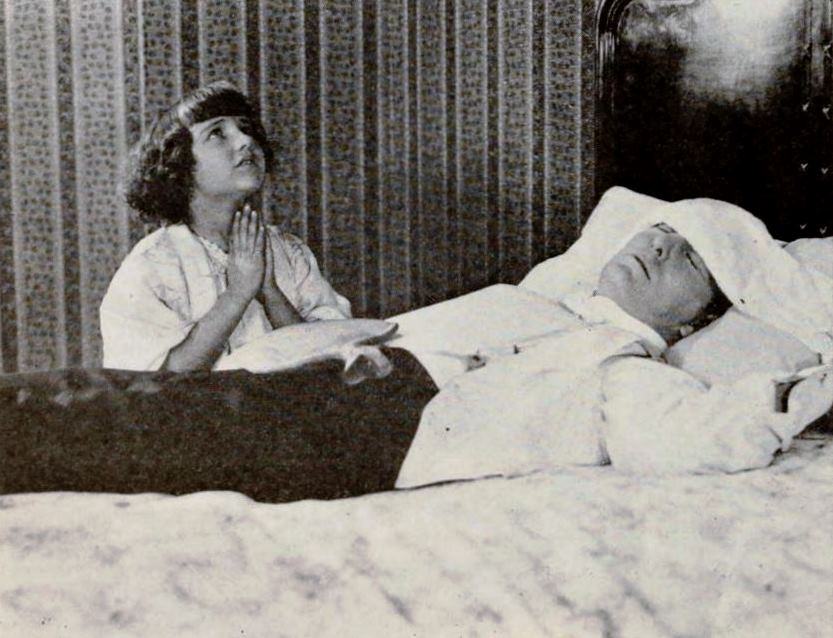
Beneath its deceptively saccharine title, The Little Diplomat detonates firecrackers in the drawing room of 1917 American propriety. Director Murdock MacQuarrie (who also stars as the magnificently dyspeptic Bradley West) crafts a subversive cocktail—one part social critique, two parts childhood insurrection—served in a cut-crystal tumbler. The film opens not with orphanage pathos, but with the transactional chill of acquisition: Bradley adopting war refugee Marie to placate his porcelain-collector wife. Marie Osborne, the era's reigning child star, enters not as a weeping waif but a watchful strategist. Observe how her eyes—preternaturally old in that baby face—scan the West mansion like a general surveying occupied territory.
The film’s radical heartbeat lies in Marie’s alliance with George Washington Jones Jr. (Ernest Morrison, later famous as Farina in the Our Gang series). Their bond transcends the period’s toxic racial politics—a silent conspiracy against adult hypocrisy. When governess Hulda (a brilliantly venomous Lydia Knott) declares George “unsuitable,” the film doesn’t sermonize. Instead, it weaponizes innocence: Marie’s literal whitewashing of her friend becomes a savage slapstick indictment. The tea party sequence remains astonishing—a masterclass in escalating tension. Powdered society matrons sip Darjeeling as Marie presents her “improved” playmate, blue-black curls peeking through cracked paint. The collective gasp echoes beyond the screen, cracking the plaster of American segregation.
“Hulda isn’t merely a villain; she’s the embodiment of respectability’s violence. Knott plays her with such clipped precision—every starched cuff and tightened lip a prison bar. Her hatred for George feels particularly grotesque when we discover her criminal identity. The film argues fascism and felony wear the same gloves.”
Emma Bell Clifton’s screenplay brilliantly parallels Marie’s mischief with Trent’s romantic woes. Jack Connolly’s charmingly hapless Trent and Betty Compson’s sparkling Phyllis provide conventional romance—yet Marie hijacks their subplot. Watch how she stages their reconciliation like a tiny Broadway director, manipulating adults like marionettes. This isn’t precociousness; it’s the desperation of a child constructing family where none exists. Meanwhile, Bradley’s antique-filled mansion becomes symbolic armor. His obsession with preserving the past mirrors society’s calcified prejudices—both shattered by Marie’s modern war tactics. When she transforms his prized safe from relic to prison, it’s revolution disguised as child’s play.
Comparing The Little Diplomat to its contemporaries reveals its audacity. Unlike the sentimental orphan tropes in A Child of the Prairie or the passive heroines of What Happened to Mary, Marie is a proactive grenade-lobber. Her dynamic with George predates the cross-racial friendships in Wild and Woolly by years, lacking that film’s minstrel undertones. The burglary climax feels strikingly modern—a blueprint for the child-outwits-adults trope later seen in sound era thrillers. Yet the film’s boldness doomed it to obscurity; its racial politics proved too volatile for redistribution after the Hays Code descended.
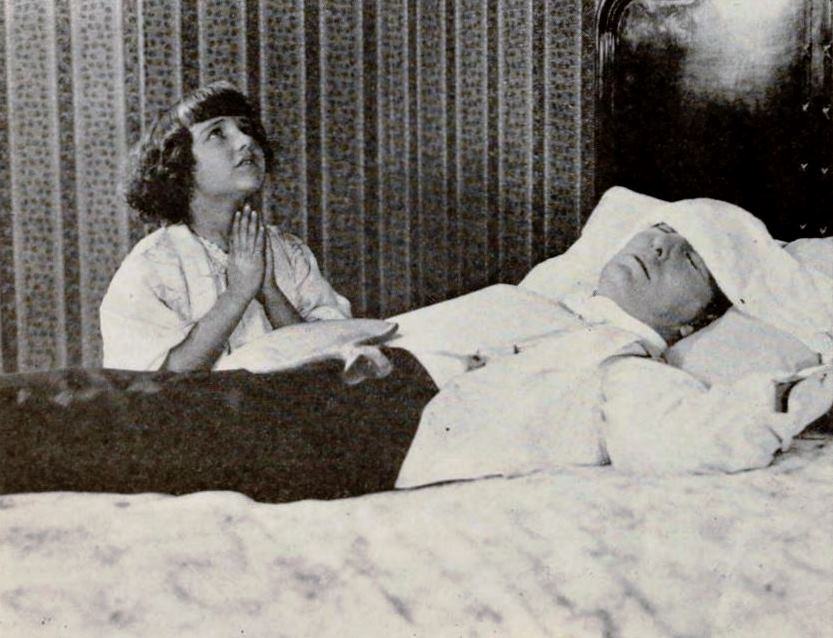
Cinematographer Gene Gaudio employs light as moral commentary. Hulda’s scenes are bathed in harsh, high-contrast lighting—her face a topography of shadows. Conversely, Marie and George’s secret meetings glow with buttery afternoon sun. The infamous paint scene uses clinical brightness to expose every horrific detail: the stiff bristles of the brush, George’s trembling shoulders, Marie’s determined frown. When Bradley finally embraces Marie, the frame floods with warm amber—a visual absolution. Production designer William Welsh’s cluttered mansion becomes a character: gilded birdcages, velvet drapes, and that monumental safe—all emblems of suffocating tradition.
Marie Osborne’s performance remains a miracle of silent film acting. She avoids cloying “cuteness,” instead projecting fierce intelligence. Note her physical precision: the military straightness when defying Hulda versus the liquid collapse into Bradley’s eventual embrace. Ernest Morrison radiates heartbreaking dignity—his silent scream during the whitewashing scene chills more than any dialogue could. Albert MacQuarrie (as George’s father) conveys generations of weary resilience in a single shot: polishing silver while watching his son’s humiliation, shoulders sagging under history’s weight.
The film’s buried legacy surfaces in unexpected places. Todd Haynes’ Far from Heaven echoes its critique of suburban bigotry, while The Royal Tenenbaums borrows its aesthetic of curated decay. Yet The Little Diplomat remains singular in granting a Black child character agency beyond victimhood. George isn’t a prop for Marie’s growth; their alliance is mutually empowering. His quiet rebellion—standing perfectly still while being painted, becoming a statue of defiance—resonates tragically today. The film’s restoration in 2009 revealed startling details: the original negative included an excised subplot where George’s father confronts Bradley about the tea party. Its removal speaks volumes about 1917’s limits.
Modern viewers must wrestle with the film’s contradictions: progressive ideals filtered through unavoidably period lenses. The whitewashing scene remains distressing, not sanitized for comfort. Yet this discomfort is the point—a stark exhibition of racism’s absurd violence. Unlike The Kaiser’s Shadow (which reduced prejudice to cartoon villainy), The Little Diplomat forces complicity. We laugh at Marie’s solution until we see its consequences—the cracking paint like fractured skin. The burglary’s triumphant resolution can’t erase that earlier violation; the film leaves scars unhealed. Perhaps this lingering ache explains its absence from canon. Safe masterpieces reassure; this one demands we sit in the mess of history, trusting a child to turn the lock.
Rediscovering The Little Diplomat feels like deciphering a palimpsest. Beneath the surface of comedy and crime thrills pulses a defiant heart. Its power lies not in tidy resolutions, but in Marie’s unwavering gaze—meeting our eyes across a century, still waiting for adulthood to catch up to her revolution.
IMDb 5.5
1930
Community
Log in to comment.