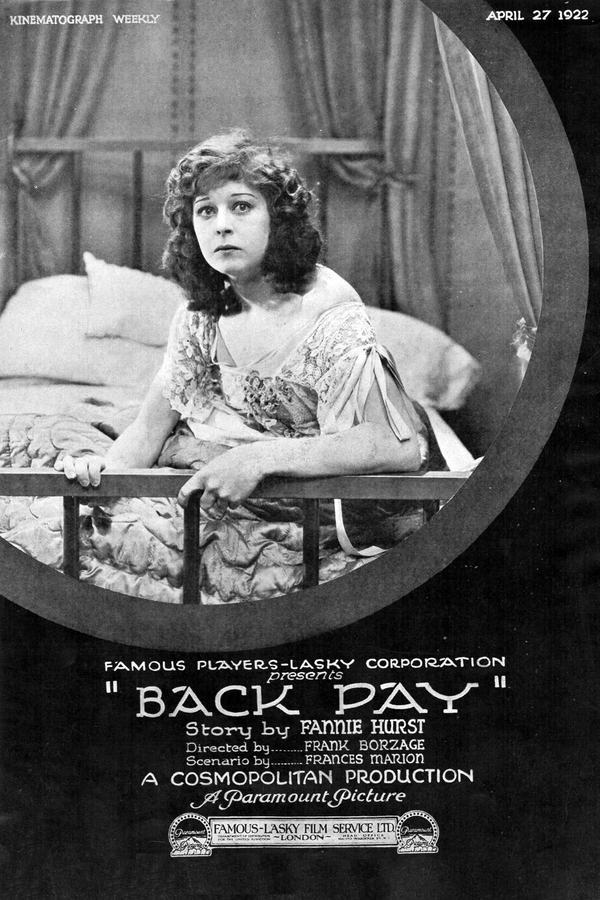
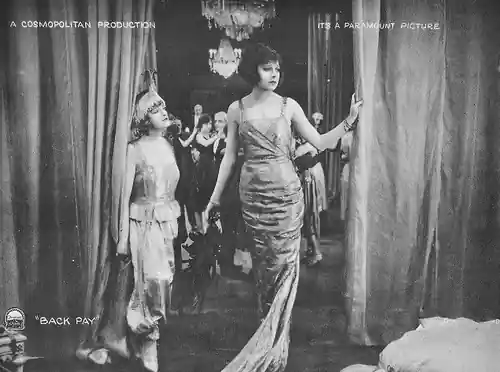
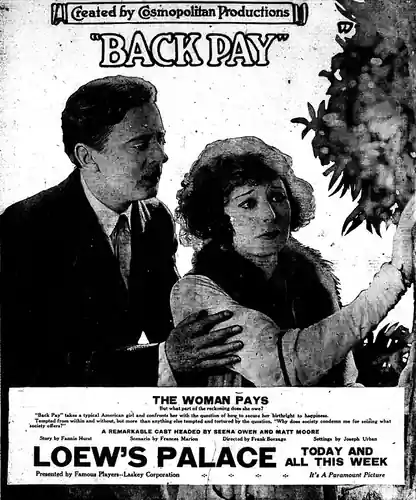
Hester Bevins is a simple country girl who yearns for adventure. Though she has a handsome young man, Jerry, who is devoted to her, she leaves her village and goes to New York in search of a grander life.

You can almost smell the starch in Hester Bevins’ first city frock: it reeks of ambition pressed to a lethal crease. Frank Borzage, that poet of yearning, opens Back Pay on a threshold—half-open farmhouse door, wind teasing gingham like a flirt who won’t stay for supper. Within sixty seconds we know the girl will bolt...
publicity
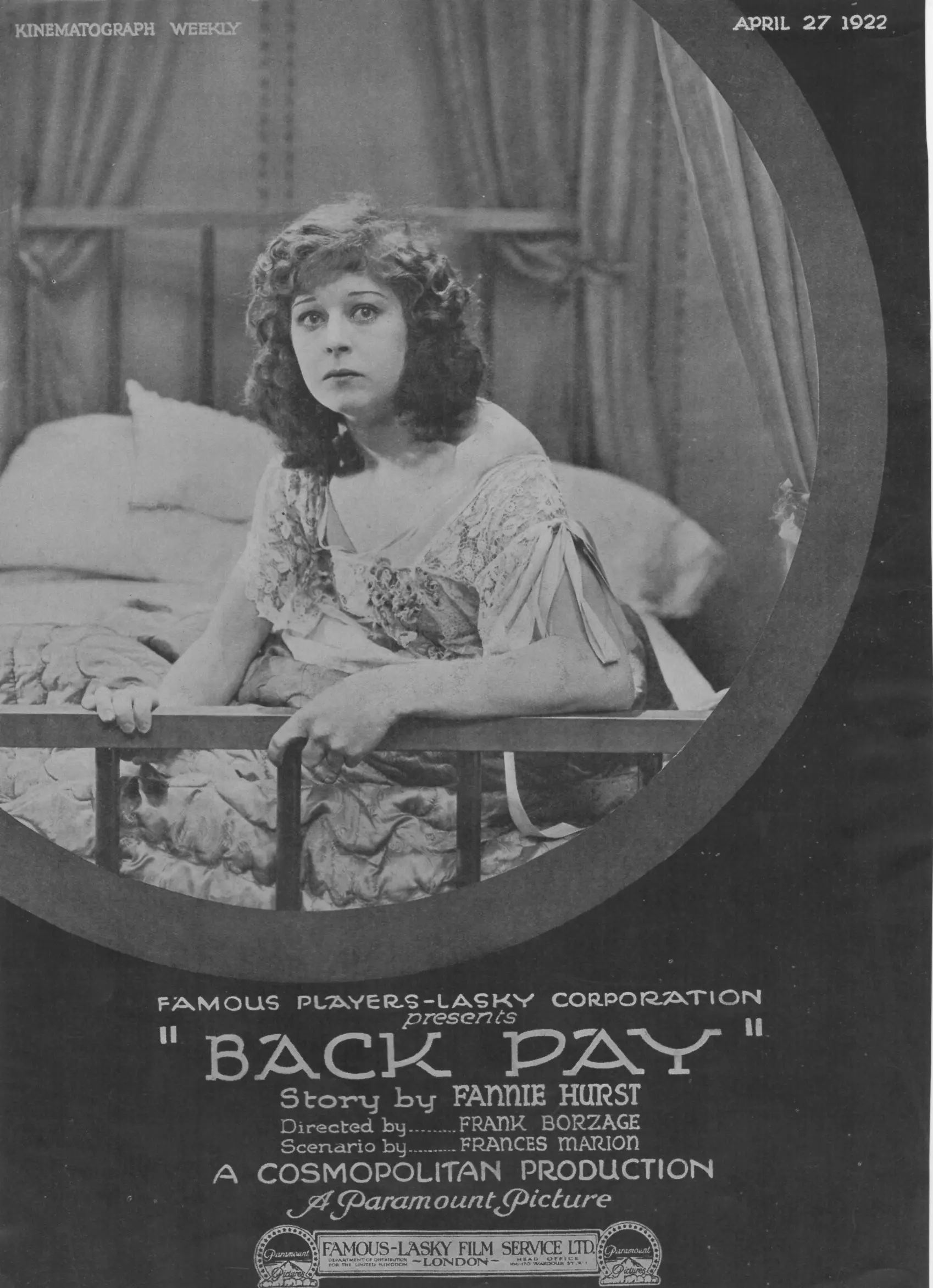
publicity
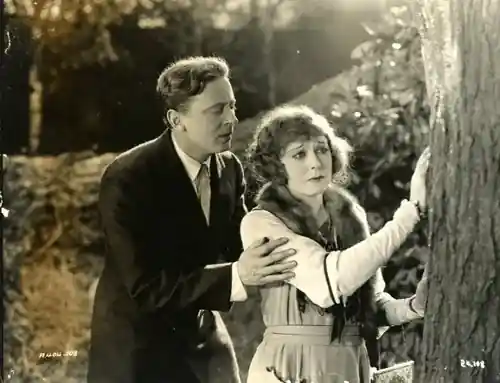
still_frame
product
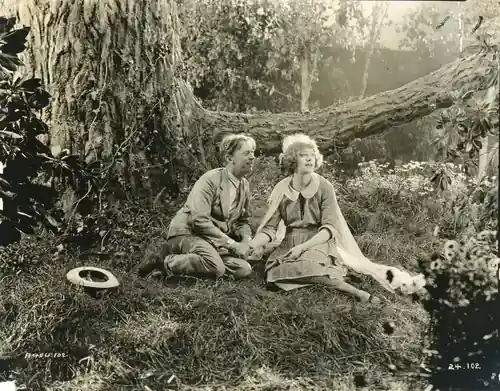
still_frame
production_art

Comparing the cinematic DNA and archive impact of two defining moments in cult history.
Frank Borzage
Frank Borzage
Community
Log in to comment.
" You can almost smell the starch in Hester Bevins’ first city frock: it reeks of ambition pressed to a lethal crease. Frank Borzage, that poet of yearning, opens Back Pay on a threshold—half-open farmhouse door, wind teasing gingham like a flirt who won’t stay for supper. Within sixty seconds we know the girl will bolt; the camera lingers on her thumb rubbing the doorframe the way a gambler caresses a lucky coin before the final toss. The 1922 film, adapted from Fannie Hurst’s Saturday Evening ..."
Fannie Hurst, Frances Marion
United States