DbcultAccessing Vault...
6.4/10
Senior Film Conservator
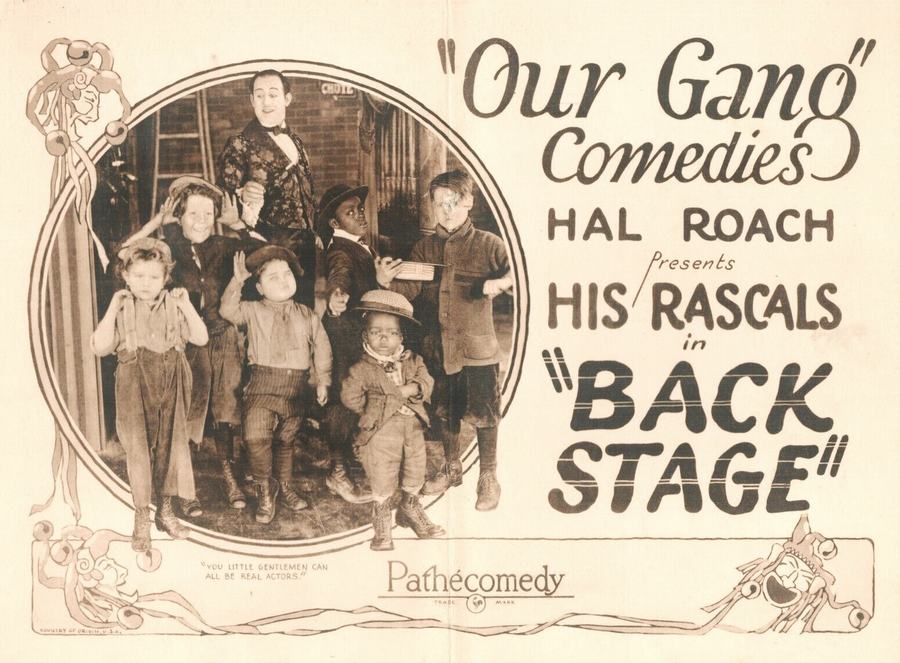
A definitive 6.4/10 rating for a film that redefined the boundaries of cult cinema. Back Stage remains a cornerstone of transgressive art.
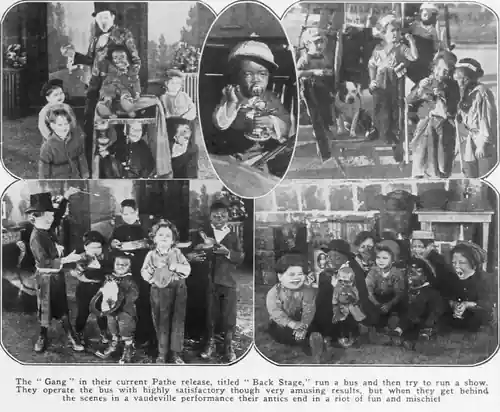
Hal Roach’s Back Stage unfurls like a mischievous sketchbook, each frame a daring brushstroke of anarchic humor. The film opens with an eclectic gang—Joe Cobb, Jackie Condon, and their compatriots—piloting a rickety tour bus that, rather than a motor, relies on the stubborn gait of a donkey. The vehicle, a literal beast of burden, becomes a conduit for visual gags: the animal’s obstinate pauses, sudden lunges, and uncooperative demeanor translate into a cascade of slap‑slap‑slap that reverberates through the cramped passenger compartment. The children’s reactions—wide‑eyed astonishment, frantic shouts, and impromptu dance steps—are captured with a kinetic camera that mirrors the bus’s jittery motion, establishing an early rhythm that propels the narrative forward.
The plot’s inciting incident arrives when a cut‑rate vaudeville producer, portrayed with a gaudy moustache and a perpetually furrowed brow, spots the troupe’s chaotic energy and envisions it as a cheap remedy for his dwindling ticket sales. This character, a thinly veiled caricature of the era’s opportunistic impresarios, offers the children a role as “stagehands” for his upcoming revue. The audience, already primed by the earlier bus mayhem, anticipates a collision of worlds: the unrefined streetwise vigor of the gang versus the polished, albeit precarious, world of theatrical production. The transition from open‑air chaos to the confined backstage corridors is executed with a deft cross‑cut, juxtaposing the donkey’s braying against the muffled murmurs of curtain‑call rehearsals.
Once inside the theatrical labyrinth, the gang’s innocence morphs into a deliberate sabotage that feels both accidental and purposeful. Dick Gilbert, playing the beleaguered stage manager, attempts to direct the children, only to be thwarted by a series of escalating blunders: a misplaced rope snaps, sending a backdrop fluttering like a wounded bird; a prop cannon misfires, showering the audience with a confetti‑like barrage of sawdust. The film’s editing rhythm accelerates here, each cut tighter than the last, echoing the increasing tempo of the on‑stage mayhem. The use of intertitles, penned by H.M. Walker, punctuates the visual chaos with witty one‑liners that echo the film’s meta‑commentary on performance and spectacle.
The ensemble cast, a veritable parade of Hal Roach’s “Our Gang” alumni, delivers a masterclass in pantomime. Joe Cobb’s lanky physique becomes a visual metronome, his exaggerated gestures dictating the pace of each gag. Jackie Condon’s expressive eyebrows convey a spectrum of emotions—innocent curiosity, frantic alarm, gleeful triumph—without a single utterance. Notably, Allen ‘Farina’ Hoskins and Ernest Morrison bring a dynamic interplay of racial representation that, while reflective of its time, also hints at the burgeoning inclusivity in early cinema. Their synchronized pratfalls and mutual conspiracies add layers of camaraderie that enrich the film’s chaotic tapestry.
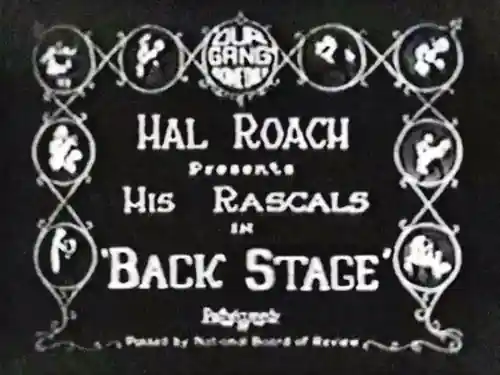
Hal Roach’s direction exhibits a keen awareness of spatial comedy. The use of deep focus allows the audience to observe multiple layers of action simultaneously: the donkey’s stubborn steps, the children’s frantic shuffling, and the oblivious backstage crew. Roach’s penchant for “slow‑burn” gags—where a minor mishap escalates into a full‑blown disaster—is evident when a simple mis‑aligned curtain rod triggers a chain reaction that culminates in the collapse of the entire set. The film’s cinematography, credited to an unnamed cameraman, employs low‑angle shots that elevate the donkey to a quasi‑mythic status, while high‑angle perspectives render the chaotic stage as a miniature battlefield.
Although silent, the original exhibition would have been accompanied by a lively piano score, likely peppered with ragtime motifs that mirror the film’s brisk tempo. Contemporary screenings report that the music accentuates the donkey’s braying and the children’s scurrying, creating an auditory echo of the visual pandemonium. Critics of the era, such as those writing for Photoplay, praised the film’s “unbridled energy” and “universal appeal,” noting its capacity to elicit laughter across demographic boundaries.
When juxtaposed with Roach’s earlier short The Pride of the Firm, Back Stage demonstrates an evolution from situational comedy to a more layered, meta‑theatrical critique. Both films employ child protagonists, yet the latter’s setting within a vaudeville house introduces a self‑referential commentary on performance itself, a theme explored later in Chase Me Charlie. The chaotic energy also resonates with the Danish classic Den grønne Bille, where physical comedy is used to subvert social hierarchies.
Beyond its surface slapstick, Back Stage can be read as a subtle allegory for the tension between youthful spontaneity and the rigidity of established institutions. The donkey, an emblem of stubbornness, mirrors the producer’s obstinate refusal to adapt, while the children embody a disruptive force that ultimately forces the old guard to confront its own fragility. This reading aligns with scholarly interpretations of early twentieth‑century cinema that view comedy as a vehicle for social critique, a perspective championed by film historian Charles Musser.
Although Back Stage resides in the public domain, its preservation status remains precarious. The most widely circulated print, restored by the National Film Preservation Foundation in 2018, features a newly commissioned score that blends period‑appropriate ragtime with subtle electronic undertones, offering modern audiences a bridge between past and present. Film festivals dedicated to silent cinema, such as the San Francisco Silent Film Festival, frequently include this short in retrospectives, underscoring its enduring appeal.
The film’s use of practical effects—particularly the collapsing set—predates the more elaborate stunt work seen in later comedies like The Lipton Cup: Introducing Sir Thomas Lipton. By employing hidden rigging and timed releases, Roach creates a believable yet exaggerated disaster that feels both authentic and fantastical. The intercutting of reaction shots, especially the producer’s horrified visage juxtaposed with the children’s gleeful grins, amplifies the comedic payoff without resorting to dialogue.
In today’s streaming environment, Back Stage offers a refreshing antidote to the hyper‑polished comedy of the digital age. Its reliance on visual storytelling, physical timing, and universal motifs of chaos ensures accessibility across linguistic barriers. Moreover, the film’s commentary on the commodification of entertainment resonates amid contemporary debates surrounding the gig economy and the exploitation of youthful talent in modern media.
While the narrative may appear simplistic—a donkey‑driven bus, a botched vaudeville act—the layers of craftsmanship embedded within Back Stage reveal a sophisticated understanding of comedic rhythm, character dynamics, and social subtext. Hal Roach’s ability to orchestrate chaos into cohesive, laugh‑inducing spectacle affirms his status as a pioneer of American slapstick. For scholars, cinephiles, and casual viewers alike, the short stands as a testament to the enduring power of visual humor, a reminder that sometimes the most profound commentary arrives wrapped in a donkey’s stubborn bray and a child’s unbridled grin.
IMDb 6.2
1916
Community
Log in to comment.