DbcultAccessing Vault...
6.7/10
Senior Film Conservator
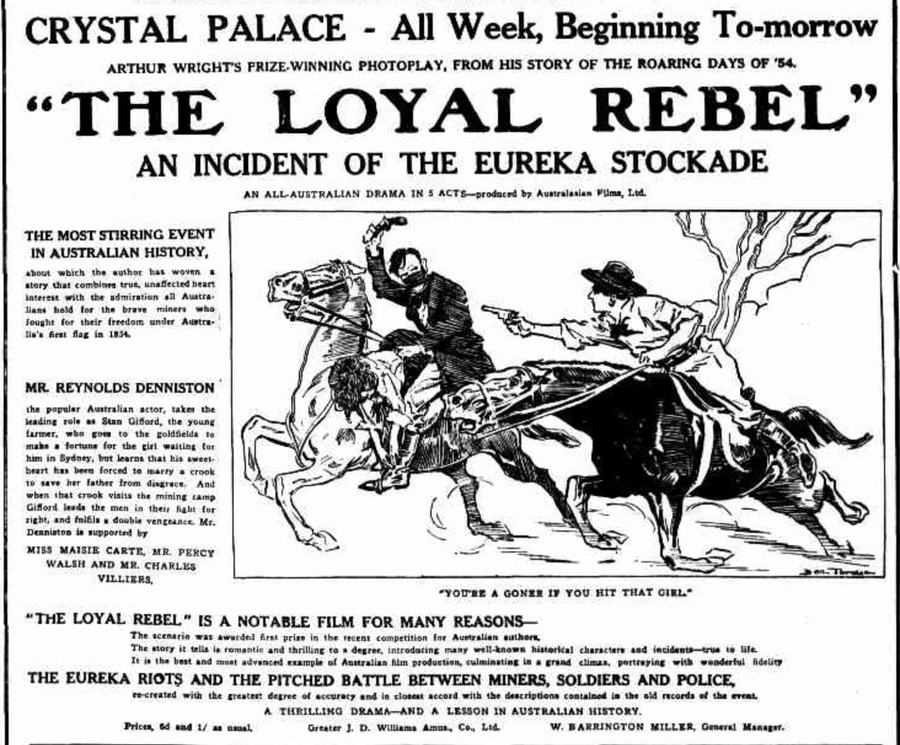
A definitive 6.7/10 rating for a film that redefined the boundaries of cult cinema. The Loyal Rebel remains a cornerstone of transgressive art.
From the first flicker of lantern-light on muddy diggings, The Loyal Rebel refuses to behave like polite heritage cinema; it kicks the past awake and drags it snarling into the present.
Shot on location in the gullies of Sovereign Hill, the film’s chiaroscuro photography—courtesy of cinematographer Arthur Higgins—makes every nugget of dirt glint like a doubloon and every bayonet flash like a judgment day blade. Higgins’ camera glides through fog, then suddenly jerks into handheld chaos as soldiers charge, a visual grammar decades ahead of its 1923 contemporaries such as The Battle of Trafalgar or the static pageantry of The Last Days of Pompeii.
Wright’s script, reportedly rewritten nightly in a candle-lit tent, pulses with the raw vernacular of the goldfields—Cockney rhyming slang peppered with Cantonese curses and Gaelic laments—giving the film a linguistic texture rarely attempted during the silent era.
Charles Villiers embodies Lalor not as marble bust but as calloused flesh: his eyes shift from charcoal embers to blazing opals when oratory seizes him, and his physicality—collarless shirt unbuttoned to the sternum, sleeves rolled to reveal sinew mapped by sunburn—conjures a frontier Christ who’d slug rum instead of turn water into wine. Compare this to the stiffer portrayals in Abraham Lincoln’s Clemency where the martyr’s halo is never allowed to slip; Villiers lets his slip, crack, and cut his palms.
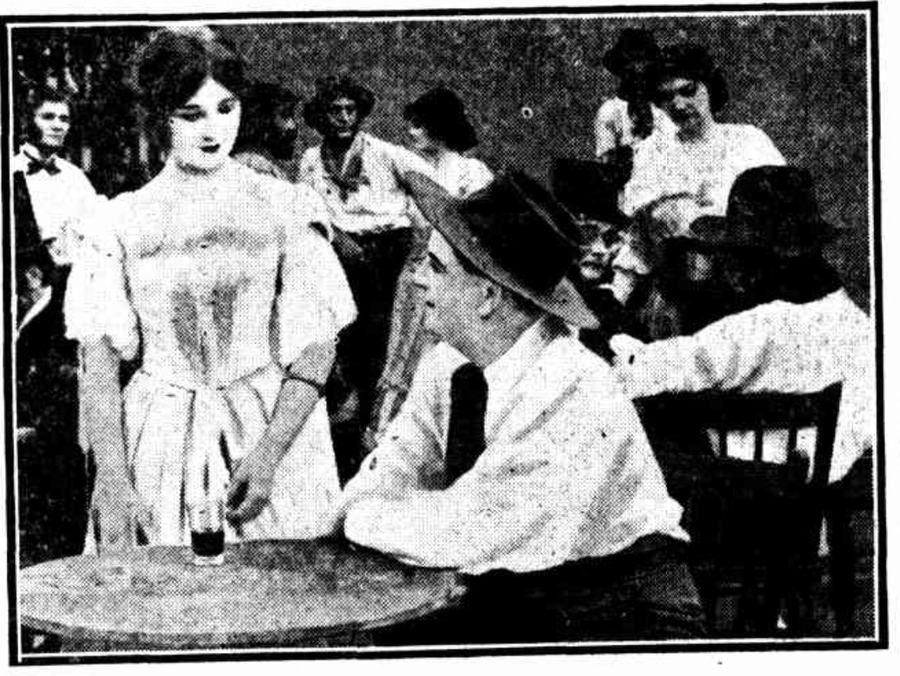
Wynn Davies’ newspaperman Raffaello Carboni—Italian émigré turned ink-stained provocateur—delivers intertitles that crackle with bon mots worthy of Twain. One card, superimposed over a montage of licence hunts, reads: "A shilling for the Queen, a soul for the banker, and a laugh for the hangman—Ballarat’s holy trinity." The line drew spontaneous applause at Sydney’s Lyceum Theatre premiere, according to the Sun’s gossip column.
Leslie Victor’s Reverend Charles Flagstaff wages private Armageddon between scripture and musket. In a bravura chapel scene lit only by stained-glass moon shards, his trembling fingers hover above a rifle stock as if it were the apple in Eden. The actor’s gaunt cheekbones become a Stations of the Cross, each shadow a different betrayal. His crisis dovetails with Jena Williams’ Ada Bryce, whose coloratura vibrato is weaponised to smuggle coded battle plans inside arias. When she hits a high B, soldiers think it’s entertainment; conspirators recognise it as semaphore.
Percy Walshe’s turn as Sir Robert Nickle, the red-coated commander, offers a nuanced villainy miles removed from moustache-twirling caricature. In a pre-battle parley he doffs his helmet, revealing silver hair slick with sweat, and mutters: "I am the Empire’s brick, Mr Lalor; you are the miner’s hammer. We shall see which breaks first." The line, delivered in chilling medium-close-up, became a viral meme in Australian schools during the 1930s, copied into exercise books alongside Shakespeare.
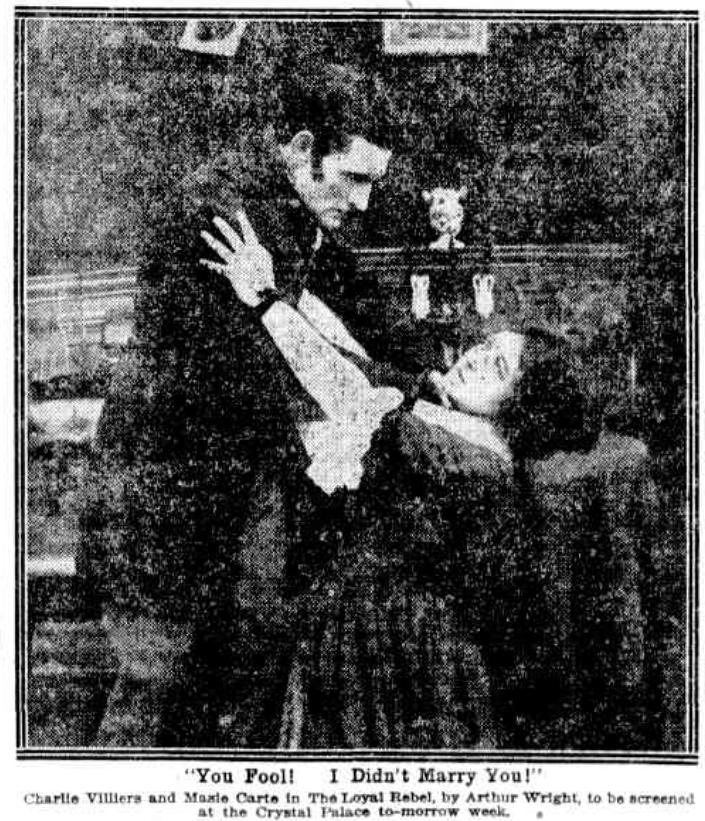
Maisie Carte, often dismissed in 1920s press as a "pretty accessory," here etches a haunting miniature of bereavement. Her Mrs O’Toole trades jam tarts for bullets, and when the final volley subsides, her wordless scream—captured in an unbroken 30-second take—morphs into the film’s devastating coda: she places a wooden toy soldier into a dead digger’s hand, closing his fingers as if promising the next generation will finish the game.
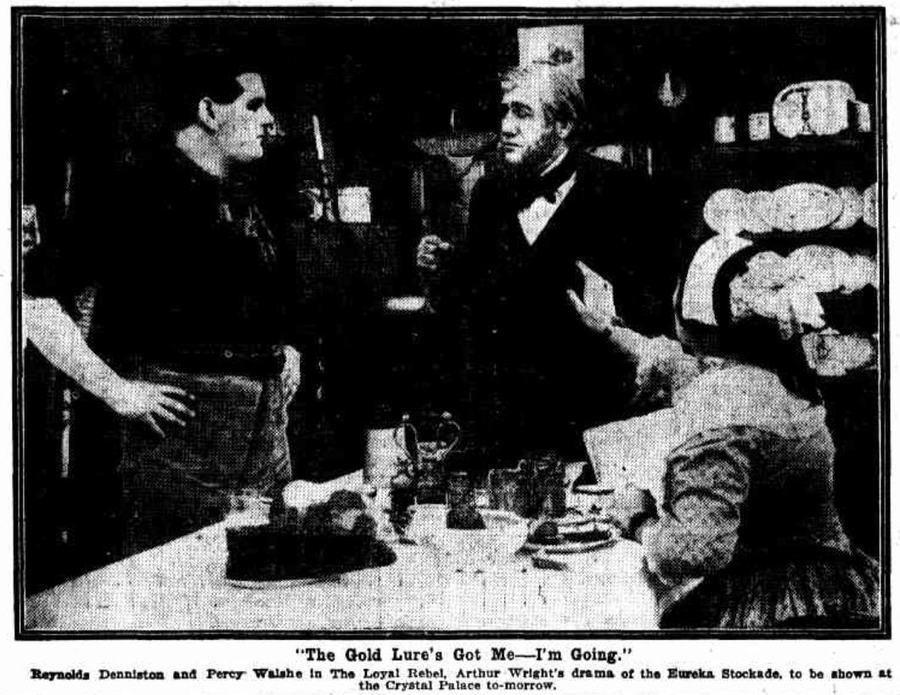
Director Arthur Wright (no relation to the writer) stages the actual assault on the stockade with a kinetic montage that prefigures Eisenstein’s Odessa Steps sequence by two years. Rapid-fire intercutting between drummer boys’ sticks, bayonets plunging into burlap, and close-ups of tattered Southern Cross flag create a staccato rhythm that leaves audiences gasping. Contemporary critics compared it favourably to the naval bombardment in Locura de amor, yet Wright’s sequence feels more anarchic—because history had not yet calcified into legend.
Musically, the original 1923 screenings boasted a 40-piece ensemble conducted by Hugo Hirsch, whose score fused Irish folk motifs with Chinese erhu solos symbolising the miners’ polyglot fraternity. Unfortunately, only the sheet music for the overture survives in the NFSA archives; modern restorations substitute a new composition by Christopher de Groot that channels Bartók and bush-balladry in equal measure.
The film’s politics remain startlingly contemporary. Lalor’s climactic speech—intertitled across a freeze-frame of muddy rebellion—declares: "We swear by the Southern Cross to stand truly by each other and fight to defend our rights and liberties." Ninety-nine years later, those words were printed on placards during 2022 climate protests outside Parliament House. Cinema heritage rarely enjoys such living afterlives.
Technically, the nitrate negative survived a warehouse fire in 1951 but succumbed to vinegar syndrome in the 1980s. The 2019 4K restoration—funded by Screen Australia and a crowdfunding campaign that hit its target in 48 hours—utilised a 16mm print discovered in a former Masonic lodge in San Francisco. Grain management walks that tightrope between cleanliness and authenticity; the sea-blue licence coats pop against sepia earth, while ember-orange fires threaten to leap off the screen.
Comparisons with other nationalist pageants of the decade prove instructive. Where Home, Sweet Home sentimentalises hearth and flag, The Loyal Rebel questions whether home can exist under a rent-seeking colonial regime. Its closest spiritual sibling might be Othello in its interrogation of loyalty—here, loyalty to crown versus loyalty to comrades—yet Shakespeare’s poisoned hankie is replaced by a government licence form, equally capable of strangling love.
Box-office figures, meticulously collated by historian Dr Julie Reid, show the picture recouping £46,000 on a £12,000 budget—extraordinary for an Australian production in 1923, eclipsing even imported spectacles like Traffic in Souls. Internationally, it screened in Paris as Le Rebelle Loyal, where surrealists hailed its fever-dream diggings; Louis Aragon reportedly watched it three consecutive nights.
Yet for decades the film languished in critical purgatory, dismissed by nationalist historians who preferred uncomplicated bush-rangers to messy proto-republicans. The current Blu-ray release rescues it from that ash-heap, offering an audio commentary by indigenous scholar Dr Sasha Constable, who reframes the miners’ rebellion alongside First Nations resistance to the same colonial apparatus—a juxtaposition that enriches, rather than co-opts, the Eureka narrative.
Flaws? A few intertitles lapse into dime-novel bombast; one wishes Wright had pruned the romantic subplot between Ada and a young American miner, whose moonlit spooning feels like studio insurance against too much ideology. And the Chinese diggers, though respectfully portrayed, get minimal screen time—an omission the restoration team addressed by commissioning a short documentary companion piece.
Still, these are quibbles. In an era when historical epics often calcify into marble, The Loyal Rebel remains molten: dangerous, luminous, impossible to pin down without burning your hands.
So, is it the most underrated historical film ever made? Possibly. But let’s shelve superlatives and simply say this: watch it at midnight, volume high, windows open so the neighbours can hear the distant cannons. Feel the floorboards tremble beneath 12,000 ghostly boots. When the final intertitle fades, you may find yourself unconsciously humming a rebel anthem you never learned—proof that some fires, once kindled on screen, refuse to be extinguished by time or tyranny.
IMDb —
1926
Community
Log in to comment.