DbcultAccessing Vault...
5.5/10
Senior Film Conservator
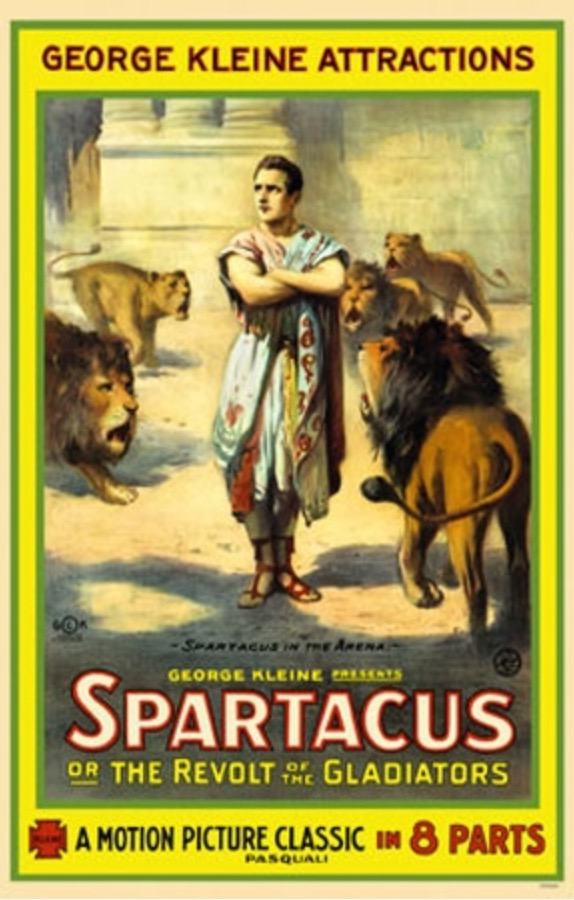
A definitive 5.5/10 rating for a film that redefined the boundaries of cult cinema. Spartacus remains a cornerstone of transgressive art.
The first thing that strikes you about the 1913 Spartacus is its stubborn refusal to behave like an artifact. Mario Guaita-Ausonia’s Spartacus strides out of the celluloid fog not as a museum relic but as a kinetic charcoal sketch—every sinew scratched in chiaroscuro, every flinch of the brow caught in the sputtering cadence of hand-cranked light. The film, barely surviving in a 35 mm nitrate print flecked like a pigeons-wing, nonetheless detonates with a modernity that makes later Kubrickian pageants feel upholstered and air-conditioned.
Director Giovanni Enrico Vidali (hiding under the anglicized Jay Viddy in trade papers) employs torchlight and sun-flare with a proto-expressionist bravado: gladiator barracks become vaulted caverns where cheekbones catch fire, and Roman banquets dissolve into gilt orgies of over-exposed whites that bleach morality itself. Compare this to the static tableaux of From the Manger to the Cross; where that film poses its figures like waxworks, Spartacus lets bodies collide, blur, re-form—an early gust of montage that anticipates Eisenstein by a full decade.
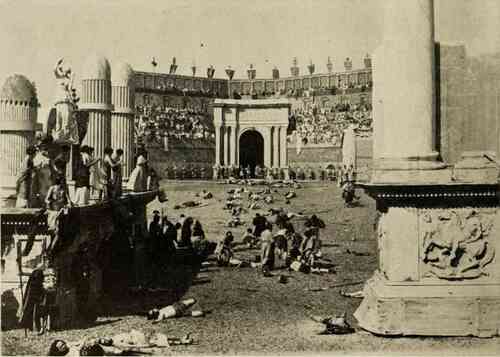
Because intertitles are sparse—some prints contain only thirty-five cards across three reels—meaning is soldered through gesture. Guaita-Ausonia wields his eyes like sabers: a downward flick while gripping a whip-scarred beam telegraphs the memory of every lash, a sidelong glance at Cristina Ruspoli’s Varinia blooms into a manifesto of egalitarian desire. Ruspoli, draped in costumes that look scavenged from a decadent Roman boutique, performs with an anachronistic minimalism: she never clutches her breast or raises a wrist to forehead, instead letting the corners of her mouth quiver like a secret flag.
Enrico Bracci’s Marcus Licinius Crassus arrives as if sculpted from patinated ego. His breastplate reflects not battlefield dents but the unblemished glow of inherited wealth; when he orders the decimation of a faltering cohort, Vidali frames him against a marble balcony so that the execution squad below appear like brokers on a trading floor. The parallel is unmistakable: capital purchasing slaughter by the yard. In one audacious insert, Bracci peels an apple with a petite dagger while discussing crucifixion logistics—consumerism nibbling at the fruit of human commodity.
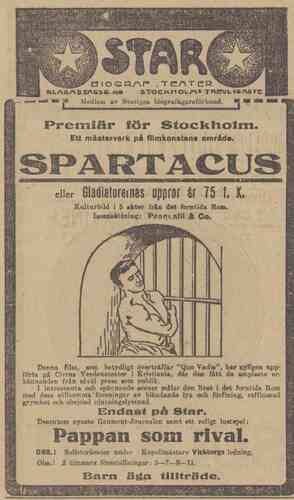
Where contemporaries such as The Corbett-Fitzsimmons Fight content themselves with single-take verité, Spartacus cross-cuts between three spatial zones during the siege of Nola: the ramparts where rebels haul logs, the hillside where Crassus’ courier gallops, and the Senate interior where parchment maps are unfurled like stock certificates. Temporal tension detonates across these gaps; we feel strategy metastasizing into history. The splice itself becomes a political act—denying any one viewpoint monolithic authority.
Hand-tinted exhibition prints survive in Turin and Paris. Scarlet daubs on gladius blades flicker like sparks of Marxist prophecy, while a single turquoise frame—occurring as Varinia first touches Spartacus’ wrist—feels hallucinatory, a bruise within the war. These dyes, unevenly soaked, bleed past outlines, suggesting ideology itself cannot be contained by the borders of empire.
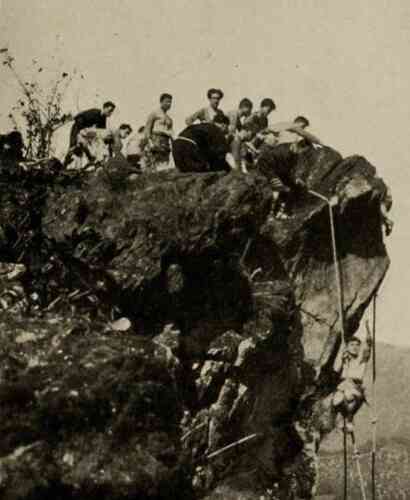
Unlike later spectacles that relegate women to hostage or harlot, Ruspoli’s Variniasteers strategic retreat across the Volturnus, commands grain stores, and ultimately smuggles the newborn away from Crassus’ clutches. Vidali grants her point-of-view shots: the camera tilts up from her sandals to reveal the horizon, a formal acknowledgment that her reproductive labor is now the seedbed of future insurrection. In 1913, this is radical enough to feel like splice from a 1970s feminist manifesto.
Rather than reserve crucifixion for the final curtain, the film stages it mid-narrative, transforming the historic road into an industrial corridor. Crosses are erected with the rhythm of piston strokes; each rebel hoisted becomes a billboard warning to the next province. Vidali shoots from atop a supply cart, the camera rolling forward so the forest of stakes scrolls like a demented diorama. The effect prefigures the motorized horror of Defense of Sevastopol and anticipates Chaplin’s dehumanizing gears in Modern Times.
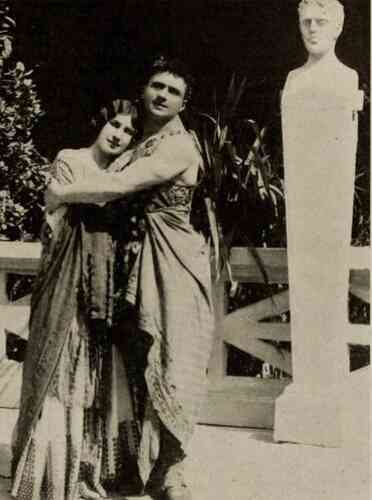
No original score survives; censorship cards mention only “military march adapted to taste.” Contemporary exhibitors improvised, sometimes pairing the siege with Bizet’s Toreador—a cruel irony that turned insurrection into cabaret. Yet even silent, the film vibrates: the scuff of sandals on stone, the faint hiss of nitrate curling, the collective breath of an audience realizing that freedom is a process, not a trophy.
Guaita-Ausonia was a circus strongman before the cameras found him; you sense the recalibrated muscle memory in every swing of shield. He refuses the balletic grace of later sword-and-sandal leads, opting instead for a pragmatic brutality—knees buckle, teeth gnash, armpits sweat. This corporeal authenticity anchors the myth, much as The Story of the Kelly Gang rooted its outlaw ballad in dust-caked trousers.
Reel three of the only complete print was lost in the 1917 Milan cinematheque fire. What remains is a gap that occurs just as Spartacus learns of betrayal. The sudden white flash forces viewers to supply trauma from imagination, turning absence into participatory wound—an accidental Brechtian device that makes revolution feel both intimate and unattainable.
Within months of release, Turin metalworkers projected the film during their 1914 strike, reading the slave revolt as mirror to their own. Fast-forward to 1960: Spartacus becomes a password for civil-rights organizers in Mississippi, who slip into matinees to escape July heat and emerge quoting “I am Spartacus” as encrypted solidarity. The phrase mutates, re-enters pop culture, gets commodified on bumper stickers, yet each recycling carries a ghost of the 1913 flicker.
Kubrick’s 1960 blockbuster gifts us star charisma and wide-screen grandeur, but it also upholsters ideology in liberal consensus: crucifixion becomes noble sacrifice rather than structural terror. Vidali’s version, raw as exposed nerve, offers no closure, no final speech—only wind across wheat and the lingering stench of crosses. The 1913 print is tattered, yes, yet its ruptures let us glimpse the historical process still underway.
To watch this Spartacus is to feel the projector’s clatter synchronize with your own pulse, to understand that cinema was never mere escapism but a workshop where new moral anatomies could be sketched in light. The rebels fail onscreen, yet each spectator carries away a splinter of that failure, lodged like shrapnel, aching forward into whatever comes next. That ache—that unfinished revolution—is why, despite missing reels, warped emulsion, and the century-long avalanche of louder, glosser retellings, this skeletal epic still kicks harder than a Crixus roundhouse. Go hunt it down—preferably in a damp archive where the projector’s hum competes with rain on the roof—and let its grainy fires rekindle your sense of what images, at their most feral, can still demand from us.
IMDb —
1920
Community
Log in to comment.