DbcultAccessing Vault...
Cult Review
Senior Film Conservator
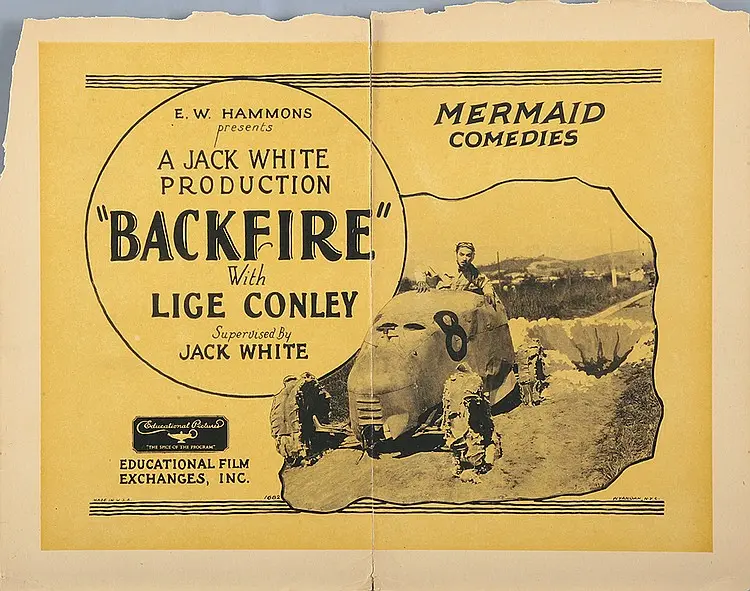
The silent era was defined by a specific brand of kinetic poetry that modern cinema, with all its CGI-laden artifice, often fails to replicate. In the 1923 short Backfire, we witness the zenith of this physical desperation. Directed with a frantic eye for geometry and timing, the film serves as a showcase for Lige Conley, a performer whose name may not carry the monolithic weight of Keaton or Lloyd today, but whose acrobatic prowess and comedic timing were indisputably top-tier. The premise is deceptively simple: a road race where the underdog must overcome the limitations of a vehicle that seems to be actively conspiring against his survival. Yet, within this framework, the film explores the burgeoning obsession with speed that gripped the post-war American consciousness.
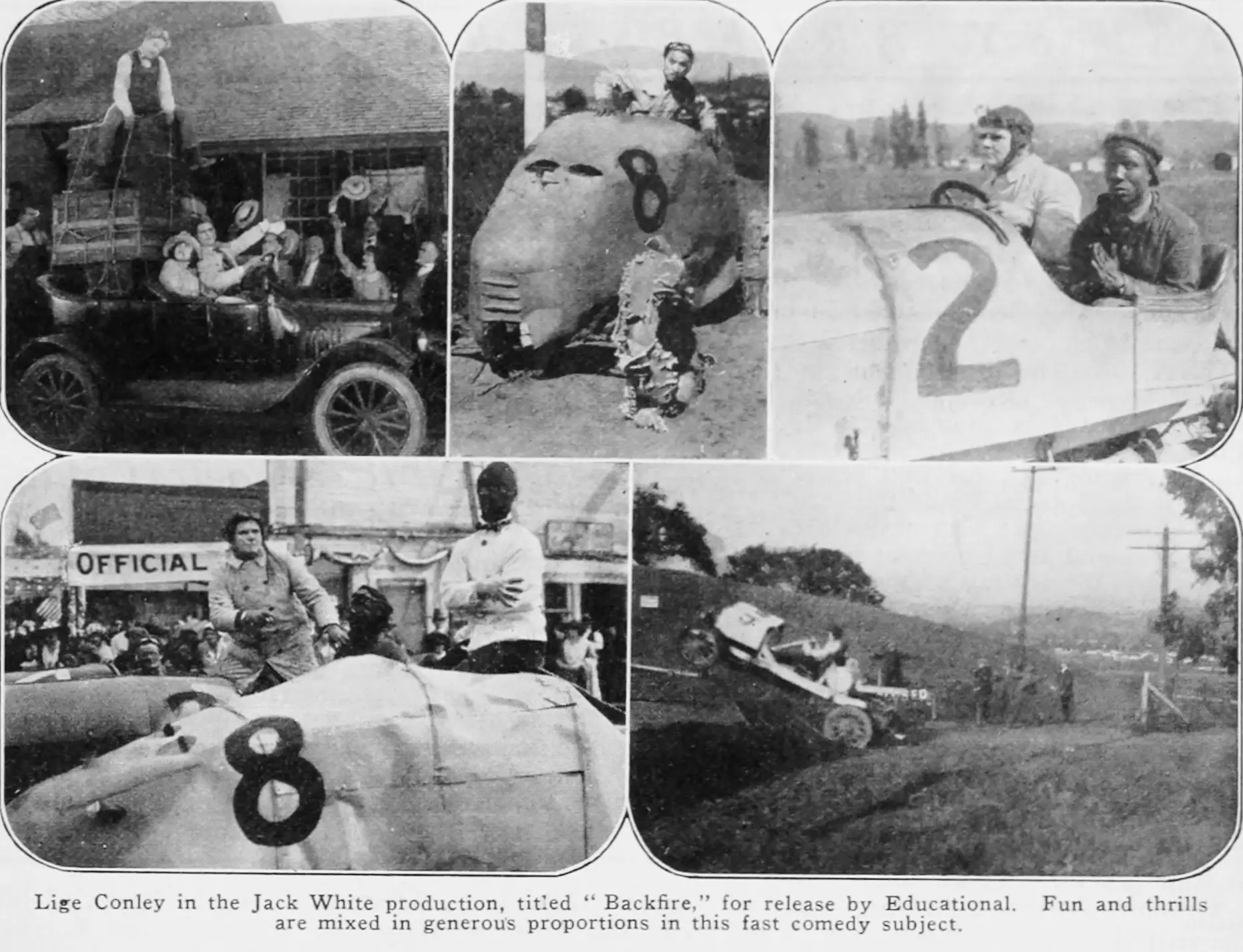
In many ways, the true star of Backfire is not a human actor, but the 'tin can on wheels' that Lige pilots. During the early 1920s, the automobile was transitioning from a luxury novelty to a ubiquitous necessity, and cinema was quick to exploit the inherent comedy of this transition. Much like the maritime mishaps found in Submarines and Simps, the humor here is derived from the failure of technology to meet human ambition. The car in Backfire is a sentient disaster, a collection of loose bolts and shuddering chassis that represents the fragility of the industrial dream. Every time Lige coaxes a burst of speed from the engine, the vehicle threatens to disintegrate, creating a tension that is as much about suspense as it is about laughter.
The cinematography captures this mechanical volatility with a grit that feels surprisingly modern. The camera is often mounted low to the ground, emphasizing the proximity of the actors to the unforgiving gravel of the racetrack. This isn't the sanitized speed of contemporary blockbusters; this is a visceral, bone-rattling experience where you can almost smell the spent oil and scorching rubber. The editing, sharp and rhythmic, punctuates the 'backfires' of the engine with a precision that suggests a musical composition. It is a symphony of clatter and smoke.
Lige Conley’s performance is a masterclass in reactionary acting. While Harold Lloyd often played the aspirational Everyman, Conley’s persona in Backfire is one of frantic adaptation. He is a man caught in a whirlwind of his own making. His body language is a constant negotiation with the erratic movements of the car. When the vehicle swerves, Conley doesn't just react; he becomes an extension of the centrifugal force. This physical commitment is reminiscent of his work in Lightning Love, where the environment itself becomes a combatant.
The supporting cast adds layers of archetypal depth to the chaos. Mack Swain, fresh from his iconic collaborations with Chaplin, brings a gravitational heft to the screen. His presence provides a necessary foil to Conley’s lithe movements. Swain’s expressive face, capable of conveying a universe of exasperation with a single twitch of his mustache, anchors the more absurd sequences in a recognizable human reality. Meanwhile, Spencer Bell delivers a performance that, while reflective of the era's problematic casting tropes, showcases an incredible sense of timing and physical comedy that often outshines the central narrative.
To truly appreciate the frantic pace of Backfire, one must look at the contemporary landscape of 1923 cinema. While films like The Christian or The Soul of Buddha were exploring the heavy, often turgid depths of moral melodrama and exoticism, the 'Educational Pictures' shorts were doing something far more radical: they were exploring the limits of the human body in space. There is a purity to the comedy in Backfire that transcends the linguistic barriers of the time. You do not need intertitles to understand the stakes of a wheel flying off at forty miles per hour.
The film’s structure is almost episodic, yet it maintains a forward momentum that feels like a single, exhaled breath. Unlike the atmospheric pacing of Fyrvaktarens dotter or the domestic intricacies of Her Week-End, Backfire is stripped of all artifice. It is a pursuit of a singular goal, obstructed by the comedic cruelty of fate. This simplicity is its greatest strength. It allows the viewer to focus entirely on the ingenuity of the stunts and the sheer audacity of the performers.
Analyzing the technical execution of Backfire requires an understanding of the limitations of the time. There were no green screens, no safety harnesses, and very little in the way of insurance for the stunt performers. The 'tin can' was a real vehicle, and the crashes were spectacularly authentic. The filmmakers used under-cranking—a technique where the film is shot at a slower frame rate and played back at normal speed—to enhance the sensation of velocity. However, even with this trickery, the bravery required to perform these sequences is staggering.
The use of location shooting gives the film a dusty, tactile atmosphere that sets it apart from the studio-bound productions of the era. We see the California landscape as it was—raw, unpaved, and dangerous. This realism provides a stark contrast to the heightened, almost cartoonish physics of the gags. It is this intersection of the real and the ridiculous that defines the best of silent comedy. When compared to the more stylized thrills of The Dangerous Paradise, Backfire feels like a documentary of a fever dream.
Why does a short about a rickety car still resonate a century later? Perhaps because the 'tin can on wheels' is a universal symbol for the human condition. We are all, in some sense, driving vehicles that are falling apart, trying to win a race against a clock we cannot see. The resilience of Lige’s character—his refusal to stop even when the steering wheel comes off in his hands—is a profoundly optimistic message wrapped in a slapstick package. It lacks the cynicism of modern parodies and the self-seriousness of contemporary action cinema.
In the broader context of global cinema, from the rural struggles of La España trágica o Tierra de sangre to the urban sophisticated wit of Moonlight Follies, Backfire stands as a monument to pure entertainment. It doesn't ask the audience to contemplate the soul or the state of the nation; it asks them to marvel at the spectacle of a man and his machine refusing to give up. Whether compared to the icy isolation of Northern Lights or the mystery of Panopta II, this film remains a vibrant, pulsing piece of history.
The film concludes not with a grand victory, but with the exhaustion of the chase. It mirrors the cycle of day and night seen in Les heures - Épisode 4: Le soir, la nuit, suggesting that the race is an eternal part of the human experience. As we look back on Backfire, we see more than just a comedy; we see the birth of the action genre, the evolution of the stuntman, and a glorious, unrefined explosion of cinematic joy. It is a 'tin can' that, despite the years, refuses to stop rattling.
Ultimately, Backfire is a reminder that cinema at its most fundamental level is about movement. It is about the transition from point A to point B, and the hilarious, terrifying obstacles we encounter along the way. While it may not have the psychological depth of Thora van Deken or the scandalous allure of The Woman in the Case, it possesses a kinetic honesty that is rare. Lige Conley and his 'tin can' deserve a place in the pantheon of greats, if only for their ability to turn a mechanical failure into a triumph of the spirit.
IMDb 6.1
1925
Community
Log in to comment.