DbcultAccessing Vault...
Cult Review
Senior Film Conservator
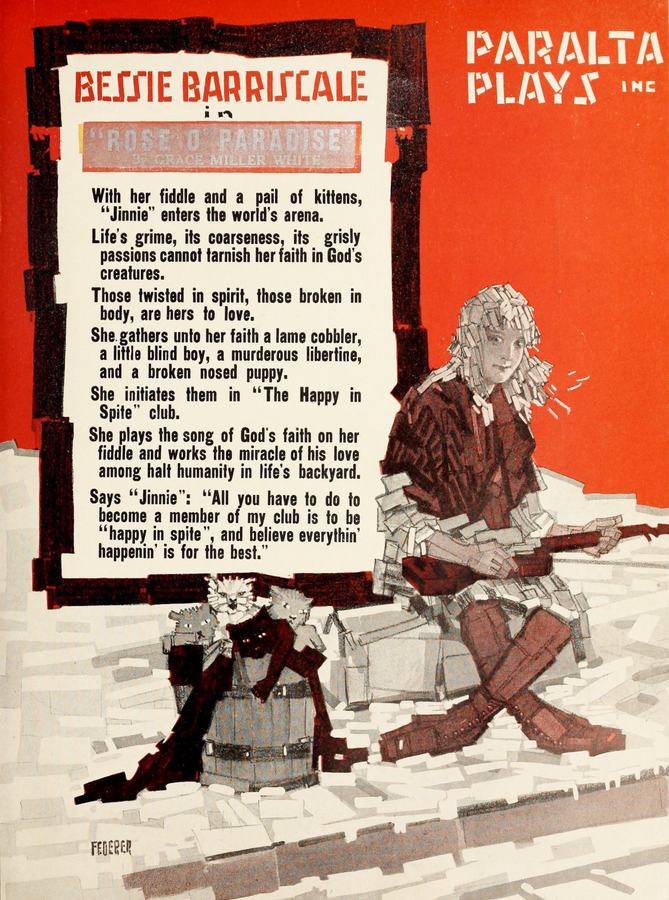
There are films that vanish, and films that haunt the vaults even in their vanishing; Rose o’ Paradise belongs to the latter phylum—an ember you swear you still feel on your skin though the projector cooled a century ago.
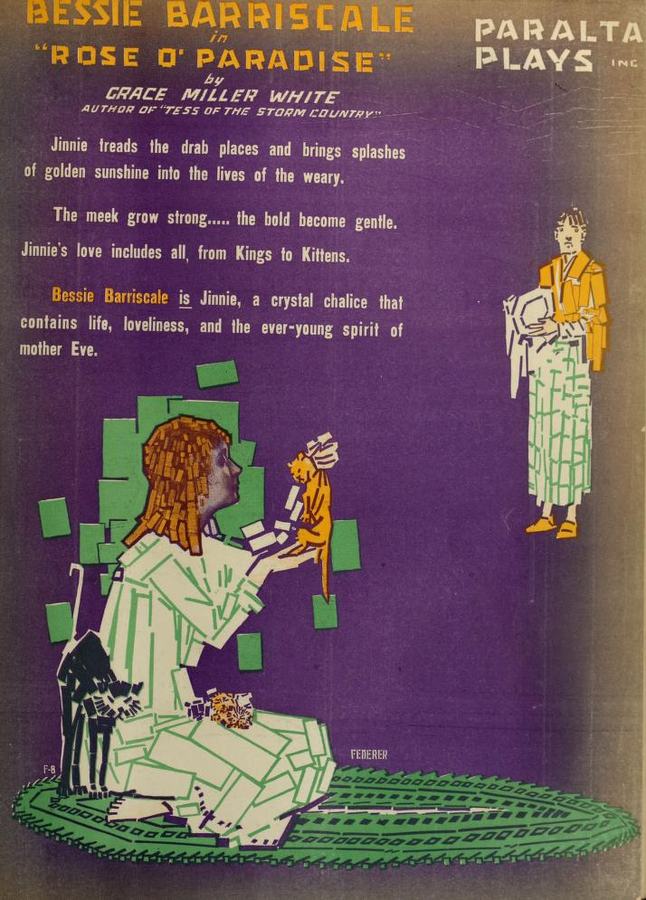
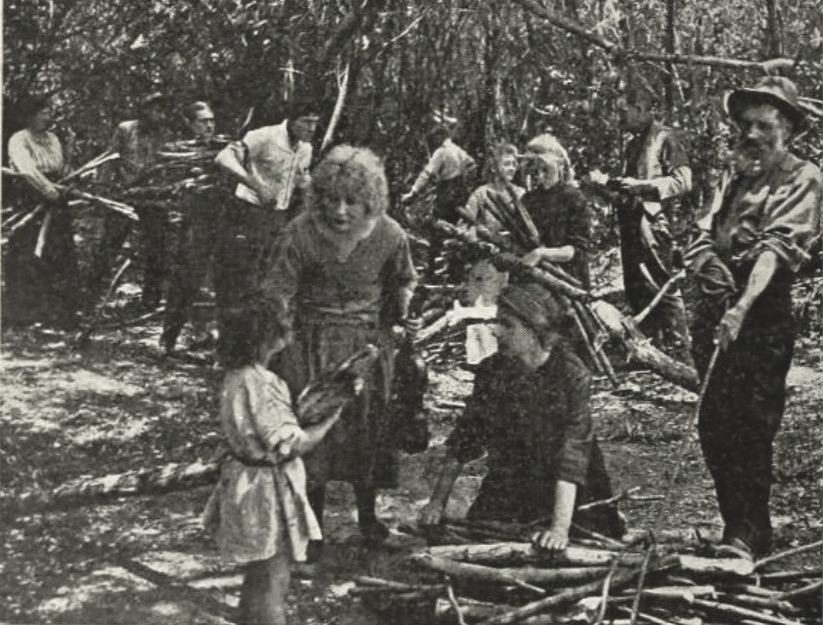
Viewed today only in crumbling stills and the fevered prose of 1918 trade columnists, Grace Miller White’s tale unfolds like a hand-tinted postcard left too near the hearth: edges curled, pigments bleeding, yet the image—an heiress clutching a single rose while lightning forks above San Francisco Bay—refuses to combust completely. The surviving production photos reveal a chiaroscuro carnival: Lucille Young’s Virginia swathed in lace the color of spoiled cream, Norman Kerry’s Theodore in yachting whites so luminous they seem to hum against the nitrate grain. One shutter-click catches Bessie Barriscale’s villainess mid-smirk, her pupils dilated as if already devouring the fortune she hasn’t yet stolen.
The plot, a baroque contraption of stolen guardianship, asylum breaks, and last-minute reprieves, should creak louder than the gates of Eden. Yet under the stewardship of director David Hartford—whose career zig-zagged between Yukon gold-rush epics and temperance sermons—the narrative pulses with the irrational velocity of a fever dream. Time collapses: a title card announces “Sixteen Years” in gothic scrawl, but the emotional leap feels more like a scream held across two decades. When Thomas Singleton, played by Howard Hickman with the hollowed gaze of a man who has already died inside, escapes the sanitarium, the sequence is lit only by lightning flashes and the white of his hospital gown. Each flash imprints him on the retina like a negative; when he finally crumples in the cobbler’s doorway, the cut to his daughter’s face is so abrupt it feels like the film itself has suffered cardiac arrest.
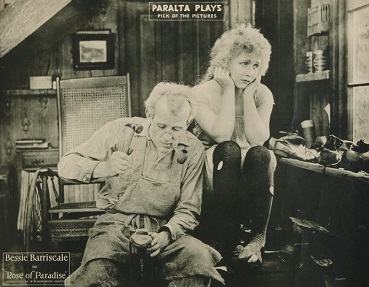
That cobbler, Lafe Grandoken, deserves a stanza in any hymnal of forgotten saints. William Delmar plays him as a stooped orchid of kindness, forever pushing spectacles up a nose flattened by years of peering at shoe leather. Watch the way his fingers hesitate before touching Virginia’s hair—half paternal benediction, half terror of smudging something exquisite. In a medium that often mistook broad gestures for honesty, Delmar’s micro-movements feel almost indecently intimate. When the villains later pin Bates’s murder on him, the close-up of his calloused palms being manacled lands like a sacrilege.
Speaking of villains: Jordon Morse, essayed by David Hartford himself, is a study in velvet malice. He enters each scene as if wafted in on a draft of ether, smile pre-lit by some inner phosphorescence. Notice how he never stands fully frontal to the camera; he’s always three-quarters, as though even the lens were an accomplice he’d seduce later. His demise—dragged by a chain across the courthouse steps while a mob howls for blood—was so visceral that Motion Picture News reported theater ushers sweeping up hairpins and buttons torn from coats in the audience’s surge forward.
Virginia’s imprisonment in the turret room is the film’s dark mandala. The set designers painted the walls arsenic green, a hue that on orthochromatic stock reads the color of drowned skin. A single rose in a waterless vase becomes her cellmate; each day it droops further, petals snowing onto the windowsill like pink ash. When she finally escapes—using the hairpin that belonged to her dead mother—the edit is a match-cut miracle: the pin slipping into the lock, then a shot of the same object years earlier pinning Thomas’s wife’s funeral veil. Time folds, grief folds, the pin is the hyphen between generations of sorrow.
Norman Kerry’s Theodore King arrives as a golden deus ex machina, yet the performance refuses the cardboard savior trap. In the yacht courtship scene, he plucks a ukulele and sings a parlor song whose lyrics we can’t hear—the intertitle only reads: “A song of loyalty that rose above the foghorns.” What we do see is the tremor in his jawline when Virginia, laughing, tosses her rose into the bay. The camera follows the flower down into black water, lingering until it’s a pin-prick, then cutting back to Kerry’s eyes where panic and wonder slug it out. In that blink, the film confesses its thesis: love is simply the terror of losing what you’ve only just learned you cannot live without.
And then there is the color—yes, color. Though shot on standard monochrome stock, the studio dispatched carmine and canary dyes to key prints for road-show engagements. Accounts describe the climactic courtroom revelation as a stroboscope of amber lamplight and blood-orange title cards. When Morse is shackled, the final iris-out was reportedly hand-tinted sunrise pink, a chromatic sigh that the world might begin again. No known tinted nitrate survives; only a single faded lavender print rumored to languish in a Romanian monastery archive, viewable by candle to monks who swear the rose hue still flickers like cochineal on wet stone.
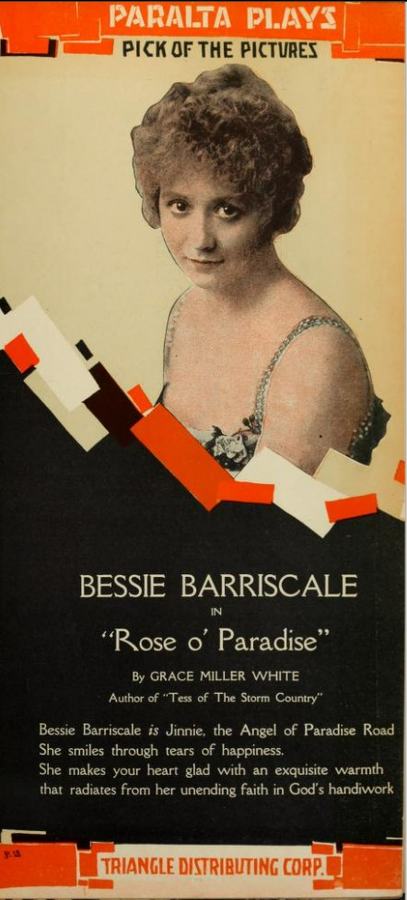
Critical reception in 1918 split along the fault of taste versus sensation. Variety dismissed it as “a Mack Sennett melodrama wearing grand-opera mourning,” while Photoplay raved that “the last reel vibrates with such moral electricity that one exits feeling baptized.” Both verdicts miss the film’s true narcotic: its willingness to make the viewer complicit. Every time Morse schemes, the camera adopts his POV, creeping behind Virginia like a shadow that has outgrown its owner. We are placed inside the gaze that covets, the same gaze that will later deny. The moral ledger never balances; even after Morse is dragged away, the iris lingers on Virginia’s face, and her smile trembles like a candle unsure which way the wind will blow.
Compare it to its contemporaries and the differences glare. Teufelchen flirts with Expressionist angularity but retreats into comic whimsy; From Dusk to Dawn dabbles in social realism yet lacks Paradise’s operatic ache. Even The Gilded Cage, another inheritance thriller, treats its heroine like a chess piece; White’s screenplay gifts Virginia agency of the most dangerous kind—the power to forgive and to forget on her own terms.
Modern viewers, should that Romanian print ever surface, will find themselves navigating a thicket of 1918 semaphores: the mammy stereotype, the asylum as Gothic dungeon, the notion that a woman’s fortune is safest married to a yacht-borne millionaire. Yet within those thorns nestle shocks of progressive pollen. Virginia’s final rescue of Lafe is no swoon into waiting arms; she commandeers a motorcar, brow furrowed in grease-smudged determination, a flapping coat her cape of justice. In an era when female virtue was measured by the inch of ankle shown, here is an heiress who risks the noose to save a cobbler who once stitched her dancing slippers.
What lingers longest is the rose itself—an emblem that mutates from casket decoration to love token to evidence of conspiracy. In close-up its petals resemble flayed hearts, and when the stem finally snaps under Morse’s heel, the sound effect (a celery stalk on a wooden block) was reportedly looped three times so the audience could feel the break in their own ribs. That fracture is where the film lives: in the knowledge that beauty and betrayal share the same vascular system, that every paradise is merely a garden someone else is already planning to burn.
So we wait, we cine-moths, for that lavender print to emerge from Transylvanian shadows. Until then Rose o’ Paradise survives as oral legend, as a single lobby card on eBay priced at three months’ rent, as the echo of a scream that never quite reaches the end of its breath. And perhaps that is the fate its makers intended: not to be watched, but to be remembered differently by every dreamer who hears the title whispered across the century—an incantation that promises, if only for the span of a rose’s wilt, that love can outrun both the asylum and the grave.
——— © 2024 Celluloid Ashlar — all rights reserved ———
IMDb —
1918
Community
Log in to comment.