DbcultAccessing Vault...
Cult Review
Senior Film Conservator
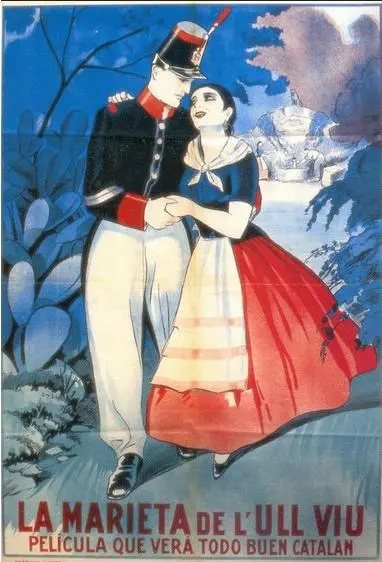
Is Baixant de la Font del Gat worth watching today? Short answer: yes, but with significant caveats that demand a particular kind of viewer. This film, a fascinating relic from a specific moment in Catalan cultural history, offers a glimpse into early cinematic adaptation and the enduring power of folk narratives, though it decidedly caters to cinephiles, historians, and those with a keen interest in the theatrical roots of cinema.
This is a film for those who appreciate the foundational elements of storytelling, the raw performances, and the socio-political context of early 20th-century Spain. It is decidedly not for audiences seeking modern pacing, high-octane action, or sophisticated visual effects; its charm lies in its historical significance and its earnest dramatic presentation.
To truly appreciate Baixant de la Font del Gat, one must approach it not merely as a film, but as a cultural artifact. It emerges from a distinct tradition, translating a popular folk song and stage play directly to the screen, a common practice in early cinema. This direct lineage from stage to screen, with the play’s author directing, imbues the film with a unique authenticity, a commitment to its source material that is both its greatest strength and, at times, its most noticeable limitation.
The film’s central conflict – a love triangle set against political upheaval – is simple yet potent. Marieta, desired by the grounded Ramon and the military-aligned Pauet, becomes a focal point for the broader tensions in Morella as liberal forces rise. This personal drama, escalating into a direct confrontation, mirrors the societal shifts impacting the region. It’s a microcosm of a nation in flux, played out through the hearts of its people.
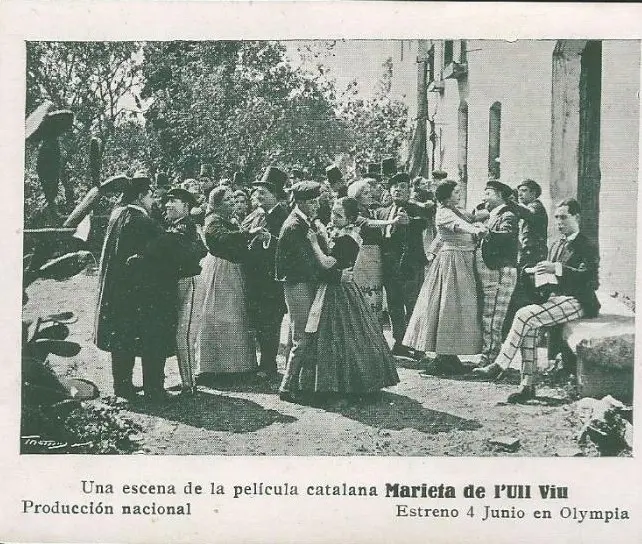
This film works because it offers an invaluable window into a specific cultural and historical moment, showcasing early directorial choices in adapting theatrical works and providing raw, unvarnished dramatic tension rooted in a popular narrative.
This film fails because its direct translation from stage to screen often sacrifices cinematic dynamism for theatrical fidelity, resulting in a pacing and visual style that can feel static and demanding for contemporary viewers.
You should watch it if you are a film historian, a student of early 20th-century European culture, or someone who values the preservation of cinematic heritage over modern entertainment conventions.
Josep Amich i Bert, as both the playwright and director, brings a palpable sense of the stage to the screen. This isn’t a director attempting to reinvent the wheel of cinematic language; rather, it’s an artist faithfully translating his vision from one medium to another. The blocking of scenes, particularly the central confrontation between Ramon and Pauet in Morella, likely retains much of its stage choreography, emphasizing clear character positioning and dramatic arcs over fluid camera movement.
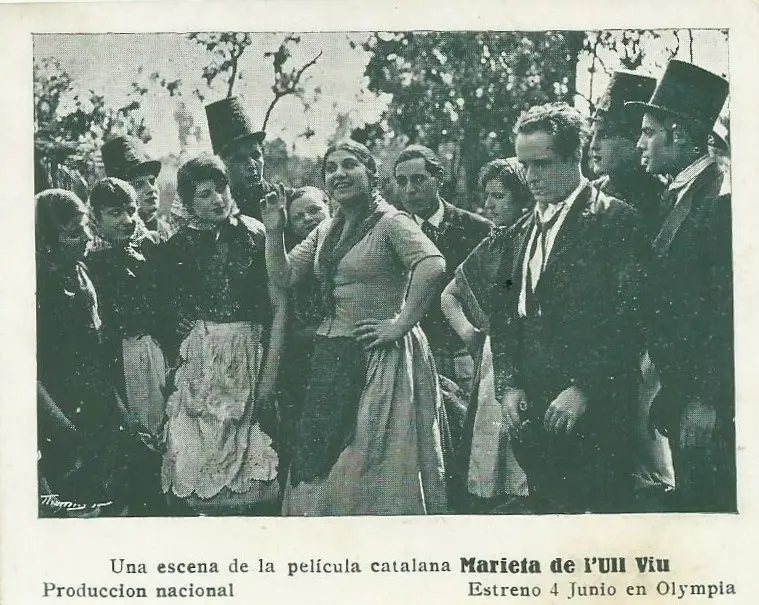
One can imagine the static camera setups, typical of the era, serving to frame these performances, allowing the actors’ expressions and gestures to carry the emotional weight. Unlike the more experimental works of its time, such as Autour de la roue, which pushed the boundaries of montage and visual storytelling, Baixant de la Font del Gat seems content to be a filmed play. This approach provides a unique insight into the performance styles of the period, but it also means the film rarely breaks free from its proscenium arch origins.
The direction's strength lies in its unpretentious commitment to the story. There are no grand flourishes, no overt attempts at cinematic wizardry. Instead, Amich i Bert focuses on the emotional core, allowing the narrative’s inherent drama to unfold. This directness, while potentially alienating for some, is precisely what makes it compelling for others. It’s a lesson in how early filmmakers grappled with the new medium, often by leaning on the familiar structures of the old.
The cast, including José Rodríguez, Javier de Rivera, and Rosa Hernáez as Marieta, would have been tasked with delivering performances that resonated both on stage and, subsequently, on screen. Early cinema acting often involved exaggerated gestures and facial expressions to convey emotion without the benefit of sound. This style, which can seem melodramatic to modern eyes, was essential for communicating narrative and character. One can envision Rosa Hernáez bringing a robust, perhaps even defiant, energy to Marieta, making her a woman capable of inspiring such intense rivalry amidst political turmoil.
The confrontation between Ramon and Pauet, likely played with a raw intensity by Rodríguez and de Rivera, would have been the emotional anchor. These actors, accustomed to projecting to the back of a theater, would have brought a certain gravitas and presence to their roles. While we lack the specific details of their performances, the very nature of the plot demands strong, contrasting portrayals: one perhaps stoic and traditional, the other more impulsive and representative of military order. Think of the intense, silent battles of wills seen in some early dramas like The Red Circle, where character motivations are etched onto faces.
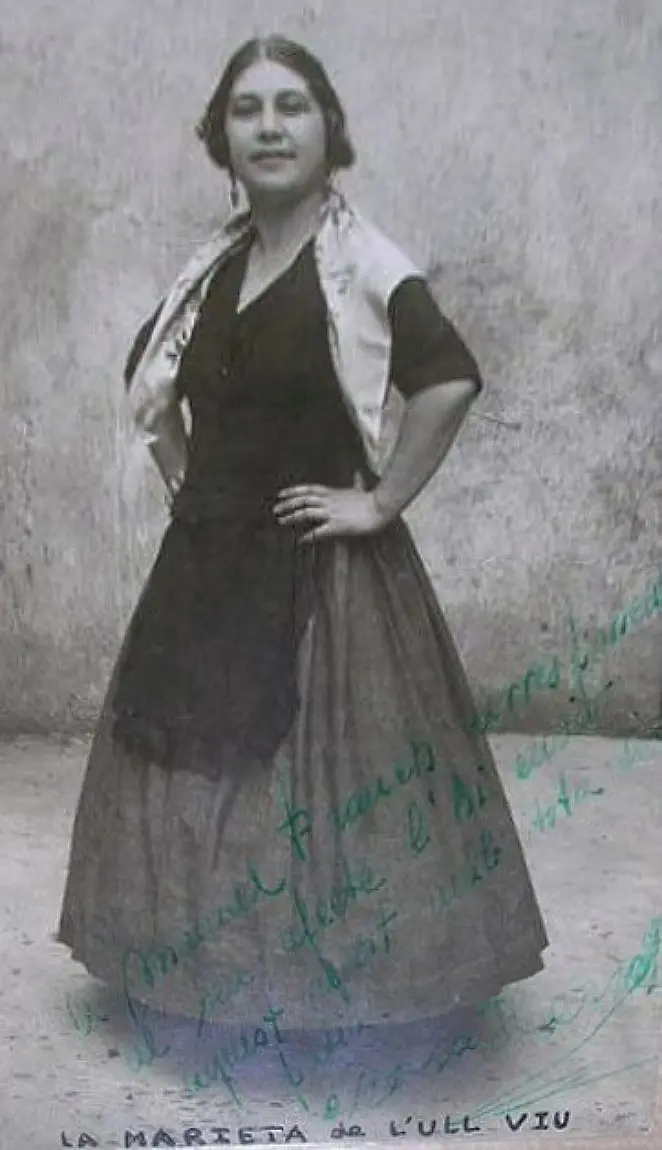
The supporting cast, with names like Ricardo Alís and Enrique Guitart, would have filled out the world of Morella, providing the necessary social fabric for the central drama. Their presence, even in smaller roles, would have contributed to the film’s sense of place and community, making the political intrusion feel more visceral and immediate. It's a testament to the ensemble that such a narrative can hold together, even with the technological limitations of the era.
Given the early period of filmmaking, the cinematography of Baixant de la Font del Gat would likely have been functional, prioritizing clarity and composition over elaborate camera work. Exterior shots of Morella, if present, would have been crucial in establishing the setting and grounding the political unrest. The arrival of the Army, for instance, would have been a powerful visual moment, signaling the shift in power dynamics and the impending conflict.
The use of light and shadow, even in its nascent stages, could have been employed to heighten the dramatic tension. Perhaps the fateful confrontation between Ramon and Pauet occurs in a stark, unadorned setting, emphasizing their isolation and the raw nature of their conflict. The film likely relied on strong visual compositions, akin to a series of living paintings, to convey mood and narrative beats, rather than dynamic camera movement or complex editing. This simplicity, paradoxically, can be quite striking, demanding the viewer’s full attention to the frame.
One could argue that this approach, while not 'cinematic' in the modern sense, forces a deeper engagement with the visual information presented. Every gesture, every set piece, every costume choice becomes more significant when the camera is less active. It’s a style that asks the audience to lean in, to interpret, and to fill in the gaps with their own imagination, much like watching a stage play from a fixed seat.
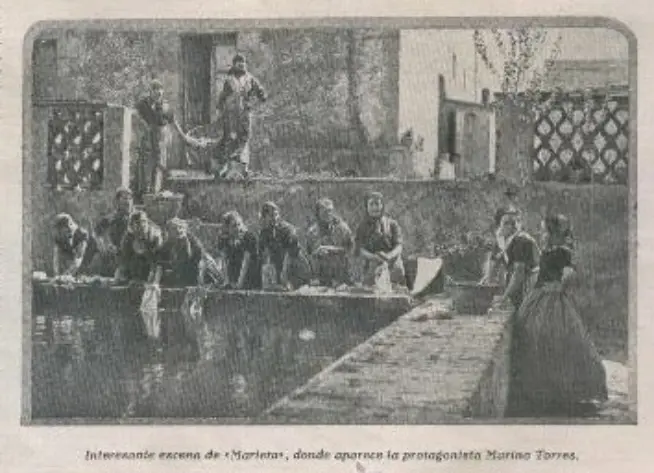
The pacing of Baixant de la Font del Gat, stemming from its stage origins, would almost certainly feel deliberate and unhurried by today’s standards. The build-up to the confrontation between Ramon and Pauet would be gradual, allowing the audience to fully grasp the emotional stakes and the political undercurrents. This measured pace is not a flaw; it is a characteristic of early dramatic cinema, where narrative clarity and emotional depth were often prioritized over rapid progression.
The tone would likely oscillate between romantic drama and socio-political commentary, infused with the melancholic or passionate spirit of the Catalan folk song it’s based upon. The inherent tragedy or triumph of the folk narrative would guide the film’s emotional landscape, giving it a timeless quality. The film's strength lies in its ability to marry the personal with the political, making the love triangle a mirror for larger societal struggles. This is a common thread in human drama, from ancient myths to contemporary thrillers like The Unguarded Hour, which also explores personal lives against a backdrop of external pressures.
An unconventional observation here is how the film, by being so deeply rooted in a specific regional culture and political climate, paradoxically achieves a kind of universal resonance. The themes of love, loyalty, and conflict in the face of changing power structures are evergreen. The struggle between personal desire and external forces is something everyone can understand, regardless of the historical context. It works. But it’s flawed.
For the casual viewer accustomed to the rapid-fire editing and immersive soundscapes of modern cinema, Baixant de la Font del Gat will likely prove a challenging watch. Its silent nature, its theatrical pacing, and its historical context demand patience and an active imagination.
However, for those with a genuine interest in film history, particularly the transition from stage to screen, and an appreciation for early European cinema, this film is an invaluable piece of cultural heritage. It offers a rare opportunity to witness a story beloved in Catalan culture translated directly by its author to the nascent cinematic medium.
It's a testament to the enduring power of a good story, even when presented through the raw, unfiltered lens of early filmmaking. It's not a film to simply 'enjoy' in the modern sense, but one to study, to reflect upon, and to appreciate for its place in the grand tapestry of cinematic evolution.
Baixant de la Font del Gat is not a film for everyone, nor does it pretend to be. It is a niche experience, a window into a bygone era of filmmaking and cultural expression. For those willing to engage with its historical context and appreciate its unvarnished theatricality, it offers a rewarding, if demanding, journey. It stands as a testament to the power of adaptation and the enduring human dramas that transcend technological limitations. While it won't be topping any 'best of' lists for modern audiences, its value as a piece of cinematic history and as a cultural touchstone for Catalonia cannot be overstated. Seek it out if you are a serious cinephile; otherwise, approach with an open mind and tempered expectations.
IMDb —
1931
Community
Log in to comment.