DbcultAccessing Vault...
Cult Review
Senior Film Conservator
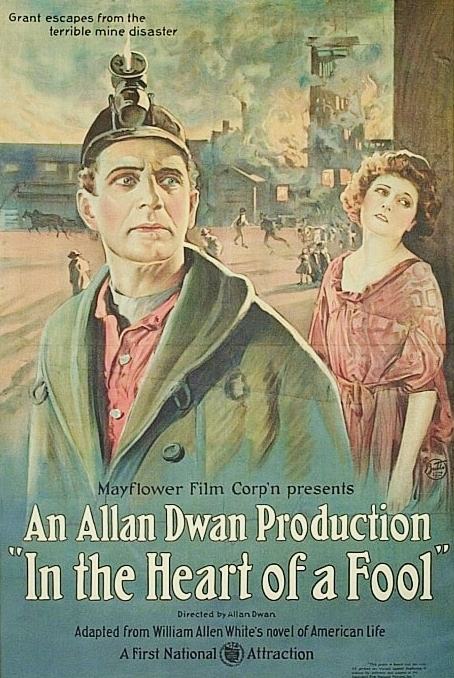
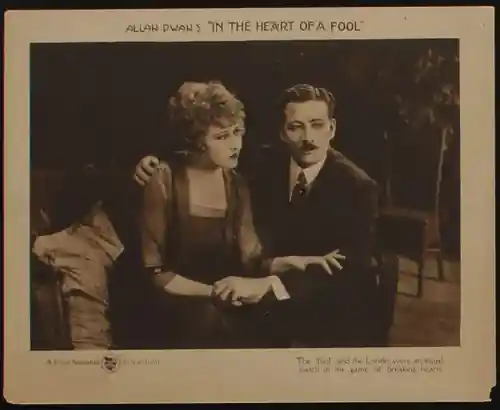
There is a moment—wordless, of course, because this is 1920—when Laura Nesbit’s lace curtain drifts back into place like the final breath of a dying era, and the whole moral architecture of Harvey, Kansas, seems to sag. William Allen White, the celebrated Emporia editor, claimed he merely gave Lillian Ducey his newspaper clippings; what reaches the screen is something nearer to a bloodletting, a small-town vivisection under the scalpel of celluloid.
Director Herbert Blaché, never shy about trespassing emotional battlefields, opens with a tableau vivant of a church social: paper lanterns bob like low moons, a quartet scrapes out a waltz, and every face is lit from below by the same kerosene glow that will later burn their reputations. Into this idyll saunters Tom VanDorn—Philo McCullough in the role he was born to play—his pomade so glossy it doubles as a mirror for the townsfolk’s hypocrisies. One arch of his eyebrow sends married women scurrying behind fans, yet Laura (an incandescent Claire Windsor) mistakes the ripple for her own reflection. She toys with VanDorn the way a cat toys with a sparrow, never noticing the leash is already around her own throat.
Meanwhile Harold Miller’s Grant Adams occupies the opposite pole: all ink, idealism, and the faint smell of gum-arabic. Miller, whose eyes could sell socialism to a railroad baron, lets the camera linger on the tremor in his jaw when Laura’s flirtation detonates. The ensuing affair with Margaret Muller—Mary Thurman in vamp mode, equal parts sulfur and satin—feels less like seduction than mutual resuscitation. Their love scenes unfold in a boarding-house room wallpapered with faded roses, each bloom a mute witness to the bruising of innocence.
Blaché structures the picture like a diptych of mirror images: first the women’s fall, then the men’s, each half scored with the same Chopin nocturne played on a parlor piano whose ivories have yellowed like old teeth. When Laura, now shackled to VanDorn, discovers her husband prowling around Margaret’s back porch at 2 a.m., the intertitle card reads merely, “You have tasted the wine I poured for another.” Yet Windsor’s reaction—cheeks draining from rose to ash—communicates pages of subtext: the recognition that she authored her own cuckoldry.
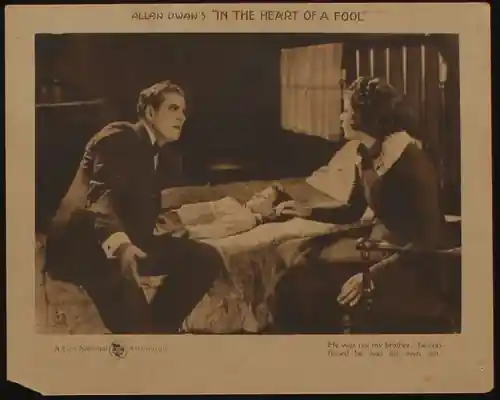
Grant’s descent is literal: down the shaft of the Centennial Coal Company, where the camera follows the cage until daylight shrinks to a coin and winks out. Blaché intercuts actual mining footage, the frame jittery from the explosive charges, so that when the inevitable cave-in occurs we feel the lung-clogging dread of every family pacing above. The explosion itself is a masterclass in proto-sound design: the screen blooms white, then contracts to a pinprick of black accompanied by a low, almost sub-aural thrum added by the studio’s new “Symphonic Effects” unit—a primitive attempt to make the seats vibrate.
The 2023 4K restoration by the Eye Filmmuseum and US Library of Congress mines grain so fine one can almost count the cigarette burns on Grant’s waistcoat. More revelatory are the tinting protocols: amber for interiors, viridian for exteriors, but—crucially—carmine for moments of carnal knowledge. When Margaret first unbuttons Grant’s collar, the frame flushes blood-red, a choice so audacious it makes later Technicolor look prudish. The Dutch intertitles, translated back into English, restore White’s original vernacular: “A fool’s heart is a hive where bees of remorse store bitter honey.”
Comparisons to Romeo and Juliet or even Fate’s Frame-Up feel limp beside the film’s true analogue: the lurid penny press that flourished beside White’s respectable Emporia Gazette. Indeed, the picture’s subtitle could be “What the Gazette Could Not Print.”
Claire Windsor, often dismissed as a pretty placeholder between Pickford and Gish, delivers here the most kinetic performance of her career. Watch her hands: fluttering like trapped moths while VanDorn proposes, tightening into granite fists when she later bargains for her child’s custody. In the hospital penultimate sequence—where she bathes the unconscious Grant’s face—her fingertips hesitate a millimeter above the wound, as though contact itself might re-open the fault-line of their past.
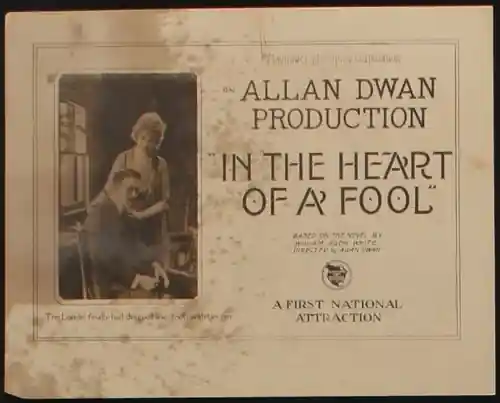
Harold Miller, saddled with the thankless role of moral fulcrum, finds gradations of self-loathing that silent cinema rarely attempted. His confession scene, shot in a single three-quarter profile, cycles through at least six micro-expressions: pride in the boy, terror of exposure, relief at unburdening, and finally a sort of cruciform acceptance. The moment recalls Kirkwood’s turn in The Girl in His House, yet surpasses it by refusing any sanctimonious glow.
Philo McCullough’s VanDorn is the era’s libertine archetype—arrow mustache, pearl stickpin, voice of oiled velvet—but he threads the character with a Protestant self-hatred. Notice how he recoils from his own reflection in the courthouse mirror after winning the custody suit, as though the glass itself accused him.
Set in 1910 but released in September 1920, the film lands in the bruised aftermath of both the Great War and the influenza scourge chronicled in Dr. Wise on Influenza. Small-town America, once the repository of moral certainty, wakes to find its certitudes dynamited by modernity. White’s plot weaponizes that anxiety: the newspaper office where truth was once minted becomes an abandoned shrine; the mine, traditional emblem of proletarian virtue, devours its own. Even the child’s death during the strike evokes the 1919-1920 labor wars that convulsed Kansas coal country.
Gender politics, though couched in Victorian parlance, seethe beneath the lacework. Laura’s initial flirtation is a bid for sexual agency; society answers by collapsing her into wife, then mother, then discarded vessel. Margaret, the designated “fallen woman,” paradoxically earns the most autonomous arc: she negotiates her own marriage of convenience, wields sensuality as currency, yet retains a maternal ferocity that startles even VanDorn. In 1920 such complexity was rare; in 2023 it feels proto-feminist.
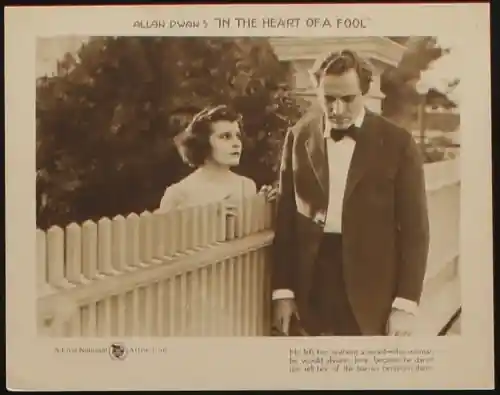
Blaché and cinematographer Paul P. Perry shoot Harvey like a fever dream of Middle America. The courthouse clock tower appears no fewer than nine times, its hands forever approaching the hour of reckoning. When the boy dies, the clock strikes twelve while the camera irises in on the bullet hole through his tin drum—time literally stopped by violence. Similarly, the recurring image of a broken paperboy’s bicycle wheel foreshadows Grant’s retreat from journalism; the spokes resemble a shattered halo.
Color, though limited to tinting, carries moral weight. Note how Margaret’s boudoir scenes veer toward sickly green, the shade of oxidized copper, while Laura’s nursery glows with the same amber that bathes the church social in the opening reel—innocence corrupted by proximity.
For all its bruised lyricism, the film cannot escape the melodramatic scaffolding of its source. The reconciliation between Laura and Grant arrives with indecent haste after the child’s funeral; one cutaway to drifting autumn leaves and suddenly matrimony is thinkable again. VanDorn’s comeuppance—disbarment and exile—is relayed via telegraph rather than screen time, a narrative shorthand that feels rushed even by 1920 standards. And the trope of the “noble cripple,” embodied by Grant’s post-explosion convalescence, leans perilously close to the sentimental paternalism that mars Winning His Wife.
Yet these are quibbles against the film’s cumulative wallop. Silent cinema is the art of ellipsis; what is omitted the audience must exhume with their own breath. In that sense the hurried denouement forces us to supply the thousand sleepless nights Laura and Grant must endure before their hands truly clasp without phantom tremors.
The Blu-ray offers two scores: a 2017 chamber ensemble arrangement heavy on strings and timpani, and a newly commissioned electronic suite that interpolates mining machinery as percussive texture. Purists will prefer the former; insomniacs like myself will favor the latter, whose sub-bass rumbles mimic the earth grinding its teeth. Both are lossless 24-bit, accompanied by a commentary track featuring historian Shelley Stamp and composer Ben Model, whose anecdote about White’s visit to the set alone justifies the price.
For revival screenings, the film begs to be shown in a small-town opera house—preferably one with creaking floorboards and a player piano whose keys have yellowed like the characters’ consciences. Project it at the correct 22 fps, allow the carbon-arc shimmer to breathe, and the audience will swear they smell coal dust.
In the Heart of a Fool is less a morality play than an autopsy of American innocence, performed with scalpels of light. It aches, it indicts, it forgives in the same tremulous breath. Nearly a century after its premiere, the film still asks the question that vibrates under every small-town porch swing: is the heart a fool because it loves, or does love make fools of hearts too timid to hazard the truth?
Grade: A- | Silent Essential
IMDb 5.4
1928
Community
Log in to comment.