DbcultAccessing Vault...
Cult Review
Senior Film Conservator
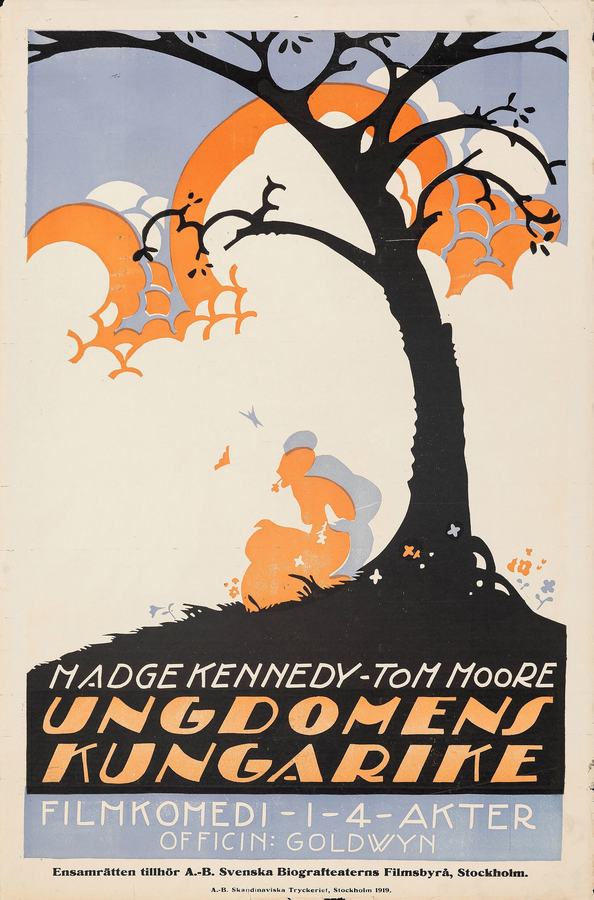
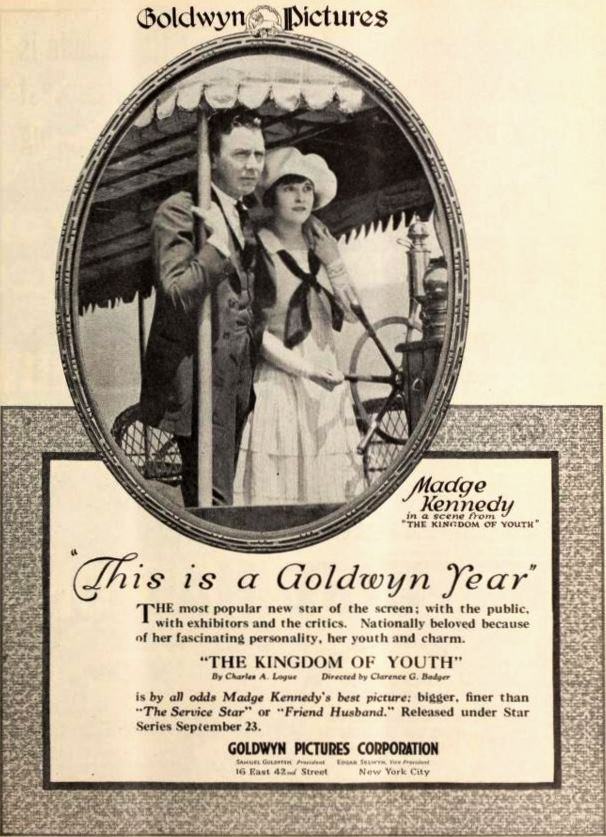
Stepping back into the cinematic tapestry of 1918, one encounters a fascinating piece of silent era storytelling: The Kingdom of Youth. This film, far from being a mere relic, offers a surprisingly intricate and psychologically resonant exploration of marital fidelity, external manipulation, and the often-blurry lines between perception and reality. Directed with a keen eye for dramatic tension and featuring a compelling performance from Madge Kennedy, this picture transcends its period trappings to deliver a narrative that, while rooted in early 20th-century sensibilities, speaks to universal human experiences. It’s a testament to the power of silent film to convey profound emotional depth through visual language, gesture, and the evocative cadence of intertitles.
The film plunges us immediately into a maelstrom of domestic discord, eschewing any gentle preamble. We witness Jimmy Betts, played with a simmering intensity by Tom Moore, confronting his wife Ruth (Madge Kennedy) with an accusatory fervor regarding a letter she has penned to Count Henri Duval. His anger, however, feels less like righteous indignation and more like a projection of his own guilt, a thinly veiled defense against Ruth’s entirely justified resentment. Ruth, in turn, bristles with a palpable sense of betrayal, her composure strained by Jimmy's prolonged and perhaps overly zealous attention to Mrs. Ella Rice. This initial scene masterfully establishes the central conflict: a marriage teetering on the precipice, eroded by suspicion, neglect, and the insidious influence of an external force. It’s a classic setup, yet the film imbues it with an immediacy that grabs the viewer, showcasing how quickly trust can erode under the weight of perceived slights and unaddressed grievances. The silent era, often caricatured for its melodramatics, here demonstrates a nuanced understanding of relational dynamics, portraying a couple caught in a cycle of accusation and defense.
Mrs. Ella Rice, portrayed by Marie De Wolfe, emerges as the quintessential femme fatale of her era, albeit one cloaked in the guise of an "aging but nonetheless charming widow." Her charm is a veneer, a calculated tool in her arsenal of manipulation. Her presence in Jimmy’s life, initially framed as a business necessity, quickly devolves into a source of marital friction, a wedge driven between husband and wife. De Wolfe’s performance likely relied on subtle gestures and expressive facial work, conveying a character whose outward gentility belies a predatory ambition. She is not merely a temptress; she is a strategist, meticulously planning the downfall of Ruth and the capture of Jimmy. This intricate portrayal of a manipulative character brings to mind similar figures in other silent dramas, where external influences often serve as catalysts for internal conflict. One might draw a thematic parallel to the subtle, yet destructive, societal pressures and hidden agendas explored in films like The Taint, where reputation and perception can be weaponized against innocent parties, or even the more overt villainy sometimes seen in crime dramas such as The Crime and the Criminal, though here the 'crime' is of a more emotional and psychological nature.
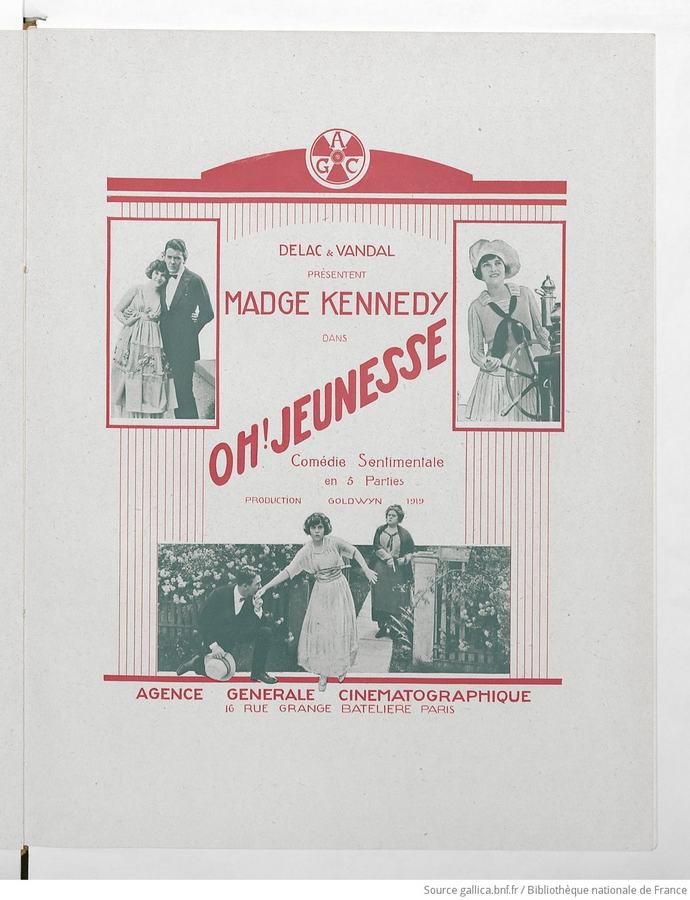
Exasperated and wounded, Ruth makes a decision that propels the narrative into its most compelling phase: she accepts Count Duval’s invitation to dine on his yacht. This act, born of defiance and perhaps a desperate plea for attention, becomes the catalyst for her profound journey into the subconscious. As she rows towards the yacht, a symbolic overturning of her rowboat plunges her into the cold embrace of the water, and subsequently, into a state of unconscious delirium. It is within this liminal space, between waking and sleeping, between reality and illusion, that the film truly unfurls its thematic complexities.
Ruth’s delirium is not merely a plot device; it is a psychological canvas upon which her memories and suppressed anxieties are painted in vivid strokes. She dreams of the blissful early days of her marriage, a period characterized by unadulterated joy and mutual affection, before the shadows of Mrs. Rice began to lengthen. This flashback sequence is crucial, providing the audience with a stark contrast to the marital discord we just witnessed, thereby emphasizing the depth of what has been lost. It highlights the foundational love that still exists, albeit buried under layers of misunderstanding and external meddling. The film cleverly uses this dream state to recontextualize the entire narrative, revealing the origins of their current predicament.
The dream meticulously reconstructs the sequence of events: Jimmy’s departure to handle Mrs. Rice’s business, Ruth’s profound loneliness, and her eventual decision to leave the relative safety of her Aunt Sophronia’s home to be with her husband. It is here that the full extent of Mrs. Rice’s machinations comes to light. The "love-struck" widow, far from being a passive admirer, actively schemes to win Jimmy for herself. Her strategy is insidious: to drive a wedge between the young couple by introducing Ruth to Count Duval, a man who, perhaps genuinely captivated by Ruth’s charm and vulnerability, soon professes his love. This intricate web of deceit, spun by Mrs. Rice, underscores the fragility of relationships when confronted with external, malevolent forces. The dream is not just a recollection; it is an active re-evaluation, a processing of past events that leads to a crucial realization.
The dream culminates in a powerful moment of agency for Ruth. Aware of Mrs. Rice’s nefarious schemes, Ruth, within her subconscious narrative, engineers a confrontation that is both dramatic and symbolic. She frightens the widow from her bedroom late one night, not out of malice, but with the calculated intent that Jimmy should witness Mrs. Rice for the "painted interloper" she truly was. This scene, even in a dream state, represents a pivotal turning point. It is Ruth reclaiming control, exposing the truth, and fighting for her marriage. The "painted interloper" refers not just to Mrs. Rice’s physical appearance but to her deceptive nature, her artificiality in contrast to Ruth’s genuine affection. This revelation, albeit dreamed, explains Ruth’s earlier letter to Count Duval – it wasn’t an act of infidelity, but a desperate, perhaps misguided, attempt to manipulate Mrs. Rice or to elicit a reaction from Jimmy, a cry for attention in a marriage strained by neglect.
The use of a dream sequence as a narrative device, particularly one that both recounts backstory and precipitates a character's emotional arc, is a sophisticated technique for its time. It allows for a deep dive into the protagonist's psyche, revealing motivations and resolving misunderstandings in a way that direct exposition might not achieve. This approach echoes the psychological depth explored in other silent films that ventured into the subjective experience, such as The Dream Lady, which similarly leverages the power of dreams to unfold crucial plot points and character insights. The unconscious mind becomes a stage for truth, a place where the tangled threads of reality can be unraveled and rewoven.
Madge Kennedy, as Ruth, delivers a performance that anchors the entire film. Her ability to convey a spectrum of emotions – from exasperation and wounded pride to deep love and determined defiance – without the aid of spoken dialogue is truly remarkable. Silent film acting demanded a nuanced physicality and an expressive face, and Kennedy masterfully employs both. Her portrayal of Ruth as a woman navigating the complexities of a strained marriage, battling a manipulative rival, and ultimately finding clarity through an internal journey, is both believable and deeply sympathetic. She captures the essence of a woman fighting for her happiness and her identity in a society that often confined women to passive roles.
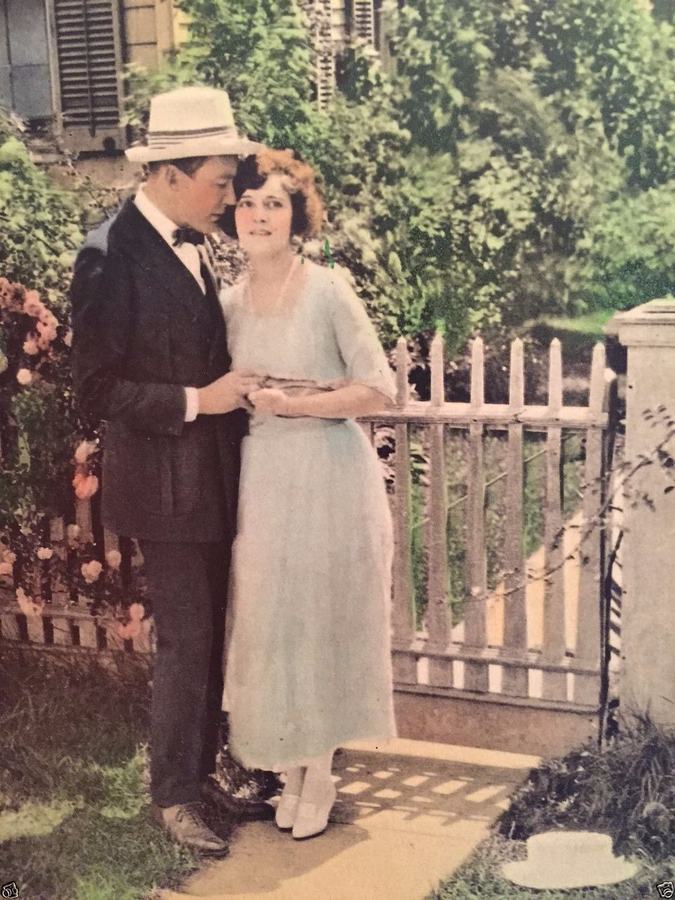
Tom Moore’s Jimmy Betts, while initially presented as somewhat obtuse and neglectful, undergoes his own subtle transformation. His rescue of Ruth from the water, and his subsequent tenderness, suggests a man who, though perhaps blinded by business or flattered by Mrs. Rice’s attention, ultimately loves his wife. His character arc is less about dramatic change and more about a return to his true affections, spurred by Ruth’s ordeal. Marie De Wolfe’s Mrs. Ella Rice is a study in controlled villainy. Her "charming widow" persona makes her all the more dangerous, as her malevolence is cloaked in respectability. Lee Baker’s Count Henri Duval, while a pawn in Mrs. Rice’s game, is depicted with an earnestness that prevents him from being a mere caricature. His genuine affection for Ruth, however misguided, adds another layer to the emotional entanglement.
The direction, presumably by Charles Logue and J. Clarkson Miller (as writers, they likely had significant influence on the visual storytelling), showcases an understanding of how to build tension and convey emotion through purely visual means. The framing, the use of close-ups to emphasize facial expressions, and the pacing of the narrative all contribute to its effectiveness. The sequence of the rowboat capsizing and Ruth’s subsequent dream is particularly well-executed, transitioning smoothly between physical peril and psychological exploration. The film’s visual lexicon, combined with the evocative language of the intertitles, creates a rich and immersive experience for the audience.
The thematic core of The Kingdom of Youth revolves around trust, fidelity, and the insidious nature of jealousy. It explores how easily a strong bond can be fractured by external interference and internal insecurities. The film also delves into the concept of illusion versus reality, particularly through the dream sequence. Ruth’s dream is not merely an escape; it is a crucible, a space where truths are forged and misunderstandings are clarified. The title itself, The Kingdom of Youth, can be interpreted in multiple ways. It could refer to the idealized state of early marriage, untainted by life’s complexities, or perhaps the enduring spirit of youth that allows individuals to overcome adversity and reclaim happiness. The film ultimately champions the resilience of genuine love, suggesting that even after significant strain, it can be rediscovered and reaffirmed. This emphasis on the enduring power of love and reconciliation, often after a period of trial or separation, is a common motif in silent era romances, from the grander spectacles to more intimate domestic dramas.
In the broader context of 1918 cinema, a year deeply impacted by World War I, films often served as both escapism and a reflection of societal anxieties. While not explicitly dealing with the war, The Kingdom of Youth’s focus on domestic stability and the triumph of good over manipulative forces could be seen as a comforting narrative for audiences facing global upheaval. It is a story about restoring order to a chaotic personal world, a microcosm of the larger desire for peace and harmony.
The film reaches its cathartic climax as Jimmy, having presumably found Ruth in the water, rescues her and carries her aboard the yacht. This act of salvation is not just physical; it is symbolic of his emotional rescue, his re-engagement with his wife. As Ruth awakens from her profound dream, the line between her internal journey and external reality blurs, then snaps into focus. The lessons learned in her delirium are immediately applicable. The final kiss between Ruth and Jimmy is not merely a romantic gesture; it is an affirmation of rediscovered understanding, a silent promise of renewed commitment. It signifies the vanquishing of Mrs. Rice’s influence and the reaffirmation of their bond. The dream, rather than being a diversion, proves to be the very mechanism through which their relationship is healed, allowing them to return to their Kingdom of Youth, a state of marital harmony and trust.
In conclusion, The Kingdom of Youth stands as a compelling example of early cinematic artistry. It demonstrates how silent films, through masterful acting, ingenious plot devices, and resonant themes, could delve into the intricate psychological landscapes of their characters. Madge Kennedy’s performance is particularly noteworthy, carrying the emotional weight of the narrative with grace and power. While it may not possess the grand scale of some contemporary epics, its intimate portrayal of domestic strife and reconciliation offers a timeless narrative on the enduring strength of love and the clarity that can emerge from the depths of misunderstanding. It’s a film that reminds us that sometimes, the most profound truths are revealed not in the harsh light of day, but in the ethereal realm of dreams. It’s a quiet triumph, a film deserving of renewed appreciation for its narrative sophistication and emotional honesty.

IMDb —
1926
Community
Log in to comment.