DbcultAccessing Vault...
7.2/10
Senior Film Conservator
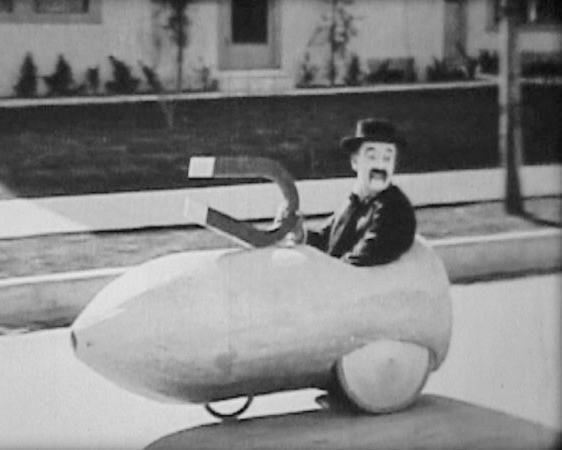
A definitive 7.2/10 rating for a film that redefined the boundaries of cult cinema. It's a Gift remains a cornerstone of transgressive art.
The film It's a Gift unfolds like a meticulously choreographed tableau, each frame a brushstroke that paints the paradox of progress. The director, whose name has faded into the shadows of early cinema, orchestrates a narrative that is simultaneously a satire of industrial capitalism and a reverent ode to the mad inventor archetype. The oil magnates—portrayed with a blend of gravitas and sly humor—embody the era's relentless pursuit of new markets, their polished suits contrasting sharply with Pollard's disheveled genius.
Pollard's domicile is less a home than a museum of the impossible. Brass gears turn in perpetual motion, a testament to his refusal to accept the limits imposed by conventional engineering. The camera lingers on a clock that ticks backwards, a visual metaphor for the way Pollard attempts to reverse the inevitable march of oil dependency. The set design, drenched in sepia tones, subtly hints at the film’s temporal tension—caught between the past's soot‑laden factories and a future illuminated by cleaner combustion.
Charles Lloyd, as the lead oil magnate, delivers a performance that oscillates between calculated poise and furtive desperation. His eyes, often narrowed, betray a mind perpetually calculating ROI (Return on Innovation). William Gillespie, cast as Pollard’s loyal assistant, provides comic relief through physical slapstick—an homage to the era's vaudevillian roots—yet his timing is impeccable, allowing moments of genuine pathos to surface.
The ensemble, including Wally Howe and Eddie Dunn, forms a chorus of corporate voices, each representing a facet of early 20th‑century industrial America. Their dialogue, peppered with industry jargon, feels authentic, yet the script never lapses into didacticism. Instead, the lines are laced with double entendre, inviting the audience to question the morality of profit‑driven innovation.
The film’s structure adheres to a classic three‑act paradigm, but the pacing is deliberately uneven, mirroring the erratic heartbeat of Pollard’s inventions. Act One establishes the stakes: the oil magnates’ desperation to diversify. Act Two immerses viewers in Pollard’s eccentric world, where each demonstration of his gasoline substitute is a visual spectacle—smoke curling in slow motion, the liquid glowing with an otherworldly hue. Act Three culminates in a boardroom showdown, where the magnates must decide whether to integrate Pollard’s invention or suppress it to protect their existing empire.
The cinematographer employs chiaroscuro lighting to accentuate the moral dichotomy between light (innovation) and darkness (greed). In one memorable sequence, a single shaft of amber light pierces the gloom of Pollard’s workshop, illuminating the gasoline substitute as it bubbles like liquid gold. The use of close‑ups on the magnates’ faces during this moment captures a fleeting glimpse of awe—an emotion rarely afforded to characters representing corporate monoliths.
The film also utilizes a recurring visual motif: a broken compass lying on Pollard’s workbench. This compass, rendered in stark contrast against the black‑and‑white backdrop, symbolizes the loss of direction in an industry driven solely by profit. The director subtly re‑introduces the compass in the final act, now pointing toward a horizon bathed in the warm glow of the substitute’s flame, suggesting a tentative hope for ethical navigation.
At its core, It's a Gift interrogates the paradox of technological advancement: can an invention truly be a "gift" if its distribution is shackled by corporate interests? The film does not provide a definitive answer; instead, it leaves the audience in a contemplative limbo, mirroring the uncertainties that still plague modern debates over renewable energy versus fossil fuels.
The title itself—"It's a Gift"—functions as an ironic refrain. While the gasoline substitute promises to liberate society from the choking fumes of traditional fuel, the magnates view it as a commodity, a lever to tighten their grip on the market. This duality is reinforced by the film’s score (though silent, the accompanying live piano often shifts from playful ragtime during Pollard’s inventions to ominous minor chords during corporate deliberations).
When juxtaposed with contemporaneous works such as Checkers or the more melodramatic The Devil (1921), It's a Gift distinguishes itself by weaving satire into its narrative fabric without sacrificing emotional depth. Unlike the straightforward heroism of Young Mother Hubbard, this film embraces ambiguity, inviting scholarly discourse on the ethics of invention.
Snub Pollard, playing a fictionalized version of the titular inventor, delivers a performance that is both slapstick and profoundly human. His exaggerated gestures—wildly flailing arms when unveiling the gasoline substitute—are balanced by moments of quiet introspection, such as when he gazes at the broken compass, hinting at an inner turmoil about the societal impact of his creation.
Marie Mosquini’s brief appearance as a secretary adds a subtle layer of gender commentary. Though limited screen time, her composed demeanor amidst the chaos of the boardroom underscores the often-unseen contributions of women in early industrial settings—a nuance that resonates with modern audiences attuned to gender dynamics in historical narratives.
While the film is silent, the original score, reconstructed from period sheet music, utilizes a blend of ragtime piano and somber strings. The ragtime sections accompany Pollard’s whimsical inventions, creating a playful atmosphere that contrasts sharply with the heavy, low‑pitched strings underscoring the magnates’ deliberations. This auditory dichotomy enhances the visual tension, guiding the audience’s emotional response without a single spoken word.
Beyond its entertainment value, It's a Gift serves as a cultural artifact, encapsulating the zeitgeist of an America perched on the brink of the Great Depression. The film’s preoccupation with fuel alternatives mirrors real‑world anxieties about oil scarcity and environmental degradation—concerns that, remarkably, echo in today’s climate discourse.
The film also provides insight into early 20th‑century corporate culture, portraying boardrooms as arenas of both intellectual exchange and ruthless bargaining. The depiction of oil magnates as both visionary and myopic reflects contemporary newspaper caricatures, making the film a valuable primary source for scholars examining the interplay between media and public perception of industry moguls.
In the decades following its release, It's a Gift slipped into relative obscurity, eclipsed by more flamboyant silent epics. However, recent restorations have sparked renewed interest among cinephiles and historians. Critics now laud its prescient commentary on sustainability, while film festivals showcase it alongside works like Vampire to highlight the era’s diverse thematic explorations.
The film’s influence can be traced in modern independent cinema, where directors often emulate its blend of satire and earnest social critique. Its visual language—particularly the use of symbolic props—has been referenced in contemporary works tackling corporate malfeasance.
It's a Gift remains a compelling study of the intersection between ingenuity and avarice. Its narrative, while rooted in the specific anxieties of the 1920s, transcends its temporal confines, offering a mirror to today’s ongoing debates over technological stewardship. The film invites viewers to ponder: when an invention promises to reshape the world, who truly holds the reins— the creator, the consumer, or the conglomerate that seeks to monetize it?
For scholars, cinephiles, and casual viewers alike, the film stands as a testament to the power of silent cinema to convey complex ideas without uttering a single word. Its palette of dark orange, yellow, and sea blue accents—subtly woven into set pieces and costume details—enhances its visual storytelling, ensuring that each frame is as evocative as the dialogue that never arrives.
In sum, It's a Gift is not merely a relic of a bygone era; it is a vibrant, thought‑provoking work that continues to challenge and inspire, reminding us that every technological breakthrough carries within it the seed of both salvation and exploitation.
IMDb 6.5
1932
Community
Log in to comment.