DbcultAccessing Vault...
5/10
Senior Film Conservator
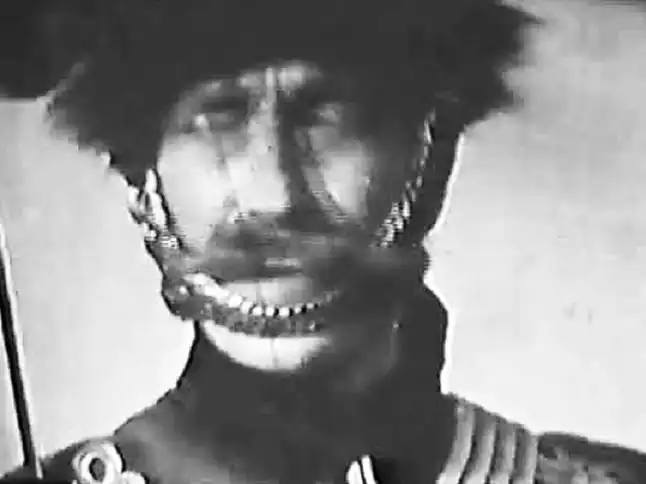
A definitive 5/10 rating for a film that redefined the boundaries of cult cinema. Balaclava remains a cornerstone of transgressive art.
If you are looking for a nuanced psychological study of war, Balaclava is not it. However, if you have a soft spot for the sheer scale of early British studio filmmaking and want to see thousands of pounds of horseflesh charging into a valley of certain death, it is absolutely worth your time. This is a film for those who appreciate the transition period of cinema—it was shot as a silent and later retrofitted with sound sequences—and for anyone who finds the Victorian 'stiff-upper-lip' ethos more charming than annoying. Modern audiences who demand fast pacing or subtle acting will likely find the first forty minutes a slog of dated tropes.
The story kicks off with a narrative engine that was already tired in 1928: the falsely accused officer. Cyril McLaglen plays our hero, John Kennedy, with a physical presence that suggests he’d be much better at punching his way out of a problem than navigating the social politics of the mess hall. When he’s framed for murder by a rival, the film leans heavily into the 'shame' of a dishonorable discharge. There is a specific shot of his buttons being literally ripped from his uniform that feels agonizingly slow, a hallmark of the era’s obsession with symbolic disgrace.
The acting across the board is a mixed bag. McLaglen (brother of the more famous Victor) has a ruggedness that works once he gets into the trenches, but in the early ballroom and garrison scenes, he looks like he’s wearing a costume three sizes too small. Benita Hume, as the love interest, is mostly relegated to looking mournful in soft-focus close-ups. The real standout is the villainy; the 'rival officer' trope is played with enough sneering arrogance that you genuinely want to see him trampled by a horse in the final act.
One of the stranger elements of the script is the inclusion of a Russian spy masquerading as a British soldier. This subplot feels like it belongs in a different movie—perhaps a pulp serial like The Invisible Enemy. It adds a layer of tension that the film doesn't quite know how to balance with the historical gravity of the Crimean War. There are several scenes in the barracks where the 'spy' is clearly up to no good, lurking in shadows that are a bit too obvious, while the other soldiers engage in some rather forced 'jolly' comedy that grinds the momentum to a halt.
The pacing drags significantly in the middle. We spend a lot of time watching soldiers stand around in the mud, which might be historically accurate to the siege of Sebastopol, but the dialogue (if you’re watching the sound-synced version) is flat and delivered with the theatrical projection common in early talkies. You can practically hear the actors waiting for their cues.
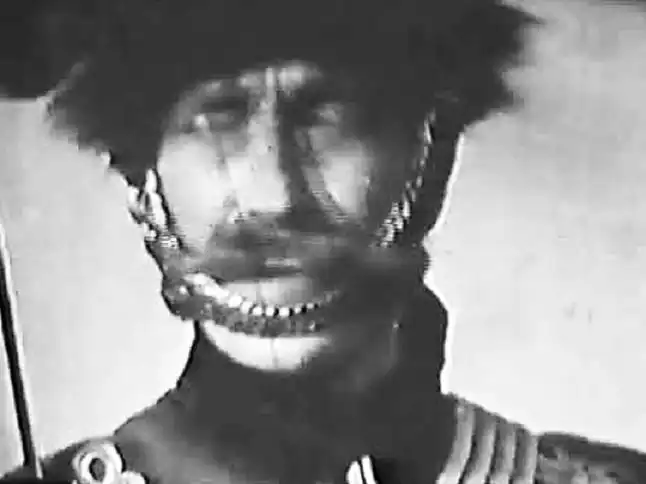
Everything changes when the film reaches the titular battle. This is where directors Maurice Elvey and Milton Rosmer show their hand. The recreation of the Charge of the Light Brigade is genuinely impressive, even by modern standards. There is no CGI here; it’s hundreds of real men on real horses charging through real explosions. The camera work becomes suddenly modern—tracking shots that run alongside the galloping horses and low-angle shots that make you feel the weight of the hooves.
One detail you’ll only notice if you’re paying attention is the sheer chaos of the falls. These aren't choreographed Hollywood stunts; they look dangerous and messy. Horses trip, riders tumble into the dirt, and the smoke from the cannons creates a claustrophobic, confusing atmosphere that captures the 'blunder' of the historical event better than many later adaptations. The editing rhythm picks up speed here, cutting between the stoic faces of the doomed cavalry and the frantic reloading of the Russian guns.
Visually, the film is a product of its time but with flashes of brilliance. The lighting in the night scenes at the camp is surprisingly moody, using deep blacks to hide the limitations of the sets. However, the transition between the silent footage and the 'talkie' inserts is jarring. You’ll notice a sudden shift in grain and a change in the actors' physical energy. In the silent sections, they are expressive and broad; in the sound sections, they become strangely static, likely because they had to stay near the hidden microphones.
The use of Lord Tennyson’s poem as intertitles is a bit on the nose, but it serves to ground the film in the patriotic fervor it was clearly aiming for. It’s a film that wants to honor the British soldier while acknowledging the horrific waste of life, though it usually chooses the former over the latter.
Balaclava is a lopsided experience. The first half is a creaky melodrama that feels like a dozen other films from the late 20s, like The Satin Woman or other social-shame dramas. But once the bugles sound and the horses start moving, it transforms into a visceral piece of action cinema. It’s a film of mud, grit, and questionable military decisions. It isn't a 'lost masterpiece,' but as a document of how early cinema tackled massive historical events, it remains a thundering, dusty spectacle that demands to be seen on the largest screen possible.
IMDb 6.9
1922
Community
Log in to comment.