DbcultAccessing Vault...
Cult Review
Senior Film Conservator
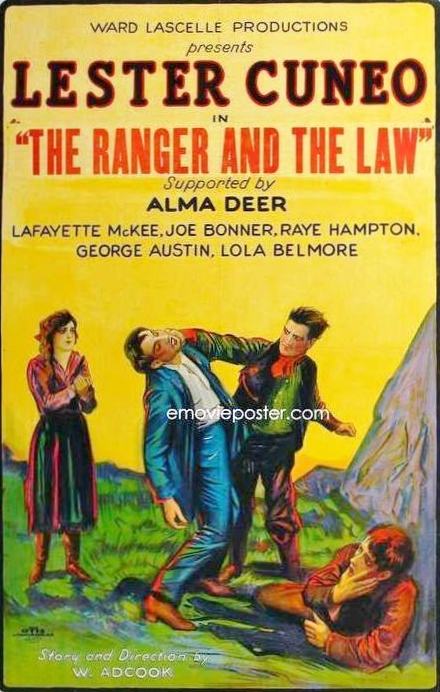
There is a moment—blink and you will miss it—when Francelia Billington’s eyes glint the exact shade of amber jacklight as she peers through pine boughs, and you realize The Ranger and the Law is slyly painting the West not in ochre cliché but in chiaroscuro psychology. Released in the exhausted summer of 1921, this six-reel programmer should have evaporated like so many bootleg negatives. Instead, it endures—slender as a birch switch—because everyone involved mistook poverty-row haste for aesthetic epiphany.
Dick Dawson’s rejection of daddy’s ledger life is less a narrative beat than a primal scream against the gilded paralysis of the era. Director James Leo Meehan shoots the departure tableau at twilight: locomotive steam kissing the lens, the protagonist’s silhouette swallowed by a vanishing point that seems to say—go west, young man, but leave your symbolism at the coat check.
Within minutes the film trades urban ennui for cathedral-quiet forests where every birdcall feels like a threat. Enter Slim Dixon—bootlegger, scenery chewer, wearer of government-issue Stetson like a wolf in Fish & Wildlife clothing. Their saloon altercation is silent cinema at its crudest and most electric: no title card, just the crack of fist on jaw, a whiskey bottle pirouetting in real time, foam spattering the lens like Pollock decades early.
Red Hobbs rules these woods the way plantocracy barons rule cotton—through debt, fear, and the occasional biblical flourish. When he shackles his own daughter inside a mine, Meehan’s camera lingers on the rope gnawing her wrists, turning domestic horror into a national indictment. The claustrophobia rivals any Gothic basement in Nordic noir of later decades.
Slim Dixon, by contrast, is pure id—greed without philosophy, knife without handle. Together they form a diptych of American malice: one the systemic face, the other the opportunistic rash. Their comeuppances—drowning in moonlit river, being hurled like feed sack from a galloping mare—feel oddly cathartic rather than cruel, because the film codes them as natural disasters rather than humans.
Ann Hobbs should be a footnote; instead she is the movie’s moral gyroscope. Watch how Billington signals Dick from the summit: lantern swinging in a slow figure-eight against cobalt sky. It is semaphore, mating dance, and prophecy—a visual sentence that argues: even when voiceless, woman will not be speechless.
Her imprisonment in the mine is shot like a descent into Hades, each timber frame a rib of some fossilized leviathan. When Dick finally pries the planks, the overexposed flare of sunlight on her face feels practically uranium-hot—a resurrection staged for an audience that still remembered wartime rationing of hope.
Lester Cuneo’s Dick is the prototype of the sensitive brute Hollywood would later Xerox for Gary Cooper. His body moves with that peculiar mix of ballet and barroom—weight on the balls of his feet even when standing still. In the climactic fistfight he eschews the wild swings common in 1920s brawls; instead he plants, pivots, and strikes with the economic savagery of a man who’s chopped cordwood and knows how gravity works.
Francelia Billington responds in micro: the flutter of an eyelid when she hears distant gunfire, the way her shoulders square as she decides, wordlessly, to betray blood for love. It is acting calibrated for the front row and the back, for the balcony grand dame with lorgnette and the gum-chewing newsboy.
As for Walter I. McCloud’s Slim, he plays the grin like a ukulele—plucking it at odd moments so you can almost hear the twang. The result is a villain both oleaginous and pathetic, the sort who’d sell his mother but apologize for the inconvenience.
Henry McCarty’s script is utilitarian, but it frees cinematographer Robert A. Golden to treat pine needles and river fog like Venetian blinds. Note the shot-reverse-shot inside the mine: Ann’s face lit by a single carbide lamp, pupils glinting predatory orange against obsidian. Cut to Dick in forest dusk, moonlight dappling his shirt like shotgun spray. The montage implies conversation—two souls whispering across strata of rock and trauma—without a single intertitle.
Outdoor sequences were filmed in the then-untamed groves of northern California. You can smell sap sweating under the 1910s orthochromatic stock, which renders sky as porcelain and skin as lunar silver. When the final scuffle spills into the river, the water’s foam registers like molten pewter, a visual alchemy that turns landscape into character.
No original score survives, but exhibitors of 1921 were cued to accompany such reels with “mountain hymns”—fiddle, pump organ, maybe a slide whistle for comic relief. Modern screenings often commission dark-folk quartets who understand that silence is itself a note. Try hearing the crunch of boots on shale, the hush of wind in manzanita, the squeak of leather as Dick tightens his glove—then realize you are supplying the mix internally. That is participatory cinema before post-modernism coined the term.
Ann isn’t merely rescued; she engineers her own salvation by signaling, by stalling Dixon with sly talk, by hoarding lantern oil for a potential blaze. In contrast to Victorian melodrama where virtue equals paralysis, here virtue strategizes. The movie flirts with suffragette energy: women’s votes had been ratified only a year prior, and the West was a canvas where new identities could be splashed fast and thick.
Yet the closing marriage proposal—delivered atop a boulder like a conqueror dividing spoils—pulls the rug toward patriarchal comfort. The film wants both: an independent heroine and a catholic ending. That tension crackles more than any gunfight, and it is why cine-clubs still argue the ending as either concession or coup.
Observe the log-chute sequence: Cuneo slides down a flume greased with river water, hat flying, sleeves slapping bark. No rear projection, no stunt double—just gravity and a prayer. Such verisimilitude contrasts sharply with studio-jungle epics of later decades. The bruises you see are 1921 vintage, the type that require iodone and a week of limping.
Editorial stitching is equally fearless: jump-cuts from wide shot to insert fist, so the impact lands on your retina, not the censor’s ledger. It prefigures Eisensteinian montage but with populist spitball energy.
For years the only known print languished in a Montana barn, nibbled by goats who found the silver halides oddly tasty. Rediscovered in 1978, it toured arthouses smelling of mold and triumph. Today a 4K scan hovers on boutique labels, but streaming giants ignore it—too short, too public-domain, too orphan. Their algorithmic cowardice is your gain: YouTube hosts a decent 1080p rip, and noir festivals occasionally project it with live score.
Scholars cite it as a bridge between slapstick chaos and the psychological western birthed by The Iron Horse. It also prefigures eco-cinema: ranger ethics, forest stewardship, villainy as environmental desecration. When Dick hangs his badge on a pine knot at the end, the gesture feels less like narrative closure than covenant—an oath to protect both woman and woodland from the next cyclone of greed.
Seek it out on the Internet Archive or snag the Blu from Reel Classics Ltd.—the grain structure there resembles brushed aluminum. Pair with a Washington State syrah, something that tastes of cedar and thunderstorm. Invite friends who argue that silent film is “too slow”; watch them fall silent when Billington’s lantern swings across the screen like a question neither past nor present can answer.
The Ranger and the Law is not a masterpiece; it is something rarer—an unvarnished plank of cultural driftwood, salt-stung and sun-bleached, carrying the DNA of everything western cinema would become. Its punches land low, its romance glows phosphorescent, and its forests murmur secrets that talkies forgot how to hear. Grade it 8.5/10 for audacity, 7/10 for technique, 10/10 for surviving at all. Approach with open pupils and a hunger for rough-cut poetry; leave with pine sap in your veins and the nagging suspicion that heroes, like sequoias, grow only where fire once feasted.
IMDb —
1923
Community
Log in to comment.