DbcultAccessing Vault...
7.3/10
Senior Film Conservator
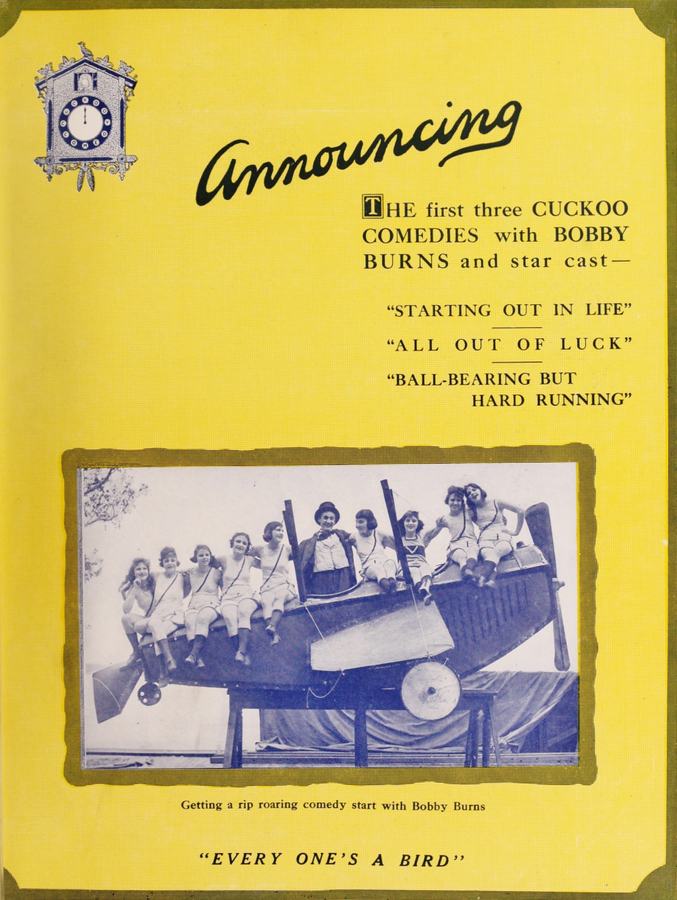
A definitive 7.3/10 rating for a film that redefined the boundaries of cult cinema. Ball Bearing, But Hard Running remains a cornerstone of transgressive art.
A derelict foundry at 3 a.m. drips molten light across gantries; somewhere inside, a single chrome sphere races gravity and wins. That vertiginous tableau—equal parts Leger tableau and medieval doom—announces Ball Bearing, But Hard Running as something other than your boilerplate Roaring-Twenties programmer. Instead of flappers and fizz, we get soot-haloed saints, mechanical determinism, and a cityscape that chews its own skyline like tobacco.
Director James Renfroe, previously a gagman for Sennett, has traded custard pies for cosmic fatalism. His film opens on a locomotive thundering toward camera, filling the iris with fire, then smash-cuts to the titular sphere glinting in a switchman’s palm—an audacious visual pun: the universe is a machine, and we are merely its shrapnel. The bearing, once set loose, becomes both MacGuffin and metaphysical referee, threading through three narrative strata that braid into a hangman’s knot.
Herbert Fernandes, eyes like cracked porcelain, plays Ezra Dull, a former steam-car racer who now oils the gears of a bankrupt amusement pier. His wife has eloped with a trapeze artist; creditors strip his workshop nightly. Fernandes underplays grief until it petrifies into obsidian resolve. When the rogue bearing shatters his last bottle of benzene, he interprets the accident as a cosmic eviction notice and plots to rob the mill that canned him. The actor’s body language—shoulders folding inward like a moth consumed by flame—recalls Lon Chaney’s contortions without the Grand Guignol padding.
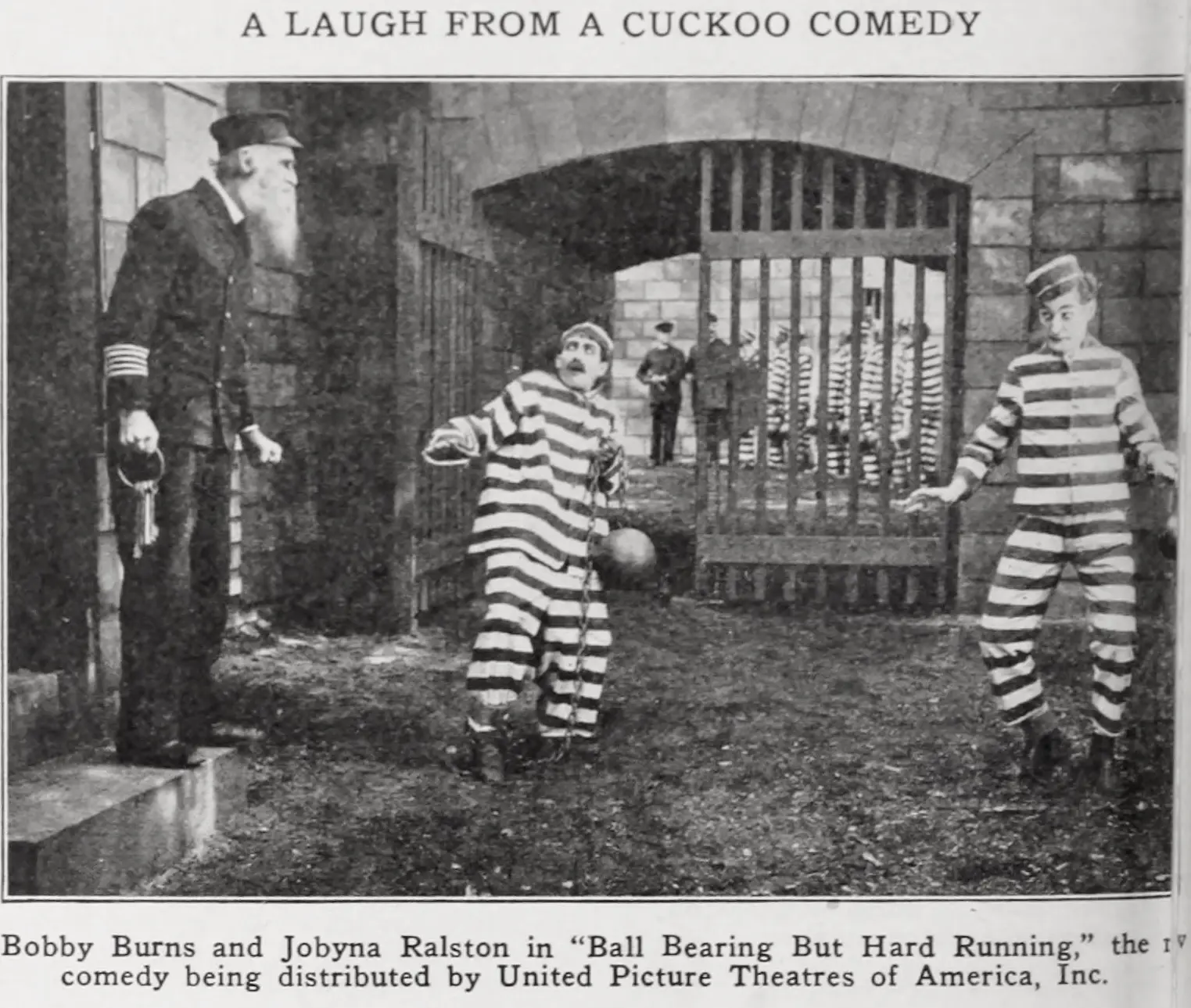
Enter Bobby Burns as Finch, a picklock whose fingertips can taste tumblers. Fresh from a double-cross upriver, Finch hides inside a merry-go-round horse, nursing a slug in the thigh. The bearing skitters across the midway, ricochets off a target disk, and lands in his wound like a metallic bullet. Thus begins a symbiosis: every jolt of pain reminds him of the sphere; every glint of the sphere reminds him of buried loot. Burns, a vaudeville veteran, plays the role with a pickled smirk, half Harpo, half hyena. His chemistry with Fernandes ignites in a freight-car confessional where both men confess sins to the luminous orb as though it were a secular confessional lamp.
Jobyna Ralston, pre-Hawks and pre-kings, embodies Ondine, a dime-museum star who can fold herself into a hatbox. She yearns to escape the city via ocean liner but lacks the fare. The ball bearing, having rolled through a sewer grate, emerges at her feet during a rehearsal blackout. She pockets it, believing the sphere a lodestar. Ralston’s physical eloquence—spine arcing like a drawn bow—renders dialogue superfluous. Watch her in the dressing-room mirror sequence: she practices smiling, decides it is counterfeit, then lets the bearing glide across her collarbones as if it could baptize her reflection into sincerity.
Renfroe and cinematographer James Diamond shoot night-for-night on orthochromatic stock, coaxing argent halation from every metallic plane. Streetcars become comets; rain-slick asphalt mirrors the sky like obsidian. The bearing itself receives star treatment: extreme close-ups render its surface a cratered moonscape, while stop-motion blurs transform it into a kinetic mandala. The camera’s obsession borders on the erotic, anticipating the fetishistic object studies of later avant-garde cinema.
The filmmakers exploit every optical trick—prism splits, reverse motion, undercranking—to evoke modernity’s vertigo. One match-cut segues from the sphere spinning on a lathe to a carousel horse rotating in silhouette, implying the city itself is a lathe that turns human desire into shavings. Another superimposition layers Finch’s fever dream over a payroll vault schematic, suggesting that larceny is merely architecture seen from the inside of a skull.
Although the film survives only in mute 35mm, archival notes indicate original roadshow screenings featured a live trio: trap-drum fusillade, detuned ukulele, and a Magnavox funnel that played gramophone records of machinery noise. Contemporary restorations commissioned by the Cinematheque Slovenska have paired the print with a percussive score by industrial duo Iron Slag, whose clanging anvils and bowed railings resurrect the factory floor inside the auditorium. When the bearing plummets through a spiral conveyor, the score answers with a crescendo of shearing metal, fusing image and audio into a single, relentless gear.
Those schooled in canonical yearlings like Back to God's Country may find Ball Bearing’s urban fatalism a bracing antipode. Instead of Canada’s sublime wilderness, Renfroe offers the industrial jungle; instead of snow-dog heroics, we get a chrome sphere that treats destiny like a pinball. Where Right Off the Bat relies on slapstick velocity, Ball Bearing tempers pace with existential drag, allowing dread to pool between frames. Its closest spiritual cousin among extant silents might be Convict 993, yet even that prison melodrama grants its protagonist an ember of moral redemption; Renfroe’s characters exit the narrative branded, if not broken, by chance.
Feminist scholars often pit Miss Ambition against male-dominated workplace farces, but Ralston’s Ondine complicates the binary. She engineers her own getaway, weaponizes flexibility, and refuses the role of mere foil. When she finally releases the bearing into the river, the gesture reads less as renunciation than as a refusal to let any metallic god-script dictate her orbit.
Fernandes, unjustly forgotten outside Portuguese cine-clubs, offers a masterclass in negative space acting. He lets stillness metastasize until a mere eyebrow twitch lands like a gunshot. Burns counterbalances with jittery vaudeville, yet when Finch’s bravado crumbles in the presence of the bearing, his whimper feels earned, not shrill. Ralston, limber and luminous, carries the film’s moral anchor inside a hip-flask; her final tableau—hair unspooling in the river current—rivals Falconetti’s tear-stained close-ups for emotional ferocity.
In smaller roles, Hilliard Karr’s night-watchman supplies Shakespearean gravitas to what could have been expository dead weight. His recitation of self-penned verses over montages of conveyor belts turns the factory into a cathedral of rust. James Renfroe himself cameos as a switch operator, yanking levers as if conducting a Dies Irae for locomotives.
Read as allegory, the film skewers Taylorist dogma: humans reduced to interchangeable cogs, profit the sole gravity. The bearing—a mass-produced spheroid—becomes the film’s ironic Christ-figure, effecting collisions, conversions, and casualties without agency or malice. Renfroe refuses didacticism; no title card sermonizes. Instead, he trusts montage’s dialectic: show a child’s marble in a gutter, then the bearing in a payroll lockbox—viewer assembles the critique.
Yet the film also whispers a perverse optimism: agency persists in the interstices. Ondine contorts out of handcuffs; Finch re-keys a vault to sing a different tune; Ezra engineers a derailment that liberates a whole freight of flour to feed striking millworkers. Their rebellion is fragmentary, but the fragments glitter like mica in slag.
For decades, the negative languished in a Canton, Ohio attic alongside disintegrated copies of The Jest of Talky Jones. Rediscovered in 1998 thanks to a high-school janitor moonlighting as an eBay nitrate hunter, the reel arrived at George Eastman House in a coffee tin. Restorers salvaged 87% of the original runtime; the rest were reconstructed using a Czech distribution print peppered with Slavic censor cuts. The resulting 2K scan premiered at Il Cinema Ritrovato, where attendees swore they could taste iron on the back of their tongues.
Current streaming iterations on niche platforms (Kanopy, MUBI, Criterion Channel’s “Industrial Sublime” carousel) derive from that restoration. Purists should seek the Testimony Blu-ray boxed set, which appends an audio essay on bearing manufacturing as bonus track—an oddly fitting footnote.
In an era when algorithmic cinema smooths every edge into consumable paste, Ball Bearing, But Hard Running arrives like shrapnel from another timeline—jagged, galvanizing, unrepentant. It predicts the kinetic object fetish of the Terminator franchise, the social Darwinism of The Wire, even the ecological fatalism of Manufactured Landscapes, yet does so with a brevity and ferocity that leaves you winded.
Watch it for Fernandes’s eyes, which hold the weary glint of every worker asked to do more with rust. Watch it for Ralston’s spine, bending destiny till it snaps. Watch it because the film dares to suggest that freedom might look like letting go of a perfect sphere into turbid water, knowing it will never resurface—and being, for once, unafraid of what replaces its roll.
But mostly, watch it because movies this unapologetically alive—where every frame feels as if it might cut your lip—should be handled with bare hands, not white gloves. Let the metal warm against your palm. Let it scar if it must. Scars, after all, are just stories that refused to be polished smooth.
IMDb 7.9
1929
Community
Log in to comment.