DbcultAccessing Vault...
Cult Review
Senior Film Conservator

The silent era was frequently defined by its fascination with the 'waif'—that ethereal, often impoverished figure of resilience who navigated a world of grotesque cruelty with wide-eyed wonder. In the 1920 production of Pegeen, Bessie Love elevates this archetype into something far more visceral and haunting. While many films of the period leaned into the saccharine, Pegeen ventures into a darker, more psychological territory, exploring the devastating ripple effects of pathological grief and the terrifying volatility of a community pushed to its breaking point.
At the center of this narrative tapestry is the tragic figure of Dan O’Neill, played with a jarring intensity by Juan de la Cruz. His performance avoids the typical pantomime of 'madness' often seen in early cinema, opting instead for a hollowed-out desperation. The script, penned by Eleanor Hoyt Brainerd and William B. Laub, treats his pyromania not as a villainous trait, but as a misguided theological quest. Dan isn't merely burning buildings; he is lighting candles in a dark universe, hoping to catch a glimpse of his departed Mary. This obsession mirrors the tragic persistence seen in Locura de amor, where the boundary between love and insanity becomes entirely porous.
The visual language of the film relies heavily on the interplay between deep shadows and the flickering, unstable light of the fires Dan sets. In an era where lighting was often flat and functional, the cinematography here manages to evoke a sense of impending doom. The flames are not just a plot device; they are a character in their own right, representing the consuming nature of Dan’s sorrow. One cannot help but compare this psychological weight to the atmospheric tension found in Trilby (1915), where a single character's internal state dictates the reality of everyone around them.
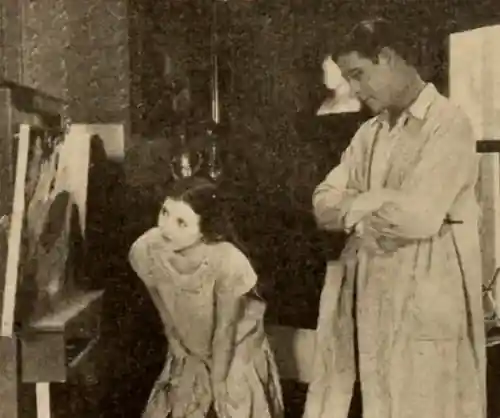
Bessie Love’s portrayal of the titular character is a masterclass in silent-screen acting. While the role requires her to be the 'damsel,' Love injects Pegeen with a weary maturity. She is the adult in the room, the primary caregiver to a father who has regressed into a dangerous childhood of the mind. Her performance resonates with the same gritty determination seen in rural dramas like The Squatter's Daughter, yet it carries a more intimate, domestic burden. Love’s ability to convey complex emotions—fear for her father, shame for his actions, and the desperate hope for her own future—without a single spoken word is nothing short of miraculous.
The supporting cast, including Anne Schaefer and Charles Spere, provides a necessary backdrop of social pressure. The village is not a faceless entity but a collection of grieving and angry individuals who have lost property and peace of mind. This creates a fascinating moral friction. Are the townspeople villains for wanting to stop an arsonist? Or is their lack of empathy for Dan’s mental state the true crime? This exploration of social dynamics feels remarkably modern, reminiscent of the tensions explored in The Blacklist, where individual morality clashes with collective security.
The final act of Pegeen is a harrowing sequence that remains etched in the viewer's memory long after the credits roll. The burning cabin is more than a set piece; it is the physical manifestation of the O’Neill family’s collapse. As the mob traps Dan, the film shifts from a character study into a high-stakes thriller. The pacing accelerates, mirroring the spread of the fire. When Pegeen rushes into the inferno, she isn't just trying to save her father's life; she is trying to salvage his soul.
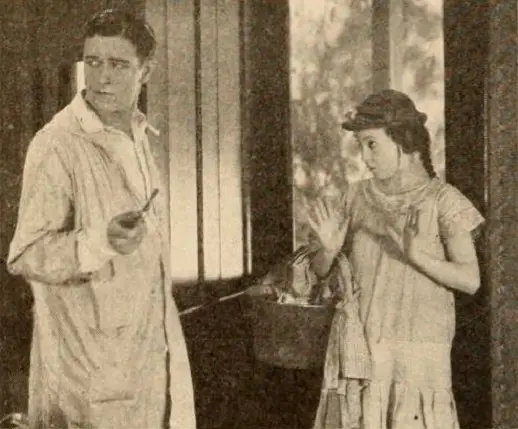
The deathbed scene is particularly poignant. Dan’s hallucination—mistaking his daughter for his dead wife—is a trope that could easily have felt manipulative. However, in the context of the film's established logic, it feels like a necessary mercy. It allows Dan a moment of peace before the end, and it allows Pegeen a final, albeit distorted, connection with her father. This bittersweet resolution is far more complex than the typical happy endings of the period, such as those found in Nearly Married.
Technically, the film is a fascinating artifact of 1920 production values. The use of fire as a primary light source in the night scenes creates a high-contrast look that prefigures the noir aesthetics of later decades. The set design of the burning cabin shows a commitment to realism that was often sacrificed for safety in earlier years. One might compare the production scale to Australia Calls, though Pegeen feels much more focused and claustrophobic.
The costumes, too, tell a story. Pegeen’s wardrobe transitions from simple, functional rural attire to the charred, tattered remains of the finale, physically charting her descent through the levels of her father’s personal hell. This visual storytelling is essential in a medium without dialogue, and here it is handled with deceptive simplicity. The film's pacing, while slow by modern standards, allows for a slow-burn (pun intended) build-up of dread that makes the eventual explosion of violence feel earned rather than forced.
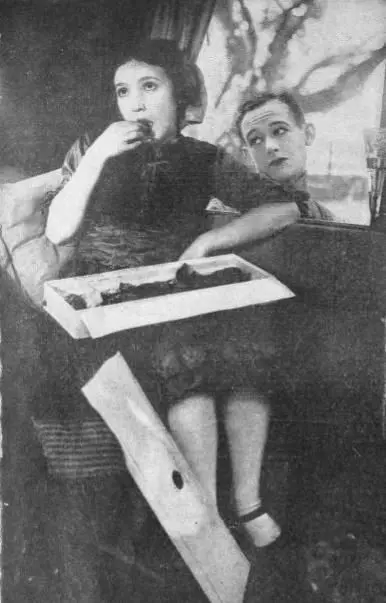
When placing Pegeen alongside its contemporaries, its unique flavor becomes even more apparent. While 39 East offers a more conventional look at a young woman navigating the world, Pegeen feels more tethered to the earth, or perhaps to the soot. It lacks the whimsical charm of Betty Be Good, choosing instead to dwell in the uncomfortable reality of mental decay. Even when compared to the high-stakes drama of A Wall Street Tragedy, Pegeen feels more visceral because its stakes are not financial, but existential.
The introduction of Jimmie as the savior at the end is perhaps the film's only concession to the standard commercial demands of the time. His rescue of Pegeen provides the audience with the 'out' they need to leave the theater without feeling completely devastated. However, the true climax isn't the rescue; it's the moment of recognition in the flames. Jimmie is merely the mechanism by which Pegeen is returned to the world of the living, a world that has been irrevocably changed by her father's madness.
Ultimately, Pegeen is a film about the limits of love. It asks how much one person can be expected to sacrifice for a parent who is no longer 'there.' It looks at the destructive power of grief and the way it can consume not just the individual, but an entire community. The performances are robust, the direction is focused, and the visual execution is surprisingly sophisticated for its time.
For fans of silent cinema, this is a must-watch, not just for Bessie Love’s luminous presence, but for the way it handles its dark subject matter with a blend of empathy and unflinching honesty. It stands as a testament to the power of early film to tackle complex psychological themes without the benefit of sound. Like the flames that Dan O'Neill so loved, the film burns with a strange, haunting beauty that continues to illuminate the shadows of the past.
If you find yourself drawn to stories of resilience in the face of overwhelming tragedy, Pegeen offers a cinematic experience that is both historically significant and emotionally resonant. It is a flickering light in the vast archive of silent film, reminding us that even in the darkest inferno, there is a glimmer of humanity to be found.
IMDb 7.7
1923
Community
Log in to comment.