DbcultAccessing Vault...
Cult Review
Senior Film Conservator
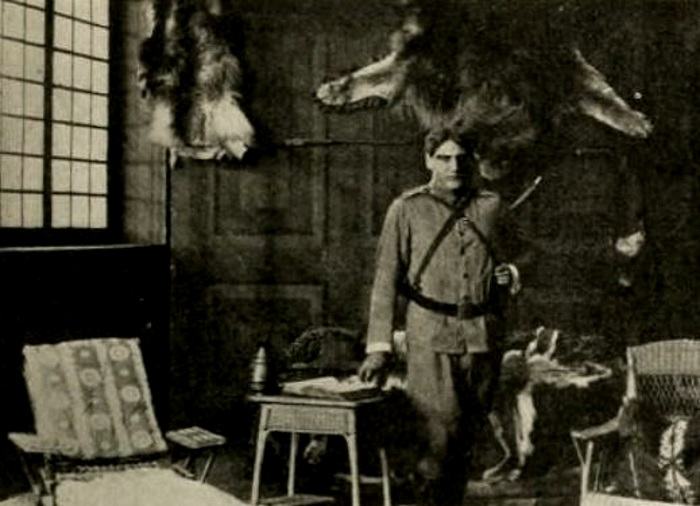
Stepping into the spectral embrace of Silence of the Dead is akin to unearthing a forgotten relic, a cinematic artifact that speaks volumes about the human condition, even across the chasm of time. This isn't merely a film; it's a grand, sweeping fresco of moral quandaries, an intricate tapestry woven with threads of injustice, desperate acts, and the long, unforgiving arm of fate. Its narrative ambition, particularly for its era, is nothing short of breathtaking, painting a picture of a world where one man's momentary lapse of reason can cascade into a multi-generational tragedy, forever altering the destinies of interconnected families.
The story commences with an immediate plunge into dire straits, introducing us to the Marquis Trevor, a man teetering on the precipice of financial ruination. His predicament, a common enough motif in dramatic literature, is rendered here with a palpable sense of urgency. The kindness extended by his loyal servant, Ponting, and the generous loan from Count Montmoran, initially appear as a beacon of hope. Yet, in a cruel twist of dramatic irony, it is this very act of benevolence that sets the stage for calamity. Trevor’s heartfelt gesture of giving Montmoran a small, jeweled revolver—a family heirloom etched with his crest—becomes the linchpin of his undoing. It's a poignant detail, this exchange of a treasured possession for a chance at a new beginning, tragically morphing into the instrument of his downfall.
No sooner has Trevor departed than the true villain of this saga, Kernizan, makes his fateful entrance. His desperation, fueled by his wife's crippling debts, is a raw, visceral force. Witnessing Montmoran's considerable wealth, Kernizan succumbs to a sudden, horrifying fit of madness. The revolver, still lying innocently on the table, becomes the focal point of his deranged impulse. The ensuing murder of Montmoran, swift and brutal, is a shocking pivot, transforming a tale of financial woe into one of profound crime and injustice. Kernizan's hurried escape, pockets bulging with stolen securities, leaves behind a scene pregnant with misdirection, a meticulously arranged trap for the unwary.
The subsequent investigation, as meticulously detailed in the plot, is a masterclass in the devastating power of circumstantial evidence. Trevor's revolver, the money Montmoran had just given him, and even a casual conversation between Montmoran’s wife and Trevor, coalesce into an irrefutable, albeit false, indictment. It’s a chilling portrayal of how easily an innocent man can be ensnared by the cruel logic of appearances. Trevor’s subsequent sentencing to penal servitude for life, a fate he deems worse than death, culminates in his tragic suicide. This early act of despair sets a somber tone, imbuing the narrative with a profound sense of loss and the irreversible consequences of a single, impulsive act of violence. It resonates with the bitter injustice found in tales like Les Misérables, where Jean Valjean's life is forever marred by a trivial theft, and the legal system's blind spots lead to profound suffering.
Yet, the story does not end with Trevor’s demise; it merely shifts focus, broadening its scope to encompass the generational ripple effects of this foundational crime. Ponting, Trevor’s devoted servant, emerges as a quiet hero, burdened with the secret of his master’s son, Gilbert. His ingenious, albeit morally ambiguous, act of registering Gilbert as the child of unknown parents, ensures the boy’s survival and a chance at a life free from the taint of his father's false accusation. The old Marchioness of Trevor, Gilbert’s grandmother, remains a distant, almost spectral figure, providing financial support for his education but refusing any personal contact. This emotional void underscores the deep-seated societal shame and the lingering shadow of the family's perceived disgrace. It’s a poignant illustration of how societal judgment can extend its icy grip even to the innocent.
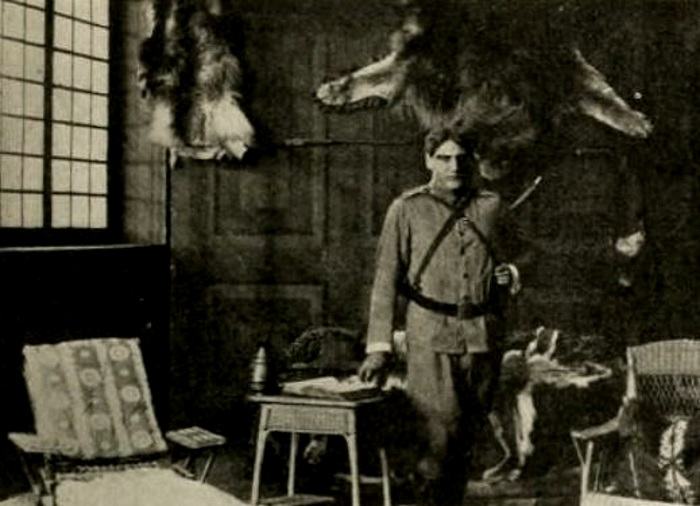
Fifteen years later, the narrative gracefully pivots to a new generation, bringing the audience into a world subtly shaped by the past. Philip Montmoran, the son of the murdered Count, now a distinguished naval lieutenant, represents the enduring legacy of loss and the passage of time. His mother and sister, Lilian, host a garden party, a scene of upper-crust gaiety that stands in stark contrast to the hidden currents of tragedy flowing beneath. It is here that fate, with its characteristic cruelty, begins to weave its intricate design. Ensign Gilbert, entirely unaware of his true lineage as the Marquis Trevor, is introduced into this very household, destined to serve alongside Philip on the same battleship. The blossoming romance between Gilbert and Lilian is particularly heartbreaking, a tender connection forged in ignorance, unknowingly treading upon the very ground stained by their fathers' intertwined fates.
The film then transports us to a distant, exotic locale, with the sailors deployed to quell an insurrectionary uprising. This shift in setting not only injects an element of adventure but also serves as a catalyst for the next crucial development. Philip, in a moment of youthful indiscretion, is lured into a Moorish house and captured, prompting Gilbert to undertake a daring, single-handed rescue. Both are subsequently captured, facing imminent assassination. The timely arrival of European hunters, drawn by the sound of pistol shots, is a dramatic deus ex machina, saving the young officers. And who is their rescuer? None other than Baron Kernizan, living in self-imposed exile, haunted by his past crime. This chance encounter, where Kernizan unknowingly saves the son of his victim and the son of the man he falsely implicated, is a stroke of narrative genius, intensifying the thematic weight of interconnected destinies and the inescapable nature of guilt.
Kernizan's refusal to identify himself, coupled with his recognition of Philip Montmoran from the young men's cards, underscores his profound internal torment. The weight of his unconfessed sin has clearly festered over the years, transforming him into a recluse. Upon their triumphant return home, Lieutenant Montmoran and Ensign Gilbert are lauded for their distinguished service, paving the way for Gilbert and Lilian’s engagement. This moment, brimming with the promise of future happiness, is destined to be brutally shattered. The audience, privy to the hidden truths, anticipates the inevitable unraveling with a sense of dread.
The revelation, when it comes, is delivered with agonizing precision by Ponting. Overwhelmed by Gilbert's joyous announcement of his betrothal to Lilian, the loyal servant can no longer bear the burden of silence. The truth—that Gilbert is the Marquis of Trevor, and his father was falsely accused of murdering Lilian’s father—is a devastating blow. This shocking disclosure renders the marriage impossible, tearing apart the fabric of blossoming love with the raw force of inherited tragedy. The old Marchioness of Trevor, finally learning Gilbert's identity, attempts to reclaim her grandson, urging him to assume his rightful place. However, the bitterness and profound disillusionment in Gilbert's heart prove insurmountable. He is a man caught between an unjust past and an impossible future, his personal happiness sacrificed on the altar of a forgotten crime.
The narrative then draws to its powerful, albeit melancholic, conclusion. Baron Kernizan, deeply affected by his encounter with Philip Montmoran, finally returns to Marseilles, compelled by an overwhelming need for atonement. His public avowal, delivered before the assembled families of Kernizan, Trevor, and Montmoran, as well as the public prosecutor, is the film's climactic moment. It is a moment of profound truth, a confession that, while belated, finally brings light to the darkness that has overshadowed so many lives. Kernizan’s weakened condition, both physical and emotional, cannot withstand the strain of his confession; he dies of heart failure, his final act a desperate bid for peace. His death, while tragic, offers a form of closure, a final sacrifice that untangles the Gordian knot of injustice. It's a powerful statement on the corrosive nature of guilt and the ultimate, albeit costly, necessity of truth, reminiscent of the dramatic confessions that punctuate narrative epics like The Count of Monte Cristo, where justice is painstakingly sought and delivered, often at great personal cost.
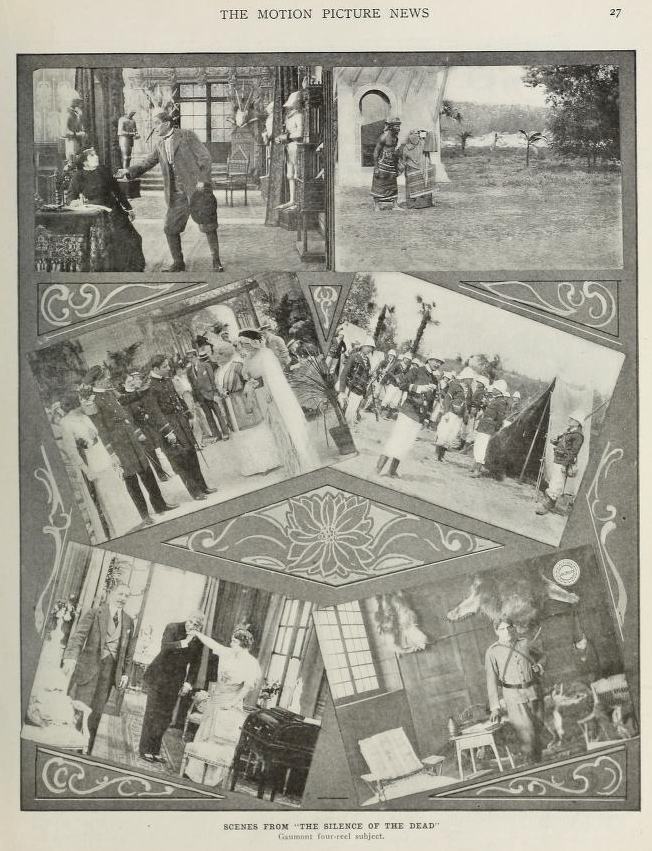
Silence of the Dead, as a cinematic experience, transcends its simple plot points to become a profound exploration of identity, justice, and the unrelenting grip of the past. The intricate plotting, with its numerous coincidences and dramatic revelations, speaks to a narrative ambition that pushed the boundaries of early filmmaking. The film's strength lies not just in its dramatic twists, but in its unwavering commitment to depicting the profound human cost of a single, unpunished crime. It posits that truth, however buried, will eventually surface, often with devastating consequences for those caught in its wake. The emotional resonance of Gilbert's plight, Lilian's heartbreak, and Kernizan's tortured conscience would have been powerfully conveyed through the expressive acting styles and intertitles characteristic of the era.
The visual storytelling, even without the benefit of sound, must have been compelling. Imagine the dramatic tension conveyed through stark contrasts: the opulence of Montmoran's study juxtaposed with Kernizan's desperate act, the sun-drenched garden party giving way to the harsh realities of colonial conflict, and the final, somber courtroom confession. The film's reliance on rich symbolism, such as the jeweled revolver, elevates it beyond mere melodrama. It becomes a potent symbol of betrayal, fate, and the instrument of a man's undoing, only to later become the key to his posthumous vindication. This kind of symbolic weight is a hallmark of enduring cinema, allowing the narrative to resonate on multiple levels.
One might draw parallels to other films of its time that grappled with the long shadow of crime and societal judgment. While films like The Life and Death of King Richard III focused on historical villainy, Silence of the Dead delves into the more insidious nature of accidental villainy and the systemic failures that can condemn the innocent. The film's intricate web of relationships and secrets also brings to mind the dramatic complexities of Oliver Twist, where characters are unknowingly connected by hidden pasts and shocking revelations. The sheer scope of the narrative, spanning years and continents, suggests a grand ambition, perhaps even a pioneering spirit in crafting complex, multi-arc stories in the nascent days of cinema.
The character of Ponting, the devoted servant, is particularly noteworthy. He embodies loyalty and self-sacrifice, dedicating his life to rectifying an injustice that was not his own. His struggle to protect Gilbert's true identity, while simultaneously bearing the weight of the past, is a powerful emotional anchor. His ultimate decision to reveal the truth, despite the pain it causes, highlights a profound moral courage. It’s a testament to the enduring power of human connection and the lengths to which one will go for those they love, even when that love is born of tragedy and duty.
The film's title, Silence of the Dead, is itself profoundly evocative. It refers not only to Montmoran's silenced voice but also to the silent suffering of Trevor, the hidden truth that festered for fifteen years, and the unspoken guilt that tormented Kernizan. The dead, in a metaphorical sense, speak through the living, their unresolved fates dictating the paths of those who remain. This thematic depth is what elevates the film from a mere crime drama to a timeless meditation on morality, destiny, and the quest for redemption. It forces us to confront uncomfortable questions about justice, fate, and the burdens we inherit.
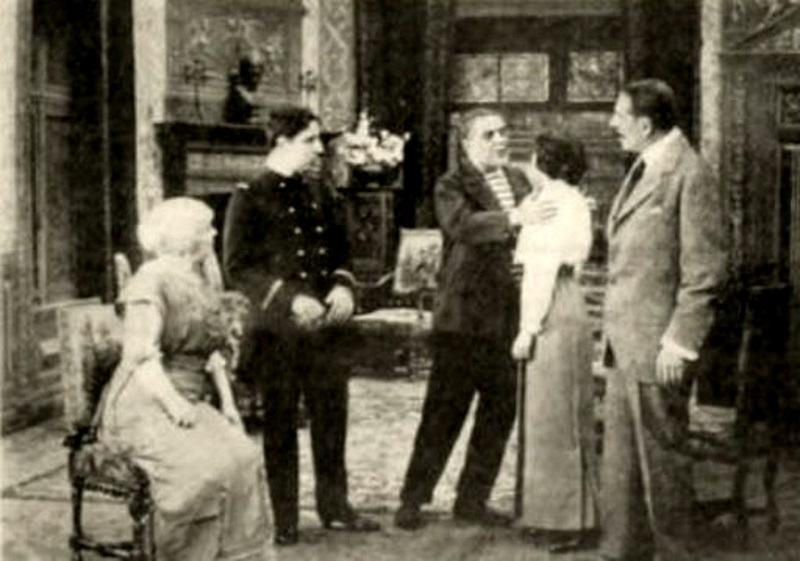
In an era of cinematic experimentation, Silence of the Dead stands as a testament to the power of narrative. It demonstrates an early understanding of how to build suspense, develop character arcs, and deliver emotionally resonant conclusions, all without the aid of spoken dialogue. The film's ability to maintain its intricate plot over such a long span, with characters whose lives are so profoundly intertwined, speaks to a sophisticated screenwriting sensibility. One can imagine the impact of its climactic confession, delivered with a mix of visual drama and poignant intertitles, leaving audiences spellbound and deeply moved.
Ultimately, Silence of the Dead is more than just a historical curiosity; it is a compelling piece of cinematic artistry that speaks to universal themes. It is a stark reminder of the fragility of justice, the corrosive nature of unconfessed guilt, and the enduring human capacity for both immense cruelty and profound devotion. Its narrative intricacies, emotional depth, and moral complexities ensure its place as a significant, albeit perhaps underappreciated, work in the annals of early cinema. It’s a film that lingers in the mind, prompting reflection on the unseen forces that shape our lives and the enduring quest for truth in a world often clouded by deception and circumstance.
The dramatic tension sustained throughout, from the initial murder to the final confession, is a remarkable feat of storytelling. The sequence where Philip and Gilbert are rescued by Kernizan is particularly rich in dramatic irony, a moment where the savior is also the original sin-bearer. This kind of nuanced layering of character and plot is what gives the film its enduring power. It avoids simplistic good-versus-evil dichotomies, instead presenting a world where desperation, madness, and circumstance converge to create a tragic, yet ultimately redemptive, narrative. The film's exploration of inherited guilt, particularly through Gilbert's suffering, is a powerful thematic thread that elevates it beyond mere melodrama into a profound commentary on the human condition.
Consider the parallels to other early films grappling with social issues or grand narratives. While The Life of Moses and Life and Passion of Christ focused on religious epics, Silence of the Dead grounds its epic scope in human fallibility and the intricate dance of justice. The deliberate pacing, the expressive gestures of the actors, and the carefully crafted intertitles would have guided the audience through this labyrinthine plot, ensuring clarity and emotional impact. The film's ability to maintain a consistent tone of somber reflection, even amidst moments of action and romance, is a testament to its artistic integrity.
The denouement, with Kernizan's confession and subsequent death, provides a cathartic release, but not without lingering sorrow. It's a bittersweet victory for truth, purchased at the cost of multiple lives and countless years of suffering. The young lovers, Gilbert and Lilian, are left to pick up the pieces of their shattered romance, their future irrevocably altered by the past. This refusal to offer a wholly saccharine ending reinforces the film's commitment to realism, or at least a heightened sense of dramatic verisimilitude. It acknowledges that some wounds, once inflicted, can never fully heal, even when truth prevails. This nuanced resolution sets it apart from more simplistic morality plays, providing a more mature and resonant conclusion.
The enduring appeal of Silence of the Dead lies in its universal themes: the quest for justice, the burden of secrets, and the intricate web of human relationships. It's a narrative that, despite its period setting and silent film conventions, continues to speak to contemporary audiences about the timeless struggles of morality and fate. Its intricate plotting and profound emotional depth solidify its place as an exemplary work of early cinematic storytelling, a testament to the power of film to captivate and provoke thought, even in its nascent stages. The film challenges us to consider the ripple effects of our actions and the arduous, often painful, journey towards truth and reconciliation.
In a landscape of early cinema often characterized by simpler narratives, Silence of the Dead stands out for its audacious complexity. It’s a compelling argument for the sophisticated storytelling capabilities present even in the medium’s infancy. The film’s ability to weave together so many disparate elements—financial ruin, murder, false imprisonment, adopted identity, romance, colonial adventure, and a final, redemptive confession—into a coherent and emotionally impactful whole is genuinely remarkable. It invites us to appreciate the foundational artistry that paved the way for the cinematic epics we cherish today, reminding us that the core elements of powerful storytelling are indeed timeless. Its narrative echoes the grand, tragic sweep of novels, demonstrating film's early potential to translate such literary ambition to the screen.
IMDb —
1920
Community
Log in to comment.