DbcultAccessing Vault...
5.3/10
Senior Film Conservator
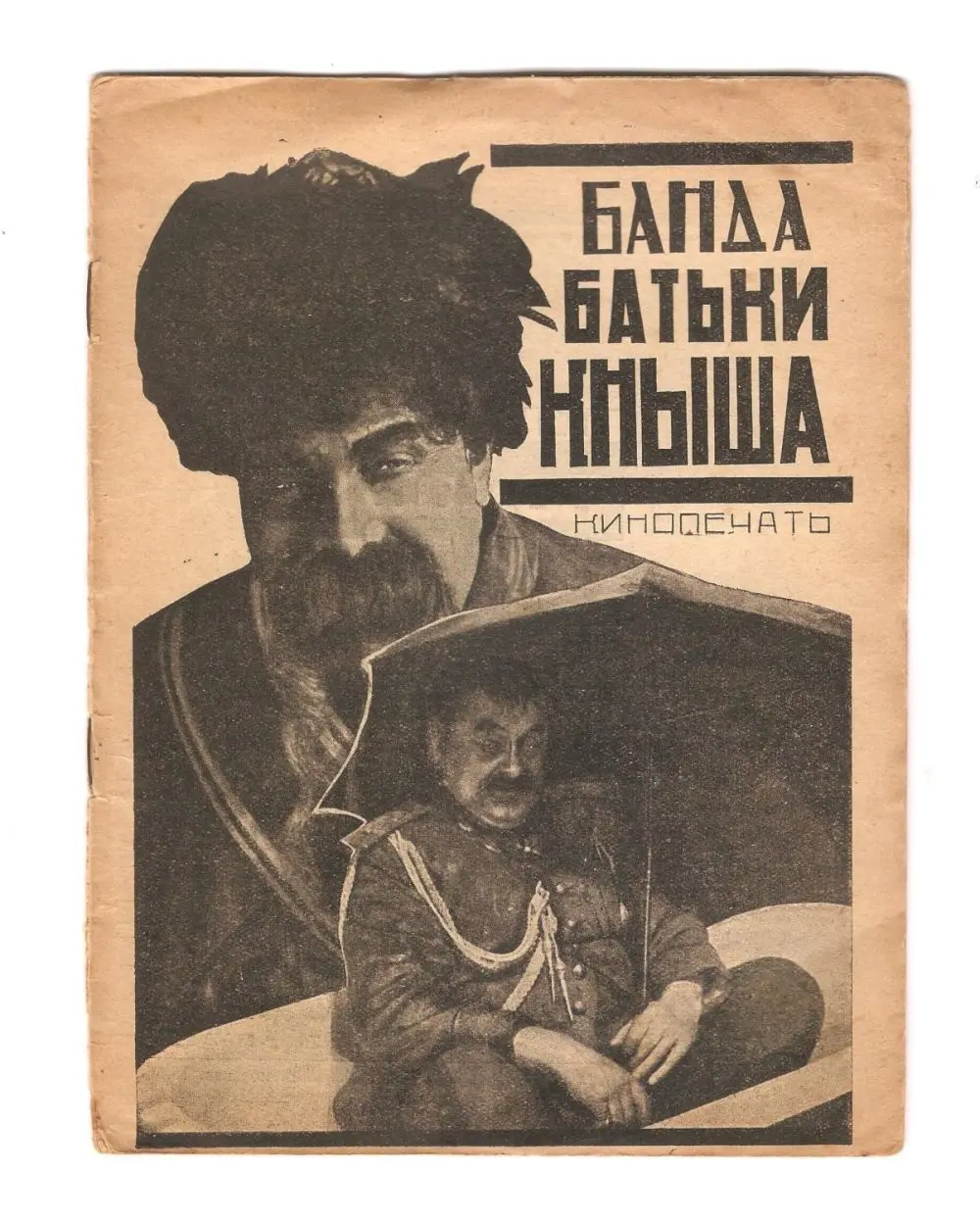
A definitive 5.3/10 rating for a film that redefined the boundaries of cult cinema. Banda batki Knysha remains a cornerstone of transgressive art.
Few artifacts from the early Soviet cinematographic vanguard capture the sheer, unadulterated tension of the Civil War with the same raw efficiency as Banda batki Knysha. Released in 1924, a pivotal year for the burgeoning industry, Yuri Tarich’s work stands as a testament to the power of narrative economy and the visceral impact of silent-era visual storytelling. While many Western contemporaries were exploring the lighthearted whimsy of The Star Boarder, the Soviet masters were forging a language of steel and shadow, one that reflected the harrowing realities of a nation in the throes of total transformation.
The film immediately plunges the viewer into the year 1919—a period of internecine strife where borders were fluid and loyalties were often written in sand. The liberation of the town by the Red Army is presented not as a triumphant conclusion, but as a fragile prologue to a more insidious conflict. Tarich utilizes the suburban periphery as a character in itself; the outskirts are a no-man's-land where the White Guards linger like ghosts in the machinery of the new world. This isn't the clear-cut heroism found in The Hoosier Schoolmaster; this is a gritty, mud-caked exploration of survival and tactical genius.
The central conceit—Red Army officers posing as a rogue bandit gang—introduces a fascinating layer of performative identity. Vladimir Kriger and Nikolai Okhlopkov deliver performances that require a double-layered nuance: they are soldiers playing bandits, and the audience must feel both the discipline of the former and the recklessness of the latter. This duality creates a pervasive sense of unease. We are constantly reminded that a single slip in character could result in a summary execution. The tension is far more psychological than the physical bravado seen in The Daredevil, focusing instead on the suffocating weight of the mask.
Visually, Banda batki Knysha is a triumph of chiaroscuro. The lighting design emphasizes the starkness of the revolutionary struggle, with deep blacks and blinding whites reflecting the ideological polarization of the era. Tarich’s direction avoids the theatrical static of earlier silent films, opting instead for a dynamic camera that feels remarkably modern. The editing, handled with a rhythmic precision that predates the more famous experiments of Eisenstein, keeps the viewer in a state of perpetual alertness. There is a sequence involving a clandestine meeting in a dimly lit cellar that rivals the atmospheric dread of The City of Silent Men, yet it is grounded in a historical urgency that makes the stakes feel immensely personal.
The supporting cast, including Olga Narbekova and Andrey Fayt, populate this world with a weary authenticity. These are not polished actors from a studio lot; they possess the weathered faces of people who have lived through the very events they are depicting. Fayt, in particular, brings a sinister intelligence to his role that elevates the film beyond mere propaganda. The antagonist isn't a caricature but a formidable obstacle, making the eventual resolution feel earned rather than inevitable. This level of character depth is often missing in films of the same period, such as Pretty Smooth, which relies more on trope than truth.
At its core, the film grapples with the ethics of deception in the service of a higher cause. By 'becoming' the gang of Batka Knysh, the Red officers must engage in behaviors that are ostensibly contrary to their revolutionary ideals. They must provoke, they must loot, and they must deceive. This paradox is the heartbeat of the narrative. It asks the viewer to consider what is lost when one adopts the methods of the enemy to secure victory. While July Days deals with the overt political shifts of the time, Banda batki Knysha operates in the shadows of the moral grey zone.
The writing by Yuri Tarich and Natan Aizikovich is remarkably tight. Every scene serves a purpose, building the pressure until the final act erupts in a flurry of action. The pacing is relentless, eschewing the melodramatic pauses common in the 1920s. Instead, we get a narrative that moves with the speed of a cavalry charge. It shares a certain structural DNA with The Straight Way, but swaps moral simplicity for a complex web of espionage and counter-intelligence.
Reflecting on the film nearly a century later, its power remains undiminished. It is a stark reminder of the origins of Soviet cinema—a medium born out of necessity and forged in the fires of conflict. It lacks the polish of later, better-funded productions, but it possesses a vitality that is impossible to manufacture. The film serves as a bridge between the primitive silents and the sophisticated montages of the late 1920s. It is as much a historical document as it is a piece of art, capturing the zeitgeist of a world being rebuilt from the ground up.
For those interested in the evolution of the thriller genre, Banda batki Knysha is essential viewing. It demonstrates how suspense can be generated through information disparity—the audience knows the 'gang' is a ruse, but the characters within the film do not. This creates a delicious irony that permeates every interaction. It is a far more sophisticated approach than the straightforward plotting found in Mark It Paid or the episodic nature of How I Became Krazy.
The performances of Ivan Arkadin and Galina Kravchenko should not go unmentioned. Kravchenko, in particular, brings a necessary human element to the otherwise masculine and militaristic world. Her presence reminds us of the civilians caught in the crossfire, those whose lives are the collateral damage of these grand strategic games. In many ways, her role is more poignant than the tragic figures in Auction of Souls, as her struggle is woven directly into the tactical fabric of the plot.
The film’s climax is a masterclass in silent action. The coordination of the 'final blow' is edited with a clarity that ensures the viewer never loses track of the geography of the fight. It is visceral, loud (in a visual sense), and satisfying. When the masks finally come off, the resolution feels like a cleansing fire. It is a stark contrast to the more somber or ambiguous endings of films like The Social Leper or the melancholic undertones of Love's Outcast.
Ultimately, Banda batki Knysha is a seminal work that deserves more recognition in the pantheon of global silent cinema. It is a film that demands your full attention, rewarding the viewer with a complex, harrowing, and ultimately exhilarating experience. It doesn't offer the easy comforts of a A Man About Town, nor does it rely on the whimsical logic of If. Instead, it offers a window into a soul-stirring moment in history, where the line between hero and villain was as thin as a thread, and the future of a nation hung on the success of a single, daring deception.
If you are a student of history, a lover of silent film, or simply someone who appreciates a masterfully told story of espionage and bravery, this is a film you cannot afford to miss. It is a jagged, brilliant diamond from an era of cinematic revolution, proving that even with limited technology, a powerful vision can transcend time and language. Yuri Tarich didn't just make a movie; he captured the heartbeat of a revolution in flux.
Critic's Note:
Banda batki Knysha remains a cornerstone of early Soviet realism. Its influence can be seen in the later works of the 1930s, where the theme of the 'hidden hero' became a staple of the genre. While some might find the propaganda elements overt, the technical execution and narrative tension are undeniable. It is a film that breathes with the heat of 1919.

IMDb 7.2
1928
Community
Log in to comment.