DbcultAccessing Vault...
Cult Review
Senior Film Conservator
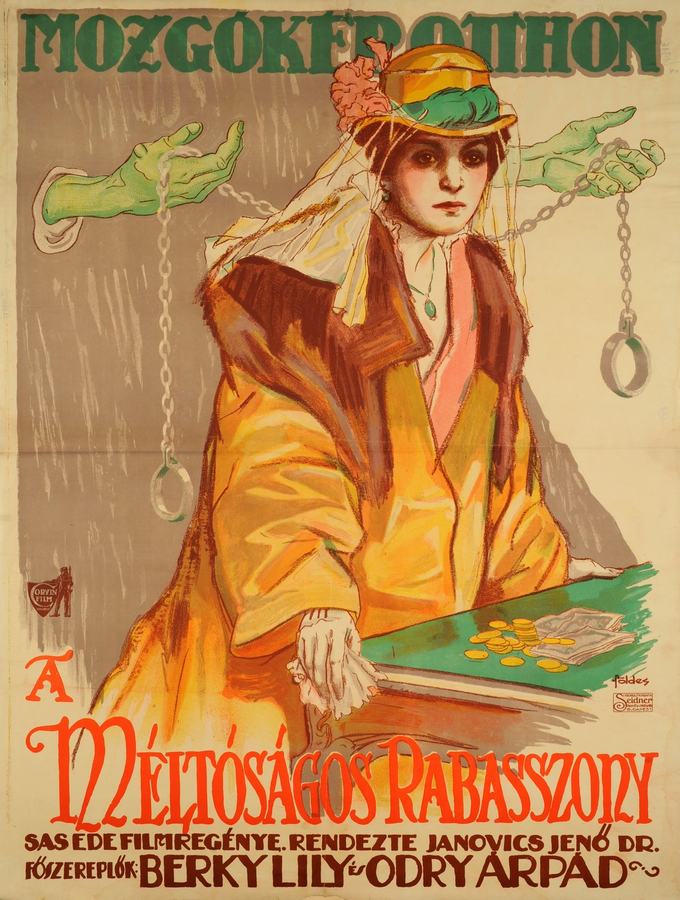
There are cinematic experiences that transcend the mere act of viewing; they become a visceral journey into the human condition, an exploration of resilience etched onto celluloid. Jenö Janovics and Ede Sas’s ‘Méltóságos rab asszony’ (The Dignified Prisoner Lady) is precisely such an artifact. A profound testament to the early capabilities of Hungarian cinema, this silent masterpiece, with its gripping narrative and evocative performances, unfurls a tale of unjust captivity and unwavering human dignity that resonates with a timeless profundity. To approach this film is to engage with a historical document, certainly, but also a living, breathing drama that speaks volumes without uttering a single word, relying instead on the eloquent language of gesture, expression, and meticulously composed imagery.
From its very inception, the film establishes a tone of somber elegance, drawing the audience into a world of societal constraints and personal tribulations. The titular character, embodied with breathtaking grace and an understated power by Ilonka Nagy, is not merely a victim of circumstance but an emblem of defiant spirit. Her portrayal is a masterclass in silent acting, conveying a maelstrom of emotions—despair, hope, indignation, and resolve—through nuanced facial expressions and deliberate movements. Nagy’s eyes, in particular, become windows to a soul under siege, yet never broken. The film’s narrative arc, while seemingly straightforward in its premise of a noblewoman unjustly imprisoned, delves into the psychological intricacies of confinement and the slow, arduous process of reclaiming one’s autonomy. It’s a story that explores the very essence of freedom, not just as a physical state, but as an internal bastion that even the most formidable walls cannot breach.
The visual language of ‘Méltóságos rab asszony’ is remarkably sophisticated for its era. Janovics, directing with an acute understanding of the medium’s nascent power, employs chiaroscuro lighting to magnificent effect, painting scenes with dramatic contrasts between light and shadow that mirror the moral ambiguities of the plot. The decaying grandeur of the manor house, where much of the action unfolds, becomes a character in itself—a labyrinthine prison, yes, but also a stage for quiet acts of rebellion and clandestine support. The cinematography, though lacking the kinetic dynamism of later eras, possesses a deliberate, painterly quality. Each frame seems carefully composed, drawing the viewer’s eye to the subtle shifts in character dynamics, the silent exchanges of glances, and the symbolic weight of objects within the scene. One might draw a parallel to the visual intensity found in films like The Mystic Hour, where atmosphere and mood are paramount, but ‘Méltóságos rab asszony’ achieves its effect with a more grounded, less overtly supernatural, sense of dread and suspense.
The use of close-ups, though sparing, is impactful, allowing the audience to intimately connect with the characters' inner turmoil. A lingering shot on Ilonka Nagy’s tear-filled eyes or a clenched jaw speaks volumes, obviating the need for verbose intertitles. This mastery of visual economy is a hallmark of early cinematic brilliance, demonstrating how much emotion and narrative information can be conveyed through purely visual means. The film understands that the silent screen, far from being a limitation, is an invitation for heightened visual artistry and audience engagement, demanding a more active interpretation of the narrative unfolding before them. The starkness of the black and white palette, rather than diminishing the experience, amplifies the drama, forcing concentration on form, composition, and the actors' expressions.
The ensemble cast delivers performances that are both period-appropriate and universally resonant. Kálmán Körmendy, as Dr. Miklós Hegedüs, provides a crucial counterpoint to Nagy’s quiet suffering. His character’s journey from detached professional to fervent advocate for justice is depicted with a compelling blend of intellectual curiosity and burgeoning empathy. Körmendy’s portrayal avoids simplistic heroics, instead presenting a man grappling with moral dilemmas and societal pressures, his commitment to truth slowly solidifying into resolute action. The chemistry between Nagy and Körmendy is subtle yet palpable, a bond forged not through overt declarations, but through shared glances of understanding and mutual respect, a silent testament to solidarity in the face of tyranny.
The supporting cast, too, contributes significantly to the film’s rich texture. Andor Szakács, likely embodying the antagonist, Baron Gábor, projects an insidious menace that is all the more chilling for its quiet, almost bureaucratic cruelty. His performance avoids caricature, presenting a villain who believes himself justified, making his actions more unsettling. Aranka Laczkó, Gyula Nagy, Flóra Fáy, Lili Berky, Cunci Berky, Árpád Ódry, and Ödön Réthely, though perhaps with less screen time, each contribute vital brushstrokes to the overall portrait of this society. Their characters, whether allies, unwitting pawns, or complicit observers, collectively create a believable social fabric against which Eszter’s struggle plays out. The depth of these performances, even in a silent film where overacting could easily dominate, speaks to the sophisticated understanding of human psychology that Janovics and Sas brought to their craft. One can feel the weight of social expectations and the quiet desperation of those caught in the machinations of power, echoing the struggles seen in films like The House of Tears, where emotional torment is intricately explored.
At its heart, ‘Méltóságos rab asszony’ is a powerful examination of justice, or rather, its perversion. The film critiques the ease with which power can be abused and how societal structures can be manipulated to silence the innocent. Eszter’s 'imprisonment' is not behind iron bars but within the gilded cage of social ostracization and legal chicanery, a form of confinement perhaps more insidious than physical incarceration. Her 'dignity' in the face of this adversity becomes her most potent weapon. She refuses to be broken, to succumb to despair, or to abandon her sense of self-worth. This steadfastness is what ultimately inspires Miklós and others to rally to her cause, illustrating that true power often resides not in force, but in moral fortitude.
The narrative also subtly explores themes of gender and agency. In an era where women, particularly those of high social standing, were often confined to restrictive roles, Eszter’s intellectual prowess and her unwavering fight for her rights represent a quiet form of proto-feminism. She is not a damsel in distress waiting for a knight; she is an active participant in her own liberation, using her intelligence and resilience to navigate a treacherous landscape. This aspect of her character resonates even today, offering a compelling portrait of female strength in the face of overwhelming patriarchal structures. In this regard, it shares a thematic thread with films like A Prisoner in the Harem or even Armstrong's Wife, where female protagonists grapple with constraints and seek to assert their will against formidable odds, albeit with distinct cultural backdrops and narrative approaches.
The collaborative genius of Jenö Janovics, as director, and Ede Sas, as writer, is evident in every meticulously crafted scene. Sas’s narrative, despite the limitations of the silent film format, is rich in dramatic tension and character development. The plot unfolds with a measured pace, building suspense gradually, allowing the audience to fully invest in Eszter’s plight and Miklós’s quest for truth. There are no sudden, unearned resolutions; instead, the story progresses with a logical yet emotionally compelling trajectory, characteristic of well-structured classical drama. The writers understood that the absence of spoken dialogue necessitated a heightened reliance on visual cues and the emotional resonance of the narrative itself, a challenge they met with remarkable aptitude.
Janovics’s direction brings this narrative to life with a sensitivity that belies the film’s early production date. His use of space, his orchestration of group scenes, and his ability to elicit powerful, nuanced performances from his actors are all hallmarks of a director deeply attuned to the expressive potential of cinema. He understands how to use the camera not just as a recording device, but as an active participant in the storytelling, guiding the audience’s gaze and shaping their emotional response. The film’s climax, a masterfully executed sequence of revelation and confrontation, is a testament to his skill in building dramatic tension to a satisfying, cathartic crescendo. This careful construction of suspense and resolution is a quality shared with other compelling dramas of the era, such as The Shadow of a Doubt, which also meticulously crafts its psychological tension.
‘Méltóságos rab asszony’ stands as a significant contribution to Hungarian cinematic heritage and a valuable piece of global film history. It demonstrates that even in its nascent stages, cinema was capable of tackling complex themes with sophistication and emotional depth. The film's enduring relevance lies in its universal message: the unyielding power of the human spirit in the face of adversity, the perpetual struggle for justice, and the importance of upholding one’s dignity, even when all external circumstances conspire to strip it away. It reminds us that true strength is often found not in physical might, but in moral courage and an unwavering belief in one's own truth.
For contemporary audiences, experiencing ‘Méltóságos rab asszony’ is not merely an exercise in historical appreciation; it is an opportunity to connect with fundamental human experiences that transcend time and cultural boundaries. The film’s quiet intensity, its eloquent visual storytelling, and its powerful performances create an immersive experience that continues to captivate. It challenges us to look beyond the superficial, to understand the subtle nuances of human interaction, and to recognize the profound impact that cinema, even in its earliest forms, could have on our understanding of ourselves and the world. It’s a film that deserves to be rediscovered, studied, and celebrated for its artistic merit and its timeless resonance, proving that some stories, told with enough conviction and artistry, truly are immortal. Its narrative echoes the profound human struggles seen in Poor Little Peppina and The Waifs, where the vulnerability of individuals against larger societal forces is a central theme, yet ‘Méltóságos rab asszony’ adds a unique aristocratic lens to this universal plight.
The preservation of such films is crucial, offering invaluable insights into the evolution of cinematic language and the societal concerns of bygone eras. This particular work not only showcases the burgeoning talent within Hungarian filmmaking but also provides a window into the broader European cultural landscape of the early 20th century. It is a stark reminder that the foundations of modern storytelling were laid by these pioneering artists who, with limited technology, managed to craft narratives of profound emotional weight and intellectual depth. Its exploration of personal freedom and societal constraint makes it a compelling companion piece to the likes of The Great Leap: Until Death Do Us Part, where the stakes of individual liberty are similarly high.
IMDb 6.7
1931
Community
Log in to comment.