DbcultAccessing Vault...
6.3/10
Senior Film Conservator
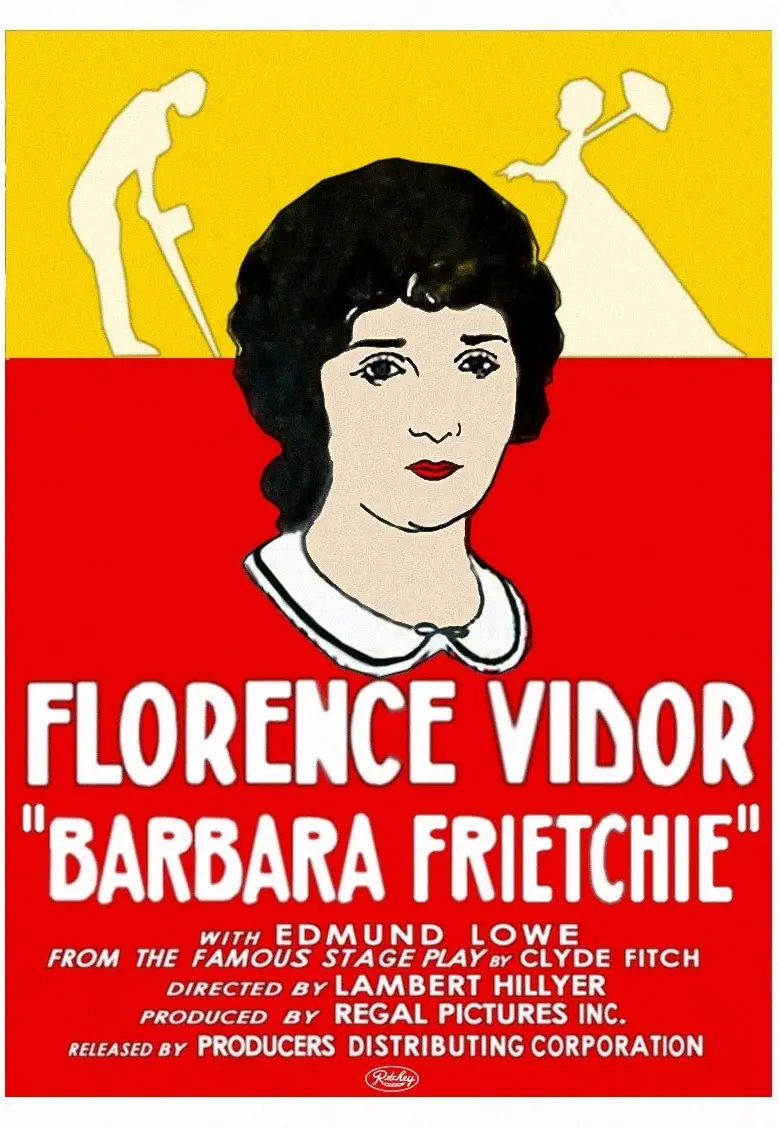
A definitive 6.3/10 rating for a film that redefined the boundaries of cult cinema. Barbara Frietchie remains a cornerstone of transgressive art.
Stepping back into the cinematic currents of 1924, one encounters a fascinating artifact of its time: Barbara Frietchie. More than just a silent film, it's a profound exploration of human resilience and the devastating toll of conflict, wrapped in the grandeur of a historical epic. This picture, brought to life by the creative minds of writers Agnes Christine Johnston, Clyde Fitch, and Lambert Hillyer, and directed with a keen eye for dramatic tension by Hillyer himself, asks us to consider the intimate cost of national strife. It's a testament to the enduring power of silent cinema to convey complex emotions and narratives without a single spoken word, relying instead on the nuanced performances and the masterful visual storytelling that defined the era.
The very essence of Barbara Frietchie lies in its heart-wrenching premise: two souls, inextricably linked by love, violently sundered by the ideological chasms of the American Civil War. This isn't merely a backdrop; the war is an active, malevolent force, tearing at the fabric of personal relationships with an almost surgical precision. Our titular heroine, Barbara, portrayed with compelling grace by Florence Vidor, embodies the steadfast Southern spirit, her loyalty to the Confederacy as unyielding as the ancient oaks of her Maryland home. Her counterpart, the man who holds her affections, embarks on a journey North, driven by an equally fervent conviction to safeguard the Union. This initial divergence sets the stage for a tragic ballet of allegiance versus affection, a theme that resonates deeply even today.
Florence Vidor, a prominent star of the silent era, brings an astonishing depth to Barbara. Her performance is a masterclass in non-verbal communication, her eyes conveying volumes of unspoken anguish, defiance, and enduring love. There's a particular scene where the camera lingers on her face, capturing the subtle tremor of her lips, the slight furrow of her brow, as she processes the news of her beloved's departure for the Union army. It's a moment pregnant with sorrow, illustrating the silent film's unique ability to magnify human emotion through exquisite close-ups and deliberate pacing. Vidor doesn't just act; she inhabits Barbara, making her internal struggle palpable to the audience. Her portrayal avoids caricature, instead presenting a woman of profound inner strength and conviction, even as her world crumbles around her.
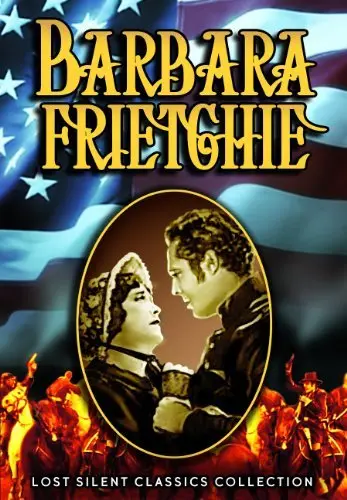
Opposite Vidor, Edmund Lowe delivers a performance that is equally nuanced. As the lover torn between his heart and his duty, Lowe conveys the internal torment of a man forced to choose. His physicality, his posture, the way he carries himself – all contribute to building a character burdened by an impossible decision. The chemistry between Vidor and Lowe, though expressed through gazes and gestures rather than dialogue, is undeniable. Their interactions are charged with an undercurrent of profound history and impending heartbreak. One can almost feel the weight of their shared past and the crushing burden of their divergent futures. This isn't a simplistic 'lovers separated by war' trope; it's an intricate dance of personal conviction against romantic devotion, played out with an intensity that transcends the lack of spoken words.
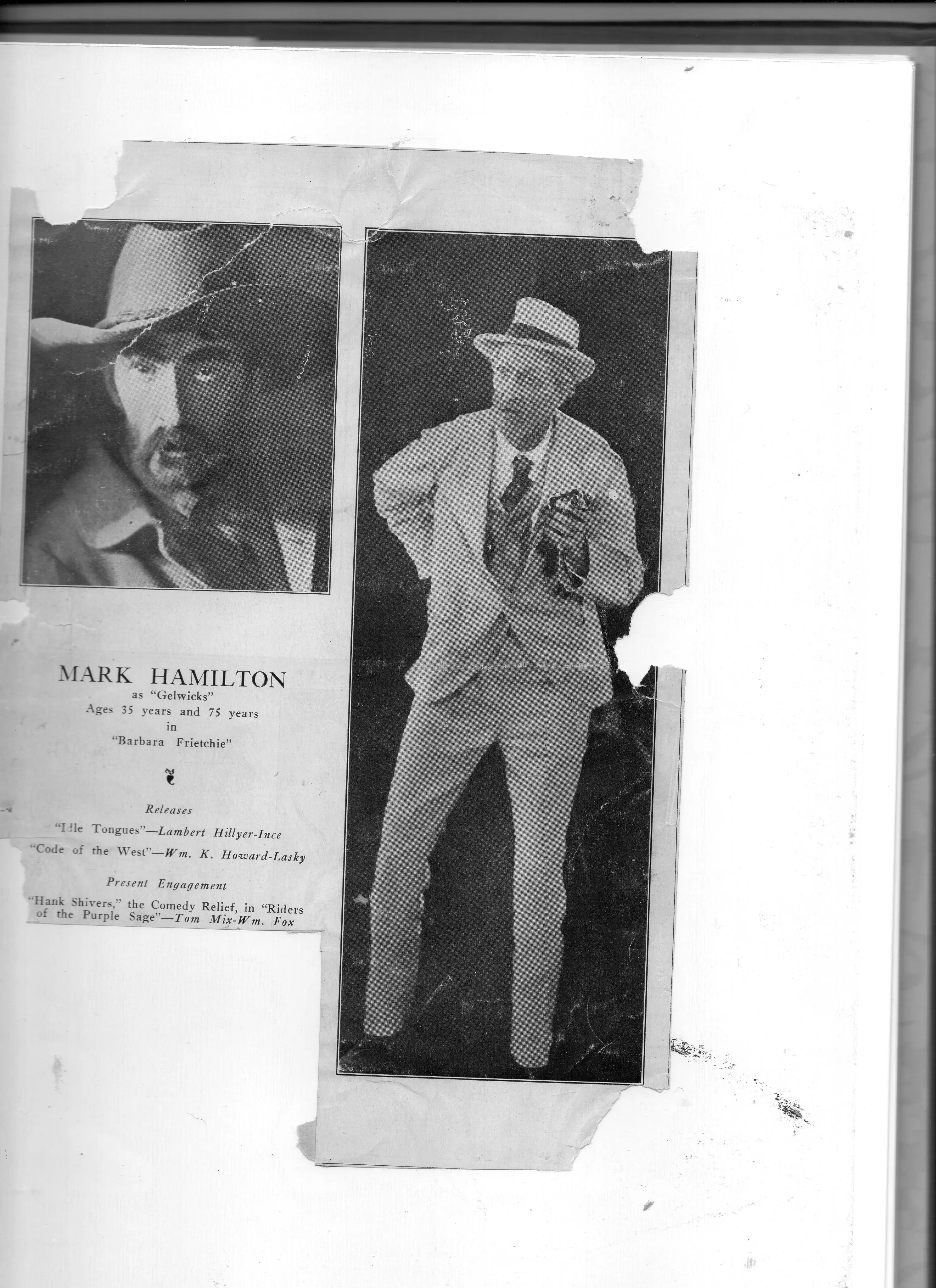
The supporting cast, including Joseph Bennett, Charles Delaney, George A. Billings, Louis Fitzroy, Lydia Knott, John T. Prince, Mark Hamilton, Emmett King, Ernie Adams, Jim Blackwell, Gertrude Short, James T. Mack, and Mattie Peters, all contribute to the rich tapestry of the film. Each actor, in their own right, helps to build a believable community, a microcosm of a nation in turmoil. Their reactions, their silent expressions of fear, hope, and despair, amplify the central conflict, making the personal struggle of Barbara and her lover feel like a reflection of the broader societal upheaval. Lydia Knott, in particular, often excelled in roles that conveyed quiet wisdom or maternal concern, and her presence here likely adds a grounding, human element to the intense drama.
Lambert Hillyer, a prolific director of the silent era, demonstrates a masterful command of visual storytelling in Barbara Frietchie. His direction is characterized by a deliberate pace that allows the emotional beats to fully register, and a keen understanding of how to frame a shot to maximize its impact. The cinematography, while perhaps not groundbreaking for its time, is effective in establishing mood and atmosphere. Hillyer utilizes sweeping landscape shots to convey the tranquility of the Maryland countryside before the war, contrasting them sharply with the chaotic, dust-filled scenes of marching armies and occupied towns. This visual juxtaposition serves to underscore the profound disruption brought by the conflict.
Furthermore, Hillyer's use of intertitles is exemplary. Rather than simply stating facts, they often convey poetic sentiments or crucial dialogue that drives the narrative forward without being overly expository. This careful balance between visual action and textual information is a hallmark of well-crafted silent films, and Barbara Frietchie excels in this regard. The intertitles act as a bridge, guiding the audience through the emotional landscape of the characters, enhancing rather than detracting from the visual experience.
One of Hillyer's strengths here is his ability to choreograph large-scale scenes with clarity. When the Federal troops finally march into the town, there’s a sense of genuine occupation, of a community suddenly made alien to itself. The tension is palpable, not just from the presence of soldiers, but from the silent, defiant glares exchanged between townspeople and troops. This careful attention to detail in crowd scenes and military movements adds a layer of authenticity to the historical setting, making the conflict feel immediate and real, even a century later.
The core thematic exploration of Barbara Frietchie revolves around the agonizing choices individuals are forced to make when personal affections clash with deeply held political or patriotic loyalties. Barbara's unwavering commitment to the South, even in the face of Union occupation, is not presented as mere stubbornness, but as a profound expression of identity and community. Her actions, particularly her defiant display of the Confederate flag, become symbolic of a larger resistance, a refusal to yield one's spirit even when physically subdued.
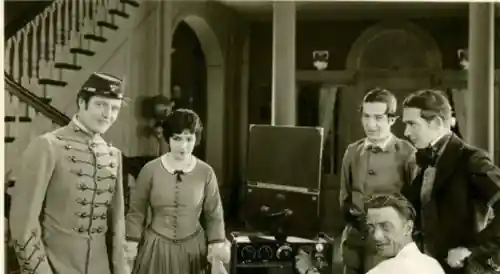
Conversely, her lover's decision to join the Federal Army is portrayed not as a betrayal, but as an equally principled stand for what he believes is right for the nation. The film masterfully avoids simplistic villainization, instead presenting both sides of the conflict through the lens of individual conviction. This moral ambiguity elevates Barbara Frietchie beyond a mere melodrama, transforming it into a poignant commentary on the human cost of ideological warfare. It forces the audience to grapple with the idea that 'right' and 'wrong' often become blurred in times of great division, and that love itself can be a casualty.
The film's most potent emotional punches are delivered during the reunion scenes. When the Federal unit, including Barbara's estranged lover, arrives in her hometown, the air is thick with unspoken history and palpable tension. This is not the joyful reunion one might expect in a conventional romance; rather, it is a stark confrontation with the irreparable damage wrought by war. The characters are no longer the same individuals who parted ways. Their experiences have hardened them, reshaped their perspectives, and etched lines of sorrow onto their very beings. The scene where they finally meet again is a masterclass in restrained emotion, the silent film's power to convey immense feeling through subtle gestures and lingering glances utilized to its fullest extent. The audience is left to ponder whether their love, once so vibrant, can ever truly recover from the wounds inflicted by a divided nation.
Released in 1924, Barbara Frietchie arrived at a time when the memories of the Civil War, though decades past, still held a powerful grip on the American psyche. The film draws inspiration from the legendary poem by John Greenleaf Whittier, which mythologized the defiance of an elderly woman who waved the Union flag in the face of Confederate troops. The film adaptation, however, takes considerable liberties, transforming the elderly Frietchie into a young, romantic figure, and shifting her allegiance to the South to create a more compelling romantic conflict. This creative interpretation allowed the filmmakers to explore themes of love and loyalty in a way that resonated with contemporary audiences, who were perhaps more interested in personal drama than strict historical accuracy.
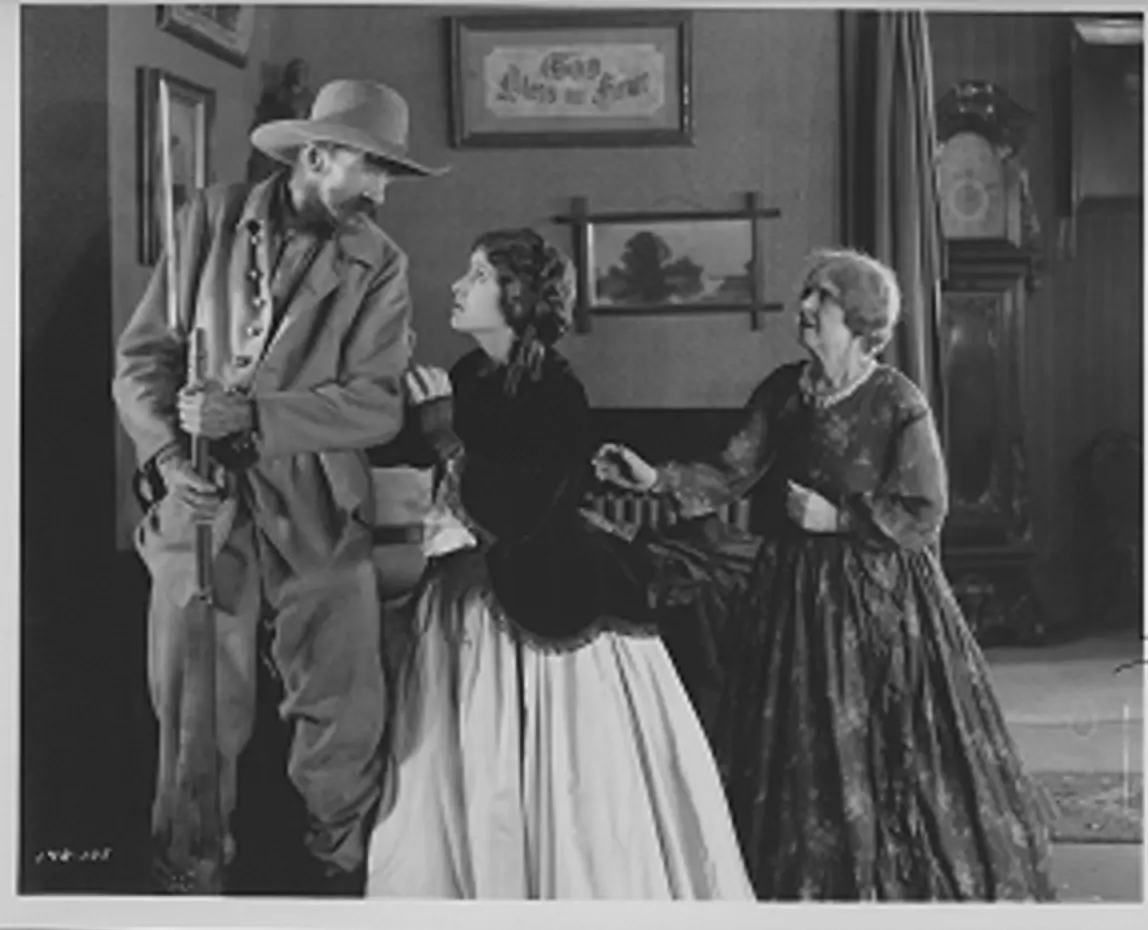
Comparing Barbara Frietchie to other films of its era, particularly those dealing with war or societal division, offers intriguing insights. While a film like Revelation (1918) might have focused on the more immediate, visceral impact of World War I, Barbara Frietchie looks back to a foundational American conflict, examining its lasting scars. Similarly, films like Miss Dulcie from Dixie (though a comedy-drama), also played with themes of North-South cultural clashes, but Barbara Frietchie plunges into the profound tragedy of these divisions with far greater solemnity. The silent era, often underestimated in its narrative complexity, frequently tackled weighty subjects with surprising nuance, and this film is a prime example.
The enduring relevance of Barbara Frietchie lies in its universal themes. While the specific conflict is the American Civil War, the story of love tested by political division, of personal conviction clashing with romantic attachment, is a narrative that transcends time and geography. In an increasingly polarized world, the film’s exploration of how ideological differences can fracture even the most intimate bonds remains profoundly resonant. It serves as a stark reminder of the human cost of discord, urging viewers to reflect on the importance of understanding and empathy, even across seemingly insurmountable divides.
The creative team behind Barbara Frietchie deserves considerable credit for crafting such a compelling narrative. Clyde Fitch's original play provided a strong dramatic foundation, which Agnes Christine Johnston and Lambert Hillyer skillfully adapted for the screen. Their collaboration resulted in a screenplay that, despite the constraints of the silent medium, managed to convey intricate character motivations and a sweeping historical scope. The film stands as a testament to the collaborative spirit of early Hollywood, where writers, directors, and actors worked in concert to push the boundaries of cinematic expression.
In a broader sense, films like Barbara Frietchie remind us of the incredible artistry and innovation present in silent cinema. Far from being primitive, these films often employed sophisticated techniques in acting, cinematography, and editing to tell stories with immense emotional power. They relied on a universal visual language, allowing them to transcend linguistic barriers in a way that early talkies struggled to achieve. Revisiting such films is not merely an act of historical appreciation; it is an opportunity to experience storytelling in its purest, most visual form, a form that demands active engagement from the viewer.
For film enthusiasts and casual viewers alike, Barbara Frietchie offers a compelling journey into a pivotal moment in American history, seen through the lens of a deeply personal tragedy. It’s a film that lingers in the mind, prompting reflection on the nature of loyalty, the devastating consequences of war, and the enduring power of love in the face of seemingly insurmountable obstacles. Its quiet intensity and the poignant performances of its lead actors ensure its place as a significant, if often overlooked, contribution to the rich tapestry of silent American cinema. The emotional resonance of this tale, almost a century after its creation, speaks volumes about its timeless appeal and the universal truths it bravely tackles.
Ultimately, Barbara Frietchie is more than just a historical drama; it’s a meditation on the human spirit’s capacity for both profound love and unwavering conviction, even when these forces are set on a collision course. It’s a powerful reminder that while grand historical events unfold on a national stage, their most profound and heartbreaking impacts are often felt in the quiet, intimate spaces of individual hearts. The film leaves an indelible impression, a somber echo of a love irrevocably altered by the tumultuous currents of history.
IMDb —
1924
Community
Log in to comment.