DbcultAccessing Vault...
5.5/10
Senior Film Conservator
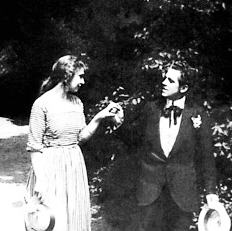
A definitive 5.5/10 rating for a film that redefined the boundaries of cult cinema. Byl první máj remains a cornerstone of transgressive art.
Stepping back into the cinematic tapestry of the early 1920s, one unearths Byl první máj (It Was the First of May), a Czech masterpiece that, even today, resonates with an almost ethereal charm. This film, a delicate yet profound exploration of cultural identity, burgeoning romance, and the eternal dance between the old and the new, stands as a testament to the sophisticated storytelling prevalent in Central European cinema of its era. With Thea Cervenková's insightful pen guiding its narrative, the picture transcends its ostensibly simple premise to deliver a rich, multilayered experience that continues to captivate discerning viewers.
At its heart, Byl první máj is an ode to the transformative power of connection, set against the vibrant, almost living canvas of a Bohemian village preparing for its most cherished annual celebration. The film introduces us to Helena, portrayed with an arresting blend of intelligence and grace by Ludmila Innemannová. Helena is not merely a village schoolteacher; she is the embodiment of a generation caught between the deep roots of tradition and the nascent stirrings of a broader world. Her eyes, often shadowed with an unspoken longing, reflect a mind eager for intellectual stimulation, a soul yearning for a love that transcends the familiar rhythms of rural life, yet her spirit is inextricably bound to the ancient customs that define her community.
Into this meticulously crafted world strides Karel, brought to life by Svatopluk Innemann with a captivating mixture of hauteur and underlying vulnerability. Karel is the quintessential urban intellectual – a poet from the avant-garde circles of Prague, whose cynicism about provincial life is as thick as the city fog he left behind. His arrival in the tranquil village is not born of a quest for inspiration, but rather a reluctant exile, orchestrated by an exasperated uncle (perhaps a smaller, yet impactful, role for Josef Sváb-Malostranský, whose versatility could easily encompass such a figure) hoping to temper his nephew's metropolitan arrogance with the grounding simplicity of the countryside. Karel's initial disdain for the quaint May Day traditions, which he dismisses as rustic anachronisms, sets the stage for the film's central conflict.
The moral compass and often mischievous catalyst of the narrative is Old Man Novák, a character etched with memorable depth by Josef Sváb-Malostranský. Novák is not just a village elder; he is the living repository of its history, a sage guardian of May Day lore whose wisdom is as profound as his wit is sharp. He sees through Karel's metropolitan facade to the artist simmering beneath, and it is he who subtly, yet firmly, tasks Karel with the seemingly trivial duty of composing a poem for the May Day festival. This assignment, initially met with sneering condescension by Karel, becomes the unlikely fulcrum upon which his transformation hinges. Sváb-Malostranský's performance infuses Novák with an infectious warmth, making him the benevolent architect of the film's romantic and cultural reconciliation.
The romantic tension is further nuanced by the presence of Lída, played by Eva Levínská with a compelling blend of practicality and subtle ambition. Lída, Helena's childhood friend, represents a different facet of village life – one that views Karel's urban pedigree not as a source of intellectual conflict, but as a potential pathway to social advancement. Her quiet machinations and attempts to draw Karel's attention create a delicate rivalry, highlighting the differing aspirations within the community and adding a layer of sophisticated social commentary to the unfolding romance. Levínská navigates this role with a quiet intensity, making Lída a sympathetic, if sometimes misguided, figure rather than a mere antagonist.
The genius of Cervenková's screenplay lies in its ability to weave these individual threads into a cohesive narrative fabric that is both intimately personal and broadly symbolic. The clash between Karel's cynicism and Helena's quiet reverence for tradition is not merely a romantic trope; it's a microcosm of the larger societal shifts occurring in a newly independent nation grappling with its identity. The film subtly argues for the enduring value of heritage, not as a static relic, but as a living, breathing entity capable of being enriched by new perspectives. This thematic depth is reminiscent of films like The Market of Souls, which also explored societal values and personal choices within a specific cultural context, albeit with a more overt social realism.
Visually, Byl první máj is a triumph of early cinematic artistry. While information on its specific director may be elusive, the visual language speaks volumes about a collaborative vision, undoubtedly shaped by Cervenková's descriptive writing. The cinematography, likely a masterful interplay of natural light and carefully composed frames, captures the lush beauty of the Bohemian spring with breathtaking clarity. Imagine sweeping vistas of rolling hills dotted with blossoming trees, the intricate details of folk costumes rendered with exquisite care, and the kinetic energy of villagers dancing around the Maypole. The use of deep focus, a technique that was gaining prominence in this era, would have allowed for an immersive experience, drawing the viewer into the heart of the village life, much like the evocative rural landscapes seen in films such as As the Sun Went Down, which similarly leveraged natural settings to enhance narrative mood.
The film's pacing, characteristic of the silent era, would have relied on expressive performances and meticulously crafted intertitles to convey dialogue and internal monologues. The Innemanns, both seasoned performers, would have excelled in this medium, their facial expressions and body language speaking volumes. Ludmila Innemannová's Helena would convey a spectrum of emotions – from quiet contemplation to spirited defiance – with subtle shifts in her gaze or the curve of her lips. Svatopluk Innemann, as Karel, would masterfully transition from aloof disdain to genuine warmth, his transformation etched not through words, but through the evolving vulnerability in his posture and the softening of his hardened features. This reliance on visual storytelling and gestural acting finds parallels in works like Your Obedient Servant, where character depth was conveyed through nuanced physical performance rather than spoken dialogue.
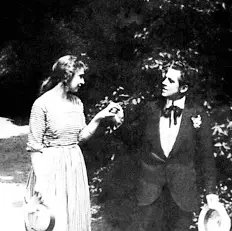
The narrative crescendo arrives during the May Day festival itself, a sequence that would have been a marvel of cinematic orchestration. As the villagers gather for the culmination of their traditions, a critical element of the celebration is threatened – perhaps the Maypole, centerpiece of the festivities, is destabilized by a sudden gust of wind, or a vital prop for a traditional play goes missing. This moment of crisis serves as Karel's crucible. Witnessing the genuine distress of the villagers, and particularly Helena's heartbreak at the potential loss of their heritage, he is jolted out of his detached observation. In a spontaneous act of engagement, he utilizes his artistic intellect, not to mock, but to save the day – perhaps improvising a solution to steady the Maypole, or crafting an impromptu, heartfelt verse that re-ignites the spirit of the celebration. This pivotal scene is where Karel's transformation becomes complete, marking a profound shift from cynical observer to invested participant. It’s a beautifully rendered moment of communal triumph, underscored by individual growth, echoing the spirit of collective effort seen in films like The Independence of Romania, albeit on a different scale of national significance.
The resolution is not one of bombastic declarations, but of quiet understanding. Karel, now genuinely transformed, embraces the authentic beauty of the village and the profound wisdom embedded in its traditions. He realizes that true artistic inspiration and genuine love are not exclusive to the intellectual hubs of the city but can be found in the most unassuming corners of the world, especially when approached with an open heart. The final moments between Helena and Karel are a silent symphony of mutual respect and burgeoning affection, a powerful testament to a love that successfully bridges their once disparate worlds. Their connection symbolizes a harmonious synthesis where tradition is not merely preserved but revitalized by fresh perspectives, and where love finds its most profound expression amidst the burgeoning life of spring. This nuanced exploration of human connection and societal interaction offers a stark contrast to the more overt conflicts explored in dramas like Human Desire, preferring instead a gentler, yet equally impactful, resolution.
Thea Cervenková's contribution as a writer is paramount. Her script for Byl první máj is a masterclass in character development and thematic subtlety. She deftly crafts a narrative that avoids simplistic dichotomies, instead presenting a nuanced view of tradition versus progress. Her characters are not caricatures; they are complex individuals driven by relatable desires and internal conflicts. The dialogue, even when conveyed through intertitles, would have possessed a lyrical quality, reflecting Karel's poetic sensibilities and Helena's thoughtful nature. Cervenková's ability to imbue a seemingly small-scale romance with such universal resonance is a hallmark of her talent, positioning the film as a significant piece of early Czech cinematic literature. Her writing style would have evoked the visual poetry that the camera then translated, creating a seamless artistic vision.
The historical context of Byl první máj further enriches its viewing. Released in the early years of the First Czechoslovak Republic, the film can be seen as an artistic reflection of a nation finding its footing, balancing its rich historical and folk heritage with the demands and influences of modernization. It subtly champions the idea that national identity is forged not by rejecting the past, but by integrating it with the present, allowing it to evolve and flourish. This cultural commentary, delivered through an engaging personal story, makes the film not just a romance, but a valuable historical document. Its exploration of community values and individual roles within a changing society might subtly echo themes found in Business Is Business or The Finger of Justice, though Byl první máj approaches these from a more pastoral and romantic perspective.
The performances are uniformly strong. Ludmila Innemannová brings an understated power to Helena, her quiet strength and intellectual curiosity shining through every frame. Svatopluk Innemann's portrayal of Karel is a journey from arrogance to humility, a nuanced character arc that feels earned and authentic. Josef Sváb-Malostranský, with his seasoned presence, grounds the film in reality, his Novák being both a source of wisdom and gentle humor. Eva Levínská, as Lída, adds a layer of human complexity, reminding us that even in idyllic settings, human motivations can be diverse and sometimes conflicting. The ensemble cast works in perfect harmony, creating a believable and engaging community.
In an era when cinema was still finding its voice, Byl první máj stands out for its sophisticated narrative and visual poetry. It avoids the melodramatic excesses often found in silent films, opting instead for a more subtle, emotionally resonant approach. The film's legacy lies not just in its pioneering spirit within Czech cinema, but in its timeless message about the enduring power of love, community, and the beauty of embracing one's heritage while looking towards the future. It’s a film that, despite its age, feels remarkably fresh and relevant, a cinematic Maypole around which generations can still dance. Its gentle yet profound exploration of personal growth within a traditional setting offers a delightful contrast to the more dramatic self-discovery narratives like Unexpected Places or the darker character studies such as Krähen fliegen um den Turm.
Ultimately, Byl první máj is more than just a film; it is an experience, a gentle invitation to witness the blossoming of love and understanding in a world on the cusp of change. It reminds us that sometimes, the most profound transformations occur not in grand, sweeping gestures, but in the quiet moments of connection, in the shared laughter around a Maypole, and in the simple, yet powerful, recognition of another soul. It’s a cinematic bloom that continues to radiate warmth and insight, a true classic of Czech silent cinema that deserves rediscovery and celebration for its masterful blend of romance, cultural commentary, and timeless human drama.
The film's enduring appeal also lies in its universal themes. While distinctly Czech in its setting and cultural specifics, the core story of an outsider finding belonging, of love overcoming preconceived notions, and of the value of tradition in a changing world, speaks to audiences across all cultures and eras. It’s this universality that allows it to stand alongside other international classics of its time, offering a unique Central European perspective on the human condition. One could even draw thematic parallels to the subtle social observations in Der müde Theodor, though Byl první máj maintains a more optimistic and romantic outlook. It avoids the overt villainy or dramatic turns found in films like The Tiger Man or The Broken Promise, instead finding its drama in the quiet unfolding of human hearts.
IMDb 5.6
1932
Community
Log in to comment.