DbcultAccessing Vault...
3.8/10
Senior Film Conservator
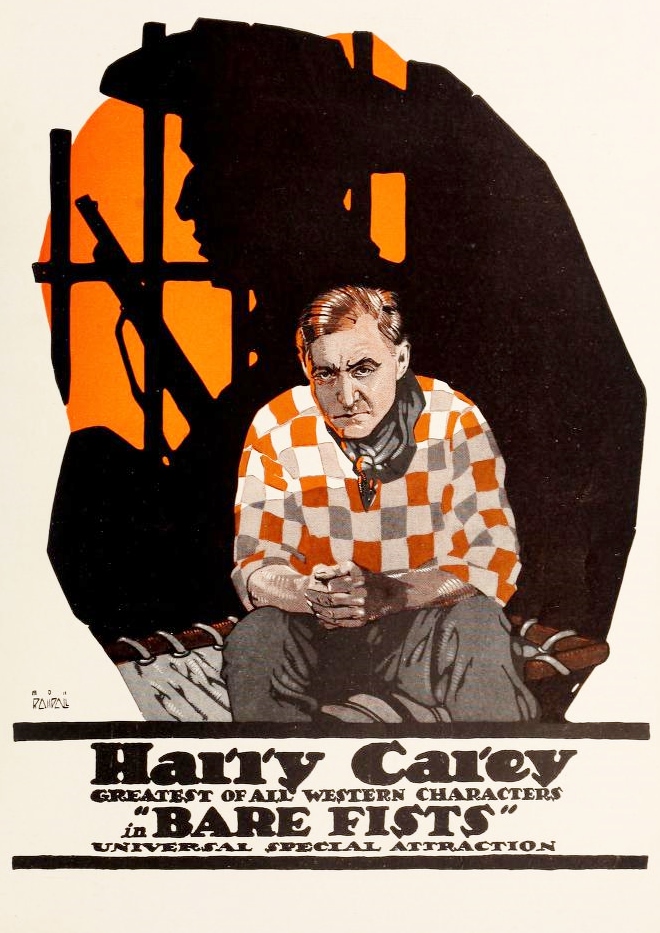
A definitive 3.8/10 rating for a film that redefined the boundaries of cult cinema. Bare Fists remains a cornerstone of transgressive art.
Dust-choked streets and moral quandaries collide with startling intensity in Bare Fists, a 1927 Western that transcends its genre’s typical shoot-’em-up bravado. Director Louis R. Lederer crafts not just an action piece, but a philosophical crucible where masculinity, honor, and pacifism are violently reforged. Harry Carey’s Cheyenne Harry isn’t merely a cowboy; he’s a man ensnared by the impossible tension between his mother’s desperate love and a frontier that understands only the language of the gun.
The film’s opening salvo remains a masterclass in economical storytelling: Marshal Callahan’s murder in the Golden Garter saloon isn’t glamorized—it’s brutal, chaotic, and stained with spilled whiskey. Carey’s entrance as Harry radiates feral grief, his sharpshooting retaliation less heroic than horrifyingly necessary. This visceral establishing of violence makes his subsequent vow—sealed with trembling hands clasping his weeping mother’s—feel like a seismic shift. The gun belt hitting the wooden floor echoes louder than any gunshot.
Harry Carey, with his world-weary eyes and granite jaw, embodies Harry’s torment without melodrama. Watch the subtle tremor in his hand when taunted, the rigid set of his shoulders as he walks unarmed past sneering men. His physicality becomes the film’s true script. When Boone Travis (a deliciously slimy Vester Pegg) murders the storekeeper Elihu Grange, the framing is chillingly mundane—a coward’s act disguised as justice. Pegg plays Travis not as a cartoon villain, but as entitlement incarnate, believing Conchita and the town itself are his birthright.
Mollie McConnell, as Harry’s mother, delivers a performance steeped in quiet devastation. Her plea isn’t religious moralizing; it’s the raw terror of a woman who’s buried too many men. This maternal intervention distinguishes Bare Fists from contemporaries like Her Country’s Call, where duty often supersedes familial bonds. Her presence haunts every frame—Harry’s promise is a chain he willingly wears, making his powerlessness against Travis’ machinations agonizing.
Betty Schade’s Conchita avoids the pitfall of mere romantic trophy. She’s less a love interest than a barometer of the town’s shifting allegiances. Her fiery spirit mirrors Harry’s own restrained passion—both are forces constrained by circumstance. When she publicly doubts Harry’s guilt after the murder frame-up, it’s not blind faith but shrewd observation. Schade imbues Conchita with a resilience reminiscent of the resourceful heroines in The Exploits of Elaine, though grounded in the West’s grimmer realities.
The film’s middle act transforms into a tense procedural. Harry, stripped of his primary tool of justice, must outthink his enemy. His investigation—gathering witness accounts, tracing the planted knife, exposing Travis’s crony Howard Enstedt as a perjurer—unfolds with the meticulousness of a frontier detective story. Cinematographer Sol Polito frames Harry’s isolation starkly: wide shots emphasizing his solitary figure against hostile crowds, close-ups capturing sweat beading on his temple as fists clench in frustrated resolve.
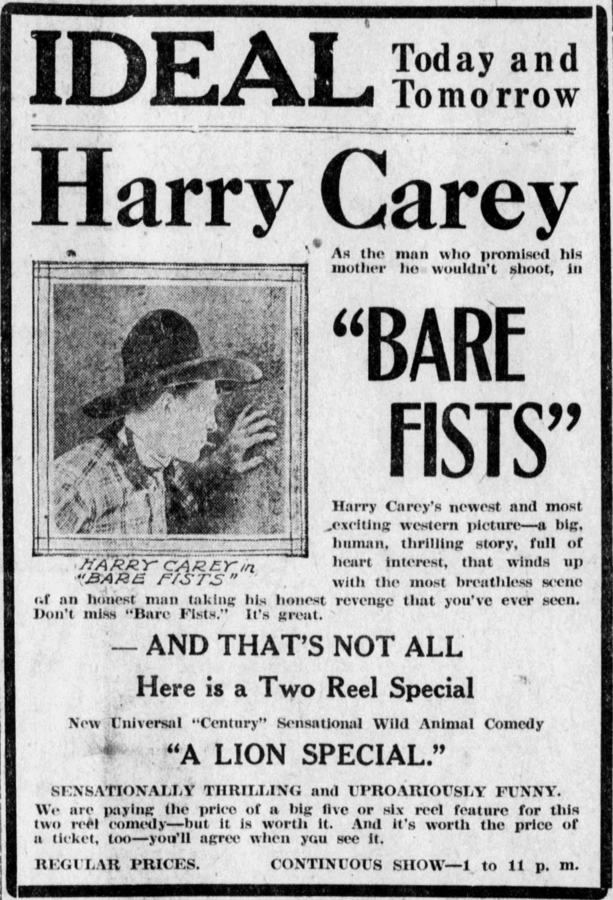
The climactic brawl between Harry and Travis is where Bare Fists truly subverts Western tropes. Director Lederer stages it not as triumphant catharsis, but as necessary, brutal penance. Bone cracks, knuckles split—every blow feels earned, visceral, and devoid of glory. Harry fights not for vengeance, but vindication; not to kill, but to disarm and expose. This distinguishes it sharply from the vengeful climaxes of films like A Falu rossza or the operatic violence of The Iron Claw. The film posits that true strength lies not in the capacity to kill, but in the will to endure without crossing one’s own moral line.
Supporting players add crucial texture. Joseph W. Girard’s skeptical Judge Walsh embodies the precarious rule of law, while Anna Mae Walthall’s gossipy telegraph operator subtly shifts public opinion. The town itself feels alive—a character as crucial as those in A Daughter of the City, but pulsing with frontier tension.
Visually, Bare Fists leverages silent film’s unique grammar. A recurring motif of Harry’s discarded gun belt—shot in shadowed close-up—becomes a silent testament to his burden. Montages juxtaposing his mother’s anxious face with Harry navigating danger amplify emotional stakes without title cards. Screenwriters Lewis and McConville avoid florid exposition; crucial information is conveyed through action and expression, trusting Carey’s formidable screen presence.
The film’s thematic resonance lies in its nuanced exploration of pacifism. Harry’s oath isn’t portrayed as naive idealism, but as a difficult, active choice demanding greater courage than violence. This complexity sets it apart from simpler morality plays like Won on the Post or the spiritual ponderings of Man and His Soul. It asks: Can principle survive in a world built on force? Is restraint its own form of strength? The resolution offers no easy answers—Harry’s victory is legal and moral, but the town’s ingrained violence remains.
While less mythologized than Ford’s later Westerns, Bare Fists prefigures the genre’s moral complexity. Carey’s performance—restrained, internalized, radiating conflicted integrity—is a blueprint for the reluctant heroes Peckinpah or Eastwood would later deconstruct. The film’s refusal to glorify violence anticipates the psychological weight of The Seventh Sin, albeit grounded in Western soil.
Flaws emerge in pacing—the middle investigation occasionally drags—and some character motivations (particularly Travis’s sheer pathological hatred) lean toward archetype. Yet these are minor quibbles against the film’s striking moral ambition and Carey’s towering performance.
Ultimately, Bare Fists endures not for its fisticuffs, but for its heart. It’s a Western where the greatest battle rages within a man’s conscience, where courage wears the face of restraint, and where an oath whispered to a grieving mother proves mightier than any six-shooter. In an era saturated with frontier fantasies of righteous slaughter, Bare Fists dared to suggest that true heroism might mean laying down the gun—and facing the consequences with bare hands and an unbroken spirit.
IMDb —
1917
Community
Log in to comment.