DbcultAccessing Vault...
Cult Review
Senior Film Conservator
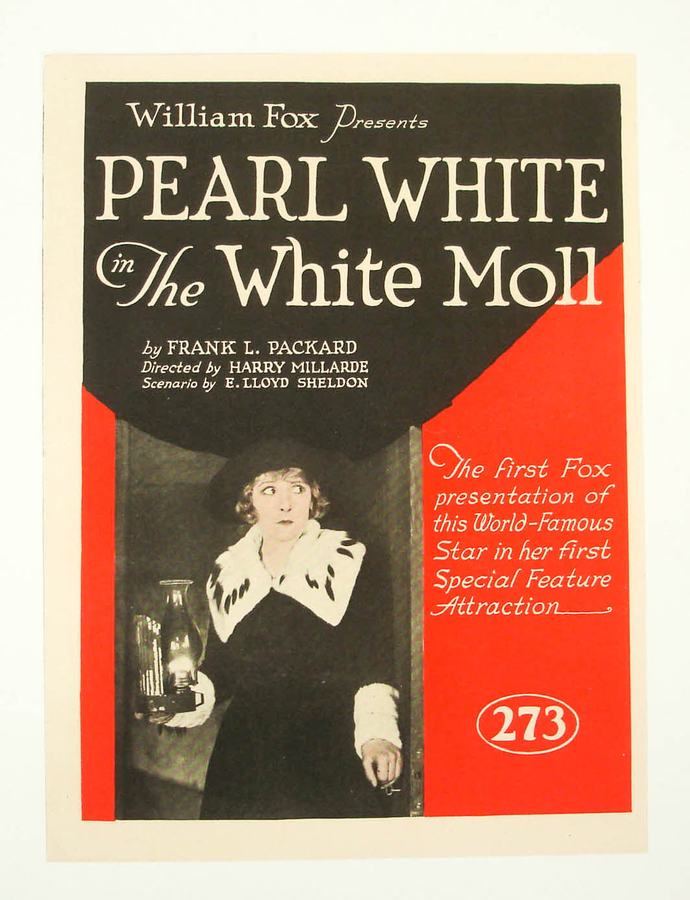
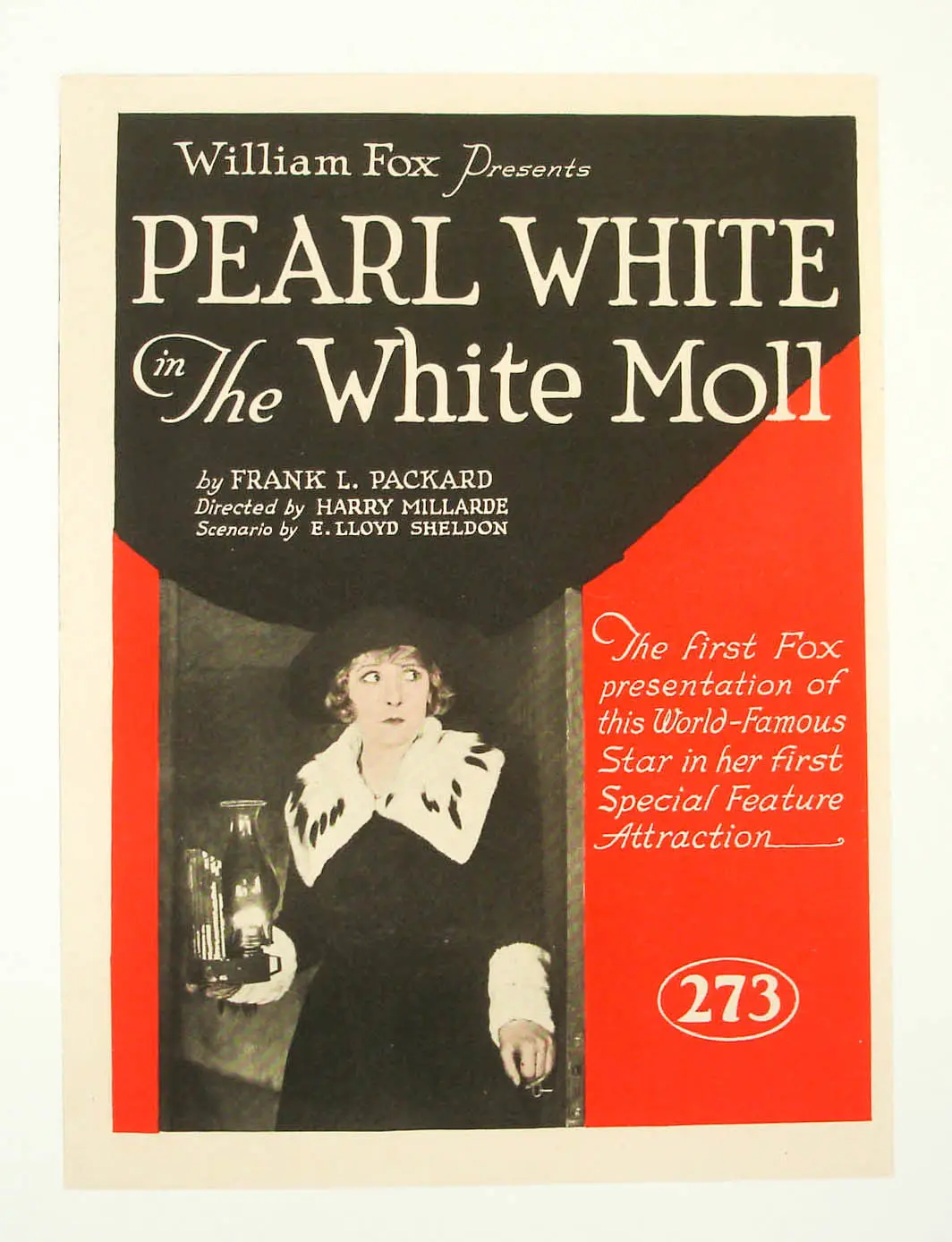
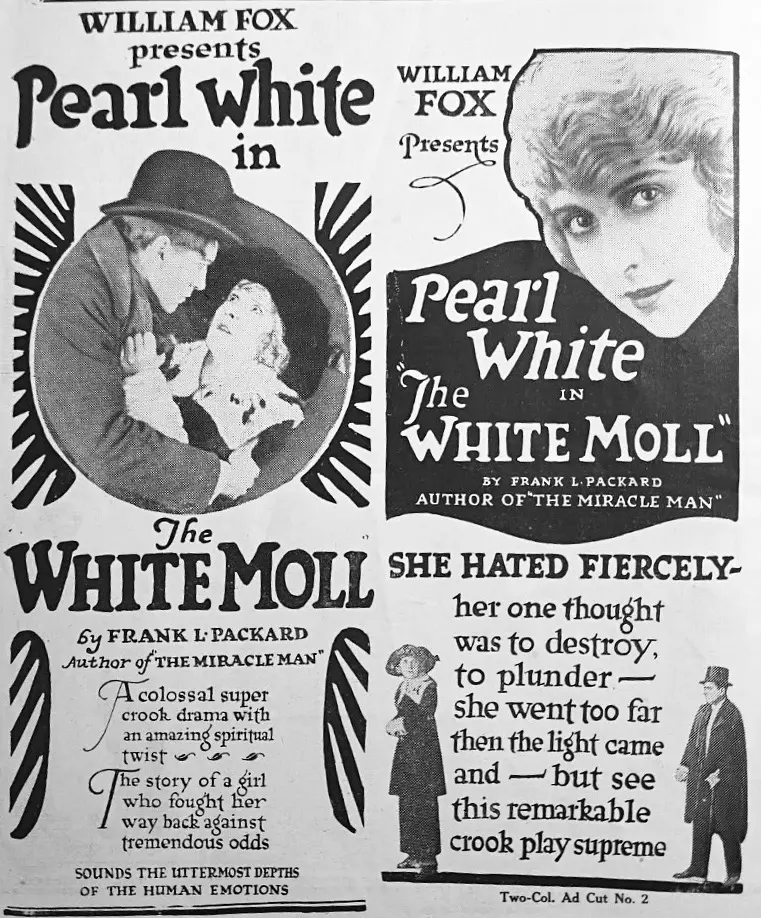
Pearl White—queen of the perils, duchess of the cliffhanger—steps off the runaway locomotive and into the confessional booth with The White Moll, a 1920 twelve-chapter whirlwind that trades locomotive tracks for the narrower rails of the human conscience. The film, long buried in mislabeled cans and misfiled under “miscellaneous melodrama,” is less a holy relic than a cracked stained-glass window: light still filters through, but the fractures refract guilt into colors you didn’t know existed.
Let us dispense with nostalgia right here. This is not a curio to be cooed over by academics in elbow-patches; it is a shrapnel-sharp parable about restitution, shot through with the same sulphur that perfumes the streets in Intrigue or Conscience. Yet where those films moralize, The White Moll monetizes penance—literally. Every restituted dollar is another ounce of lead lifted from the soul, and Pearl White’s face flickers between beatitude and larceny so fluidly you cannot tell whether she is laundering money or laundering herself.
The prologue uncoils inside a church whose rafters echo with the smell of old beeswax and older shame. Cinematographer Frank L. Packard (pulling double duty as co-writer) chiaroscuros the nave until the pews look like granite sharks. Rhoda’s father—played by Walter P. Lewis with the rheumy eyes of a man who has already seen his own ghost—slides a stiletto into the poor-box lock. The camera does not cut away; instead it lingers on the tension between sin and survival, a visual motif that will later bloom across rooftop chases and basement showdowns. When the fatal bullet arrives, it is not the loudReport of a gangland execution but the soft cough of a dying organ note, swallowed by incense. The moment is so hushed you almost feel the gunpowder settle on your tongue.
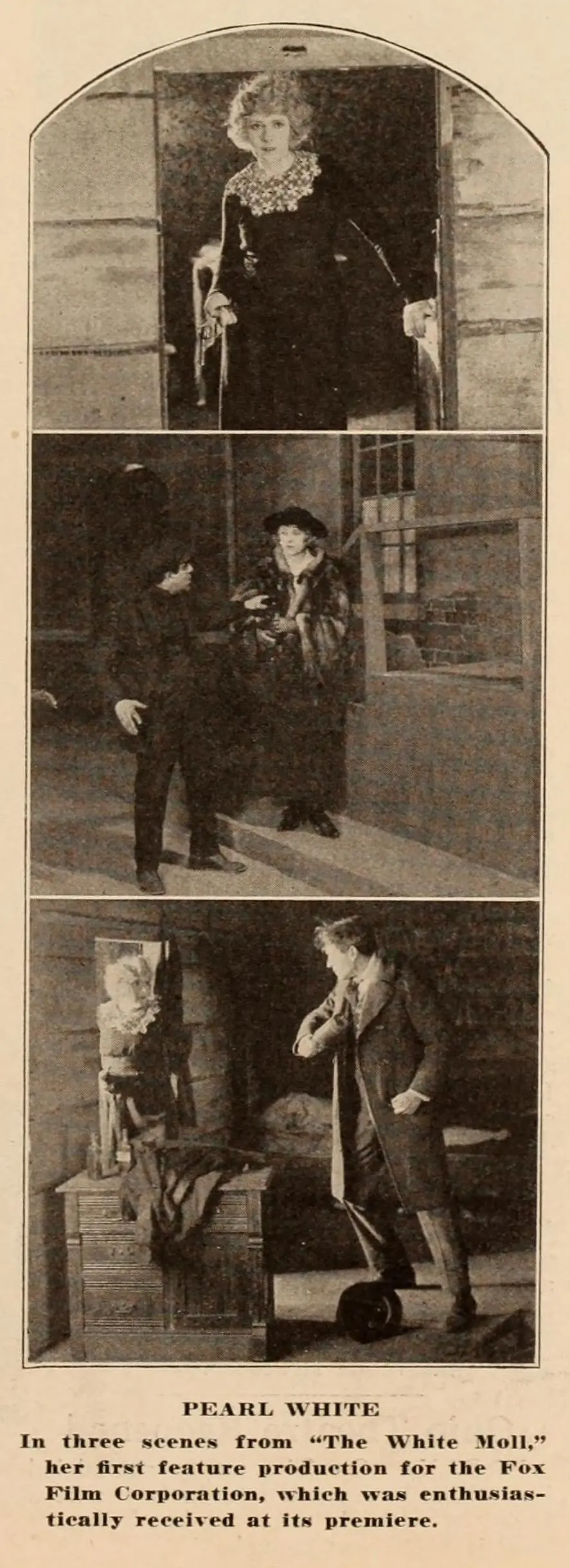
From there the narrative pivots into a picaresque of penance. Rhoda, now robed in the ironic halo of “White Moll,” must disperse the fortune that once crushed her father. Think of it as Robin Hood with a guilty conscience, except Sherwood is a Lower East Side alley where snow turns black within minutes of falling. Each chapter drops her into a fresh circle of urban inferno: a child-labor sweatshop reeking of sour milk; a opium den wallpapered in peeling gold-leaf dragons; a rooftop where clotheslines snap like hangman’s ropes. The episodes were designed to be consumed weekly, yet binge-watched in one sitting—as I did at a midnight archival screening—they feel like a fever dream that keeps looping back to the same moral wound: can restitution ever be anything more than self-interest in ecclesiastical drag?
Every angel needs a serpent, and Richard Travers delivers one whose menace is measured not in snarls but in silken pauses. The Dangler—so named because he “dangles” men over rooftops by their own watch-chains—wears evening dress at 8 a.m. and never raises his voice above a conspiratorial murmur. In one delirious set-piece he hosts a “charity auction” where the lots are human beings: pickpockets sold back to their mothers, counterfeiters returned to the gangs that need them. The sequence is staged like a diabolic cotillion, all long gloves and footlight glare, and it makes the bacchanal in A Modern Salome look like a church picnic.
Travers steals every frame not through theatricality but through restraint; his smile is a paper cut, and when he finally slips on the handcuffs—Rhoda lures him with a forged ledger so exquisitely counterfeit it could pass for holy writ—the triumph feels less like justice than like the moment a guillotine blade realizes it too is subject to gravity.
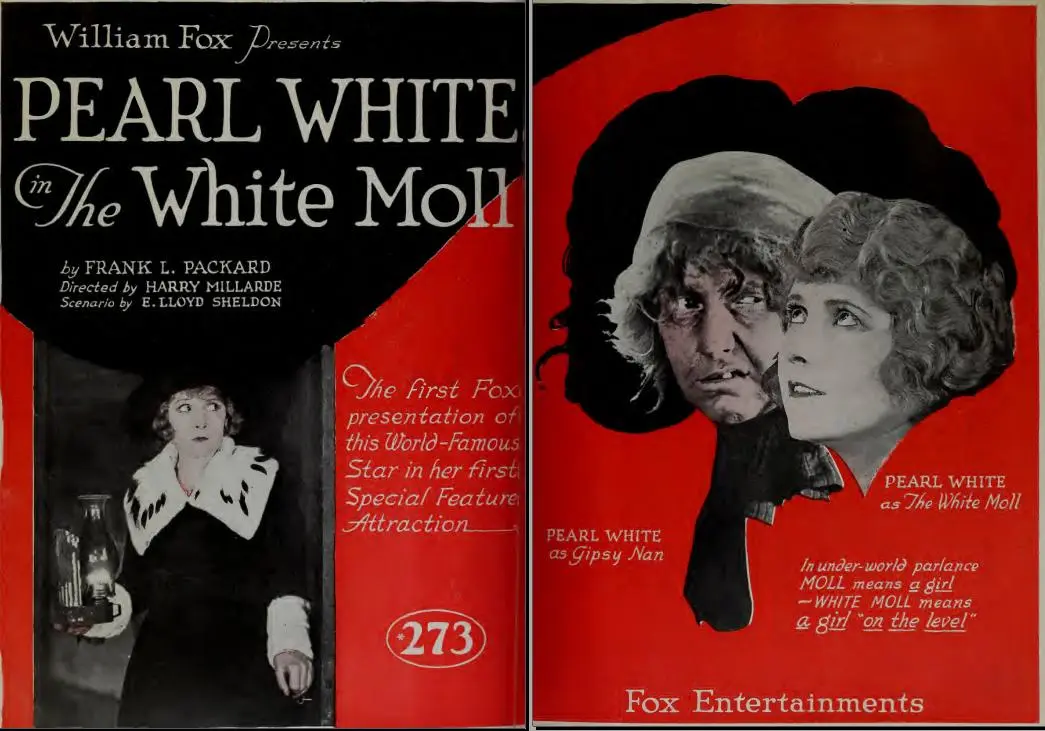
Pearl White’s screen persona was forged on train tracks and cliff edges, yet here she weaponizes vulnerability. Watch her eyes in the close-up after she learns her father has died absolved: they glitter with something too bitter for tears, too private for confession. She never plays Rhoda as saint; instead she lets us glimpse the calculating mind behind the alabaster complexion—how she times her charitable intrusions to coincide with police raids, how she leaks information to tabloid sketch artists to ensure public sympathy. The performance is a masterclass in moral greyness, and it predates by a full decade the anti-heroines that would later populate film noir.
Physically, White is fleet without being balletic; she scrambles up fire escapes like a chimney-cat, but every landing carries the thud of someone who has tasted pavement before. In Chapter Seven she leaps a ten-foot gap between tenements, misses, and dangles by a clothesline. The stunt is real—no rear projection, no net visible—and the camera records the split-second when terror corrodes into determination. That single image, more than any intertitle, explains why audiences of 1920 trusted her to carry their anxieties over the abyss.
If Rhoda’s journey is about unburdening guilt, then Jack Baston’s Pug is the film’s bruised heartbeat. Introduced as a punch-drunk brawler who bets on his own knockouts, he evolves into Rhoda’s reluctant bodyguard, then into her partner in restitution, and finally into the only man who sees the scar tissue beneath her philanthropy. Their courtship is choreographed in glances rather than embraces: she bandages his split eyebrow in the glow of a forge; he teaches her how to throw a left hook that doesn’t telegraph its intention. When they finally kiss—inside a shuttered church, candles snuffed to avoid police spotlights—the moment is framed in chiaroscuro so severe their silhouettes merge into a single stained-glass shard. It is among the most erotic scenes of the silent era precisely because it withholds.
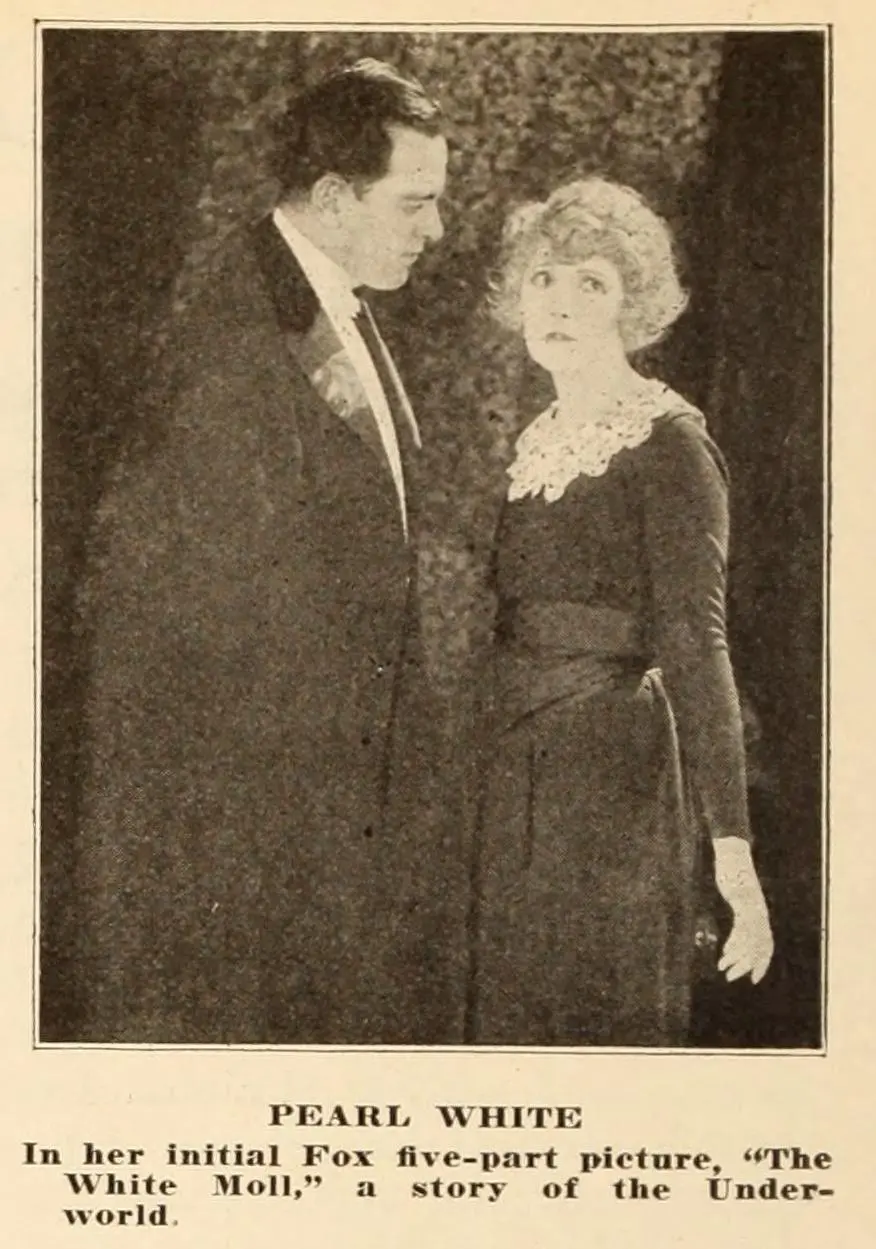
The restoration I viewed—completed by the University of Georgia’s archivists from a 35mm tinted nitrate print—reveals a palette that would make Gustav Klimt blink. Night scenes are soaked in cyan, the color of bruised moonlight, while daylight interiors pulse with a sickly sepia that suggests blood diluted by rain. Intertitles, originally hand-lettered on parchment-colored stock, appear here re-created in a font whose serifs curl like smoke rings. Most startling are the gold-tinted flashbacks that bloom whenever Rhoda remembers her father’s disgrace; the pigment is so metallic it seems to corrode the emulsion, as though memory itself were oxidizing before our eyes.
Packard’s camera language anticipates German Expressionism without succumbing to its angular excess. Staircases tilt, but only enough to make you feel vertiginous; shadows stretch, but never so far that they detach from the bodies that cast them. The result is a world that feels simultaneously documentary and oneiric, as if Jacob Riis had wandered onto the set of Caligari and decided to light it with kerosene lamps.
No original score survives, so the archival screening commissioned a new one by Claire Valcourt for string quartet and toy piano. Her motif for Rhoda is a lullaby in Phrygian mode, its intervals sliding just off-center enough to evoke guilt. The Dangler’s leitmotif is a slow waltz played entirely on muted trumpet, the valves released with the languor of a man exhaling cigar smoke. During the climactic auction scene, the quartet gradually detunes until the strings rattle like loose shutters in a storm. The effect is so unnerving that several viewers (myself included) checked for cell-phone vibrations that did not exist.
Scholars love to slot The White Moll alongside The Plow Woman or A Modern Salome as evidence of post-suffrage cinema wrestling with the New Woman. Yet the film’s true radicalism lies in its refusal to punish its heroine for ambition. Rhoda does not die; she does not marry merely to domesticate her desires. Instead she negotiates a space where compassion and cunning coexist, a balancing act that wouldn’t resurface until the 1970s in the form of Jane Fonda’s Klute or Pam Grier’s Foxy Brown. When she finally unloads the last coin, the camera does not iris-in on bridal veils but on her boot-soles walking away from the frame—into a future that remains unwritten.
Cinephiles will catch reverberations between Rhoda’s nocturnal charity and the guilt-ridden aristocrat of The Beautiful Lie, yet where that film collapses into masochistic atonement, The White Moll opts for restitutive action. Likewise, the moral vertigo of J'accuse! finds a pulp analogue here: both films insist that survival scars the survivor more than the perpetrator. The difference is that Gance’s epic howls at the cosmos, while Packard’s serial whispers into the collar of the person sitting next to you in the dark.
For all its daring, the film cannot escape the racial myopia of its era. Black characters appear only as mute servants or prison orderlies, their faces clipped by the frame as though the camera itself were embarrassed. A 2024 viewer will wince when Rhoda disguises herself in yellow-face to infiltrate an opium den, the slant-eye makeup applied with the casual indifference of someone putting on a false mustache. These moments land like bruises on an otherwise luminous body, and they remind us that even radical texts carry the mold of their moment.
Class, too, is sanitized. The tenement kids who receive Rhoda’s largesse are scrubbed cherubic; the actual stench of poverty—rancid lard, overflowing privies—is traded for the sentimental shorthand of patched knees and shoeless but well-brushed hair. Yet within the confines of 1920 commercial cinema, the film still manages to indict the viewer: every time we thrill to Rhoda’s escapades, we become complicit in the same spectacle that once impoverished her father.
Streamers currently glut us with avenging angels—Alice in Borderland, Kate, Peppermint—yet none wrestle with the moral hangover that The White Moll sips like bitter communion wine. Rhoda’s crusade is not cathartic; it is recursive. Each act of restitution births a fresh grievance, and the film’s final image—her silhouette dissolving into the city’s river of neon—suggests that penance is less a ledger to be balanced than a tide to be surfed until your legs give out.
Archivists tell me the negative is too shrunken for another print cycle; in ten years this restoration may itself fade. See it now, while the gold tint still corrodes, while Pearl White’s eyes still hold that razor gleam. The poor-box is long since empty, but the interest on its debt keeps compounding—accruing not in coin but in the dark orange afterglow that stains the retina when the house lights come up.
Verdict: 9/10 — a cracked cathedral window whose fractures glow brighter than any intact pane.
IMDb 6.2
1923
Community
Log in to comment.