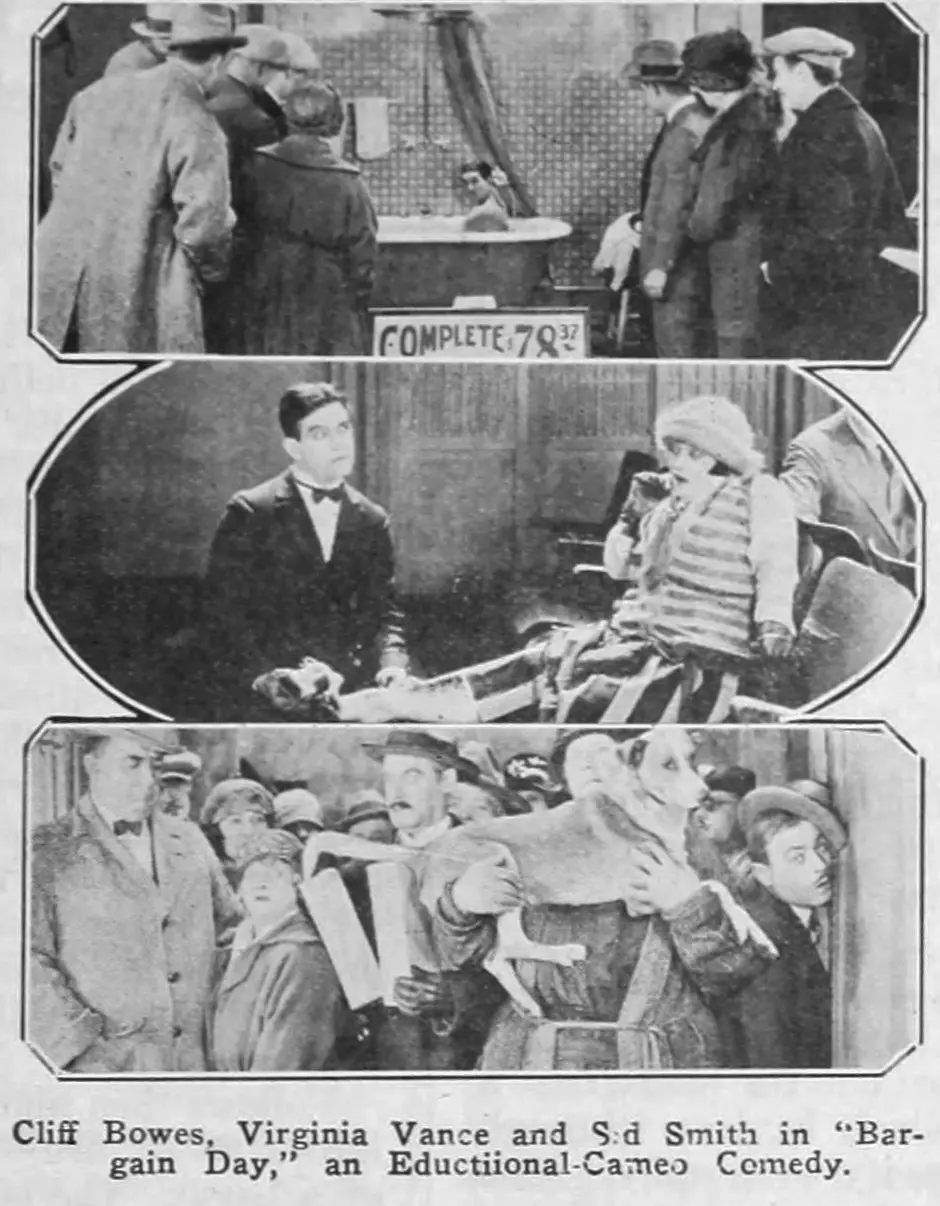
In the heart of a bustling department store, Geoffrey, a man of modest ambitions, finds himself at the center of a modern-day odyssey that transcends the usual romantic escapades. The stage for this drama is set in the silk department, where the air is thick with anticipation for a special sale, and the floors are about to become an obstacle course of human desperation and desire.
The narrative takes a sharp turn when Geoffrey, with a heart full of hope and a wallet not quite as full, decides to pursue Hazel, a woman who catches his eye. Their paths cross in the midst of the crowd, and as the sale begins to unfold, the atmosphere in the store escalates into a chaotic frenzy. The elevator, a microcosm of societal pressures and personal ambitions, becomes the setting for a series of confrontations and near-disasters, each layering on the tension and anxiety.
The claustrophobic environment of the elevator serves as a metaphor for the suffocating and often irrational behaviors of the crowd. The audience is thrust into a scene of pure and unadulterated chaos, where the characters' individual struggles become intertwined with the collective madness. Sidney Smith, in a performance that is both nuanced and raw, portrays Geoffrey's journey from hopeful suitor to a man who must navigate the treacherous waters of human depravity.
From a technical standpoint, 'Bargain Day' is a masterclass in cinematography and sound design. The use of tight, claustrophobic shots in the elevator creates a sense of entrapment that mirrors the characters' feelings of being pushed to their limits. The sound of the crowd, a cacophony of voices and footsteps, adds a layer of tension that is both immersive and disorienting. The film's pacing is relentless, driving the narrative forward with a sense of urgency that leaves no room for complacency.
Geoffrey's journey is a metaphor for the struggles of modern life, where personal goals collide with the relentless pressure of societal expectations. The elevator serves as a microcosm of a larger societal issue, where the pursuit of individual desires often leads to a collective loss of identity and sanity. The film's exploration of this theme is both poignant and thought-provoking, challenging the audience to reflect on their own desires and the ways in which they are shaped by the world around them.
In comparison to other films of the era, 'Bargain Day' stands out for its raw, unfiltered portrayal of human behavior. Films such as 'His Wife Jimmy' and 'Lunatics in Politics' offer a more straightforward exploration of societal issues, but 'Bargain Day' delves deeper into the emotional and psychological aspects of human interaction. The film's focus on the individual's struggle within a larger social context is a hallmark of its brilliance, and it offers a fresh perspective on the complexities of modern life.
Casting wise, Sidney Smith's performance is the linchpin of the film, bringing a layer of vulnerability and resilience to Geoffrey's character. The supporting cast, including Cliff Bowes and Virginia Vance, add depth to the narrative, each bringing their unique energy to the table. The film's dialogue is crisp and engaging, with moments of humor that offset the tension and provide a much-needed respite for the audience.
'Bargain Day' is a film that challenges the viewer to confront their own desires and the ways in which they are shaped by the world around them. It is a powerful exploration of the human condition, one that is both intensely personal and universally relatable. If you are looking for a film that will provoke thought and emotional response, 'Bargain Day' is a must-see. It is a film that stands the test of time and offers a fresh perspective on the complexities of modern life.
For those interested in delving deeper into the themes of 'Bargain Day', I would recommend also checking out 'The Man and the Moment' for a similar exploration of personal ambition and societal expectations. 'Eat-a-Bite-a-Pie' and 'Let Her Rip Van Winkle' offer a different take on the human condition, but are equally thought-provoking. 'Back of the Man' and 'Ambrose's Visit' provide a more comedic approach to the same themes, while 'Protéa' and 'The Red Glove' offer a more poetic and experimental take on the human experience.