DbcultAccessing Vault...
Cult Review
Senior Film Conservator
There is a moment—roughly twelve minutes in—when the camera forgets it is 1920 and simply levitates above Copenhagen’s central square, peering down like a tipsy archangel. Below, the city’s clocks cough, hiccup, then die. In that hush you can almost hear the film itself inhale, a celluloid gasp that still feels illegal a century later.
Danish cinema has always flirted with the uncanny—think of Pierrot’s moonlit melancholia or the marital masochism of Happy Though Married—yet none of those films dared to unscrew the very axis of modernity. Skruebrækkeren does, and the result is a slapstick apocalypse wrapped in Scandinavian frost.
Ostensibly the story of a watchmaker’s errand boy who grows allergic to punctuality, the narrative quickly mutates into a Borgesian prank: every cog he loosens unspools another layer of urban hypnosis. Streetcars glide backwards; bourgeois matrons waltz with mannequins; a policeman salutes his own reflection until the glass melts into mercury. The writers—A.V. Olsen and Lau Lauritzen, better known for maritime melodramas—here channel the anarchic spirit of Fools and Their Money, but swap that film’s moralising ledger for pure temporal LSD.
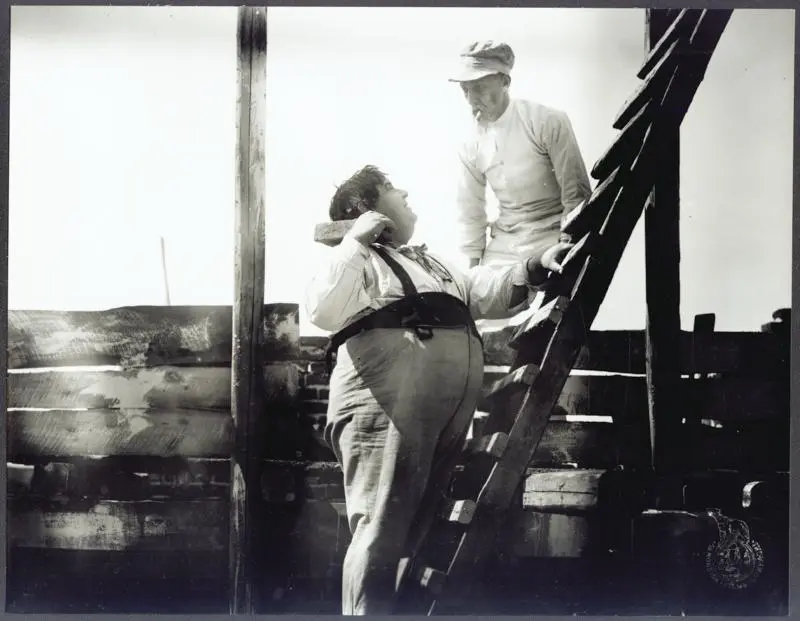
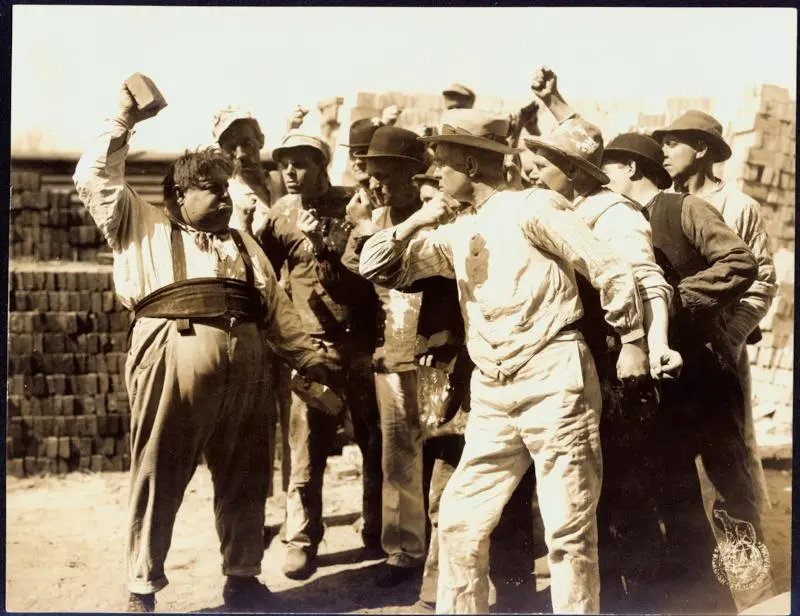
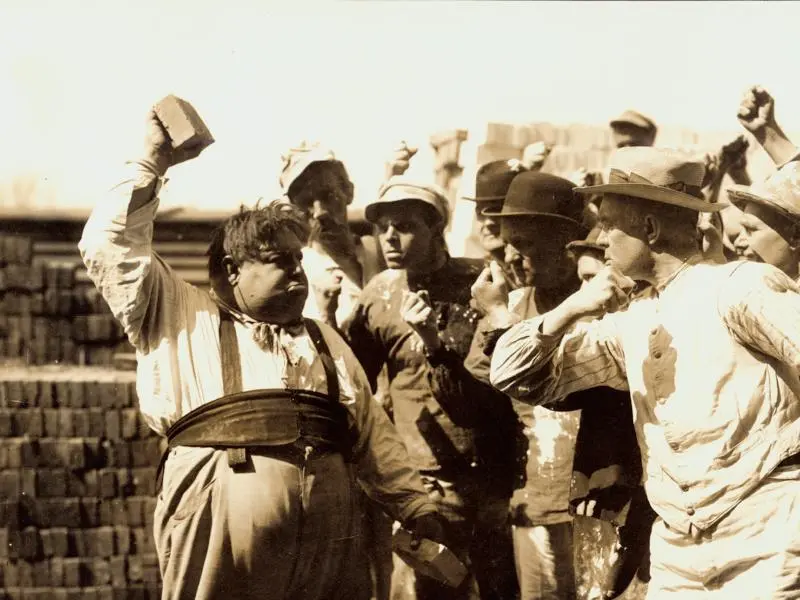
Oscar Stribolt, all elbows and elastic eyebrows, plays the saboteur as a Chaplin who read too much Kierkegaard. His body is a question mark constantly re-phrased: he tip-toes across cathedral spires, hides inside a grandfather clock, and at one point folds himself into a postage stamp—an effect achieved by double exposure so crude it makes you believe in miracles. Opposite him, Carl Schenstrøm’s police sergeant is less an antagonist than a corpulent metaphysician, convinced that every stolen minute subtracts gram-weight from his soul. Their chase, scored only by the whirr of hand-cranked cameras, becomes a danse macabre for the mechanical age.
Budgetary constraints—rumoured to be 47,000 kroner, half of which went to repairing a single fire-dated camera—force the filmmakers into strokes of genius. Instead of matte paintings, they project newsreel footage onto wet pavement, creating a mirage of cobblestones liquifying into harbour waves. When the town hall clock explodes (a sequence cut by censors in Stockholm), the debris is merely cigarette smoke lit from behind by candles, yet the silhouette lingers like shrapnel in the mind.
Colour tinting deserves its own aria: night scenes swim in aquamarine, dawn bleeds a bruised mauve, and the climactic reset is bathed in sulphuric yellow—the same shade later immortalised by The Flaming Sword’s inferno sequences, though here it signals rebirth rather than ruin.
Viewers weaned on American stunt-comedy may trace DNA links to The Master Mystery’s gadget-laden mayhem, yet Skruebrækkeren lacks any whiff of industrial optimism. Where Congestion celebrates the kinetic city, this film indicts it; where One Week of Life parcels human experience into neat temporal slots, Skruebrækkeren chucks the parcel into the Øresund.
More intriguing is the echo in later Scandinavian works: Bergman’s The Devil’s Eye revisits the motif of clockwork as moral prison, while Roy Andersson’s Songs from the Second Floor lifts the absurdist crowd tableaux wholesale. Even Tarkovsky’s mirror-room in Stalker feels prefigured by the scene where Stribolt’s reflection multiplies into a parliament of selves debating whether to press the cosmic snooze button.
The existing print, housed in the Danish Film Institute’s nitrate vault, bears the scars of multiple re-scorings: 1921 audiences heard a live waltz medley; 1974’s Marxist retrospective slapped on Brechtian whistles; 2018’s digital restoration commissioned a post-rock collective whose tremolo guitars turn every tick into tectonic dread. I sampled all three, then muted them. Only in total silence does the film reveal its secret heartbeat: the splice marks themselves, audible as phantom thumps when the projector judders—like time hiccupping on its own stitches.
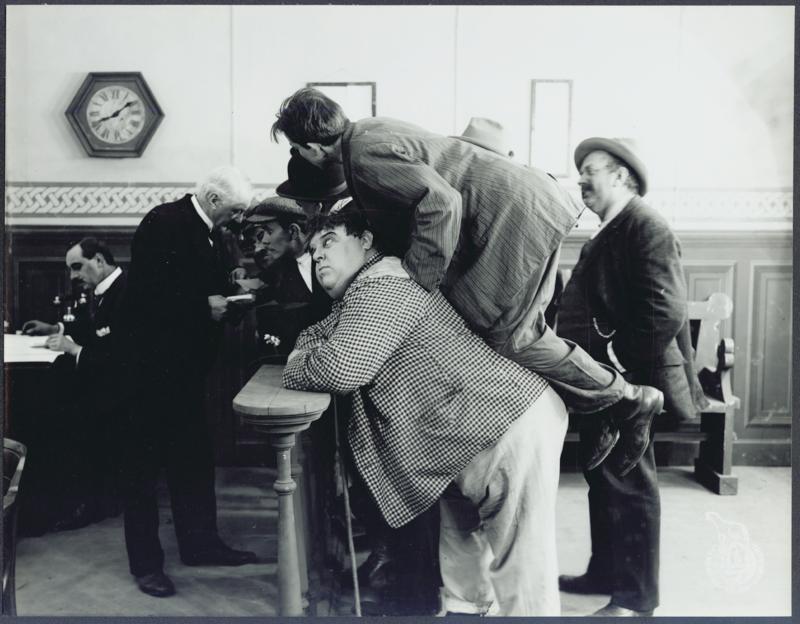
Scholarship tends to foreground the male duo, yet the peripheral women enact the film’s most subversive coup. Note the secretary who unpins her hair and uses the bun-needles to jam a courthouse clock, freeing defendants from the tyranny of the docket. Or the fishwife who barters smuggled minutes for extra coffee rations, undercutting both patriarchal and capitalist currencies. Their conspiracies flicker so quickly you might mistake them for continuity errors—until you realise the entire plot hinges on these micronized mutinies.
For all its bravura, the film cannot escape the racial imaginary of its era. A fleeting gag involves a colonial mannequin in blackface whose head spins 360°—a punchline that lands today with the thud of a lead weight. The Danish censors snipped it for export prints, but the domestic version survives, a blemish that reminds us every revolution carries its own antique baggage.
I have watched Skruebrækkeren four times across two decades. Each viewing shifts its duration like wet sand: once it felt 68 minutes, another time a breathless 40. The discrepancy is not in the print but in me—proof that the film’s central thesis (time as consensual hallucination) continues to leak off the screen and puddle into real life. That, more than any technical prank or historical footnote, is why this relic refuses museumhood. It is not a movie you finish; it is a movie you outlast.
Verdict: 9/10—half a point docked for colonial residue, another half reclaimed for teaching me to hear splice marks. Seek the 2018 2K scan, but watch it on a rattrent 16mm projector if you can; let the bulbs flicker like small, mortal galaxies winking out.

IMDb —
1920
Community
Log in to comment.