DbcultAccessing Vault...
6.8/10
Senior Film Conservator
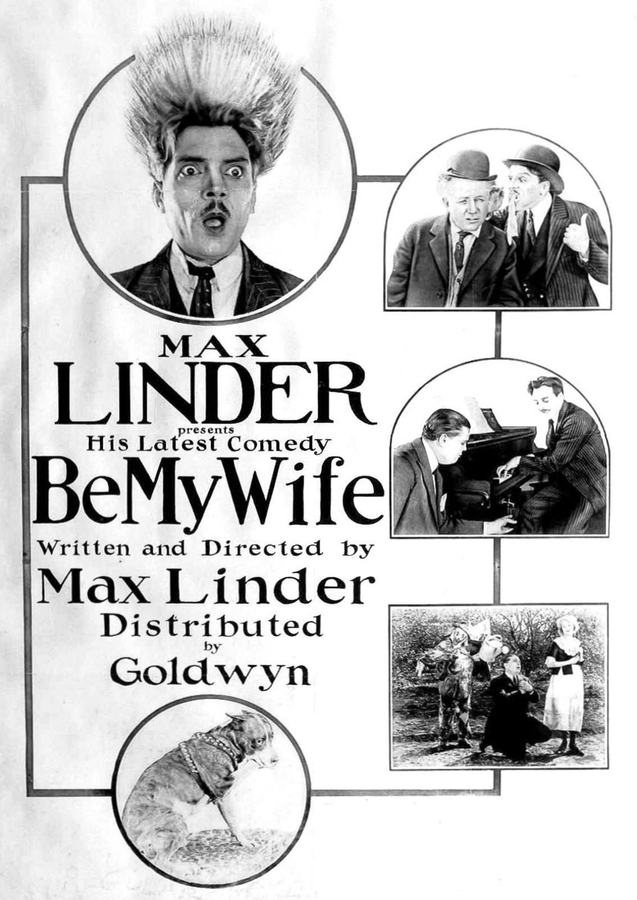
A definitive 6.8/10 rating for a film that redefined the boundaries of cult cinema. Be My Wife remains a cornerstone of transgressive art.
Parisian boulevard snowflakes swirl around a silk top-hat that has just been flattened by a fiacre; within three seconds that same hat will be resurrected, dented, yet rakishly tilted—an emblem of Max Linder’s entire ethos: elegance survives humiliation by laughing at it.
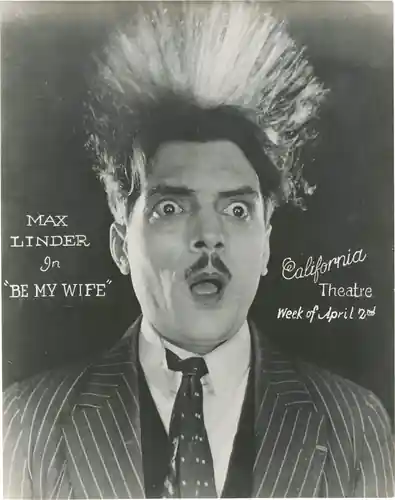
Be My Wife, the 1921 silent that too many cineastes unknowingly skip on their pilgrimage from Keaton to Lubitsch, is a compact tornado of courtship contortions. At 56 minutes it feels both breathless and balletic, a film that sprints on the balls of its feet while never misplacing its cane-twirling swagger. Linder, who wrote, produced, and stars, distills the DNA of future romantic comedies into a moonshine so potent that every swig leaves you woozy with déjà vu.
Max, a name that functions like a punchline in advance, pursues the porcelain-complexioned Mary (Viora Daniel) across manicured hedges and drawing-room battlefields. The obstacle: Aunt Agatha (Rose Dione), a matriarch whose bustle seems stuffed with disapproval rather than horsehair. She brandishes a lorgnette the way a vampire hunter wields a crucifix. Every time Max attempts to scale the walls of Victorian decorum, Agatha materializes like a gargoyle sprung to life.
Yet the plot is less a linear siege than a Möbius strip of social embarrassment. Max disguises himself as a woman to infiltrate a garden party; the corset strings snap, launching him into a fountain where goldfish nibble at his dignity. He bribes a butler (Charles McHugh) with enough coin to purchase a modest principality, only to discover the servant’s loyalty lasts exactly until the champagne loses its fizz. Even Pal the Dog, cinema’s first four-legged scene-stealer this side of Friday the 13th’s campy suspense, trots off with Max’s trousers in a sequence that predates Keaton’s canine sidekick gags by half a decade.
Linder’s mise-en-scène is a cartography of waistcoats and weaponized etiquette. Note how the camera lingers on a white glove snapping across a palm—an auditory synecdoche even without synchronized sound. The monochrome palette becomes a chessboard: Max’s obsidian tailcoat versus Agatha’s ivory lace. Mary drifts between them in dove-grey, a mutable pawn awaiting coronation as queen.
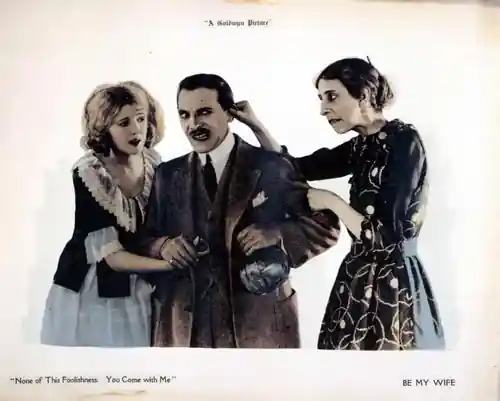
The film’s most exquisite flourish arrives when Max, believing himself jilted, attempts suicide by cigar. He lights an explosive, then reconsiders, stuffing it into a rival’s pocket. The cutaway to a statue of Cupid with an arrow aimed at nothing in particular is silent-era shade-throwing of the highest order.
Under the froth lies a stealth manifesto on the commodification of brides. Mary’s value fluctuates like a stock ticker: when she’s “compromised” by a compromising letter, her dowry inflates; when Max appears penniless, it plummets. Aunt Agatha’s parlor is Wall Street in crinoline. The film winks at this economic subtext by having Max literally gamble his future on a roulette wheel that keeps turning even after the ball has landed—an image that anticipates the fatalism of Lykkens blændværk.
Yet the women are never mere mannequins. Mary’s sidelong glance at Max’s pratfall carries the same erotic charge as Garbo’s cigarette caress, only quicker, as if she’s afraid to admit she enjoys the spectacle of male humiliation. And when she finally commandeers the dog to deliver her own letter—an epistolary coup d’état—the power dynamic flips faster than a vaudeville mattress.
Chaplin’s tramp is a poet of pathos; Keaton’s stone face is a monument to existential endurance; Lloyd’s bespectacled go-getter is capitalism’s stunt double. Linder, by contrast, is the boulevardier as boulevard—smooth, paved, and driven over by every heel in Paris. His comedy is not the survival of the underdog but the persistence of the overdog who refuses to admit he’s been downgraded.
Compare the dinner-table sequence here with the bean-feast chaos in The Janitor’s Harem. Where the latter uses surplus bodies for centrifugal mayhem, Linder orchestrates a minuet of raised eyebrows, misplaced soup tureens, and a single oyster that slides across a silver platter like a comet across the night sky. Precision over pandemonium.
Most prints circulating today derive from a 1999 Lobster Films restoration, cobbled from a Czech nitrate positive and a French dupe peppered with Dutch intertitles. The flicker you notice during the garden-party dissolve? That’s the splice where 17 feet of footage—reportedly a Ferris-wheel elopement gag—went missing during WWII. Each scratch is a scar; each missing frame, a phantom limb.
Yet absence becomes part of the aesthetic. When the film jumps from Max’s tear-stained eyes to a wedding veil with no explanatory vignette, the narrative ellipses feel modernist, almost like the jump-cuts Constantinople, the Gateway of the Orient employed to evoke temporal dislocation.
At its 2022 MoMA screening, accompanist Ben Model premiered a score that interpolates Offenbach’s “Gendarmes’ Duet” with a tango in a minor key, synchronizing the moment Max’s heart breaks with a accordion’s wheeze. The effect is devastating: you realize the laughter has been a diversion, the same way a magician’s right hand flourishes while the left palms the coin.
Modern entries in the genre—those pastel-washed, Spotify-soundtracked affairs—treat love as a solvable algorithm. Swipe, match, misunderstanding, kiss, roll credits. Linder offers no algorithm, only asymptote: the lovers approach, veer, ricochet, and finally collide in a kiss that leaves both breathless and slightly bruised. The film understands that desire is not a straight line but a Spirograph doodle—beautiful because it’s pointless.
So the next time some algorithm nudges you toward a reboot starring a TikTok heartthrob, detour instead to Be My Wife. Let Max teach you that courtship is at once carnival and crucifixion, and that the most enduring marriages are those whose foundations tremble with the echo of a pratfall.
(For further contextual mayhem, pair this with The Misfit Wife’s reverse-gender shenanigans or Sleuths and Slickers’s corridor-sprinting entropy.)
IMDb 6.1
1935
Community
Log in to comment.