DbcultAccessing Vault...
6.6/10
Senior Film Conservator
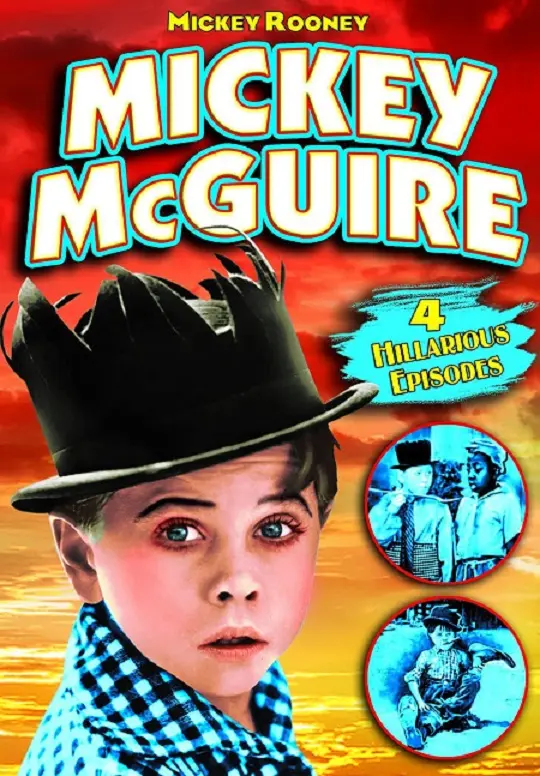
A definitive 6.6/10 rating for a film that redefined the boundaries of cult cinema. Mickey's Circus remains a cornerstone of transgressive art.
Is "Mickey's Circus" worth watching today? Short answer: yes, but with significant caveats. This 1930s short film is a fascinating artifact, a vibrant snapshot of early Hollywood and the burgeoning charisma of a young Mickey Rooney, making it a compelling watch for film historians, classic cinema enthusiasts, and those curious about the roots of vaudeville-style entertainment on screen. However, it is decidedly not for viewers seeking complex narratives, sophisticated filmmaking, or a film that challenges contemporary sensibilities; its charm lies in its simplicity and historical context.
"Mickey's Circus" is a delightful, if slight, short film that captures a very specific moment in cinematic history. Directed with a clear understanding of its target audience – children and families – it functions primarily as a showcase for its young, energetic cast. The film’s premise, that a group of kids decides to put on their own circus, is inherently charming and relatable, tapping into a universal fantasy of childhood ambition and imaginative play.
What truly elevates this short beyond a mere historical curiosity is the raw, unadulterated talent on display, particularly from Mickey Rooney. Even at such a young age, his star power is undeniable. He commands the screen with an infectious energy that is both authentic and polished, a testament to the early honing of skills that would make him one of Hollywood's biggest stars. His performance isn't just a series of actions; it's a force of nature, pulling the audience into the vibrant, if chaotic, world these children create.
The film works because it understands its strengths: the inherent appeal of children performing, the simple joy of a DIY spectacle, and the magnetic personality of its lead. It fails because its narrative is threadbare, serving more as an excuse for a series of acts rather than a cohesive story. You should watch it if you appreciate the historical context of early sound shorts, enjoy seeing the genesis of major Hollywood talent, or simply want a dose of innocent, unpretentious fun.
The cast of "Mickey's Circus" is a veritable who's who of child performers from the era, each bringing their own distinct flavor to the ensemble. Billy Barty, for instance, with his incredible stage presence and comedic timing, offers moments that are genuinely laugh-out-loud funny. His physical comedy, even in this early role, is remarkably sophisticated, demonstrating a natural aptitude for performance that would define his long career. The interplay between these young actors feels organic, a testament to director Fontaine Fox's ability to harness their youthful energy without making it feel overly rehearsed or artificial.
Delia Bogard and Junior Johnston, while perhaps not as prominently featured as Rooney or Barty, contribute significantly to the film's overall charm. They embody the wide-eyed enthusiasm and occasional clumsy grace that is so endearing in child performers. Their collective effort creates a believable, if idealized, world of childhood enterprise. It’s a joy to watch them navigate the challenges of their improvised circus, from failed stunts to triumphant acts, with an earnestness that transcends the simple script.
Fontaine Fox, primarily known as a cartoonist, brings a certain visual wit and straightforward storytelling to "Mickey's Circus." The direction is unpretentious, focusing on clear sightlines for the various performance acts and allowing the children's natural exuberance to drive the scenes. There's a refreshing lack of overly complex camera work, which, in a way, enhances the film's 'home movie' aesthetic, making the audience feel like they are truly watching a neighborhood show.
The pacing is brisk, a necessity for a short film, ensuring that interest never wanes. Scene transitions are simple, often cutting directly from one act's preparation to its execution. This rapid-fire succession of gags and performances prevents any single moment from overstaying its welcome, maintaining a lively, energetic tone throughout. For example, the quick cut from Mickey struggling with a tent pole to the next shot of the tent miraculously standing perfectly illustrates this efficient, no-nonsense approach to storytelling.
The cinematography in "Mickey's Circus" is functional rather than artistic. Shot in black and white, the lighting is generally bright and even, ensuring that all the performers are clearly visible. There are no dramatic shadows or intricate compositions; the camera serves as a straightforward observer of the unfolding events. This simplicity, however, perfectly suits the film's tone, which is one of lighthearted, innocent fun.
The overall tone is overwhelmingly positive and optimistic. Even when things go slightly awry in the children's circus, there's never a sense of genuine failure or despair. Instead, it's met with resilient laughter and a quick pivot to the next act. This unwavering optimism is, perhaps, one of the film's most enduring qualities, offering a gentle escape into a world where problems are easily overcome with a smile and a song. It’s a stark contrast to the often cynical tone of modern children's entertainment, and that alone makes it stand out.
Is Mickey's Circus a timeless classic? No, not in the traditional sense of a narrative masterpiece, but it is a valuable historical document and a delightful showcase of nascent talent. It offers a unique window into the entertainment sensibilities of the 1930s and the raw, unpolished charm of early child stars.
Who will enjoy it most? Individuals with an interest in film history, particularly the evolution of comedy shorts and the careers of actors like Mickey Rooney and Billy Barty. It's also a nostalgic trip for those who appreciate simpler, more innocent forms of entertainment.
What is its biggest draw? The sheer energy and undeniable star power of Mickey Rooney, even in his youth, coupled with the endearing performances of the entire child cast. It's short, punchy, and leaves a smile on your face.
When viewed alongside other shorts of its era, such as the more narrative-driven The Country Heir or the more dramatic J'accuse!, "Mickey's Circus" stands out for its purely entertainment-focused approach. It doesn't aim for complex character development or social commentary. Instead, it leans heavily into the vaudeville tradition, where a series of acts are loosely strung together by a theme. This makes it feel less like a 'movie' and more like a captured stage performance, which, for a critic, is both its strength and its limitation. It works. But it’s flawed.
The film’s focus on children performing for children also sets it apart from adult-oriented comedies like Red Hot Love. It occupies a niche of family-friendly entertainment that was still finding its footing in the early sound era. While it may lack the technical sophistication of later productions, its earnestness is a refreshing change of pace. It's a testament to the fact that good, clean fun has always had a place in cinema.
One surprising observation about "Mickey's Circus" is how effectively it conveys the feeling of a genuine, if amateur, circus. The imperfections, the slightly out-of-sync music, the visible effort in the children's stunts – all contribute to an authentic atmosphere that a more polished production might have lost. It’s not about perfection; it’s about effort and heart. This raw quality gives the film an unexpected depth, making it feel less like a studio product and more like a spontaneous neighborhood event. It's charmingly unvarnished.
The film's most debatable opinion, for me, is whether its simplistic narrative truly holds up beyond its historical value. While I argue its charm is undeniable, I can also see how a modern viewer, accustomed to intricate plots and high production values, might find it a bit too light. Its reliance on the charisma of its young stars is immense, and without that, it would likely fall flat. But the charisma is there, in spades.
"Mickey's Circus" is more of a cultural curio than a cinematic masterpiece, but its value is undeniable. It serves as a vibrant, if simplistic, showcase for the raw talent of its young stars, particularly Mickey Rooney, whose magnetic presence is evident even in these early years. While it won't challenge your intellect or leave you pondering deep themes, it offers a refreshing dose of innocent fun and a fascinating look at the foundational elements of Hollywood entertainment. Its charm is in its straightforwardness, its energy, and its unapologetic embrace of youthful spectacle. For those willing to adjust their expectations to the era, it's a short, sweet, and surprisingly engaging piece of film history. It's not a must-see for everyone, but for the right audience, it's an absolute treat. Consider it a delightful historical footnote, brimming with unbridled enthusiasm.
IMDb —
1914
Community
Log in to comment.