DbcultAccessing Vault...
Cult Review
Senior Film Conservator
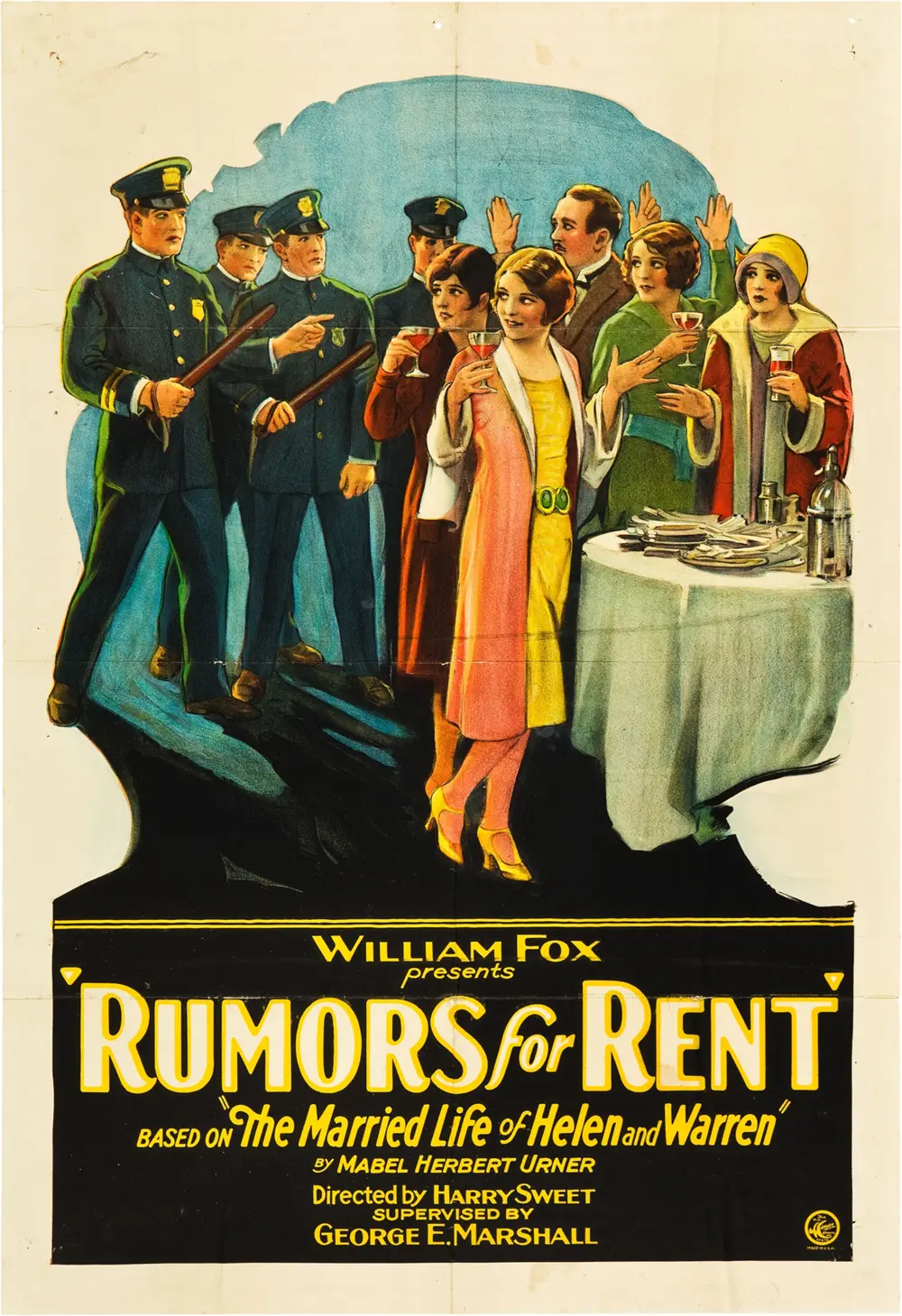
Is Rumors for Rent worth your time in the modern age? Short answer: yes, but primarily for those who appreciate the cynical undercurrents of 1920s domestic dramas rather than pure slapstick.
This film is for the viewer who enjoys peeling back the layers of social artifice and seeing how the 'polite' society of a century ago was just as obsessed with clout as we are today. It is decidedly not for those who require high-definition spectacle or fast-paced narrative resolution.
1) This film works because it treats gossip as a tangible, tradeable commodity, creating a tension that feels surprisingly modern.
2) This film fails because the third act relies on a series of convenient coincidences that undermine the sharp realism of the opening half.
3) You should watch it if you are a fan of Mabel Herbert Urner’s writing or want to see Arthur Housman before he became entirely typecast in 'drunk' roles.
Rumors for Rent is worth watching if you value historical context and the evolution of the social satire genre. While it lacks the grand scale of The Courtship of Myles Standish, it offers a more intimate and biting look at human nature. It serves as a fascinating time capsule of 1920s anxieties regarding class and reputation.
The brilliance of Rumors for Rent lies in its script, penned by Mabel Herbert Urner. Urner, famous for her 'Helen and Warren' stories, had a preternatural ability to capture the friction of domestic life. In this film, she takes that friction and applies it to the broader social sphere. The central conceit—that rumors can be rented or manipulated to achieve social ends—is a dark reflection of the American Dream.
Consider the scene where Katherine Perry’s character first realizes the power of a well-placed lie. The camera lingers on her face as she weighs the moral cost against the social gain. It’s a subtle moment, devoid of the over-the-top mugging common in the silent era. It reminds me of the psychological depth found in Sex (1920), though the stakes here are more domestic than scandalous.
The pacing, however, is where the film struggles. Like many productions from 1921, it feels caught between the short-form 'gag' style and the emerging feature-length narrative. There are moments where the plot grinds to a halt to accommodate a bit of physical business from Otto Fries. While Fries is a capable performer, these diversions often feel like they belong in a different movie entirely, perhaps something more akin to Taming the West.
Katherine Perry is the emotional anchor of the film. She possesses a grounded quality that makes her character's desperation palpable. When she navigates the treacherous social waters of the second act, you feel the weight of her character's precarious position. She isn't just a damsel; she is a strategist. This is a far cry from the more passive roles seen in Wild Beauty.
Arthur Housman, on the other hand, provides the film's most unpredictable energy. Known later for his impeccable 'drunk' characters, here he shows a versatility that is often overlooked. His character serves as the catalyst for much of the film’s external conflict. Every time Housman enters a scene, the temperature of the film rises. He brings a sense of danger that contrasts sharply with the stiff, formal environments of the upper-middle-class sets.
Otto Fries provides the necessary bulk and physical presence to ground the comedy. His interactions with Perry are highlights, showing a domestic partnership that feels lived-in and weary. Unlike the idealized romance in The Cloister and the Hearth, the relationship in Rumors for Rent is transactional and messy. It’s honest. And in 1921, honesty in domestic depictions was a rare commodity.
Visually, the film is functional but rarely experimental. The lighting is flat, typical of the era's indoor sets, yet it serves the narrative by not distracting from the performances. There is a specific use of shadows in the 'rental' office scenes that hints at the noir aesthetics that would emerge a decade later. It’s a subtle touch, but it adds a layer of moral ambiguity to the proceedings.
The intertitles are surprisingly sparse, allowing the visual storytelling to carry the weight. This is a mark of a confident director who trusts his actors. Compared to the dialogue-heavy feel of God's Law and Man's, Rumors for Rent feels lean and visual. The director uses the physical space of the house to mirror the characters' feelings of entrapment, a technique that would be perfected in later decades but is seen here in its nascent form.
Pros:
Cons:
When looking at other films from this period, such as Ashamed of Parents, one sees a recurring theme of generational and social anxiety. However, Rumors for Rent approaches these themes with a smirk rather than a sob. It is a film that recognizes the absurdity of social climbing. It doesn't ask you to pity the characters; it asks you to recognize yourself in their petty schemes.
Even compared to more lighthearted fare like The Barnstormers or Up in the Air, Rumors for Rent feels more substantial. It has a bite. It understands that the greatest threats to our happiness are often the words spoken behind closed doors. It is a film of interiors—both architectural and psychological.
There is a sequence involving a misplaced letter that, while a cliché today, is handled with such frantic energy by Arthur Housman that it feels fresh. It reminds me of the chaotic energy in Why Girls Say No, but with a darker edge. The film isn't afraid to let its characters be unlikeable, which is its greatest strength. It works. But it’s flawed.
Rumors for Rent is a fascinating, if slightly uneven, piece of silent cinema. It transcends its low-budget origins through a clever script and committed performances. While it may not reach the epic heights of The Hope or the rugged charm of The Pioneers, it carves out a unique space for itself as a sharp, cynical domestic comedy. It is a reminder that the price of a reputation has always been high, and the rent is always due. It’s a bit of a mess. But it’s a brilliant mess.

IMDb 4.9
1926
Community
Log in to comment.