DbcultAccessing Vault...
Cult Review
Senior Film Conservator
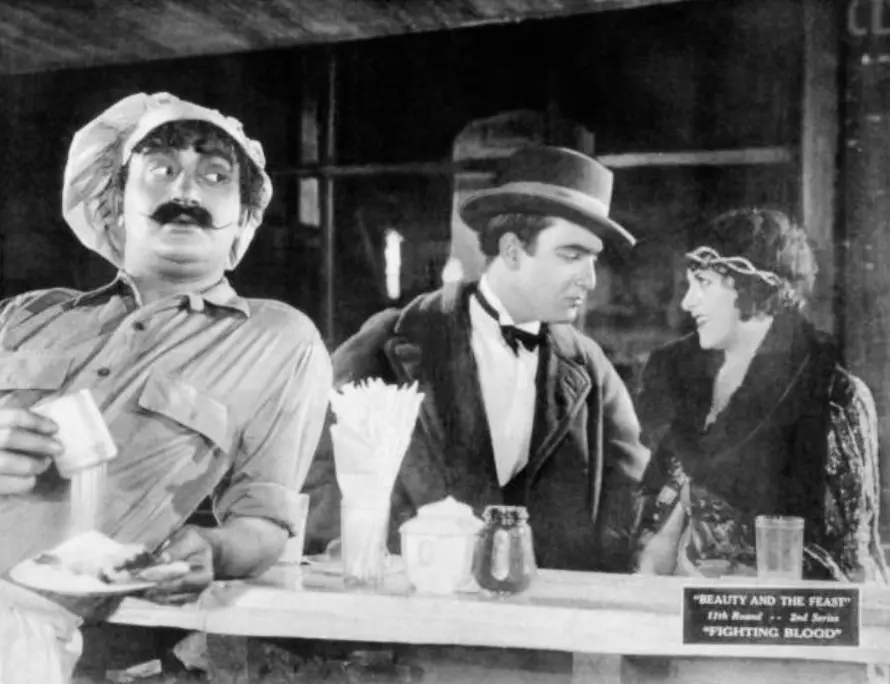
When the reels of Beauty and the Feast begin to spin, the viewer is thrust into a world where artistic ambition collides with rigid class structures. Kit Guard’s portrayal of Gale is a study in restless energy; his eyes flicker with the same intensity he reserves for brushstrokes, and his movements echo the cadence of a dancer rather than a conventional boxer. This duality—artist‑fighter—forms the film’s beating heart, a pulse that drives the narrative forward with an almost palpable rhythm.
Gale’s first foray into the Paddington salon is less a polite introduction than a bold splash of color on a pristine white wall. He arrives bearing a portfolio of stark, expressionist works that starkly contrast the genteel, pastel‑tinted décor of the household. The cinematography, courtesy of an unnamed yet deft director of photography, frames Gale’s canvases in tight close‑ups, allowing the audience to absorb the raw, almost feral brushwork that defines his aesthetic. This visual contrast is a deliberate narrative device: it underscores the cultural chasm between the bohemian outsider and the aristocratic insiders.
Patricia Paddington (Louise Lorraine) is introduced as the embodiment of genteel grace, yet her curiosity is unmistakably piqued by Gale’s unapologetic authenticity. Their brief, charged exchange—her hand hovering over a particularly aggressive painting, his voice a low murmur about “the truth hidden in chaos”—sets the stage for a tension that reverberates throughout the film.
The father, a stern figure played by Al Cooke, epitomizes the era’s patriarchal gatekeeping. His dismissal of Gale is not merely a personal slight; it is a manifestation of the broader societal reluctance to embrace artistic disruption. The film cleverly escalates this conflict into a physical confrontation—a bout that feels more like a choreographed dance than a conventional fight. The choreography, illuminated by stark chiaroscuro lighting, evokes the kinetic energy of a silent‑era action sequence while simultaneously serving as a metaphor for the clash between tradition and innovation.
During the bout, Gale’s fighting style mirrors his painting technique: abrupt, unrefined, and unapologetically bold. The camera tracks his movements with a handheld jitter that, for its time, feels almost modern—adding a visceral immediacy that pulls the viewer into the fray. The audience in the film, a microcosm of society, watches with a mixture of awe and horror, their reactions echoing the mixed critical reception that modernist art often provoked.
When the dust settles, the patriarch, bruised both physically and ideologically, offers Patricia a stark choice: remain within the comforting confines of the family estate or abandon that sanctuary for a life alongside Gale. This moment, rendered in a lingering close‑up of Patricia’s conflicted visage, is the emotional fulcrum of the film. Gale’s counsel—advising her to honor her father’s wishes—introduces a layer of self‑sacrifice that complicates his earlier rebellious persona.
The decision to forgo the romanticized notion of the starving artist’s triumph in favor of a more nuanced, bittersweet resolution is a daring narrative choice. It reflects a mature understanding of the era’s social realities, acknowledging that artistic freedom often came at the expense of personal stability.
Kit Guard’s embodiment of Gale is a masterclass in silent‑film expressiveness. His facial micro‑expressions—ranging from the smoldering intensity of a painter lost in his work to the weary resignation after the bout—communicate a spectrum of emotions without a single spoken word. Louise Lorraine, as Patricia, balances poise with an undercurrent of yearning, her eyes often lingering on the empty spaces of the grand hall, perhaps dreaming of a life beyond gilded constraints.
Al Cooke’s patriarch is a study in stoic authority, his rigid posture and clipped gestures reinforcing the weight of tradition. Mary Beth Milford and George O'Hara provide texture to the social tapestry, their brief interludes offering glimpses into the broader community’s attitudes toward art and rebellion.
The film’s exploration of artistic alienation aligns it with contemporaneous works such as The Golem, where the outsider grapples with societal acceptance, and Sherlock Holmes (1922), which juxtaposes intellect against entrenched norms. Yet, Beauty and the Feast distinguishes itself through its intimate focus on personal choice rather than grandiose spectacle.
The screenplay, penned by Beatrice Van and H.C. Witwer, weaves dialogue‑free intertitles that are succinct yet evocative, allowing the visual storytelling to dominate. Their collaboration yields a script that feels both theatrical and cinematic, a hybrid that resonates with the era’s experimental spirit.
Although the film is presented in monochrome, the director’s use of light and shadow creates a palette reminiscent of the modernist paintings Gale champions. The chiaroscuro technique, especially during the climactic bout, invokes the stark contrasts found in expressionist cinema, drawing a visual parallel between Gale’s artistic philosophy and the film’s own aesthetic choices.
The set design—opulent chandeliers, marble staircases, and richly draped curtains—serves as a visual metaphor for the gilded cage that Patricia inhabits. In contrast, Gale’s modest studio, cluttered with canvases and splattered paint, embodies creative freedom, however chaotic.
While Beauty and the Feast may not enjoy the same renown as Once to Every Woman or the swashbuckling vigor of The Lone Star Ranger, its nuanced portrayal of artistic integrity versus social conformity endures as a poignant study. Contemporary audiences, attuned to the perpetual tension between creative authenticity and commercial viability, will find Gale’s dilemma strikingly familiar.
Moreover, the film’s decision to eschew a conventional happy ending in favor of a sober, realistic resolution anticipates later works such as In the Night, where moral ambiguity supersedes melodramatic closure.
In sum, Beauty and the Feast stands as a compelling artifact of silent‑era storytelling, marrying visual bravado with thematic depth. Its performances are layered, its direction purposeful, and its screenplay incisive. For scholars of early cinema, the film offers a rich case study in how narrative structure can reflect broader cultural anxieties. For casual viewers, it delivers an engaging, emotionally resonant tale that transcends its black‑and‑white frame.
If you are seeking a silent film that balances artistic ambition with a grounded, humanistic core, look no further than this understated yet unforgettable drama. Its relevance persists, reminding us that the true feast of beauty often comes with a bittersweet aftertaste.
IMDb 5
1917
Community
Log in to comment.