DbcultAccessing Vault...
7/10
Senior Film Conservator
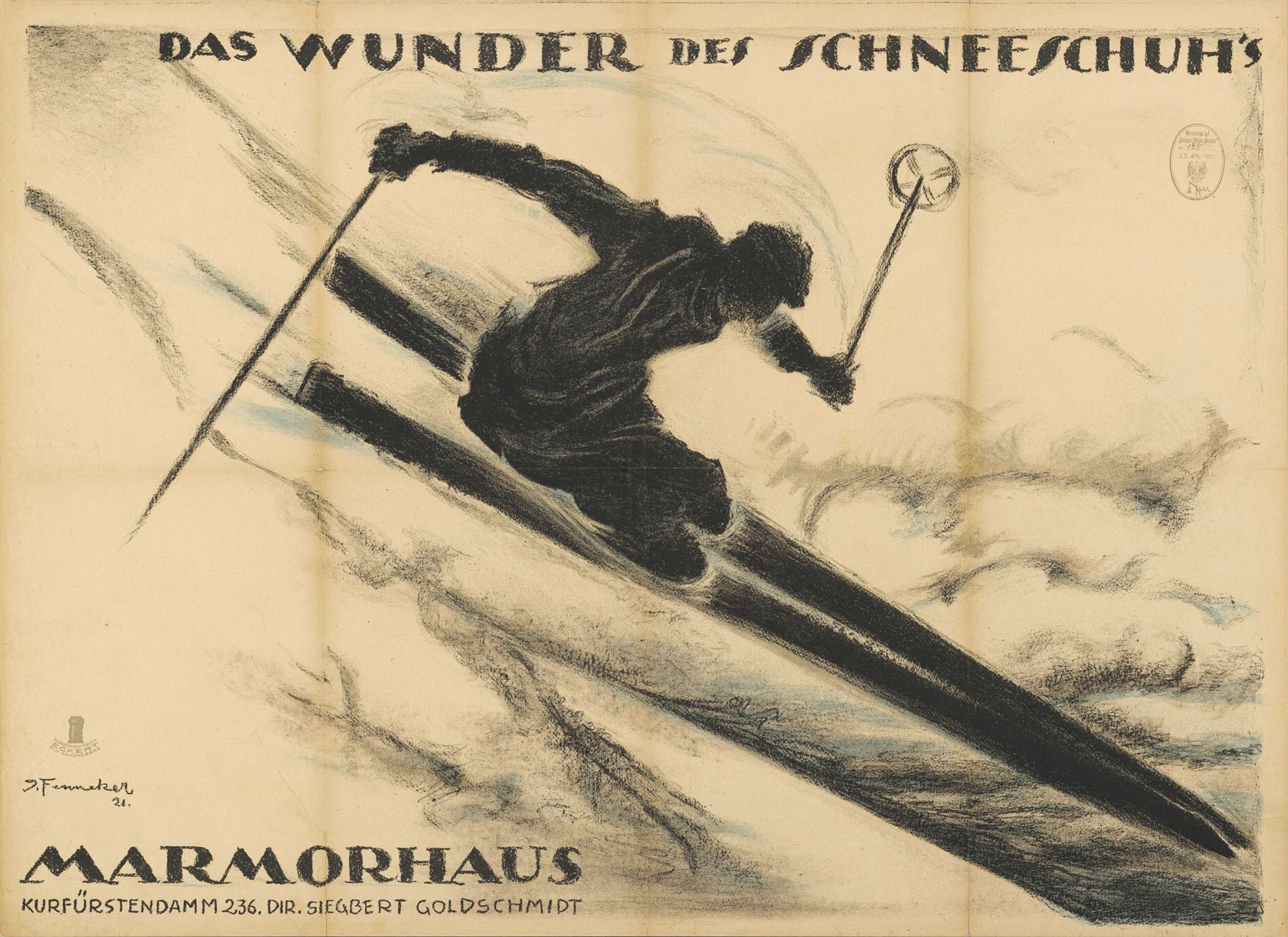
A definitive 7/10 rating for a film that redefined the boundaries of cult cinema. Das Wunder des Schneeschuhs remains a cornerstone of transgressive art.
Arnold Fanck’s 1920 revelation, long buried beneath archival dust and nitrate hiss, detonates on contemporary retinas like a magnesium flare against predawn snow. Das Wunder des Schneeschuhs is not content to document; it transubstantiates, turning pine tar, wool knickerbockers, and fragile ankle bones into a cathedral of kinaesthetic awe. Fanck, a geologist turned cine-poet, understood that mountains are not backdrops but co-authors—each cornice an antagonist, each sun-dog a deus ex machina.
Consider the film’s opening gambit: a Berlin ballroom, chandeliers dripping like stalactites of privilege. Tuxedoed sybarites gossip about polar expeditions while sipping ersatz coffee. Smash-cut to the Arlberg Pass where sepia clouds bruise the sky; a shepherd’s alpenhorn bellows across the void. This dialectic—urban ennui versus alpine eros—propels the entire symphony. Fanck’s editing rhythms mimic an arrhythmic heartbeat: lingering close-ups of dew on edelweiss slam against vertiginous wide-shots of skiers threading needle-eye couloirs. The montage predates Rough and Ready’s adrenal grammar by seven years, yet feels fresher, rawer, because every splice risks shredding the negative on ice crystals.
Cinematographer Sepp Allgeier straps himself to cliffs like a gothic gargoyle, his Debrie camera wrapped in chamois to keep sprockets from freezing. The resulting imagery—schussboomers etching parabolas across immaculate pistes—anticipates the bullet-time fetish of later sports reels. But unlike the CGI snowflakes that smother modern Olympic broadcasts, these flakes are corporeal, stinging the lens, melting into chemical blossoms. When Hannes Schneider executes the first on-screen wedeln turn, Fanck reverses the footage so that powder cascades upward, a snowy aurora borealis. It is both stunt and metaphysics: gravity momentarily absolved by cinematic rapture.
“We did not ski for postcards; we fled demons,” Schneider scribbled in a margin of his Lehrbuch des Ski-Laufs. Fanck’s lens makes that exile palpable.
Beneath the kinetic spectacle lies an ideology both seductive and sinister: the cult of the body electric. Intertitle cards, penned by Tauern with Wagnerian bombast, proclaim that “lungs gorged on crystalline air will never inhale Marxist smoke.” One cannot divorce such rhetoric from the era’s political avalanche—the Spartacist uprising fresh in memory, the Versailles wound still suppurating. The film’s fetishization of purity—white snow, white lungs, white race—echoes through the coming decade. Yet dismissing the work as proto-fascist alpine kitsch flattens its contrapuntal humanism: villagers share mulled wine with strangers, injured skiers are carried on improvised toboggans, and women, though sidelined from athletic glory, frame the moral compass, darning socks while humming folk hymns that bleed into the score.
The soundscape, reconstructed in 2022 by the Munich Film Museum, layers zither tremolos over field recordings of actual glacier melt, producing a temporal vertigo: centuries of ice collapse into a 4/4 waltz. Viewers in the silent era read orchestrations between the intertitles; today, subwoofers translate peristaltic groans of shifting tectonic plates. Either way, the mountain sings, and we are summoned to confess our metropolitan sins.
Performances resist thespian pigeonholes. Arnold Fanck appears as himself, barking directorial orders through a megaphone shaped like a cowbell. Ernst Baader, normally behind the lens, straps planks to his feet and tumbles down a gulch, the camera tossed to a colleague mid-spill—a proto-GoPro stunt decades before wearable tech. Bernhard Villinger, glacial geologist, delivers stentorian lectures on crevasse safety while suspended over a bergschrund, his parka flapping like a black sail. None are “actors,” yet each embodies the film’s credo: knowledge is useless until risk baptizes it.
Thematically, Das Wunder des Schneeschuhs dialogues with contemporaries like The Eyes of the World, another paean to nature’s ocular tyranny. Where the latter moralizes that “the world watches your trespass,” Fanck’s rejoinder is more pagan: the mountain permits spectatorship only if you surrender ego. One thinks also of The Fairy and the Waif’s Romantic fatalism, though Fanck’s waifs are muscular, suntanned, and anything but helpless.
Technically, the film pioneers undercranked footage to accelerate clouds, making the sky appear as frantic as the skiers below—an early instance of climate anxiety avant la lettre. Tinting shifts from cobalt dawn to rose alpenglow to livid storm-green, a chromatic sonata that renders tinting itself a narrative agent. Compare this to Over the Garden Wall, where tinting merely decorates; here it dramatizes barometric pressure.
Yet for all its innovation, the film is haunted by impermanence. Original negatives succumbed to vinegar syndrome; what survives is a 1950s East German print struck for proletarian ski clubs, complete with Marxist voice-over excoriing “bourgeois adrenaline junkies.” Archives in Böblingen restored the tinting by referencing dye samples scraped from Hannes Schneider’s mittens. The resulting 2K scan reveals tram-lines of sprocket decay that resemble lightning forks—beautiful wounds in the emulsion, reminding us that cinema itself is a fragile glacier.
Contemporary ski porn—GoPro maximalism, drone pirouettes, EDM bass-drops—owes its DNA to Fanck’s ecstatic minimalism. Watch any Warren Miller sequence and you’ll detect the shadow of Schneider’s sweater-knit torso carving the first S-turns. Yet modern films neuter danger via avalanche transceivers, heli-bails, and medical teams idling nearby. Fanck’s crew had none; when an avalanche swallowed cameraman Allgeier, colleagues dug for twenty minutes with shovels fashioned from ski tips. The footage survived because the metal magazine was clasped to his chest like a reliquary.
Critics on Letterboxd quibble about the 40-minute instructional mid-section—slow-motion diagrams of pole-plant angles. But these pedagogic detours are the film’s secret spine, democratizing the once-aristocratic sport. Fanck intercuts Bavarian postal workers executing tidy parallel turns, their wool uniforms threadbare yet triumphant. The montage anticipates YouTube tutorials by a century, proving that cine-education can be vertiginously sexy.
Gender politics, predictably, are period-appropriate yet subversively queer. Women appear as nurses, tea-servers, or spectators swaddled in furs. Yet when the camera ogles leather-clad thighs tightening boot buckles, the gaze feels pansexual—an erotics of torque and tension. One memorable shot frames a male skier from behind, his plus-fours ballooning like ballet tunics as he flexes knees; the intertitle purrs about “the sinewy grace of a satyr.” The moment is coded, but unmistakably queer by 1920 standards, smuggling forbidden desire beneath healthy alpine metaphors.
Spiritually, the film is a missing link between The Life and Passion of Jesus Christ’s Stations-of-the-Cross iconography and the impending ecstatic visions of Leni Riefenstahl—Fanck’s mentee and eventual propagandist. Where later Nazi cinema weaponizes athletic physiques for ideology, Das Wunder retains a Rilkean ambiguity: the mountain as angelic hammer that shatters as it forges. The crucifixion here is self-inflicted—knees bloodied, ribs cracked—yet resurrection arrives in the form of panoramic summit shots where human silhouettes dissolve into blinding snowfields, achieving apotheosis through obliteration.
Reception history zigzags like a slalom. Vienna censors in 1921 demanded cuts, fearing copycat accidents among city youth. Tokyo audiences in 1923 sat in stunned silence, then rioted for encore screenings, an enthusiasm that indirectly funded Japan’s first alpine institute. Hollywood moguls screened it privately for Douglas Fairbanks, who borrowed its kinetic grammar for Don Juan’s rooftop chases. Thus, a Bavarian snow rite stealthily infected global action syntax.
What keeps the film from antiquarian curiosity is its tactile immediacy. You taste pine resin, feel permafrost seeping through boot leather, hear the cardiac thump when edges slip on boiler-plate ice. Digital cannot replicate the tremor of celluloid grain shimmering like hoarfrost; each fleck reminds you that light itself once ricocheted off alpine snow, then filtered through silver halide, then licked your retinas a century later. Time folds, synapses fire, and suddenly you are there, breath fogging the lens.
Final verdict? Das Wunder des Schneeschuhs is neither quaint ethnography nor reactionary mountain porn. It is cinema’s primal scream against gravity, a manifesto claiming that film stock can outrun death if only it keeps sliding downhill. Watch it on the largest screen you can find, volume cranked until glacier fissures crack your sternum. Then, go outside. Find the nearest hill. Waxless wooden boards optional. Remember: the mountain remembers every footprint, and the camera is always rolling—even when no one is there to crank the handle.
IMDb 3.3
1929
Community
Log in to comment.