DbcultAccessing Vault...
Cult Review
Senior Film Conservator
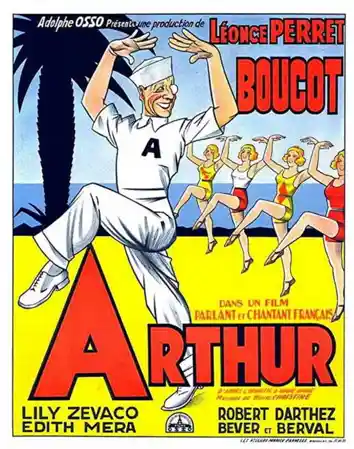
Is "Beauty Cult" worth your time today? Absolutely, if you're into films that take a very specific, almost feverish look at societal pressures. This isn't for folks seeking a straightforward narrative. If you enjoy films that leave you a bit unsettled and thinking about appearances long after the credits roll, give it a shot. But if you prefer your movies with clear heroes and villains, or maybe something that doesn't feel like a subtle punch to the gut, you'll probably find it tedious, even a bit baffling. 🤷♀️
The opening scene, where Marguerite Ducouret’s character, Hélène, just stares at herself in a cracked mirror, really sets the mood. It’s not just vanity; it's this deep, almost painful scrutiny. You see her trace lines on her face with her finger, like she’s already been judged and found wanting.
Then there's the "Institute." It's less a spa and more like a hushed, sterile temple. The way everyone moves, so carefully, like one wrong step could shatter their perfect facade. Georges Bever as Monsieur Dubois, the director, has this unsettling calm. His smile never quite reaches his eyes.
There's this one shot, so quick you almost miss it, of a small glass vial on a table. It's empty. You wonder what was in it, what promises it held. It sticks with you.
The film has this slow, creeping dread. It’s not horror, not really. It’s more like watching a flower bloom in reverse, becoming tighter and more artificial with each petal.
Louis-Jacques Boucot’s performance is subtle. His character, Jean, is observing all this, often from the sidelines. He's not saying much, but his expressions say it all. A slight frown, a shift in his gaze. He's witnessing something profoundly strange.
Remember that scene where Hélène tries to cover a small scar on her hand? She uses this thick, pasty cream. The camera just holds on her hand for a beat too long, and you feel the weight of that tiny imperfection. It's almost suffocating, you know?
The parties at the Institute are something else. Everyone is so immaculately dressed, perfectly coiffed. But beneath all that polish, there's this palpable anxiety. Like they're all waiting for someone to find a flaw. It’s less a celebration and more a performance.
I kept thinking about A Naked Soul, not because they’re similar in plot, but in how they both explore what people hide beneath the surface. "Beauty Cult" just takes it to a much more literal, and frankly, disturbing, place with appearance.
There’s a scene near the end where Hélène finally confronts Monsieur Dubois. She's not screaming or crying. She's just... tired. Utterly, completely exhausted by the effort of it all. Her voice is barely a whisper, but it hits harder than any shout. It’s a powerful moment.
The pacing can feel a bit odd sometimes. Long stretches of silence where you're just watching faces. Then a sudden burst of activity, like when a new "client" arrives at the Institute, all hopeful and nervous. It keeps you a little off-balance, which I think is the point.
The film doesn't really give easy answers. It just presents this world, this "cult," and lets you sit with it. You might walk away feeling a bit itchy about your own reflection.
One of the most striking things is how the film uses lighting. The Institute is always so bright, almost too bright, like an operating theater. But outside, in the "real" world, the shadows are deep and comforting. It makes you wonder which place is truly more natural.
The extras in the background often have these blank, almost placid expressions. Like they’ve all achieved some kind of ideal, or perhaps given up trying. It’s a very unsettling visual.
I found myself wondering about Edith Méra's character, Elise. She’s one of Dubois’s assistants. She has this fleeting look of doubt, just for a second, when Hélène asks her a direct question about the procedures. It’s so quick, but it plants a seed. Is she a true believer, or just doing her job?
And what about the costumes? They start off fairly normal, but as characters get deeper into the "cult," their clothes become almost uniform-like. Very structured, very clean, but somehow less individual. It's a subtle change, but very effective.
There’s a moment where a character tries to re-enter society after leaving the Institute. They look fine, maybe even "perfect" by some standards. But they carry this invisible weight. The world seems to reject them, not for how they look, but for how they feel about how they look. It’s a clever turn.
The movie doesn’t really have a traditional plot arc. It’s more like a series of vignettes, all circling the same unsettling idea. It almost feels like a dream, or maybe a nightmare.
Louis-Jacques Boucot’s character, Jean, has this brief interaction with a child playing outside. The child is grubby, messy, completely unselfconscious. Jean just watches them for a long time. It’s such a tiny thing, but it highlights the artificiality of the adult world so sharply. 🧒
The film’s soundtrack is sparse, almost non-existent for long stretches. When music does come in, it’s usually this unsettling, high-pitched string arrangement. It ratchets up the tension without being obvious about it. It makes your skin crawl.
Some of the dialogue felt a bit… stiff. But I think that’s intentional. These characters aren’t speaking from the heart, they’re speaking from a script they’ve been given by society. They’re repeating ideals.
The ending is pretty ambiguous. Does Hélène escape? Does she find peace? The film leaves you hanging, which might frustrate some. But for me, it felt right. There’s no easy "happily ever after" in a story like this.
The color palette, too, is something. Lots of muted tones inside the Institute – grays, creams, soft blues. It all feels very clinical, almost sterile. But then, outside, you get these sudden bursts of vibrant greens and browns. It’s a stark contrast that really hits you.
And the way they use mirrors! Not just for vanity, but as a kind of silent judge. Characters are constantly framed by their own reflection, or by someone else’s. It’s like they can’t escape the gaze, not even their own. It made me think of the mirror scene in The Rip-Tide, but this is less about self-discovery and more about self-imprisonment.
There’s a brief, almost absurd moment where a minor character, played by Colette Andris, drops a tiny, perfect porcelain figurine. It shatters into a hundred pieces. No one reacts much, but it feels like a heavy metaphor for everything else in the movie. That fragility. 💔
It's a film that stays with you. Not because of grand gestures or big revelations, but because of those small, uncomfortable moments. The way a hand trembles, a fleeting glance, the silence in a room. It asks you to look closer. 👀
I wouldn't say it's a "fun" watch, but it's certainly a thought-provoking one. It makes you question what we value and why.

IMDb 7.5
1930
Community
Log in to comment.