DbcultAccessing Vault...
6.2/10
Senior Film Conservator
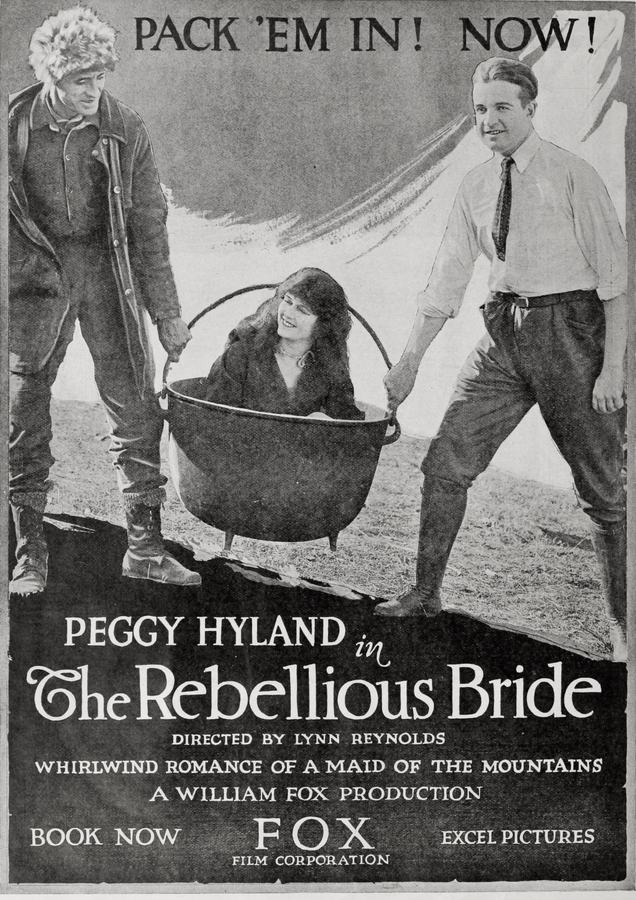
A definitive 6.2/10 rating for a film that redefined the boundaries of cult cinema. The Rebellious Bride remains a cornerstone of transgressive art.
Stepping into the world of early 20th-century cinema often feels like unearthing a hidden treasure, a time capsule brimming with narratives that, despite their age, resonate with surprising modernity. Such is the case with The Rebellious Bride (1919), a silent film that, through its vibrant characters and engaging plot, transcends its era to deliver a timeless story of defiance, unexpected romance, and the enduring human spirit. This isn't just a historical artifact; it's a testament to storytelling that continues to captivate, offering a window into societal norms of a bygone era while championing individual will.
At the heart of The Rebellious Bride beats the fiercely independent spirit of Cynthy Quimby, portrayed with compelling vivacity by Kathleen Emerson. Cynthy is not merely a character; she is an embodiment of untamed nature, a product of the rugged Ozark Mountains whose free spirit refuses to be shackled by convention or patriarchal decree. Her initial predicament is one that many women throughout history have faced: an arranged marriage, dictated by her grandfather, to the decidedly unappealing Tobe Plunkett (Harry Dunkinson). This isn't a demure acceptance; it's a catalyst for rebellion. Cynthy's refusal to be a pawn in a domestic game is not just a plot device; it's a powerful statement on female agency, especially remarkable for its time. She is proactive, resourceful, and utterly unwilling to compromise her happiness for the sake of tradition. This initial act of defiance sets the tone for the entire film, immediately establishing Cynthy as a heroine worth rooting for. Her quick thinking in enlisting the 'disreputable' Jeff Peters to disrupt the wedding is not just humorous; it underlines her ingenuity and determination to carve her own path, irrespective of societal expectations. This resilience and cunning make her a captivating figure, a true force of nature against the backdrop of the Ozarks.
The film's depiction of Cynthy is a refreshing departure from the more passive female roles sometimes seen in early cinema. She doesn't wait to be rescued; she orchestrates her own escape, even if it leads to an even more complicated situation. Her spirit is reminiscent of characters in films like The Quality of Faith, where individuals grapple with profound moral choices and often defy the norms to uphold their personal convictions. Cynthy’s conviction is her freedom, her right to choose, and this makes her journey intensely compelling. Her character arc, from a girl rebelling against an unwanted suitor to a woman navigating a forced marriage and eventually finding genuine affection, is handled with a subtlety and depth that belies the silent medium. Emerson's performance, relying solely on expression and gesture, masterfully conveys Cynthy's internal world, making her emotional journey palpable to the audience.
Cynthy's successful disruption of her wedding to Tobe, while a triumph of will, inadvertently thrusts her into an even more peculiar predicament. Her grandfather, exasperated by her recalcitrance, issues a new decree: she must marry the very first man she encounters. Enter Arthur Calloway (Charles Le Moyne), a sophisticated St. Louis aviator whose plane has suffered an unfortunate mishap in the remote Ozarks. The collision of these two vastly different worlds – Cynthy's rustic independence and Arthur's urban modernity – is immediate and fraught with comedic tension. The irony of Arthur being the 'first man' is delicious, a classic trope of romantic comedy, but the execution here is anything but conventional. Arthur is quite literally forced into marriage at gunpoint, a stark and rather dramatic twist on the 'meet-cute' scenario. Le Moyne portrays Arthur with a delightful blend of bewilderment and indignation, making his forced vows a source of both humor and a touch of genuine pathos.
This shotgun wedding, far from being a romantic ideal, is the starting point for a truly unconventional courtship. It forces two strangers, utterly unsuited by background and initial inclination, into an intimate, albeit unwilling, bond. The film cleverly uses this forced proximity to explore the dynamics of human connection, demonstrating how circumstances can forge relationships in the most unexpected ways. Arthur, the epitome of modern progress with his airplane, suddenly finds himself ensnared by the ancient traditions of a mountain community and the formidable will of Cynthy. This contrast is a rich vein for both humor and character development, positioning Arthur as a reluctant hero whose journey from captive to devoted husband is genuinely earned. His initial disdain and desire for escape are entirely understandable, making his eventual change of heart all the more poignant and believable.
The narrative truly ignites when Cynthy and Arthur are left alone in a secluded cabin, a crucible for their burgeoning, albeit reluctant, relationship. Cynthy, still asserting her autonomy, locks Arthur in a closed room, a symbolic act of reclaiming control over her own fate, even if it means imprisoning her 'husband.' This is where the film transforms into a delightful cat-and-mouse game, a battle of wits that forms the core of their unconventional courtship. Arthur, resourceful and determined to escape, repeatedly manages to break free from his confinement. Each escape, however, is not a flight to freedom, but a methodical step towards repairing his damaged airplane. This repetitive cycle of escape, repair, and re-capture creates a rhythmic tension, punctuated by moments of frustrated humor and subtle shifts in their dynamic.
The cabin becomes a microcosm of their relationship: a confined space where two strong personalities clash, learn, and slowly, imperceptibly, begin to understand each other. Cynthy's attempts to keep Arthur captive are less about malice and more about control and perhaps, a subconscious desire to keep this intriguing stranger around. Arthur's persistence in repairing his plane, his symbol of freedom and connection to his former life, underscores his initial resistance to this forced union. Yet, the very act of being forced into such close proximity, of observing each other's resilience and quirks, lays the groundwork for something deeper. The silent exchanges, the frustrations, the small victories and defeats within the cabin, are masterfully portrayed through the actors' physicality and expressions, making the audience privy to their evolving sentiments.
This section of the film could even be compared to the strategic mind games depicted in films like The Checkmate or Bluff, where characters engage in a delicate dance of deception and counter-deception to achieve their goals. Here, the goal isn't just escape or capture; it's the subtle negotiation of power and personal space, leading to an eventual, mutual respect. The three days spent in this peculiar cohabitation are crucial, allowing enough time for initial antagonism to mellow into something more complex, paving the way for the heartfelt resolution that follows.
Arthur's eventual aerial escape after three days marks a pivotal moment. The roar of his repaired biplane, a symbol of his return to civilization and his 'real' life in St. Louis, initially feels like a triumph. He has broken free, leaving the wild Ozarks and the spirited Cynthy behind. However, the film wisely doesn't end there. The true brilliance of the narrative unfolds as Arthur returns to his familiar urban existence. The comforts of St. Louis, once so appealing, now feel strangely hollow, overshadowed by an unexpected and growing sense of longing. He finds himself missing Cynthy – her defiance, her spirit, even the challenging dynamic of their forced cohabitation. This realization is profoundly human, highlighting how true connection can blossom even from the most unpromising of origins.
The film beautifully illustrates that love, or at least a deep affection and respect, isn't always born of grand romantic gestures but can emerge from shared experiences, even difficult ones. Arthur’s internal struggle, his dawning awareness of what he has left behind, is conveyed with a quiet poignancy. And just as his heart begins to acknowledge this void, Cynthy, ever the independent and decisive one, arrives at his doorstep. Her appearance is not one of desperation but of determination, a clear signal that her feelings, too, have evolved beyond mere obligation or initial curiosity. This final reunion is devoid of coercion, a genuine meeting of two individuals who have come to appreciate and, dare we say, love each other on their own terms.
The journey from a forced, gunpoint marriage to a union founded on earnest affection is a powerful testament to the film's thematic depth. It suggests that while circumstances can bring people together, it is the genuine connection, the mutual understanding forged through shared trials, that ultimately binds them. This narrative arc, where initial adversity gives way to profound affection, is a classic, enduring trope, masterfully executed here. It’s a story that, despite its silent film origins, speaks volumes about the complexities of human relationships and the surprising paths to love.
In the silent era, the burden of conveying emotion, character, and plot rested squarely on the shoulders of the actors. Their expressions, gestures, and physicality had to speak where words could not. Kathleen Emerson as Cynthy Quimby delivers a performance that is nothing short of captivating. Her eyes convey defiance, humor, and eventually, a burgeoning tenderness, making Cynthy’s transformation utterly believable. Emerson embodies the 'mountain wildflower' spirit with an authenticity that makes her rebellion feel less like melodrama and more like an innate aspect of her character. Her energy is palpable, driving much of the film's comedic and dramatic momentum.
Charles Le Moyne, as the sophisticated but bewildered Arthur Calloway, provides an excellent foil. His initial shock and indignation, evolving into a grudging respect and then genuine affection, are portrayed with a nuanced subtlety that is impressive for the silent screen. He manages to convey Arthur's urbanity and his discomfort with the rustic surroundings, making his character's journey of adaptation and emotional growth deeply engaging. The chemistry between Emerson and Le Moyne, built on a foundation of playful antagonism, is surprisingly strong, making their eventual reconciliation genuinely earned and satisfying.
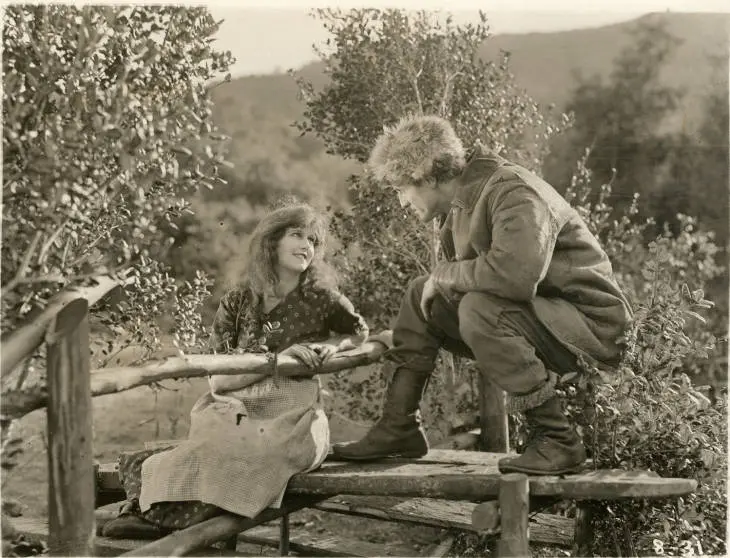
The supporting cast, including Harry Dunkinson as the hapless Tobe Plunkett and George Nichols as Cynthy's grandfather, add significant texture and humor to the narrative. Dunkinson's portrayal of Tobe is suitably bumbling and unappealing, making Cynthy's aversion entirely understandable. Nichols, as the stern but ultimately caring grandfather, provides the patriarchal force against which Cynthy rebels, grounding the fantastical elements of the plot in a relatable familial dynamic. The collective performances demonstrate the mastery of silent acting, where every gesture and facial expression is carefully calibrated to communicate the story's emotional core. This ensemble work ensures that even without dialogue, the characters' motivations and feelings are crystal clear, allowing the audience to fully invest in their journey.
The screenwriting duo of Joseph Anthony Roach and Charles Kenyon crafted a remarkably engaging and well-paced narrative for The Rebellious Bride. Their script skillfully balances elements of romantic comedy, adventure, and social commentary. The plot, while seemingly simple, is rich with character development and thematic depth. They introduce a compelling conflict early on, quickly establishing Cynthy's independent spirit and setting her against the restrictive forces around her. The introduction of Arthur and the subsequent forced marriage is a stroke of narrative genius, injecting immediate tension and humor into the story.
What stands out is their ability to maintain momentum and interest throughout the 'cabin conundrum' sequence. This section, which could easily become repetitive, is instead a testament to their clever plotting, with Arthur's repeated escapes and repairs building both comedic and dramatic tension. The eventual, organic shift from antagonism to affection is handled with a delicate touch, avoiding rushed sentimentality. The writers understand that genuine connection needs to be earned, and they allow their characters the space and time to evolve. The resolution, where Arthur realizes his longing and Cynthy takes the initiative to find him, feels earned and satisfying, completing a well-rounded character arc for both leads. Their writing ensures that the film is not just a series of events but a coherent and emotionally resonant journey.
The Rebellious Bride, while a distinct entity, finds itself in conversation with other films of its era and beyond, particularly in its exploration of themes like independence, societal pressure, and unconventional romance. The presence of Arthur Calloway, the stranded aviator, immediately brings to mind films centered on aviation and adventure, such as The Sky Hunters. While the latter might focus more on the technical marvels or thrilling aspects of flight, The Rebellious Bride uses the airplane as a symbol of Arthur's modern world and his means of escape, contrasting it with Cynthy's grounded, traditional existence.
Cynthy's fierce independence and her refusal to conform to her grandfather's wishes echo the struggles of female characters in films like Her Maternal Right, which often explored the societal pressures and expectations placed upon women. While the specific contexts differ, the underlying theme of a woman fighting for her autonomy remains a powerful and resonant connection. The battle of wits between Cynthy and Arthur in the cabin also brings to mind the strategic interplay seen in films like The Checkmate or Bluff, where characters engage in clever schemes and counter-schemes. Here, the 'game' is one of freedom versus confinement, leading to an unexpected understanding.
Even the initial premise of a forced marriage, while played for comedic effect, touches upon the serious societal implications of relationships dictated by external forces, a theme that can be found in a multitude of historical dramas and romances. The film navigates this sensitive topic with a light touch, ultimately affirming the power of individual choice and genuine affection. In its blend of adventure, romance, and a strong female lead, The Rebellious Bride stands as a charming example of silent cinema's ability to tell compelling, character-driven stories that continue to entertain and provoke thought today.
Beyond its period charm and delightful performances, The Rebellious Bride offers a rich tapestry of enduring themes that remain relevant even a century later. At its core, it's a celebration of individual freedom and the courage to defy societal expectations. Cynthy Quimby's spirited rebellion against an unwanted marriage speaks to the universal desire for self-determination, a theme that resonates strongly with contemporary audiences who value personal agency above all else. Her journey is a powerful testament to the idea that one should never settle for a life not chosen.
The film also masterfully explores the complex nature of love and attraction. What begins as a forced, almost farcical union, gradually transforms into a genuine connection forged through shared adversity and mutual respect. It challenges the notion that love must always begin with grand romantic gestures, suggesting instead that it can blossom in the most unexpected of circumstances, nurtured by understanding and a shared spirit. The transformation of Arthur's feelings, from indignation to longing, is a beautiful portrayal of how hearts can be won not by force, but by the undeniable presence of a vibrant personality.
Furthermore, the juxtaposition of the rustic Ozark Mountains with the modern aviator from St. Louis highlights the clash between tradition and progress, a theme that was particularly potent in the early 20th century and remains relevant as societies continually grapple with change. The film subtly argues for a balance, suggesting that while progress is inevitable, there's a timeless quality to human spirit and connection that transcends technological advancements or geographical divides. These layers of meaning elevate The Rebellious Bride beyond a simple romantic comedy, making it a thoughtful exploration of human nature and societal evolution.
While specific directorial credits for this era often remain sparse in detailed analysis, the visual storytelling in The Rebellious Bride is undeniably effective. The cinematography, even in its restored forms, likely played a crucial role in establishing the contrasting worlds of the Ozarks and Arthur's implied St. Louis. Shots of the rugged mountain landscape would have emphasized Cynthy's wild, untamed nature, making her a natural extension of her environment. The airplane, in contrast, would have been framed to highlight its modernity and its role as a harbinger of a different kind of freedom.
The direction of the actors, a critical component of silent film, is particularly noteworthy. The careful blocking and exaggerated yet clear gestures of Emerson and Le Moyne ensure that the emotional beats of the story are never lost. The pacing, too, is a testament to the directorial hand, moving swiftly through the initial setup, lingering on the comedic tension in the cabin, and then allowing for the quiet introspection that leads to the resolution. The use of intertitles, a necessity of the era, is seamlessly integrated to provide context and dialogue, enhancing rather than interrupting the visual flow.
Consider the visual metaphor of Arthur's repeated escapes and repairs. Each time he works on his plane, the camera likely emphasizes his meticulousness, his focus, and his longing for the sky. When Cynthy is shown watching him, her expressions would subtly shift, conveying her growing curiosity and perhaps even admiration for his persistence. These are the nuances of silent filmmaking that, when done well, create a profound and lasting impression without a single spoken word. The film's visual language, combined with strong performances, ensures that the narrative is not just understood, but felt deeply by the audience.
The Rebellious Bride stands as a delightful and surprisingly profound entry in the annals of early American cinema. It’s a film that, despite its century-old vintage, feels remarkably fresh and relevant, thanks to its compelling characters, witty plot, and timeless themes. The journey of Cynthy Quimby, from a rebellious mountain girl to a woman who finds genuine love on her own terms, is both inspiring and thoroughly entertaining. Kathleen Emerson and Charles Le Moyne deliver nuanced performances that transcend the limitations of the silent medium, bringing their characters to vivid life.
For anyone interested in the evolution of cinematic storytelling, the portrayal of strong female characters in early film, or simply a charming and engaging romantic comedy with a twist, The Rebellious Bride is an absolute must-see. It’s a testament to the enduring power of narrative and a reminder that true artistry knows no temporal bounds. This film is more than just a historical curiosity; it's a vibrant, captivating piece of cinema that continues to resonate, proving that tales of defiance and unexpected love are truly universal. Seek it out, and let its rebellious spirit enchant you.
IMDb 5.6
1936
Community
Log in to comment.