DbcultAccessing Vault...
Cult Review
Senior Film Conservator

From the very first flickering frames, 'Beauty in Chains' ensnares the viewer in a narrative tapestry woven with threads of fervent passion, suffocating dogma, and the tragic inevitability of human frailty. This cinematic endeavor, adapted from the profound literary work of Benito Pérez Galdós by Elliott J. Clawson, plunges us headlong into the heart of a provincial Spanish village, Orbajosa, where the formidable Dona Perfecta reigns supreme, her authority absolute, her will unyielding. It's a world where ancient customs are not merely honored but enforced with an almost religious zeal, creating a crucible for the ill-fated romance at its core. The film masterfully delineates the suffocating atmosphere of a society caught between the relentless march of progress and the iron grip of entrenched tradition, presenting a timeless struggle that resonates with a chilling clarity even today. The tension is palpable from the outset, a slow-burning fuse lit by the arrival of an outsider, threatening to ignite the carefully constructed facade of order.
At the epicenter of this tumultuous drama stands Dona Perfecta, brought to terrifying life by the commanding presence of Gretchen Lederer. Her performance is nothing short of a tour de force, embodying a character who is not merely an antagonist but a force of nature, a living embodiment of unyielding, destructive piety. Lederer imbues Dona Perfecta with a chilling blend of righteousness and ruthlessness, her eyes often betraying a fanaticism that curdles the very air around her. She is a woman convinced of her own moral superiority, her actions justified by a twisted interpretation of faith and familial duty. Her determination to prevent the marriage between her young kinswoman, Rosarita, and the ostensibly progressive Pepe Ray Don Jose is not born of a simple dislike, but rather a profound fear – a fear of the unknown, of change, of anything that threatens the meticulously ordered, albeit stagnant, world she has so carefully constructed. This fear metastasizes into an obsession, a relentless pursuit of her own tyrannical will that escalates with terrifying speed. One cannot help but draw parallels to other cinematic portrayals of unyielding matriarchs or figures of absolute power, perhaps even the suffocating domestic tyranny explored in films like Behind Closed Doors, though Dona Perfecta's brand of control is far more insidious, cloaked in the guise of virtue. Lederer’s portrayal ensures that Dona Perfecta is not merely a caricature of evil but a complex, albeit terrifying, figure whose actions stem from a deeply ingrained, albeit misguided, conviction.
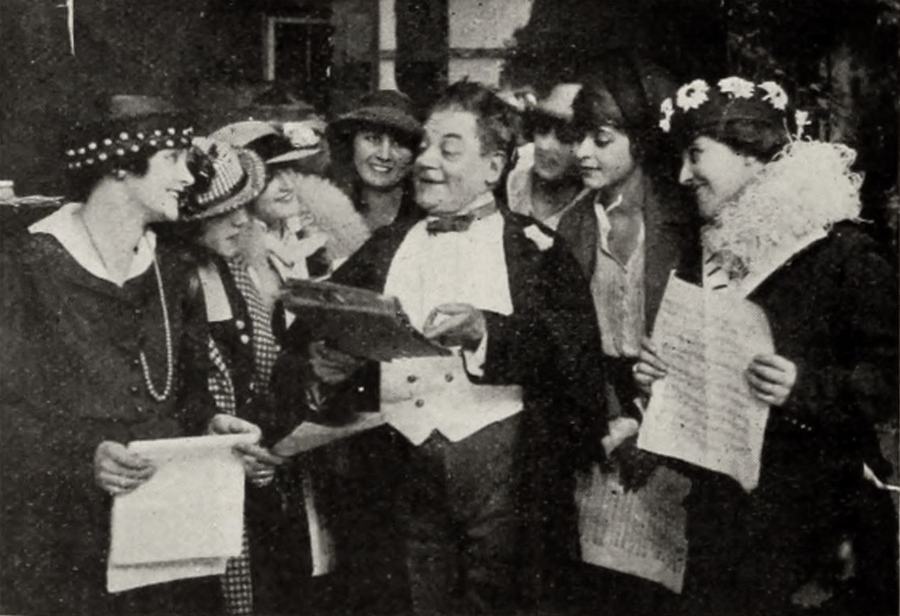
Contrasting sharply with Perfecta’s rigidity are the two young lovers, Rosarita, played with poignant vulnerability by Ella Hall, and Pepe Ray Don Jose, portrayed by Maxfield Stanley with a compelling blend of charm and earnestness. Rosarita, initially resigned to a marriage with a stranger, finds her world irrevocably altered by Pepe’s arrival. Their burgeoning affection, depicted with a delicate touch, is the film's beating heart, a beacon of hope destined to be extinguished. Hall’s performance evokes a profound sense of innocence and awakening, her character’s initial shyness giving way to a fierce, albeit ultimately futile, devotion. Stanley's Pepe is the quintessential outsider, a man of modern sensibilities clashing inevitably with the antiquated customs of Orbajosa. His progressive ideas and open demeanor are perceived as a direct threat to Dona Perfecta's dominion, setting the stage for the tragic confrontation. Their love story, pure and untainted by the village’s machinations, serves as a stark reminder of the devastating consequences when personal freedom is crushed under the heel of oppressive authority. The chemistry between Hall and Stanley is understated yet potent, making their eventual separation and the brutal suppression of their love all the more heartbreaking. Their plight is reminiscent of other narratives where innocent love is tragically thwarted by societal or familial pressures, echoing the despair found in tales like The Promise, where vows and expectations shatter individual desires.
The supporting cast, while perhaps less central to the narrative’s immediate thrust, nonetheless plays a crucial role in constructing the oppressive ecosystem of Orbajosa. William Hakeem, Ruby Lafayette, Winter Hall, Harry Holden, Emory Johnson, and George A. McDaniel each contribute to the pervasive atmosphere of complicity, fear, and misguided loyalty that empowers Dona Perfecta. Some are her instruments, others her unwitting pawns, but all are enveloped by her shadow. Their collective portrayals paint a vivid picture of a community held captive by tradition and the fear of social ostracization. Lafayette’s presence, for instance, often lends a quiet gravity to scenes, hinting at the unspoken tragedies simmering beneath the surface of village life. These characters are not merely background figures; they are the very fabric of the society that allows Perfecta's tyranny to flourish, their silence or complicity as damning as her direct actions. The film subtly explores how a community, through its inaction or misplaced deference, can become an accessory to injustice. This aspect of collective responsibility, or lack thereof, adds another layer of depth to the film, showcasing how individual moral failings can coalesce into a societal malaise. In this sense, it shares thematic DNA with films that explore the moral decay of a community or the power of corruption within a closed system, perhaps even touching upon the dark undercurrents seen in something like The Curse of Greed, albeit with a focus on spiritual rather than material avarice.
'Beauty in Chains' transcends its period setting to deliver a profound commentary on the eternal clash between individual liberty and authoritarian control, between modern thought and entrenched dogma. Benito Pérez Galdós’s original novel was a scathing critique of religious fanaticism and conservative provincialism in 19th-century Spain, and Elliott J. Clawson’s adaptation admirably retains this critical edge. The film interrogates the very nature of 'perfection' – revealing it not as an ideal, but as a dangerous, self-serving construct used to justify cruelty and oppression. It’s a narrative that forces us to confront uncomfortable questions about the sources of prejudice, the seductive power of righteousness, and the tragic cost of resisting change. The central conflict is not merely a personal vendetta but a microcosm of broader societal struggles, echoing the timeless battle against forces that seek to dictate thought and love. The subtle yet powerful direction allows these weighty themes to unfold organically, avoiding heavy-handed didacticism. Instead, the tragedy feels earned, a natural consequence of the characters' choices and the unyielding environment in which they exist. The film's examination of how faith can be perverted into a tool of control, rather than a source of compassion, is particularly striking and remains startlingly relevant in an increasingly polarized world. It forces a contemplation of the boundaries between conviction and fanaticism, and how easily the former can morph into the latter when unchecked by empathy or reason. The film's title itself is a poignant metaphor for Rosarita's plight, her beauty and spirit shackled by the chains of tradition and patriarchal decree.
The narrative pacing of 'Beauty in Chains' is deliberate, allowing the tension to build inexorably. It’s a slow burn that culminates in a devastating conflagration. The early scenes establish the idyllic yet fragile nature of Orbajosa and the burgeoning affection between Rosarita and Pepe. As Dona Perfecta's disapproval hardens into active malice, the atmosphere gradually darkens, each interaction becoming fraught with increasing peril. The film's strength lies in its ability to generate a sense of impending doom, making the audience acutely aware of the forces aligning against the young lovers. The visual storytelling, while characteristic of its era, effectively conveys the emotional landscape, utilizing subtle gestures and expressions to communicate the characters' inner turmoil. The eventual, brutal resolution is not a sudden shock but the logical, agonizing conclusion of a meticulously constructed tragedy. This methodical unfolding ensures that the emotional impact of the climax is profound and enduring, leaving a lasting impression on the viewer. It's a testament to the storytelling prowess that the audience is made to feel the weight of every decision, every act of defiance, and every crushing blow. The sense of inevitable fate, so central to many classical tragedies, is powerfully evoked here, resonating with the fatalism found in narratives like A bánat asszonya (Woman of Sorrow), where characters are seemingly destined for tragic ends despite their best efforts.
'Beauty in Chains' stands as a powerful testament to the destructive potential of unchecked authority and rigid ideology. It’s a cautionary tale that resonates across generations, reminding us of the fragility of love and freedom in the face of tyranny. The film’s exploration of moral corruption, even when cloaked in piety, finds echoes in stories of individuals who make a pact with their darker selves, perhaps even a 'deal with the devil' scenario as explored in A Modern Mephisto, though here the devil is a self-righteous human. It compels viewers to consider the insidious ways in which power can corrupt, and how deeply ingrained prejudices can lead to horrific acts. The tragic fate of Rosarita and Pepe is not merely a story of personal misfortune but a broader indictment of a society that prioritizes dogma over humanity, control over compassion. This film, though from an earlier cinematic era, possesses an emotional depth and thematic complexity that ensures its continued relevance. It’s a stark reminder that the battles against intolerance and oppression are timeless, and the human heart, when constrained by chains of any kind, will inevitably suffer. Its enduring power lies in its unflinching portrayal of human nature at its most zealous and its most vulnerable, solidifying its place as a compelling, albeit devastating, piece of cinematic history.
IMDb 5.1
1928
Community
Log in to comment.