DbcultAccessing Vault...
Cult Review
Senior Film Conservator
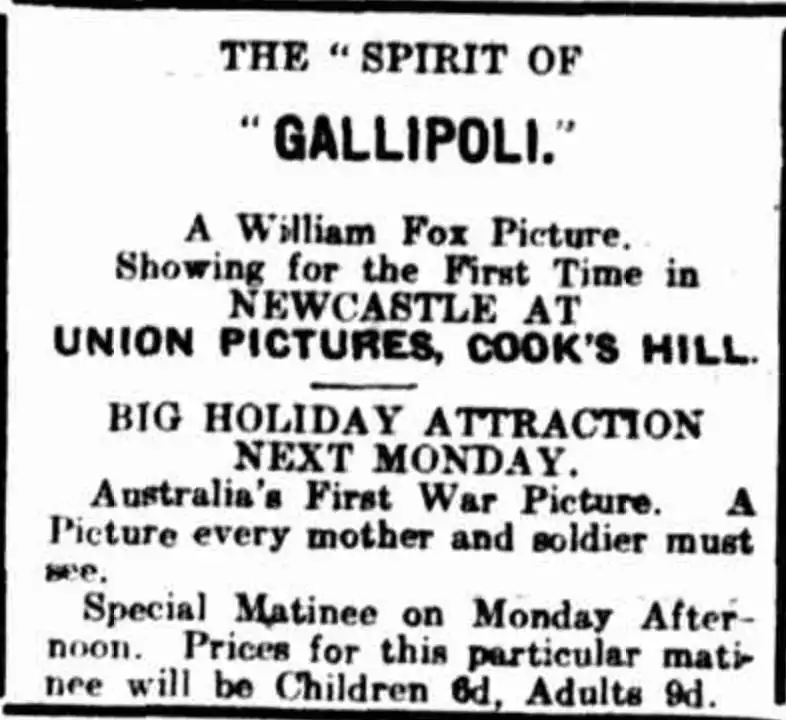
So, is The Spirit of Gallipoli worth your time today? Look, if you’re expecting some kind of sweeping, modern war epic, just walk away now. This one’s strictly for the serious silent film buffs, the historians who want to see how the Great War was portrayed *during* the war itself. Everyone else? You’ll probably find it a bit of a slog, honestly. But it has a certain *something* if you’re patient.
Right from the start, you can feel the urgency. This film was made in 1915, while the Gallipoli campaign was still happening. It’s less a historical document and more like a very immediate, very heartfelt, almost **propaganda piece** from the time.
The story follows a few threads, but it mostly centers on this young couple, Gwen Sherwood and William Green, and a soldier caught up in the fighting. Their emotions are *big*, as you’d expect from a silent film. Gwen’s worried expressions, William’s determined chin – it’s all there, writ large.
Watching William Green, he really tries to convey the weight of war. You see it in his eyes, even if the acting style feels a bit over-the-top to us now. It’s the way they had to do it, I guess. He's got this earnest, almost boyish look that makes his character’s journey feel… well, *earnest*.
The intertitles are where a lot of the story comes through, obviously. Some of them are quite poetic, trying to capture the **grandeur of sacrifice**. Others are just plain dialogue. You sometimes get a little lost in the quick cuts between scenes and text, trying to piece it all together.
The actual ‘battle’ scenes are sparse and, let’s be real, pretty tame. A few guys running around, some smoke, you know the drill for early cinema. It’s not about the gritty details, but the *idea* of the fight. The sound of silence during these parts is actually pretty powerful. You fill in the blanks with your own head.
There’s a moment, I think it’s Leo Meagher’s character, where he’s just sitting, looking out. No big dramatic gesture, just a quiet sadness. It cuts through all the grand pronouncements in the intertitles. That one shot, it sticks with you. 😔
The film doesn't exactly shy away from sentimentality. You can almost feel it pulling at your heartstrings, especially when the focus shifts back to the home front. Marie Miller as the mother figure, worried sick, that’s a universal feeling. And it’s portrayed with such a straightforward simplicity, no complex layers.
One small thing I noticed: the uniforms. They look so clean sometimes, even in what are supposed to be desperate conditions. It makes you wonder how much they could really stage back then. Or maybe it’s just the print quality I saw.
The whole thing feels like a time capsule. You’re not just watching a movie; you’re looking at how people 100 years ago tried to make sense of something *huge* that was happening right then. It's not always easy to watch, the pacing is a bit different, but it’s a **fascinating window** into a very specific moment in history.
It’s not perfect. Some scenes go on a little long, others feel rushed. The dramatic beats aren't always earned in a modern sense. But it's got a raw energy that’s unique. Definitely not one for casual viewing, but for the right audience? Absolutely worth seeing for its historical weight alone. It's a snapshot, you know? Like someone took a quick photo of an unfolding tragedy, but with a movie camera. 🎞️
IMDb —
1918
Community
Log in to comment.