
DbcultAccessing Vault...
6.5/10
Senior Film Conservator
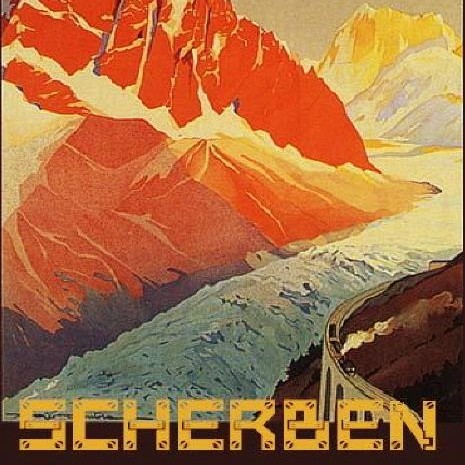
A definitive 6.5/10 rating for a film that redefined the boundaries of cult cinema. Shattered remains a cornerstone of transgressive art.
German Expressionism rarely moved this quietly. No gnarled sets or painted shadows here—only the merciless white of real snow and the iron-black certainty of poverty.
Lupu Pick’s Shattered (shattered) arrived in 1921, the same year Hollywood flirted with flapper frivolity while Ufa turned its gaze inward, toward the claustrophobia of working-class parlours. Together with screenwriter Carl Mayer, Pick peels railway romanticism down to the bone: the rails are no arteries of progress but sutures holding a family’s fragile skin together. Every vibration foretells eviction.
The film’s austerity is not a budgetary accident; it is the very aesthetic engine. Interiors were shot in a freezing Berlin studio with windows left open so the actors’ breath would condense on cue. Edith Posca, playing the wife, later recalled stuffing newspapers inside her costume to stop shivering—yet the tremor we see is not discomfort but distilled despair. Werner Krauss, fresh from Anna Boleyn, abandons monarchic pomp for the inspector’s petty tyranny: a man who measures flour as though weighing sins.
Pick himself embodies the track checker with minimalist stoicism—eyes like frostbitten lanterns, shoulders a railway semaphore permanently set to surrender. Compare this to Paul Otto’s firecracker cameo as the relief dispatcher; one jittery monologue about timetable revisions becomes a miniature aria of bureaucratic terror. The children, non-professionals plucked from Berlin tenements, move with feral accuracy: they know how to make a spoon scraping an empty bowl sound like the knell of civilisation.
Cinematographer Gustave Preiss frames every shot so the horizon slices heads in half, reminding us that even the sky is rationed. Windows gape like broken promises; the single oil-lamp burns with the sickly hue of curdled hope. When the inspector spreads his charts across the kitchen table, the map’s brightly coloured arteries mock the family’s anaemic wrists. It is the inverse of the operatic excess in Just a Song at Twilight: here, the world is too small, not too large.
Because Shattered is silent, the absence of diegetic rail-clatter becomes hallucinatory. Intertitles are sparse, often mere nouns: “Potatoes.” “Eviction.” “Tomorrow.” Mayer understood that language itself had grown emaciated. The film’s sonic imagination lives in your head: you supply the hiss of steam, the wolf-like whistle, the crunch of boots on cinder—until the room itself seems to vibrate. Few movies make silence feel this heavy; compare the snow-muffled dread to Out of the Snows, where winter is scenic, not punitive.
Film historians bracket Shattered within Kammerspielfilm—Germany’s answer to intimate chamber drama. Location, limited cast, social critique, tragic ending; yet Pick avoids the movement’s frequent fatalism. The final freeze-frame is neither redemption nor doom, but an ethical standoff: who deserves to remain inside the frame of human concern? The inspector’s departure is no victory; the track checker’s retightened spike is no fix. The camera lingers on the rails stretching into white infinity, and you realise the film’s true protagonist is inertia—the force that keeps the poor poor and the trains running on time.
Posca’s performance is a masterclass in gendered hunger. She moves through the hut like a ghost auditing its own afterlife: folding invisible laundry, stirring empty pots, pressing her palm to the stove as if warmth could be willed into being. In one devastating close-up she gnaws a crust then instinctively offers the remaining morsel to the inspector’s dog, catching herself mid-gesture. The moment lasts three seconds yet sketches an entire economy of maternal self-erasure. Compare Hermine Straßmann-Witt’s turn in Her Condoned Sin, where surplus and satire leaven the gender critique; here, there is no room for irony, only calcium-depleted bones.
Pick manipulates screen duration to punish both characters and viewer. The act of waiting—waiting for water to boil, for a child’s fever to break, for the next train—becomes filmic real-time. You feel the drag of minutes because poverty is boredom alloyed with terror. When the inspector finally demands back-rent, the confrontation plays out in a single 90-second take, an eternity by 1921 standards. No cross-cutting, no score, just four faces negotiating survival under the gaze of a wall calendar that nobody can afford to update.
The DNA of Shattered surfaces wherever cinema decides that kitchens are political arenas. Echoes reverberate from Rossellini’s war-ravaged apartments to the Dardenne brothers’ Seraing estates. Even the snow-blasted despair of Wings of the Morning owes a debt to Pick’s frost-bitten nihilism. When you watch theinspector smooth his gloves with the same fussiness Ralph Fiennes later brought to Schindler’s List, you realise villainy often dresses like middle management.
For decades Shattered survived only in shards—nitrate reels melted, intertitles lost. A 2019 restoration by the Deutsche Kinemathek reinstated tints (amber lamplight, bluish dawn) and a new score by German minimalist Niklas Schakarg--a spectral drone that pulses like migraine. You can currently stream it on MUBI in select regions; Blu-ray from Masters of Cinema pairs it with The Gown of Destiny for a diptych of textile and hardship. Avoid the YouTube 480p transfers; compression flattens Preiss’s depth-of-field into oatmeal.
Great cinema teaches you to recognise the creak of floorboards you have never walked upon. Shattered does something harsher: it makes you inhabit a cold you can’t shiver away. Long after the last intertitle fades, you will find yourself listening for the rumble of trains that never come, counting potatoes that were never yours, hearing the echo of a telegram that said only: “Expectation.”
Verdict: Essential, merciless, and eerily contemporary—Shattered is the film to cite whenever someone claims poverty can’t be photogenic.