DbcultAccessing Vault...
6.5/10
Senior Film Conservator
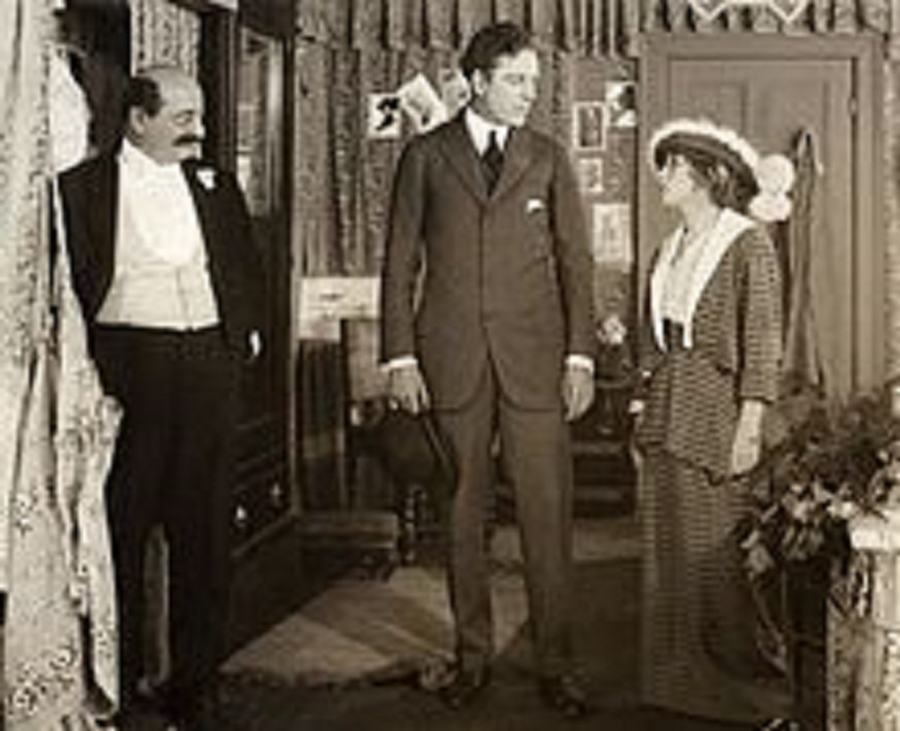
A definitive 6.5/10 rating for a film that redefined the boundaries of cult cinema. Behind the Scenes remains a cornerstone of transgressive art.
Behind the Scenes, Margaret Mayo’s luminous exploration of artistic ambition and marital dissonance, unfolds like a hand-tinted photograph of the Roaring Twenties, each frame steeped in the bittersweet ache of unfulfilled potential. Mary Pickford, in her signature role of ingénue-turned-icon, embodies Dolly Lane with a fragile ferocity that feels both archetypal and astonishingly modern. The film’s opening act, a sun-dappled portrait of small-town life, lingers on the stark contrast between Dolly’s gilded aspirations and Steve Hunter’s (Russell Bassett) grounded practicality—a duality that seeds the narrative’s inevitable fracture.
Mayo’s script, while occasionally hamstrung by the era’s melodramatic conventions, crafts a resonant metaphor in Dolly’s dual lives: the stage, where she is alchemy incarnate, and the domestic sphere, where she grows fainter by the day. When Steve’s fortune collapses, the couple’s relocation to Teddy Harrington’s (Lowell Sherman) estate becomes a liminal space—a purgatory where Dolly’s latent stardom begins to shimmer. The scene in which she dons the ailing star’s sequined gown, her reflection a ghostly double of her future self, is a masterstroke of visual storytelling. Pickford’s eyes, wide with a mixture of terror and triumph, crystallize the moment’s gravity without a single line of dialogue.
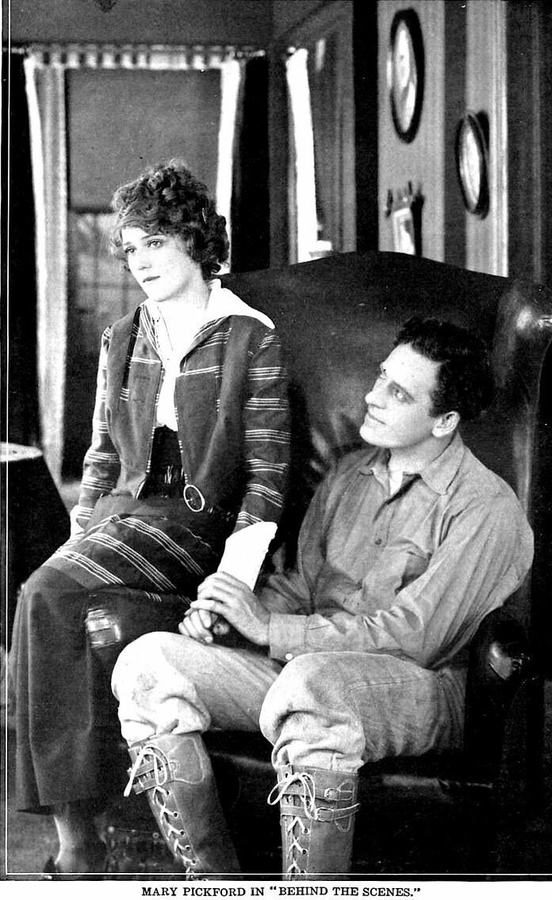
The film’s second act pivots on a deus ex machina inheritance that restores Steve’s wealth, yet the narrative’s true genius lies in its refusal to resolve Dolly’s inner turmoil. Her Broadway triumph, while a technical victory, becomes a hollow conquest as Steve’s pleas for her return to the West Coast reveal a fundamental disconnect. The dissonance between their worlds is most palpable in a haunting sequence where Dolly, now a star, watches a vaudeville act of rural life from a gilded box seat—her laughter at the performance’s clichés cutting deeper than any critic’s pen.
Director James Kirkwood’s approach to the material is both reverent and restrained. The sets, particularly the Broadway theater’s velvet-draped proscenium and the Harrington estate’s fading grandeur, serve as visual metaphors for the transient nature of success. The use of shadow in Dolly’s final scenes—a stark contrast to the early bright, flat lighting—hints at her internal desolation, a technique that would later define 1930s film noir. Yet, the film’s most striking innovation lies in its sound design (for the sound era it inhabits). The overlapping din of a theater crowd, the muffled clatter of stage machinery, and the faint hum of Steve’s tractor in the distance create an auditory collage that underscores the clash of Dolly’s dual worlds.
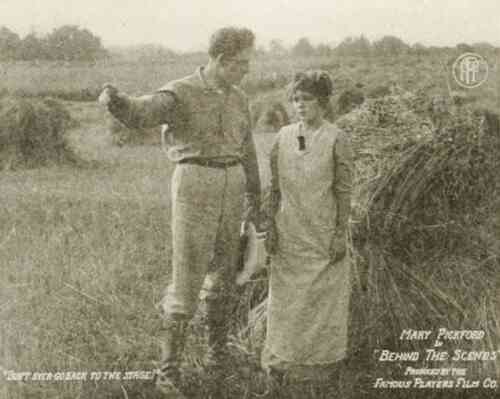
Lowell Sherman’s portrayal of Teddy Harrington is a masterclass in subtle villainy. His dry wit and calculated generosity mask a manipulative nature, making him both a catalyst for Dolly’s rise and a symbol of the parasitic opportunities that defined early Hollywood. The dynamic between Dolly and Teddy, though never overtly sexualized, crackles with unspoken tension, adding another layer to Dolly’s moral ambiguity. In contrast, Ida Waterman’s supporting role as a jaded theater veteran offers a grounded counterpoint to Dolly’s idealism, her cynicism a foreshadowing of the price of fame.
Behind the Scenes occupies a unique niche in the silent film era’s transition to sound, blending the operatic flourishes of St. Elmo with the psychological intimacy of Madame Butterfly. Like The Flying Circus, it examines the intersection of art and commerce, though with a more somber tone. The film’s exploration of gender roles echoes themes in Lucille Love: The Girl of Mystery, yet its focus on female agency under patriarchal structures is more pronounced. In this light, Dolly’s arc can be read as a proto-feminist critique of the era’s double standards, her stage persona a fleeting rebellion against the domesticity prescribed to women of her class.
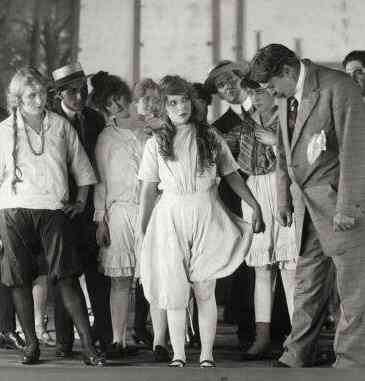
"The stage is a mirror, and I’ve seen my reflection in it—bright, bold, and briefly mine. But the curtain falls, and the real world demands its due."
This tension between public persona and private self is perhaps the film’s most enduring theme. Dolly’s final decision to return to Steve, though portrayed as a compromise, feels less like capitulation and more like a weary acceptance of life’s nonlinear narratives. The closing shot—a train carrying her away from Broadway, its engine a smudge of smoke against the dawn—leaves the audience in a state of unresolved melancholy, a testament to Mayo’s refusal to offer easy resolutions.
While Pickford’s performance is the emotional anchor, the supporting cast elevates the film to its pinnacle. Russell Bassett’s Steve is a study in repressed longing, his stoicism cracking only in the film’s final act when he realizes he has become a footnote in Dolly’s story. His climactic monologue, delivered in a dimly lit study, is a tour de force of nonverbal acting—his hands trembling not with anger but with the quiet devastation of a man who has loved in vain.
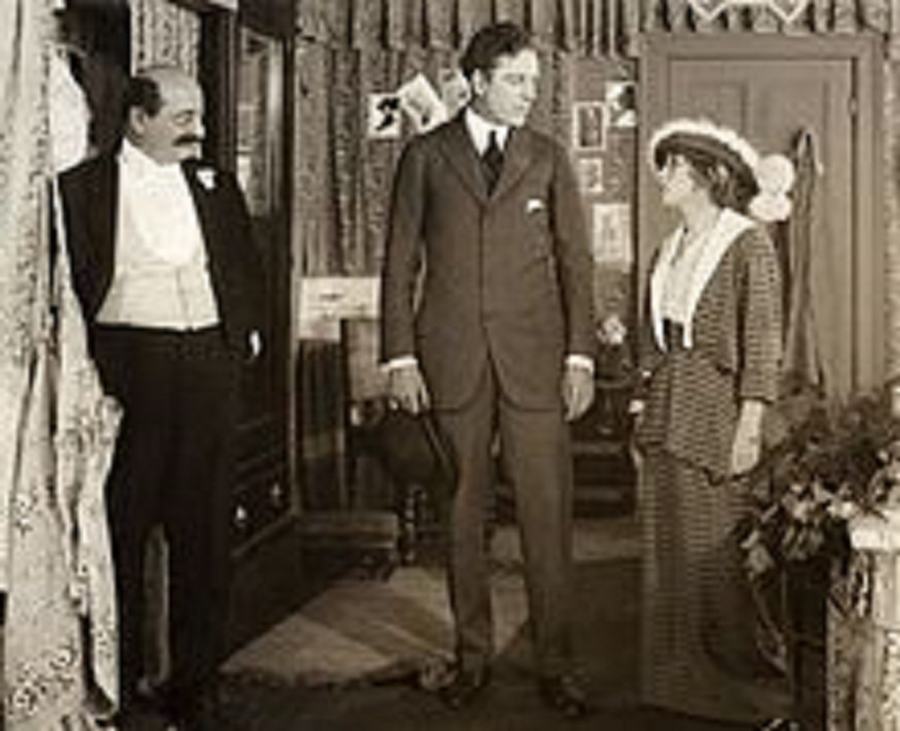
Ida Waterman’s theater veteran, with her raspy voice and weary eyes, delivers a single scene that lingers long after the credits roll. In a conversation with Dolly about the "cost of applause," Waterman’s character lays bare the film’s central thesis: that success is a currency that devalues itself. Her line, "The curtain loves you, but it won’t hold you," is the narrative’s thematic keystone, a truth Dolly must confront as her star ascends.
The film’s technical achievements, particularly its use of color tints and innovative camera angles, were groundbreaking for its time. The Broadway scenes, bathed in gold and crimson, create an almost hallucinatory sense of grandeur, while the rural sequences employ muted greens and browns to emphasize their earthbound authenticity. This visual dichotomy is not merely aesthetic—it’s symbolic, a cinematic language that speaks to the irreconcilable duality at the film’s heart.
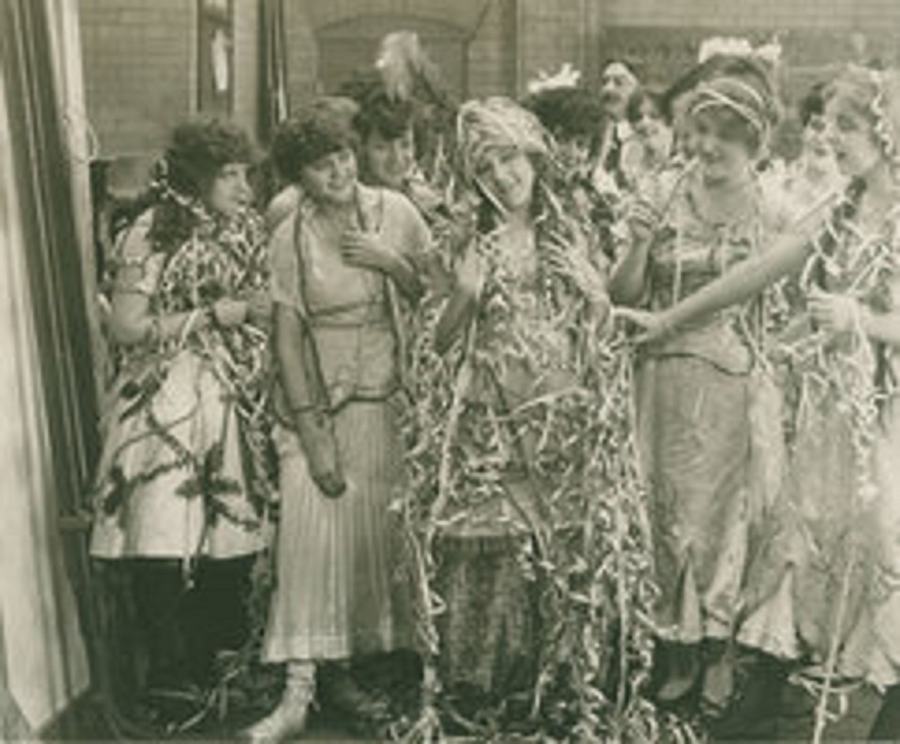
Soundscapes, though rudimentary by modern standards, are used with surprising sophistication. The transition from the live theater’s acoustics to the mechanized noise of Steve’s farm is rendered with such precision that it feels almost like a character in its own right. The final scene, where Dolly hears the faint strains of a stage rehearsal through her train window, is a masterstroke of auditory poignancy—a reminder that the world she left behind is as inescapable as the one she now inhabits.
Behind the Scenes remains a vital artifact of early cinema, not merely for its technical ingenuity but for its unflinching examination of the human condition. It is a film that understands ambition not as a straight path but as a series of compromises and contradictions. In Dolly Lane, we see not just a star, but a symbol of every artist who has had to choose between the spotlight and the life they once imagined. Margaret Mayo’s screenplay, with its blend of old-world elegance and modern disillusionment, ensures that the film transcends its era, offering timeless reflections on the cost of greatness.
IMDb 6
1925
Community
Log in to comment.