DbcultAccessing Vault...
Cult Review
Senior Film Conservator
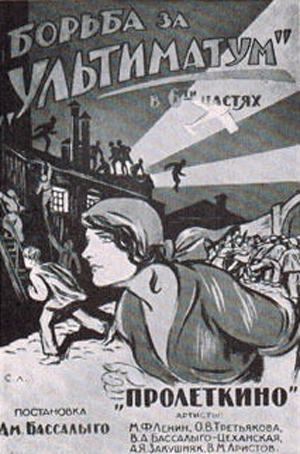
Ah, 'Borba za Ultimatum' – a title that still resonates with a certain kind of gravitas, doesn't it? It's a film that, even decades after its release, continues to spark debate, provoke thought, and solidify its place not just in the annals of cinema, but in the very cultural fabric it sought to depict. For those unfamiliar, or perhaps those who've only grazed its periphery, this isn't merely a historical drama; it's a pulsating, often visceral, exploration of human will pitted against overwhelming odds, a testament to collective spirit, and a stark reminder of the ideological battles that once shaped a nation. It’s a film that demands to be watched, not just seen.
From its opening frames, 'Borba za Ultimatum' announces itself as a work of profound intent. The cinematography, a stark, almost brutalist aesthetic, immediately immerses the viewer in the unforgiving landscape of the 'Red Dawn' steelworks. This isn't just a backdrop; it's a character in itself, a colossal, grimy behemoth of industry, belching smoke and defiance into a sky that often seems indifferent to the struggles beneath. Director Kirshon and Boitler, in a collaborative synergy that feels almost telepathic, craft a visual language that speaks volumes without uttering a single word. The towering structures, the molten steel, the rhythmic clang of hammers – all serve to underscore the epic scale of the human endeavor at stake. It’s a world away from the charming escapism of something like There Goes the Bride, instead confronting its audience with unvarnished reality.
At the heart of this industrial maelstrom is Tsekhanskaya, delivering a performance that can only be described as iconic. Her character, the lead engineer driving the crucial turbine project, is not merely a protagonist; she's an embodiment of the era's ideals, a woman of unshakeable conviction and fierce intellect. Tsekhanskaya imbues her with a quiet strength, a determination that burns beneath the surface, occasionally erupting in moments of impassioned rhetoric or decisive action. It's a nuanced portrayal, avoiding the pitfalls of one-dimensional heroism. We see her moments of doubt, her weariness, but always, her spirit triumphs. Her interactions with Vasiliy Aristov, played with a compelling blend of pragmatism and nascent idealism by Aristov, form the emotional backbone of the narrative. Aristov's character arc, from a jaded veteran engineer to a fervent believer in the collective cause, is handled with a delicate touch, reflecting the subtle shifts in ideology and personal conviction that defined the period. Their dynamic isn't just about professional collaboration; it's a microcosm of the larger societal transformation the film seeks to capture.
The 'ultimatum' itself – a seemingly impossible deadline for the turbine's completion – serves as a relentless ticking clock, amplifying the film's already palpable tension. But it's not just the external pressure; the true conflict lies within, in the insidious acts of sabotage orchestrated by Vladimir Karin's character. Karin's portrayal is chillingly effective, a masterclass in understated villainy. He isn't a moustache-twirling caricature; rather, he's a cold, calculating presence, his motives shrouded in a quiet malevolence that feels far more dangerous than any overt aggression. The film cleverly uses these acts of sabotage not just as plot devices, but as a lens through which to examine the vulnerability of progress, the constant threat of internal dissolution, and the psychological toll of suspicion. This element of unseen danger, a constant, gnawing uncertainty, gives 'Borba za Ultimatum' a thrilling, almost noir-like quality that sets it apart from many of its contemporaries. One might even draw parallels to the psychological suspense found in Hungry Eyes, though 'Borba' grounds its tension in socio-political realities rather than personal obsessions.
Olga Tretyakova's character, a skilled but emotionally volatile technician, adds another layer of complexity to this intricate tapestry. Her internal struggles, her fluctuating loyalties, and the shadow of a past transgression make her a deeply human, if sometimes frustrating, figure. Tretyakova navigates this ambiguity with remarkable skill, ensuring her character remains sympathetic even as her actions sometimes sow discord. She represents the individuals caught in the crosscurrents of history, those whose personal narratives are inextricably linked to the grander societal shifts. Her journey, often heartbreaking, underscores the film's commitment to exploring the human cost of ideological purity and the difficult choices demanded by revolutionary fervor. It’s a testament to the film's depth that even secondary characters are afforded such intricate psychological landscapes.
The themes explored in 'Borba za Ultimatum' are vast and profound. At its core, it's a celebration of the collective, a hymn to the power of unified labor and shared purpose. Yet, it never shies away from acknowledging the individual sacrifices required, the personal struggles subsumed by the greater good. The film meticulously details the mechanics of industrial production, turning the seemingly mundane into a heroic ballet of human and machine. The sequences depicting the workers toiling, their faces streaked with grease and sweat, are imbued with a raw, almost spiritual energy. This isn't just work; it's a sacred duty, a contribution to a future that is being forged, literally, in fire and steel. This dedication to portraying the dignity of labor, even in its most arduous forms, finds a thematic echo in films like Hard Cider, though 'Borba' elevates it to an almost mythic status.
Mikhail Lenin's presence, though perhaps more symbolic than strictly narrative, provides a crucial ideological anchor. His character, a wise and guiding figure, often delivers pronouncements that encapsulate the film's philosophical underpinnings. He's the voice of reason, the embodiment of the guiding principles that ostensibly drive the 'Red Dawn' project. His calm demeanor and intellectual gravitas serve as a counterpoint to the more volatile emotions swirling around him, reminding the audience of the larger historical and political context. Similarly, Mikhail Garkavi, in a smaller but vital role, brings a poignant humanity to the ensemble, representing the steadfast, often unsung, heroes of the factory floor. His character's unwavering loyalty and quiet determination are a powerful reminder that the grand narratives of history are built upon the countless individual efforts of ordinary people.
The direction, under the astute guidance of Kirshon and Boitler, is nothing short of masterful. They employ a visual style that is both epic and intimate, capable of capturing the sweeping grandeur of the factory floor as well as the subtle nuances of a character's internal conflict. The editing is sharp, almost rhythmic, mirroring the relentless pace of industrial production and the ticking clock of the ultimatum. There are moments of breathtaking montage, where images of machinery, human faces, and ideological symbols coalesce into powerful statements, reminiscent of the experimental zeal found in early Soviet cinema. The use of light and shadow is particularly striking, often imbuing the industrial landscape with an almost expressionistic quality, highlighting the stark divisions between progress and reaction, hope and despair.
One cannot discuss 'Borba za Ultimatum' without touching upon its intricate sound design. The roar of the furnaces, the hiss of steam, the clatter of machinery – these are not mere background noises; they are integral components of the film's immersive atmosphere. They create a cacophony that is both overwhelming and strangely harmonious, a symphony of industrial might that reinforces the film's central themes. The sparse yet impactful musical score, often relying on powerful, stirring orchestral pieces, swells during moments of triumph and recedes into a tense silence during periods of doubt, expertly manipulating the audience's emotional response. It’s a sonic landscape that few films, even today, manage to achieve with such precision and evocative power.
The film's exploration of propaganda is also noteworthy. While 'Borba za Ultimatum' undeniably serves an ideological purpose, it transcends mere didacticism through its compelling characterizations and genuine human drama. The 'ultimatum' itself, while a practical deadline, also functions as a powerful symbol – a rallying cry for unity and accelerated production. The film doesn't shy away from depicting the fervor, the almost religious zeal, with which these ideals were embraced. Yet, it also subtly hints at the pressures, the sacrifices, and the moral compromises inherent in such an all-encompassing ideology. It’s a complex portrayal, inviting viewers to ponder the nuances of belief and action, rather than simply accepting a prescribed narrative. In this way, it offers a far more sophisticated engagement with its themes than one might expect from a film often categorized within a specific political genre.
Comparing 'Borba za Ultimatum' to other cinematic works reveals its unique position. While it shares the epic scope and historical ambition of films like The Conqueror, its focus is less on individual heroism and more on the collective spirit of a nascent society. It possesses the psychological tension of a thriller, akin to Satan Junior, but grounds its suspense in the tangible threats of industrial espionage and ideological warfare. The human element, the raw emotion, and the profound sense of struggle recall the earnestness of Souls Triumphant, yet 'Borba' elevates these personal dramas to a national, even universal, scale. It's a film that, despite its specific historical context, speaks to broader themes of perseverance, the battle against adversity, and the unwavering belief in a better future. The earnestness of purpose, the sheer commitment to portraying its narrative with unvarnished authenticity, is something that truly sets it apart.
In conclusion, 'Borba za Ultimatum' is more than just a film; it's a historical document, a character study, and a thrilling drama all rolled into one. It's a testament to the power of cinema to capture the spirit of an era, to immortalize the struggles and triumphs of a people. The performances, particularly Tsekhanskaya's incandescent turn, remain etched in the memory long after the credits roll. The masterful direction, the evocative cinematography, and the immersive sound design all coalesce to create an experience that is both intellectually stimulating and deeply emotionally resonant. It challenges, it inspires, and it leaves an indelible mark. For anyone interested in the intersection of art, history, and human endeavor, 'Borba za Ultimatum' is an essential viewing experience, a film that continues to spark conversations and inspire new interpretations with each passing decade. It’s a triumph of cinematic storytelling, a vibrant, complex piece of work that refuses to be confined to a single genre or historical label, instead standing as a monumental achievement in its own right.
IMDb 5.7
1935
Community
Log in to comment.