DbcultAccessing Vault...
Cult Review
Senior Film Conservator
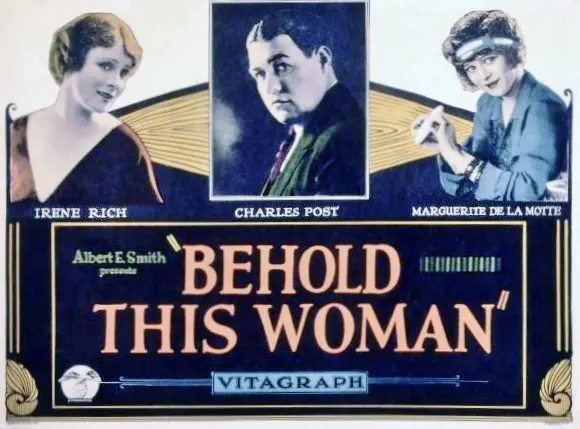
There’s a unique allure to silent cinema, a specific kind of magic that transcends spoken dialogue, relying instead on the nuanced language of gesture, expression, and the often-poetic intertitle. Behold This Woman, a 1924 offering from the golden age of film, stands as a compelling testament to this era’s profound storytelling capabilities. It’s a film that, even today, resonates with themes as current as tomorrow's headlines: the corrosive power of gossip, the chasm between public perception and private reality, and the often-brutal consequences of hasty judgments. Directed with a delicate hand and penned by E. Phillips Oppenheim and Marian Constance Blackton, the narrative unfurls with a quiet intensity, drawing the viewer into a world where love is fragile, reputation is paramount, and the truth is often obscured by a veil of conjecture.
The story pivots around John Strangeway, a character embodying the rugged, unblemished idealism of the American West. A cattle rancher, he’s a man of the earth, his principles as steadfast as the mountains that frame his existence. His world, however, is irrevocably altered when he encounters Louis Maurel, portrayed with captivating grace by Irene Rich. Maurel is everything Strangeway is not: a movie star, a denizen of a world far removed from his ranch, shimmering with an enigmatic allure that captivates him entirely. Their initial connection is a spark, a collision of disparate worlds that promises a fascinating romance. Rich, with her expressive eyes and understated elegance, masterfully conveys the complexity of Maurel, hinting at depths beneath the glamorous surface that the narrative slowly, agonizingly, peels back.
But as is often the case in tales of burgeoning affection, especially when one party inhabits the public eye, external forces conspire to test its nascent strength. John’s brother, acting perhaps out of misguided concern or perhaps merely as a conduit for societal whispers, introduces the first tremor of doubt. He reveals Maurel's alleged entanglement with Eugene de Seyre, a character painted in broad strokes as a 'dissolute playboy.' This descriptor alone, even in the silent era's often-heightened lexicon, immediately conjures an image of moral laxity, of a man whose very presence contaminates. Anders Randolf, who often played imposing or villainous figures, likely brought a certain gravitas to de Seyre, even if his role here is more of an unseen, catalytic force in the early stages. The mere mention of his name, coupled with Maurel's association, is enough to plant a seed of suspicion in John's otherwise trusting heart. This is where the film begins its intricate dance with perception versus reality, a theme that Oppenheim, a master of suspense and intrigue, often explored in his literary works.
John, driven by a blend of protectiveness and a rancher's directness, confronts Louis. He seeks clarity, a definitive refutation that would dispel the shadows gathering around his idealized vision of her. Yet, Louis's explanation, whatever its content, fails to satisfy him. This pivotal moment is a testament to the film's psychological depth. It’s not necessarily that Louis is untruthful, but rather that John’s inherent idealism, combined with the brother’s insidious report, renders him incapable of truly hearing her. His disappointment, perhaps even a sense of betrayal, is so profound that he leaves, ushering in the 'complications' that form the dramatic core of the film. This scene, devoid of spoken words, would have relied entirely on the actors' ability to convey internal turmoil through their physicality and facial expressions, a hallmark of silent film artistry. Irene Rich's portrayal of a woman caught in a web of circumstance, misunderstood and judged, would have been crucial here.
The ensuing narrative becomes a compelling exploration of how quickly a reputation can be tarnished, how easily doubt can fester into conviction, and how difficult it is to reclaim one's good name once it has been impugned. The film, in its quiet way, interrogates the very nature of truth in a world obsessed with appearances. Is Louis Maurel truly the 'fickle woman' that society, and John's brother, perceive her to be, or is she a victim of circumstance, caught in a web woven by others? This question hovers over the entire picture, compelling the audience to look beyond the surface, much like a good mystery novel by Oppenheim himself. The screenplay by Marian Constance Blackton, known for her work on other significant silent films, would have been instrumental in translating Oppenheim's intricate plot into a visually engaging and emotionally resonant cinematic experience, ensuring the narrative beats landed with maximum impact despite the absence of dialogue.
The supporting cast, while perhaps less prominent, would have played crucial roles in fleshing out this world. Harry Myers, a prolific actor of the era, and Rosemary Theby, known for her dramatic flair, would have contributed to the film's texture, each character adding another layer to the societal tapestry against which John and Louis's drama unfolds. Even Charles A. Post, in what might have been a smaller but significant role, would have helped to anchor the film's world, whether as a confidante, a rival, or another voice in the chorus of public opinion. The collective performances would have been orchestrated to build the tension, to underscore the dramatic stakes of Louis's predicament, and John's journey of disillusionment and eventual understanding.
One cannot discuss Behold This Woman without acknowledging its place within the broader context of silent cinema. It arrived at a time when the industry was rapidly maturing, moving beyond mere spectacle to embrace complex character studies and sophisticated narrative arcs. Films like The Girl with the Green Eyes or even Fickle Women, though potentially different in tone, often explored the intricacies of romantic relationships and societal pressures. Behold This Woman, however, delves deeper into the destructive nature of reputation, predating and perhaps even influencing later melodramas. It’s a stark reminder that the 'talkies' didn't invent nuanced emotional storytelling; they merely added another dimension to an art form already rich with expressive power.
The film's visual language would have been paramount. How were John's pastoral ideals contrasted with Louis's glamorous, yet ultimately confining, world? What cinematic techniques were employed to convey the growing suspicion in John's mind, or the quiet desperation of Louis? Silent films often utilized symbolic imagery, dramatic lighting, and carefully choreographed blocking to communicate subtext. The 'dissolute playboy,' Eugene de Seyre, for instance, might never be explicitly shown in a compromising situation, but his character could be evoked through decadent set designs, the reactions of other characters, or even just the weight of his name in an intertitle. This indirect storytelling often required a more active engagement from the audience, inviting them to fill in the emotional blanks, making the viewing experience intensely personal.
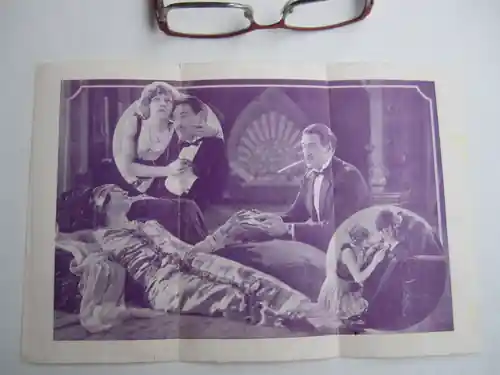
The 'complications' that ensue after John's departure are, by the very nature of silent film narrative, left to the viewer's imagination in the initial plot synopsis. But within the film itself, these would have unfolded with a carefully calibrated dramatic tension. Perhaps Louis attempts to clear her name, encountering further resistance. Perhaps de Seyre reappears, complicating matters further. Or perhaps John himself, consumed by regret, embarks on a journey of discovery, forcing him to confront his own prejudices and the superficiality of his initial judgment. The brilliance of such a plot lies in its ability to unravel the initial perception, revealing the humanity and vulnerability beneath the veneer of scandal. It's a journey not just for the characters, but for the audience, challenging them to question their own assumptions about morality and truth.
In a broader sense, Behold This Woman touches upon the timeless struggle of women in the public eye, a theme that remains remarkably pertinent. Louis Maurel, as a movie star, is inherently subjected to a level of scrutiny and judgment that a private individual might escape. Her perceived association with de Seyre is enough to cast a shadow over her entire being, regardless of the actual facts. This echoes the challenges faced by women throughout history, whose reputations could be irrevocably damaged by mere whispers or perceived impropriety. It's a narrative that, without explicitly stating it, champions a deeper understanding and empathy, urging viewers to look beyond the sensational and into the heart of the individual.
Comparing it to other films of its era, one might find parallels in the dramatic intensity of a film like The Fighting Shepherdess, which might have also explored themes of a strong woman navigating a challenging world, albeit perhaps in a more action-oriented context. Or consider Tennessee's Pardner, another film that could delve into the complexities of relationships forged in rugged landscapes, though likely with a different emotional core. What sets Behold This Woman apart is its meticulous focus on the psychological toll of societal judgment, a theme that resonates with a quiet power that transcends the lack of spoken dialogue. It's less about grand gestures and more about the internal battles fought by its protagonists.
The film's lasting impact lies not just in its engaging plot, but in its ability to evoke a sense of empathy for its characters. John Strangeway's journey from naive idealist to a man burdened by regret and seeking redemption is as compelling as Louis Maurel's struggle to reclaim her dignity and truth. It’s a story that reminds us of the fragility of trust and the importance of looking beyond superficial judgments. The power of a film like this, even a century later, is its capacity to hold a mirror up to human nature, reflecting our own tendencies to judge, to misunderstand, and to yearn for connection and truth. The artistry of Irene Rich, the narrative craftsmanship of Oppenheim and Blackton, and the evocative power of silent cinema combine to create a work that is both a historical artifact and a timeless piece of dramatic storytelling.
Ultimately, Behold This Woman is more than just a period piece; it’s a profound meditation on the human condition. It explores how our perceptions, often colored by rumor and class distinctions, can warp reality and lead to profound heartache. It asks us to consider the burden of public scrutiny, especially for those in the spotlight, and the arduous path one must sometimes take to defend one's honor and integrity. In its silent grandeur, it speaks volumes, leaving an indelible impression that lingers long after the final intertitle fades from the screen, much like a haunting melody that echoes in the mind. It’s a testament to the enduring power of classic cinema to explore complex human emotions and societal dilemmas with a grace and subtlety that remains captivating.
The narrative arc, as detailed by Oppenheim's original story, would have certainly provided ample material for the 'complications' to unfold in a gripping manner. Silent films, reliant on visual narrative, often excelled at building suspense and emotional intensity through carefully constructed scenes and intertitles that punctuated key plot developments. One can imagine scenes of Louis Maurel navigating the social labyrinth, facing veiled accusations or outright ostracism, all while maintaining a façade of strength. Similarly, John Strangeway's path to understanding would likely involve encounters that challenge his initial assumptions, forcing him to re-evaluate the true character of the woman he so hastily judged. This journey of enlightenment, often a staple of dramatic narratives, would have been particularly poignant in the silent era, where character transformation was conveyed through subtle shifts in posture, gaze, and expression.
The societal backdrop of the 1920s, an era of significant social change and burgeoning celebrity culture, would have also lent a particular resonance to the film's themes. The rise of Hollywood movie stars like Louis Maurel meant that public figures were increasingly subjected to intense scrutiny, their private lives often becoming fodder for tabloids and gossip. This cultural context amplifies the stakes of Maurel's predicament, making her struggle for reputation not just a personal one, but a reflection of a broader societal fascination with and judgment of public figures. The contrast between John's rustic, seemingly uncorrupted world and Louis's glamorous, yet treacherous, urban milieu provides a rich thematic tension that would have been expertly woven into the film's visual fabric.
Finally, the enduring appeal of Behold This Woman lies in its universal message. While set in a specific historical period and utilizing a now-vintage cinematic form, its core themes of love, betrayal, misunderstanding, and the search for truth are timeless. It’s a film that encourages introspection, urging viewers to question their own biases and the ease with which we often form opinions based on incomplete information or malicious whispers. It reminds us that appearances can be deceiving, and that true character often reveals itself not in the absence of scandal, but in the courage with which one faces it. This profound human insight, delivered through the evocative silent artistry of Irene Rich and the compelling narrative of Oppenheim and Blackton, ensures that Behold This Woman remains a powerful and relevant cinematic experience, a quiet masterpiece that continues to speak volumes without uttering a single word.
IMDb 5.6
1932
Community
Log in to comment.