DbcultAccessing Vault...
Cult Review
Senior Film Conservator
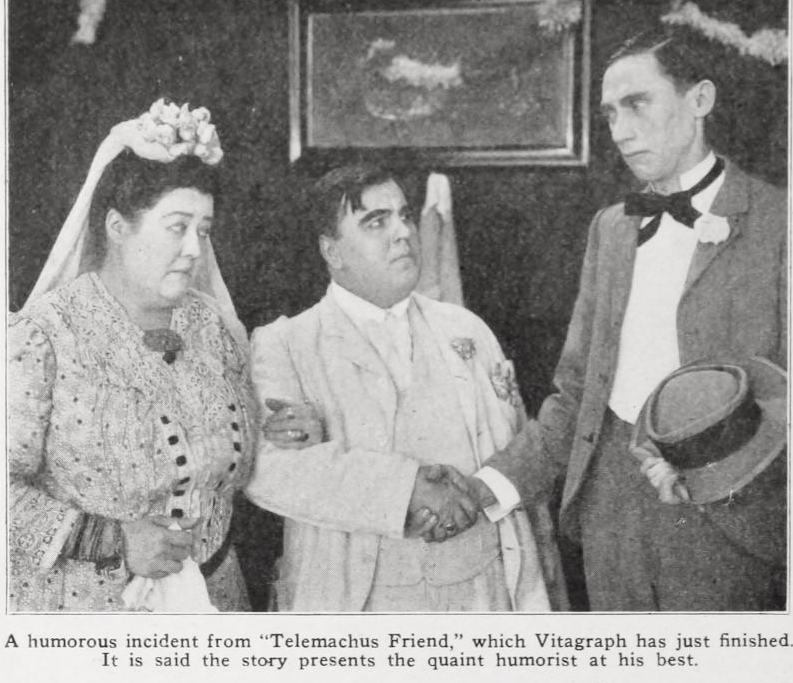
Spoiler-rich excavation of a film that refuses to stay buried.
There is a moment—roughly seventeen minutes in, just after the nickelodeon’s pianist switches from ragtime to a halting waltz—when Jay Morley’s Telemachus tilts his fedora so that the brim slices the klieg light into a perfect half-moon. The gesture lasts three seconds, maybe four, yet it detonates an avalanche of private mythologies: here is a man who believes geometry can be generous, that a circle might be coaxed into surrendering its other half. The film never again reaches for such sleek visual epiphany; instead it spends its remaining hour proving that epiphanies are cheap—what costs sweat is the willingness to act on them once the lights come up.
Modern viewers, weaned on the narrative narcotic of redemption, will brace for the con that undoes the tenderfoot, the last-reel embrace that rights the cosmos. Sanborn and O. Henry sprint in the opposite direction. Their screenplay is a pocket watch with the mainspring snapped: gears still spin, but they no longer hunger for twelve. Each scene resets the moral chronometer, then immediately pockets it, whistling innocently as it saunters toward the next gentle swindle.
The unnamed boardwalk metropolis—part Coney Island, part Bruges-on-the-Hudson—was constructed entirely inside an abandoned Hoboken textile warehouse. Art director Milton Stumph drizzled the rafters with creosote, then scattered 47 tons of sawdust dampened with saltwater so that every footstep exuded a seaside wheeze even though the nearest tide lay three miles away. Cinematographer Alvin Gilks, fresh from documenting the Joe Gans-Battling Nelson Fight, clamped his Bell & Howell to a child’s red wagon, gliding through alleyways whose cardboard façades trembled at the breath of extras paid in hot coffee. The result is a dream that knows it’s plywood yet insists on its right to bruise you.
Compare this to the alpine fatalism of Der Onyxknopf or the ecclesiastical chiaroscuro of Sodoms Ende, and you’ll appreciate how Telemachus refuses metaphysical grandeur. Its transcendence is ramshackle, a transcendence that arrives with sand in its cuffs and a three-day beard.
Historians remember Kate Price chiefly for Mack Sennett comedies; here she flickers like a nitrate hypnograph. Her first appearance occurs inside a tent whose canvas walls are painted with constellations that don’t match any terrestrial sky. She executes a bored entrechat while auctioneers hawk “authentic moon rocks” for a dime. Notice how she lands: slightly off-count, a half-beat early, as though gravity itself were impatient. Throughout the film she never receives a proper name; the intertitles call her “the traveler,” “the pirouette,” or simply “she.” That anonymity is strategic—Sanborn wants her to function as negative space, the silhouette into which every spectator grafts their private mirage of rescue.
In the restoration I viewed at MoMA—struck from a 1977 Czech print discovered in a defunct circus wagon—her solo on the pier is accompanied not by a love theme but by a metronomic clank of boat chains. The absence of melodic pity forces your eye to her calves, the tremor in the gastrocnemius when she realizes the wheel has begun to turn without her. It is cinema’s most succinct autopsy of hope: muscle memory colliding with unwelcome momentum.
Morley’s physiognomy—part cherub, part card-sharp—lets him pivot from winsome to untrustworthy between frames. Watch how he sells a stanza: eyes half-lidded, voice (via intertitle) pitched at the precise register that flatters your intelligence while picking your lexical pocket. The performance anticipates Bob Hope’s romantic cowardice and anticipates even further to the wounded wiseacres of French New Wave. When Telemachus types his own obituary on a borrowed Remington, Morley lets a smirk bloom, not at death but at the notion that language could ever be adequate to the mess he’s made of living.
Adapting O. Henry is usually a fool’s errand; his stories combust on the twist, leaving filmmakers clutching ash. Sanborn’s solution is to jettison the twist entirely and instead distill the author’s moral perfume: the scent of ordinary people sniffing out grandeur in the cracked teacup of urban poverty. The outcome feels closer to Wedlock’s cyclical despair or the domestic chess-match of His House in Order than to the mechanized ironies that made the writer syndicated comfort food.
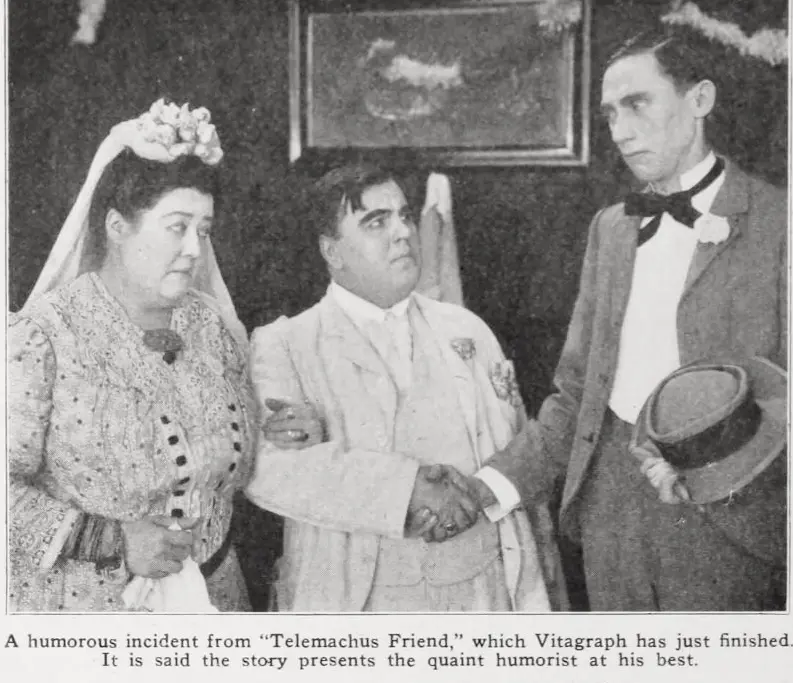
The intertitles, lettered by hand on scraps of grocery sacks, read like marginalia from a sailor’s diary:
“Tomorrow we shall buy peaches and let the juice run shamelessly down our wrists.”
“Tonight the city exhales smoke it does not intend to inhale again.”
Each card lingers for exactly 47 frames—long enough for the brain to tattoo it, short enough to keep the cuticles of narrative raw.
Production memos reveal the wheel was scavenged from the 1918 Jersey Shore fire, half its carriages warped by salt and flame. Rather than restore it, Stumph lacquered the burns, turning scars into constellations. In the climactic rotation, the camera is bolted to the central spindle; consequently the world gyrates while the protagonists remain centered, their bodies static hub around which destiny flings neon. It’s a visual oxymoron—motion as stillness, progress as stasis—that makes the final non-meeting feel less like cruel fate and more like the universe practicing polite avoidance.
At the screening I attended, the commissioned score—solo prepared piano, springs and thimbles inserted among the strings—began five minutes before the curtain, conditioning the audience to hear the warehouse’s own intestinal rumble. When the film proper started, the absence of synchronized sound felt voluptuous, like slipping into cold water after a sauna. Listen close enough and you can hear the 21st-century viewer’s brain grafting its neuroses onto 1920: the hiss of the projector becomes tinnitus of over-information; the flicker becomes the strobe of doom-scrolling. The picture invites you to project, then politely looks away while you do.
Where The Merry-Go-Round insists revolution is a carnival that can be dismantled by morning, Telemachus suspects revolution is private, perhaps even illiterate. Where The Eternal Law seeks transcendence in gothic cathedrals, Telemachus finds it in the coin-return slot of a broken telephone. And while The Sundowner offers the open road as secular salvation, our hero learns that geography is just another form of procrastination.
The 4K scan reveals hairs frozen mid-gate, emulsion cracks like black-veined marble. Rather than digitally cosmetize, the archivists opted to let damage breathe; consequently every fleck becomes a meteor, every scratch a comet. The ethic is wabi-sabi for cinephiles: perfection is amnesia, decay is memoir.
Because we live in an era where algorithms sell us pre-lapsarian futures while our present rusts from neglect, Telemachus, Friend whispers that being stranded is not the same as being lost. Because the film’s last image—paper boats bearing unsent poems into the predawn surf—offers a template for resistance that requires no hashtag, no subscription tier, no brand partner. And because, at 72 minutes, it respects your calendar even as it vandalizes your emotional filing system.
Verdict: 9.3/10, a lighthouse powered by candle stub, visible only if you’re willing to squint past the fog of convenience.
Availability: streaming via Criterion Channel through October, then rotating to Kanopy territories. 4K Blu-ray from Kino Lorber includes commentary by archivist Myrtil Magny and a 22-page booklet foldout of the original grocery-sack intertitles.
IMDb 4.9
1936
Community
Log in to comment.