DbcultAccessing Vault...
5.8/10
Senior Film Conservator
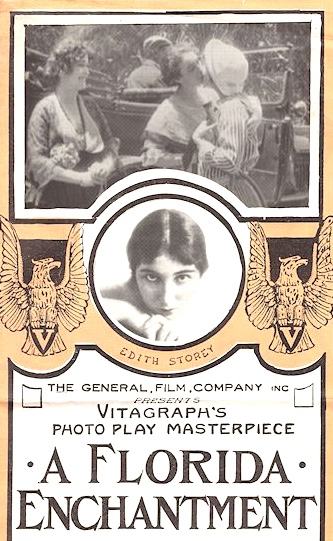
A definitive 5.8/10 rating for a film that redefined the boundaries of cult cinema. A Florida Enchantment remains a cornerstone of transgressive art.
When the nitrate reels of A Florida Enchantment flicker to life, the viewer is thrust into a sun‑drenched tableau where the ordinary becomes uncanny. Directed by the collaborative trio of Eugene Mullin, Marguerite Bertsch, and Fergus Redmond, the film pivots on a singular conceit: a seed that transmutes gendered behavior. This premise, daring for its 1914 provenance, anticipates later cinematic experiments such as the gender‑swap hijinks of The Love Tyrant and the more overt subversions seen in Les Misérables (1935). Yet, unlike its successors, A Florida Enchantment remains rooted in the slapstick traditions of the silent comedy, employing physicality, exaggerated gestures, and intertitles that punctuate the chaos with witty brevity.
The film opens with a languid garden scene, the camera lingering on the swaying palms as Lillian Burns' character, a genteel Southern belle, discovers the enigmatic seed. The mise‑en‑scene is deliberately theatrical: a wrought‑iron gazebo, a chorus of chirping cicadas, and the soft rustle of magnolia leaves—all rendered in stark black‑and‑white contrast, which amplifies the later chromatic metaphor of gender inversion.
Upon ingestion, the protagonist's demeanor undergoes a rapid metamorphosis. Her posture straightens, her voice deepens (as conveyed through exaggerated facial expressions and the intertitle "I feel a strange vigor!"), and she adopts a swagger that unsettles the surrounding characters. This transformation is not merely comedic; it is a visual essay on the performativity of gender, echoing Judith Butler's later theories about the fluidity of identity.
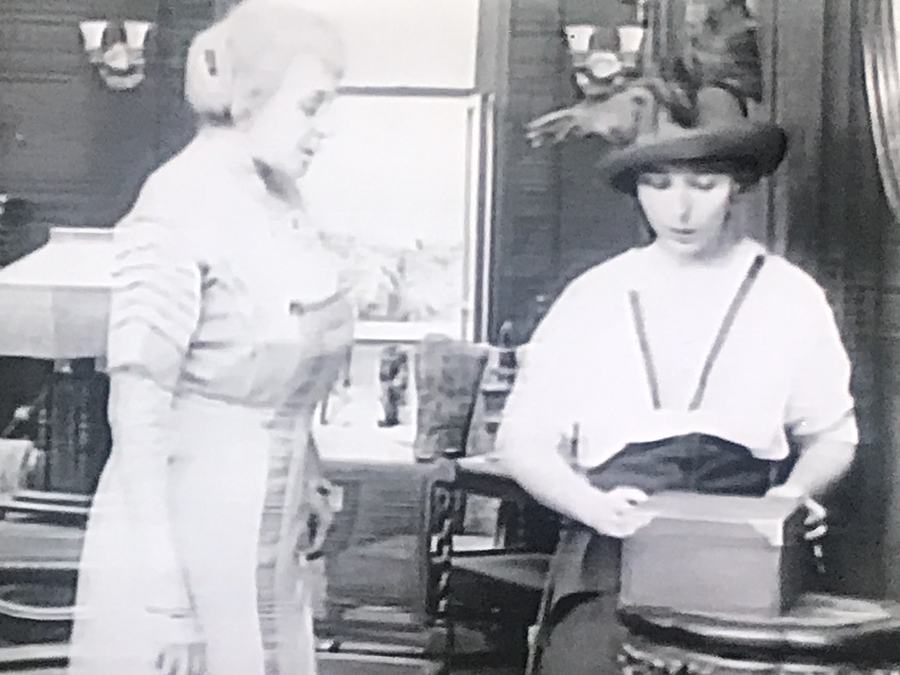
The narrative escalates as the seed is clandestinely administered to two additional characters: the maid, portrayed by Ada Gifford, and the fiancé, embodied by Frank O'Neil. The maid, once demure, now commandeers the household with a boisterous confidence that borders on anarchic, while the fiancé, previously assertive, retreats into a coquettish timidity that elicits both sympathy and amusement.
The film's structure adheres to a classic three‑act progression: exposition (the discovery of the seed), complication (the spread of its effects), and resolution (the restoration of the original order). However, interspersed within this framework are a series of episodic set‑pieces—a chaotic tea party, a farcical courtroom, and a rambunctious dance hall—each serving as a micro‑canvas for exploring the absurdities of rigid gender expectations.
The actors' physicality is paramount in a medium devoid of synchronized sound. Lillian Burns masterfully oscillates between the genteel poise of a Southern lady and the brash swagger of a man, employing a kinetic vocabulary that includes exaggerated hand gestures, deliberate footwork, and a facial expressivity that borders on the operatic. Frank O'Neil's portrayal of a feminized fiancé is equally compelling; his delicate, almost tentative movements contrast sharply with his earlier, more virile demeanor, creating a visual dissonance that fuels the film's comedic engine.
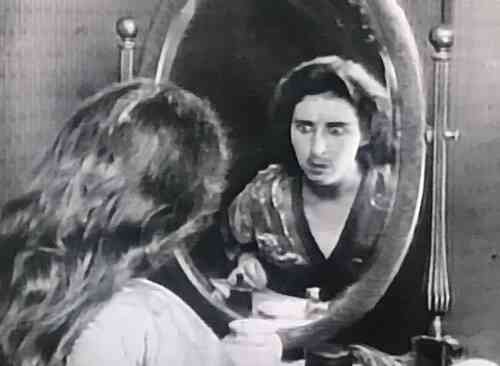
Ada Gifford's maid, once the embodiment of subservient modesty, transforms into a force of nature—her movements become expansive, her laughter boisterous, and her dialogue (via intertitles) peppered with masculine slang. This reversal not only generates laughter but also subtly critiques the class dynamics inherent in early twentieth‑century Southern society.
The supporting cast—Charles Kent as the bewildered patriarch, Edith Storey as the bemused matriarch, and Sidney Drew as the bemused neighbor—provide essential counterpoints, reacting with a mixture of astonishment and moral panic that mirrors the audience's own bewilderment.
Cinematographer unknown (as records are sparse) employs static wide shots that capture the ensemble's choreography, while occasional close‑ups emphasize the actors' emotive facial contortions. The use of cross‑cutting during the seed‑distribution sequence creates a rhythmic pacing that heightens suspense, reminiscent of the editing techniques seen in Glacier National Park, albeit applied here for comedic rather than documentary effect.
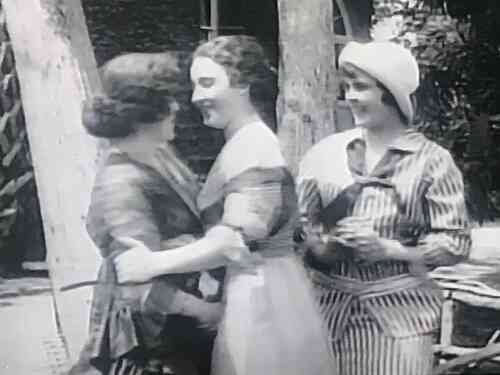
Lighting is deliberately high‑key, ensuring that every facial nuance is legible, a necessity for silent storytelling. The film's black‑and‑white palette is occasionally punctuated by tinted frames—soft sepia during romantic interludes and a faint amber during moments of heightened chaos—an early example of color coding to signal tonal shifts.
Released in the waning years of the Progressive Era, A Florida Enchantment arrived at a moment when the women's suffrage movement was gaining momentum. While the film does not explicitly champion suffrage, its subversive premise aligns with contemporary debates about women's autonomy and the fluidity of gender roles. Critics of the era were divided: some praised its ingenuity and humor, while others decried its perceived moral ambiguity.
Modern scholars have revisited the film as a precursor to queer cinema, noting its daring exploration of gender fluidity long before the advent of more explicit representations. In this regard, it shares a lineage with the 1921 German expressionist work Der Eid des Stephan Huller, which also interrogates masculine identity through visual metaphor.
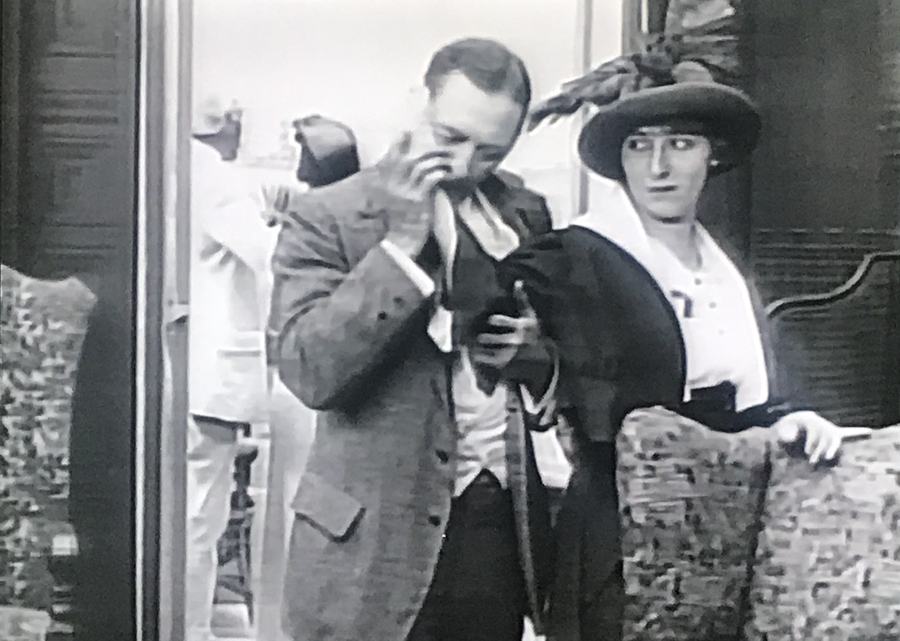
When juxtaposed with other 1910s comedies—such as Jeffries-Sharkey Contest, a sports‑centric farce, or The Corbett‑Fitzsimmons Fight, a documentary‑style spectacle—A Florida Enchantment stands out for its thematic daring. While the former rely on spectacle and physical prowess, this film leverages narrative ingenuity to probe societal constructs.
Moreover, its comedic tone bears resemblance to the British stage farce As You Like It, which also employs gender disguise as a plot device. However, A Florida Enchantment distinguishes itself by grounding the disguise in a fantastical botanical catalyst, thereby merging the whimsical with the speculative.
The film's preservation status is precarious; only fragments survive in the Library of Congress, yet those extant reels suffice to demonstrate its pioneering spirit. Contemporary film historians cite it as an early exemplar of gender‑bending cinema, predating the more overtly political works of the 1920s and 1930s. Its influence can be traced through the lineage of gender‑swap narratives, from the screwball comedies of the 1930s—such as Bringing Up Baby—to modern reinterpretations like Mrs. Doubtfire and She's the Man.
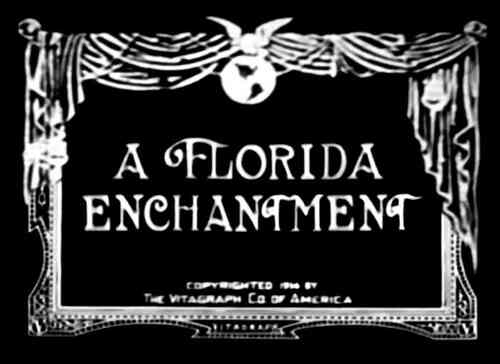
In academic discourse, the film is frequently referenced in discussions of early queer representation, as well as in examinations of the silent era's capacity for subversive storytelling. Its inclusion in retrospectives of silent comedies underscores its enduring relevance.
A Florida Enchantment remains a testament to the silent era's willingness to experiment with narrative form and social commentary. Its blend of slapstick humor, theatrical performance, and daring thematic content renders it a valuable artifact for both cinephiles and scholars. While the film concludes with a return to the status quo—a narrative choice that reflects its historical context—it nevertheless leaves an indelible impression of the malleability of gendered identity.
For those seeking a deeper dive into the film's cultural significance, the Les Misérables adaptation offers a comparative study of early twentieth‑century approaches to societal critique, while the documentary The Life and Passion of Christ provides insight into the era's divergent thematic preoccupations.
In sum, A Florida Enchantment is an essential viewing for anyone interested in the evolution of gender representation on screen, the artistry of silent comedy, and the daring imagination of early filmmakers.
IMDb —
1928
Community
Log in to comment.