DbcultAccessing Vault...
Cult Review
Senior Film Conservator
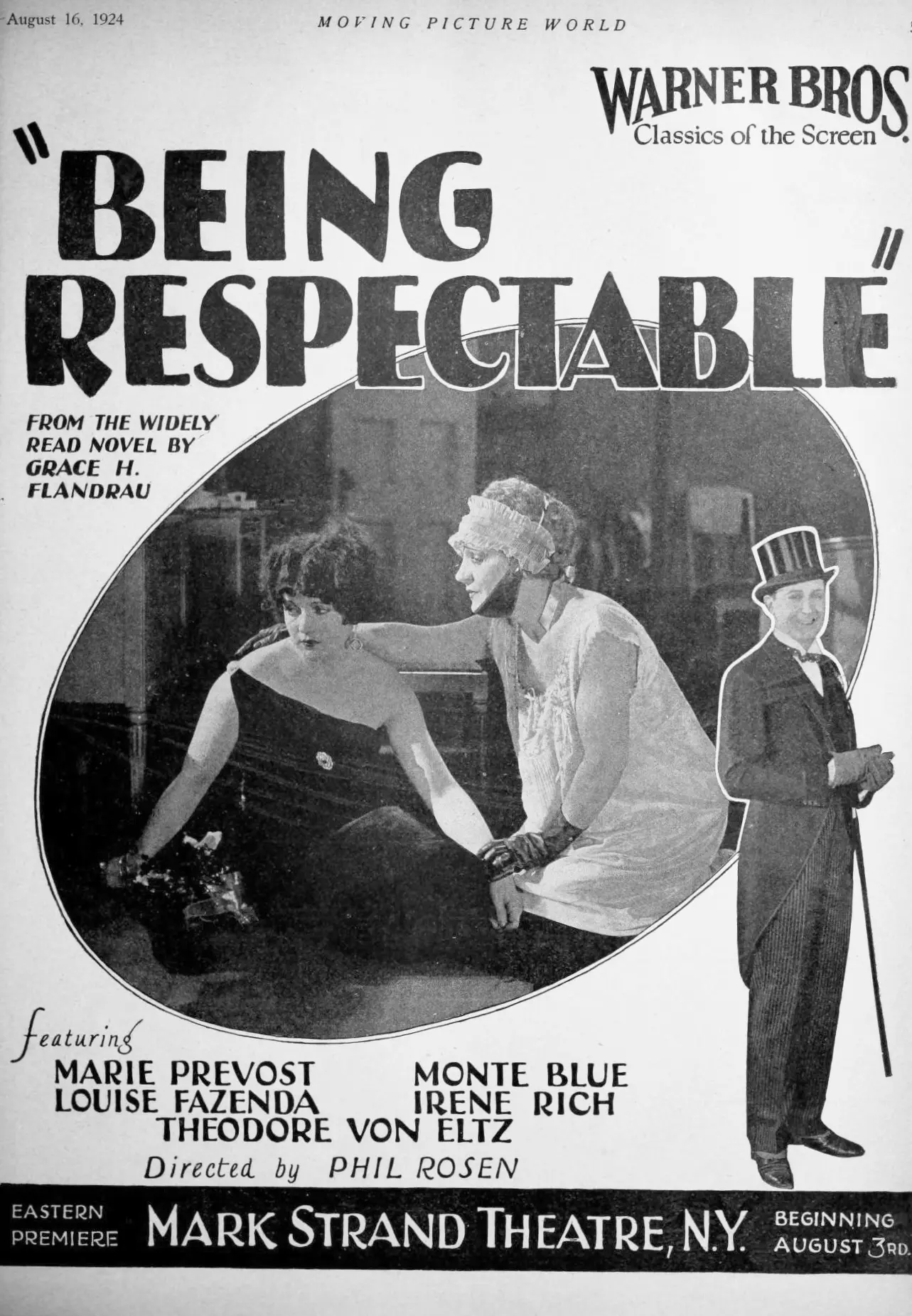
In the annals of silent cinema, certain narratives resonate with an enduring power, transcending the limitations of spoken dialogue to communicate profound human truths. Being Respectable, a 1924 offering, stands as a poignant testament to this capability, an intricate tapestry woven from the threads of societal expectation, personal yearning, and the often-agonizing consequences of choices made under duduress. This film, directed with a keen eye for emotional nuance, delves into the suffocating grip of early 20th-century propriety, setting a stage where genuine affection often finds itself at odds with the dictates of family and class. It’s a compelling exploration of a man caught between two worlds, two women, and two vastly different definitions of happiness.
The narrative unfurls around Charles Carpenter, portrayed with a compelling blend of vulnerability and suppressed longing by Theodore von Eltz. Charles is a scion of wealth, a young man whose path is ostensibly laid out for him by the formidable hand of his lineage. His family, embodying the rigid social structures of the era, exerts immense pressure upon him to forge a marital alliance with Suzanne, a woman whose background and demeanor align perfectly with their elevated standing. Suzanne, brought to life with a quiet dignity by Irene Rich, represents the epitome of what a “respectable” wife should be: poised, dutiful, and an ideal complement to the Carpenter name. Yet, Charles’s heart belongs irrevocably to another: the vivacious, free-spirited Valerie. Valerie, embodied with electrifying charisma by Marie Prevost, is the quintessential “flapper” – a beacon of modernity, independence, and an unbridled zest for life that stands in stark contrast to the staid world Charles is expected to inhabit. Her presence in the film is a vibrant splash of color against a monochrome backdrop of convention, a testament to the burgeoning social changes of the Roaring Twenties.
The initial act of the film meticulously details Charles’s agonizing internal struggle. Torn between the fierce pull of his affections for Valerie and the crushing weight of his family’s expectations, he ultimately capitulates. The marriage to Suzanne proceeds, a union born not of passion, but of obligation. This decision, a pivotal moment of tragic resignation, precipitates Valerie’s departure. Heartbroken and unable to remain in a town that now represents the crushing of her hopes, she vanishes, leaving Charles to a life that, while outwardly impeccable, is inwardly hollowed out by the absence of genuine love. This early narrative arc, crafted by the perceptive minds of writers Dorothy Farnum and Grace Hodgson Flandrau, effectively establishes the central conflict and the profound sacrifices made in the name of “respectability.” The screenwriters demonstrate a masterful understanding of character motivation and the social dynamics of the period, laying a robust foundation for the emotional turmoil that is yet to unfold. Their work, much like in compelling dramas such as The Social Code, meticulously dissects the invisible rules that govern society and the individuals trapped within their intricate web.
Years later, the narrative takes a dramatic turn. Charles and Suzanne have settled into a life of domesticity, complete with a child, cementing their status as a “respectable” family. The seemingly tranquil surface of their existence is violently rippled by Valerie’s unexpected return to town. Her reappearance acts as a catalyst, igniting the embers of a love that Charles had long tried to suppress. He quickly realizes that his feelings for Valerie remain as potent and consuming as ever, and it becomes equally clear that Valerie’s heart has never truly moved on from him. This rekindling sets off a chain of complications, threatening to shatter the carefully constructed façade of Charles’s life and expose the raw, unresolved emotions simmering beneath. The film excels in portraying the sheer awkwardness and agonizing tension of this reunion, allowing the audience to feel the weight of unspoken words and lingering glances.
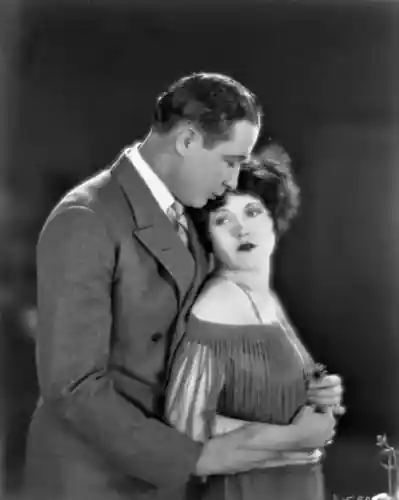
Theodore von Eltz’s portrayal of Charles is a study in quiet desperation. His performance is nuanced, conveying the internal struggle of a man whose outward composure belies a soul in torment. He doesn’t resort to broad gestures but rather communicates through subtle shifts in his gaze, a slight tremor in his hands, or a melancholic set to his jaw. This understated approach makes Charles’s predicament all the more relatable and tragic. One can sense his regret, his yearning, and his profound sense of entrapment. It's a performance that speaks volumes without uttering a single word, a hallmark of effective silent film acting. His predicament, caught between duty and desire, mirrors the struggles seen in other contemporary dramas like The Right to Be Happy, where characters frequently grapple with the societal blueprints laid out for their lives.
Marie Prevost, as Valerie, is simply captivating. Her “flapper” persona is not merely a superficial affectation but a deeply ingrained expression of her independent spirit. Prevost imbues Valerie with an infectious energy and a profound emotional depth, making her character far more than a mere object of desire. She is a woman who lives by her own rules, even if those rules lead to heartache. When Valerie returns, Prevost skillfully conveys the lingering pain of her past, tempered by a renewed hope that defies her earlier despair. Her chemistry with von Eltz is palpable, lending credence to the idea that their connection is one of destiny, not mere infatuation. Prevost’s ability to convey such a wide range of emotions – from joyous abandon to profound sorrow – through facial expressions and body language alone is a masterclass in silent film acting. Her portrayal here stands as a significant contribution to the representation of the modern woman in early 20th-century cinema, challenging the static roles often depicted.
Irene Rich’s Suzanne, while perhaps less flamboyant than Prevost’s Valerie, is no less compelling. Rich plays Suzanne not as a villain, but as a victim of circumstances, a woman who genuinely loves Charles and believes in the sanctity of their marriage. Her quiet suffering, her attempts to maintain decorum even as her world crumbles, are deeply moving. Rich’s performance adds a crucial layer of pathos to the narrative, preventing the audience from simply rooting for Charles and Valerie without acknowledging the profound pain inflicted upon Suzanne. Her character serves as a stark reminder of the collateral damage caused by societal expectations and unfulfilled desires, a silent testament to the “respectability” that traps her as much as it traps Charles. This intricate triangulation of characters and their emotional predicaments provides the film with its enduring dramatic tension, distinguishing it from simpler love triangles by its depth of psychological insight.
The supporting cast, though perhaps given less screen time, contributes significantly to the film’s rich texture. Charles K. French and Lila Leslie, likely portraying members of Charles’s family, effectively embody the rigid, unyielding societal pressures that drive much of the plot. Their stern visages and judgmental demeanors underscore the suffocating environment Charles operates within. Monte Blue, Eulalie Jensen, Louise Fazenda, Virginia Loomis, Sidney Bracey, and Frank Currier fill out the ensemble, each adding brushstrokes to the canvas of this 1920s world. Their collective presence helps to build a believable social milieu, illustrating the pervasive nature of gossip, judgment, and the unspoken rules that governed interactions in a bygone era. These characters, though secondary, are crucial in establishing the stakes and the social repercussions of Charles’s choices, much like the intricate ensemble work in films such as One Wonderful Night, where a diverse cast contributes to the narrative's overall tapestry.
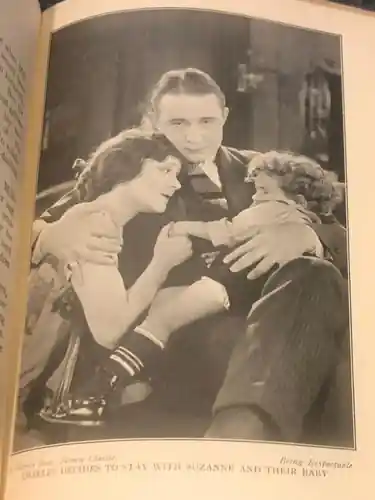
The direction of Being Respectable is commendable for its ability to maintain a consistent tone and pace, allowing the emotional drama to unfold organically. The cinematography, while perhaps not groundbreaking for its era, is effective in its storytelling. Close-ups are utilized judiciously to highlight the subtle expressions of the actors, drawing the audience into their inner turmoil. The framing often emphasizes the isolation of characters, particularly Charles, even when surrounded by others, visually reinforcing his internal conflict. There’s a careful attention to detail in the set design and costuming, which authentically transports the viewer to the opulent yet restrictive world of the wealthy in the 1920s. The visual language of the film speaks volumes, conveying social hierarchy, emotional states, and narrative progression with clarity and artistry. One might draw parallels to the visual storytelling prowess seen in films like The Man Life Passed By, where visual cues are paramount in conveying character depth and narrative subtext.
The screenplay by Dorothy Farnum and Grace Hodgson Flandrau is a particular strength of Being Respectable. They navigate a complex emotional landscape with a remarkable degree of sophistication, avoiding simplistic characterizations or facile resolutions. The writers understand that life’s dilemmas are rarely black and white, and they present Charles’s situation with a nuanced understanding of human fallibility and the pressures of social conformity. The dialogue, conveyed through intertitles, is economical yet impactful, advancing the plot and revealing character without unnecessary exposition. The structure of the narrative, with its significant time jump, is handled adeptly, allowing for the full weight of Charles’s initial decision to be felt years later. The enduring relevance of the themes they explore – the conflict between personal happiness and societal obligation – is a testament to their insightful writing. This depth of thematic exploration elevates the film beyond a mere melodrama, positioning it as a thoughtful commentary on the human condition. Their approach to character development, where motivations are complex and often contradictory, is a notable achievement, akin to the psychological realism found in works like Der Eid des Stephan Huller.
The central themes of Being Respectable are as resonant today as they were a century ago. It is, at its core, a story about the universal struggle between duty and desire. Charles’s choice to marry Suzanne, driven by familial pressure and the pursuit of “respectability,” highlights the suffocating nature of societal expectations. The film interrogates the very definition of happiness, suggesting that a life lived in accordance with external dictates, no matter how outwardly perfect, can lead to profound internal emptiness. Valerie, as the “flapper,” represents the burgeoning spirit of individual freedom and self-expression that challenged the rigid norms of the era. Her character underscores the changing roles for women and the societal pushback against traditional constraints. The film also delves into the concept of second chances and the enduring power of true love, even after years of separation and the establishment of new lives. The tragic irony lies in the fact that the pursuit of “respectability” ultimately leads to a far more scandalous and emotionally destructive situation than had Charles followed his heart initially. These themes, particularly the clash between individual yearning and societal constraints, are powerfully echoed in films such as Some Judge, which also explores the intricate dance between personal morality and public perception.
Placing Being Respectable within its historical context further enriches its viewing experience. Released in 1924, it arrived at the height of the Jazz Age, a period of immense social and cultural upheaval. The “flapper” phenomenon was in full swing, challenging Victorian morality and pushing the boundaries of female independence. The film subtly captures this tension, contrasting Valerie’s modern sensibilities with Suzanne’s more traditional virtues and Charles’s struggle to reconcile the two worlds. It serves as a valuable cinematic artifact, offering insights into the moral dilemmas and evolving social landscape of the Roaring Twenties. The film’s exploration of forbidden love and societal disapproval finds parallels in other silent-era narratives that dared to question prevailing norms, such as Burning the Candle, which also navigated the complexities of passion versus propriety.
In conclusion, Being Respectable is a compelling and emotionally resonant silent film that deserves renewed attention. Its strengths lie in its well-crafted narrative, the nuanced performances of its lead actors, particularly Theodore von Eltz and Marie Prevost, and its timeless exploration of universal human themes. The film brilliantly uses the silent medium to convey deep emotional turmoil and societal critique, proving that powerful storytelling transcends the need for spoken words. It is a poignant reminder of the sacrifices often made at the altar of convention and the enduring, sometimes devastating, power of true love. For anyone interested in the social dramas of the silent era or a compelling story of love and duty, Being Respectable offers a rich and rewarding experience, solidifying its place as a significant contribution to the cinematic landscape of the 1920s.
IMDb —
1931
Community
Log in to comment.