DbcultAccessing Vault...
Cult Review
Senior Film Conservator
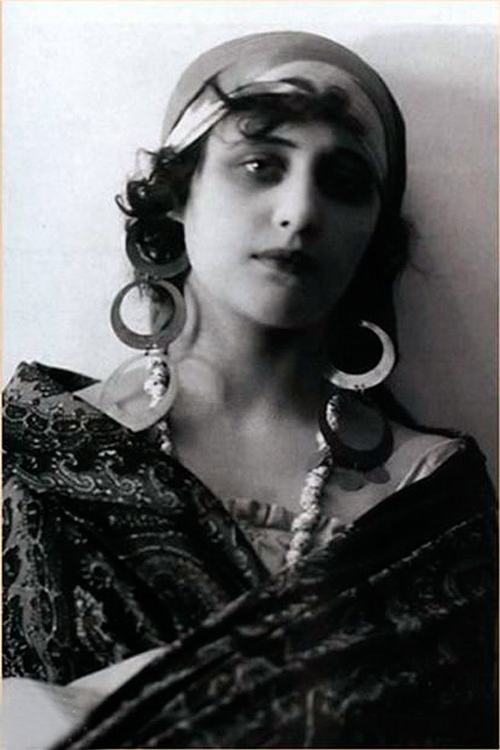
The 1918 cinematic rendering of Zhivoy trup (The Living Corpse) stands as a monumental artifact of Russian pre-revolutionary sensibilities, capturing the twilight of an era through the lens of Lev Tolstoy’s harrowing narrative. Directed by Cheslav Sabinsky, the film is not merely a translation of text to celluloid but a profound exploration of the human condition’s inherent friction with societal structures. In the pantheon of silent cinema, few works manage to convey the internal rot of the soul with such stark, unadorned clarity. The film’s protagonist, Fedor Protasov, played with a haunting, hollowed-out intensity by Mikhail Massin, serves as the nexus for a discourse on the futility of escape and the cruelty of institutionalized morality.
At the heart of Zhivoy trup lies the agonizing paralysis of Fedor Protasov. Unlike the protagonists of more traditional melodramas, such as the characters found in The Right Direction, Fedor does not seek a path toward redemption through conventional virtue. Instead, he is a man who recognizes the inherent lie of his domestic bliss. The suspicion that his wife, Liza—portrayed by the legendary Vera Kholodnaya—remains spiritually wedded to Victor Karenin (Osip Runich) becomes an all-consuming fire. Massin’s performance is a masterclass in the aesthetics of despair; his eyes reflect a man who has already departed from the world of the living, long before he attempts to pull the trigger.
The film brilliantly captures the suffocating atmosphere of the Protasov household. The set design and framing emphasize a sense of entrapment, reminiscent of the legal and social cages explored in A Butterfly on the Wheel. Every interaction between Fedor and Liza is laden with the heavy silence of things left unsaid. When Fedor finds himself unable to commit the act of suicide, it is not portrayed as a moment of cowardice in the traditional sense, but rather as the ultimate realization that even death requires a level of engagement with reality that he can no longer muster. His 'disappearance' is a cowardly act of supreme bravery—a paradox that Sabinsky explores with nuanced shadow-work and pacing.
Fedor’s descent into the Gypsy underworld introduces a sharp aesthetic pivot. Here, the film sheds its stiff, aristocratic skin and adopts a more fluid, almost feverish visual language. The introduction of Mascha, the Gypsy singer, provides a counterpoint to the domestic sterility of Liza. While Liza represents the 'correct' path—much like the moral compasses found in As Men Love—Mascha represents a raw, unmediated vitality. The relationship between Fedor and Mascha is not one of simple lust, but of mutual recognition between two outcasts. However, even this escapism is tinged with the knowledge of its own transience. Fedor is a 'living corpse' precisely because he cannot truly belong to Mascha’s world either; he is a ghost haunting the festivities of the living.
The contrast between the two worlds is expertly handled. Where the scenes in the city are characterized by rigid compositions and sharp lines, the Gypsy camp sequences feel more organic, utilizing depth of field to create a sense of sprawling, uncontrolled life. This thematic duality reminds one of the rugged, untamed landscapes in The Wolf and His Mate, where the environment itself reflects the internal struggle of the characters. Yet, in Zhivoy trup, the landscape is psychological rather than physical.
One cannot discuss this film without paying homage to Vera Kholodnaya. As Liza, she embodies the tragic grace that made her the most celebrated actress of the Russian silent screen. Her performance here is more restrained than in some of her more overtly sensationalist roles, such as Nattliga toner. She navigates the complex emotional terrain of a woman who is simultaneously a victim of her husband’s instability and a beneficiary of his supposed death. The scenes where she transitions from mourning to a new life with Karenin are handled with a delicate touch, avoiding the pitfalls of easy villainy. She is as much a prisoner of social mores as Fedor, forced to play the role of the grieving widow until the state permits her to be a wife again.
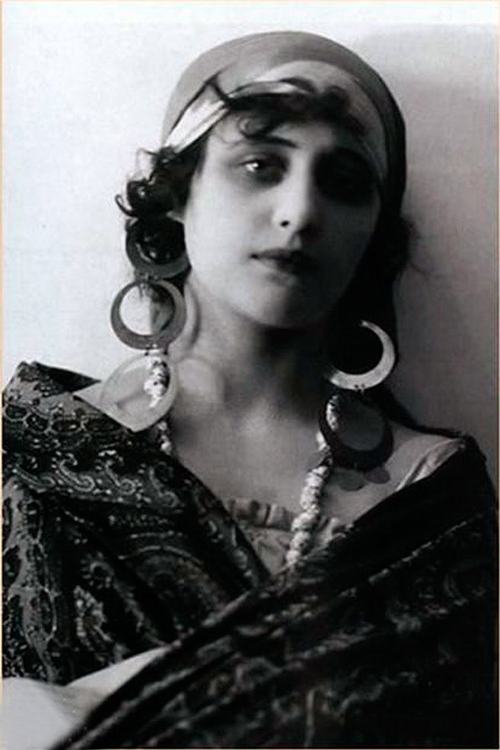
This portrayal of domestic entanglement and the legal ramifications of marriage echoes the themes found in Husband and Wife, though Tolstoy’s narrative infuses the situation with a much darker, existential dread. When the secret of Fedor’s survival inevitably surfaces, Kholodnaya’s reaction is a harrowing display of shattered security. The film shifts from a character study into a scathing critique of the legal system—a system that views human relationships as mere entries in a ledger.
Sabinsky’s direction in Zhivoy trup displays a sophisticated understanding of visual storytelling. The use of close-ups to convey psychological interiority was relatively advanced for 1918, and the film utilizes these moments to bridge the gap between the audience and Fedor’s fractured psyche. The lighting, particularly in the tavern scenes, creates a chiaroscuro effect that mirrors the moral ambiguity of the narrative. This visual sophistication puts the film in conversation with other high-caliber productions of the era, such as the atmospheric Fyrvaktarens dotter, which also utilized setting to enhance its dramatic weight.
Furthermore, the editing rhythm of the film accelerates as the legal net begins to tighten around the protagonists. The courtroom climax is a tour de force of tension, utilizing cross-cutting to highlight the disparity between the cold, bureaucratic logic of the judges and the raw emotional agony of the accused. Unlike the adventurous pacing of Up Romance Road or the comedic timing of The Galloper, Zhivoy trup maintains a deliberate, funereal tempo that reinforces its central metaphor.
The challenge of adapting Tolstoy lies in capturing his profound philosophical inquiries without the benefit of his sprawling prose. Sabinsky succeeds by focusing on the 'unspoken'—the glances, the hesitations, and the spatial relationships between characters. The film grapples with the concept of 'the living corpse' not just as a plot device, but as a condition of modern existence. Fedor’s desire to step outside the system is a radical act of defiance that ultimately proves impossible. The state, much like the relentless pursuit seen in Big Jim Garrity, eventually catches up to the man who tried to delete himself.
The film also touches upon the corruption inherent in 'good' society. Victor Karenin, though ostensibly a decent man, represents the banality of the status quo. His presence is a constant reminder of what Fedor refused to become—a cog in the machine of social propriety. This thematic exploration of the 'un-chastened' individual vs. society can be seen in various forms in films like The Unchastened Woman, but in Zhivoy trup, the stakes are cosmic rather than merely social. Fedor is fighting for the right to his own soul, even if that soul is broken.
In comparison to the epic scale of Ivanhoe or the mythological grandeur of Satyavan Savitri, Zhivoy trup is an intimate, almost claustrophobic experience. It does not offer the catharsis of a hero’s journey or the comfort of a moral lesson. Instead, it presents a mirror to the viewer’s own existential anxieties. The final act, involving Fedor’s ultimate sacrifice to free Liza and Karenin from the legal quagmire he inadvertently created, is a moment of profound irony. He must die 'for real' to validate the life he tried to leave behind. This tragic irony is as potent as the greed-driven downfalls in Erich von Stroheim’s Greed, though Tolstoy’s focus is on the poverty of the spirit rather than the thirst for gold.
The film remains a vital piece of cinema history, offering a glimpse into the sophisticated narrative techniques of the Russian film industry before it was radically transformed by the revolution. It is a work of somber beauty, a visual poem dedicated to the man who couldn't find his place in the world. For those seeking a cinematic experience that challenges the mind while ravishing the eyes with the presence of Kholodnaya and Massin, Zhivoy trup is an essential viewing. It is a reminder that cinema, even in its infancy, was capable of grappling with the most complex questions of human existence, much like the hidden depths found in An Alabaster Box. Sabinsky’s work is a testament to the enduring power of Tolstoy’s vision and the haunting allure of the 'living corpse' that resides within us all.
IMDb —
1925
Community
Log in to comment.