DbcultAccessing Vault...
Cult Review
Senior Film Conservator
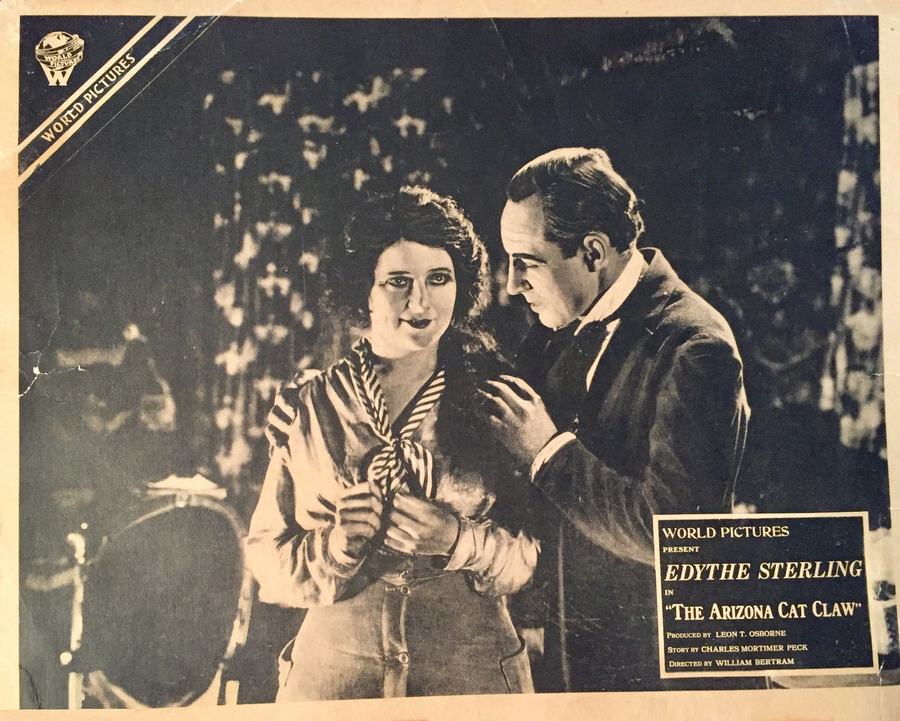
Stepping back into the dusty, sun-drenched landscapes of the American silent era, one occasionally uncovers a cinematic artifact that, despite its age, still crackles with an undeniable vitality. Such is the case with Charles Mortimer's The Arizona Cat Claw, a 1919 western that, even a century later, feels remarkably fresh in its portrayal of female agency and the rugged tenets of frontier justice. This isn't just another tale of cowboys and outlaws; it’s a vibrant tapestry woven with threads of romance, betrayal, and an unyielding spirit, all centered around a protagonist who defies the conventional damsel-in-distress trope.
At its core, The Arizona Cat Claw is a narrative driven by the formidable Blossom Ruggles, portrayed with captivating intensity by Pauline Becker. Blossom is no shrinking violet; she is the daughter of a prominent cattleman, Hank Ruggles, and embodies the very essence of the untamed West. Her independence is not merely a character trait but a force of nature, shaping her decisions and driving the film's intricate plot forward. She’s a woman who knows her mind, and more importantly, knows how to wield her influence, whether it’s in matters of the heart or in enforcing her own brand of righteousness.
The romantic entanglements that ignite the film’s initial sparks are deliciously complex. Blossom’s affections are undeniably tethered to Asa Harris, the neighboring rancher, played by Gordon Sackville with a quiet strength that complements Becker’s fiery persona. Their connection feels authentic, a bond forged in shared experience and mutual respect. Yet, in a move that speaks volumes about Blossom’s playful defiance and perhaps a touch of youthful impetuosity, she decides to pique Asa’s interest by flirting with Frank Stimpson, a mining engineer. This seemingly innocuous flirtation, however, unravels a darker thread in the narrative, as Stimpson, portrayed by Leo D. Maloney, is far from the charming suitor he appears to be. His deceitful nature has already left a devastating mark on Amelia Young, a character touchingly played by Edythe Sterling, whose 'half-wit' designation in the original plot description hints at a vulnerability that Stimpson ruthlessly exploited. This intricate web of relationships immediately elevates the film beyond a simple love triangle, adding layers of moral ambiguity and impending conflict.
One of the film’s most striking sequences, and certainly a highlight for those who appreciate a strong female lead, occurs when Blossom, while riding the rugged range, is ambushed by a Mexican bandit. What follows is not a scene of rescue, but one of raw, unadulterated grit. Blossom doesn’t wait for a hero; she becomes one. She overpowers her assailant, a remarkable feat that instantly establishes her as a woman of extraordinary courage and physical prowess. This moment resonates deeply, echoing the spirit of other pioneering female characters in early cinema, though often in less overtly physical roles. One might consider the quiet resilience of women in dramas like Sylvi, but Blossom’s active combativeness sets her apart, placing her firmly in the tradition of proactive protagonists, even if her methods are uniquely her own. Her subsequent action—delivering the subdued bandit to Asa and his cowboys—leads to a brutal, yet characteristic, act of frontier justice: the bandit is thrown from a cliff. This raw, unvarnished depiction of justice, or perhaps vengeance, is a stark reminder of the lawless, unforgiving nature of the era depicted. The later discovery of the bandit, unconscious but alive, by the sheriff, and his subsequent incarceration, adds a layer of ironic complexity, highlighting the nascent, often chaotic, transition from vigilante justice to formal law enforcement.
The narrative truly shifts gears and reveals its thematic depth when Blossom learns of Amelia Young’s tragic plight at the hands of Stimpson. This discovery galvanizes her, transforming her from a woman navigating personal affections into an unwavering champion of justice. Her response is swift and decisive: she mounts a posse, not as a passive observer, but as its driving force. Her pursuit of Frank Stimpson is relentless, culminating in a confrontation where she apprehends him and, in a breathtaking display of moral authority, forces him at gunpoint to marry Amelia. This 'shotgun wedding' is not merely a dramatic flourish; it’s a powerful statement about accountability and restitution, a form of justice that, while unconventional, speaks to Blossom’s fierce sense of right and wrong. It's a moment that could easily feel melodramatic in lesser hands, but Becker’s performance imbues it with a gravitas that makes it utterly compelling. The implications for justice in the silent era are fascinating, often reflecting a societal hunger for clear moral outcomes, even if achieved through extraordinary means, much like the often stark retribution depicted in films such as The Tong Man, though here, the focus is on a different kind of justice – one of forced societal repair rather than pure vengeance.
Charles Mortimer’s screenplay is a masterclass in concise yet impactful storytelling, typical of the silent era’s need to convey complex emotions and plot points visually. The pacing is brisk, each scene building purposefully towards the next, ensuring that the audience remains fully invested in Blossom’s journey. The characters, though sometimes broadly drawn, are imbued with enough nuance to feel authentic within their frontier setting. Mortimer understands the power of a strong female lead, crafting Blossom not just as a heroine, but as an agent of change in her own world, a refreshing departure from many of her contemporaries. While some silent films, like Flower of the Dusk, might have focused more on societal constraints, The Arizona Cat Claw revels in a protagonist who shatters them.
The performances across the board are commendable, especially considering the stylistic demands of silent film acting. Pauline Becker, as Blossom, is undeniably the star. Her expressions convey a vast range of emotions, from flirtatious charm to steely resolve, without ever devolving into caricature. Gordon Sackville’s Asa Harris provides a grounded counterpoint, his quiet strength a perfect foil to Blossom’s dynamism. Leo D. Maloney’s Frank Stimpson is suitably smarmy and villainous, making his eventual comeuppance all the more satisfying. Edythe Sterling, despite the potentially problematic characterization of Amelia, brings a poignant vulnerability to the role, making her plight truly affecting and underscoring the necessity of Blossom’s intervention. The supporting cast, including William Quinn, Steve Clemente, and Jack Carlyle, contribute to the authentic feel of the frontier setting, each playing their part in the unfolding drama.
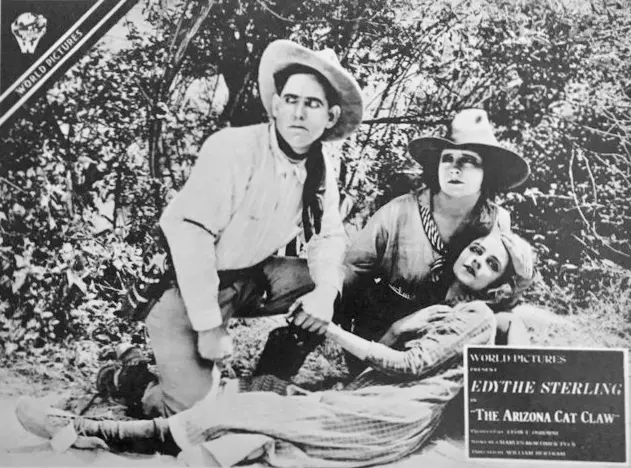
Visually, the film likely made excellent use of its Arizona setting, though without direct access to the film itself, one can only infer from the plot description and the era’s common practices. Silent westerns often capitalized on sweeping vistas and dramatic landscapes, using the natural environment as a character in itself. The arid beauty of Arizona would have provided a powerful backdrop to Blossom’s fierce journey, contrasting the wildness of the land with the burgeoning order she strives to impose. The cinematography, even in its early form, would have been crucial in conveying the scale of the frontier and the intensity of the action sequences, such as Blossom’s struggle with the bandit or the posse’s pursuit of Stimpson.
The thematic underpinnings of The Arizona Cat Claw are particularly compelling. It explores not just romantic love, but also the broader definitions of justice, responsibility, and female empowerment. Blossom's journey is one of self-discovery and moral conviction. She challenges the patriarchal norms of her time, asserting her will and shaping her own destiny, as well as the destinies of those around her. This makes her a proto-feminist icon of early cinema, a woman who doesn't just react to circumstances but actively dictates them. Her actions, while sometimes extreme, are rooted in a clear moral compass, distinguishing her from characters who might simply seek revenge. Instead, she seeks restitution and order, even if she has to enforce it herself.
Comparing The Arizona Cat Claw to its contemporaries, one can see both its adherence to and departure from silent western conventions. While it features classic elements like ranch life, bandits, and heroic cowboys, its central focus on a female protagonist who actively drives the plot and metes out justice is quite progressive. Many films of the era, such as Mr. Barnes of New York or The Spy, often placed women in more supportive or reactive roles, even when they were strong characters. Blossom, however, is the primary instigator of action, a trait that makes her stand out. Her determination to right a wrong, even if it means orchestrating a forced marriage, speaks to a different kind of heroism, one that prioritizes social justice over mere romantic entanglement.
The ending, with Blossom and Asa finally wed after the tumultuous events, brings a satisfying closure to the narrative. It’s a resolution that feels earned, not just for the romantic pair, but for the moral arc of the story. Justice has been served, a wrong has been righted, and the community, through Blossom’s extraordinary efforts, has been rebalanced. It's a testament to the enduring appeal of stories where good triumphs over evil, but with a nuanced understanding that 'good' can manifest in unconventional, even audacious, ways. The film leaves the viewer with a sense of closure and the impression of a powerful, unforgettable female character who truly made her mark on the wild Arizona territory. This isn't just a film about a 'cat claw' in the sense of a physical weapon; it's about the sharp, unyielding spirit of a woman who refuses to be scratched by injustice.
In conclusion, The Arizona Cat Claw, though a product of its time, transcends many of its genre's limitations through its vibrant protagonist and compelling narrative. It’s a film that deserves to be rediscovered, not just for its historical significance as a silent western, but for its timeless message of courage, independence, and the relentless pursuit of justice. Pauline Becker’s Blossom Ruggles remains a beacon of female strength, a character whose actions resonate with a modern audience just as powerfully as they must have captivated viewers a century ago. This film, with its dramatic turns and powerful performances, solidifies its place as a significant, if often overlooked, contribution to early American cinema. It teaches us that even in the silent era, voices could be heard loud and clear, especially when embodied by a woman as fierce and unforgettable as Blossom.
The film's exploration of justice, particularly the contrast between the summary execution attempted by the cowboys and the sheriff's formal arrest, offers a fascinating glimpse into the legal landscape of the frontier. It underscores the tension between established law and the raw, immediate responses of a community attempting to protect itself. Blossom's actions, forcing Stimpson to marry Amelia, can be seen as an attempt to bridge this gap, imposing a social form of justice where formal legal avenues might have been slow or inadequate. This blend of personal morality and societal enforcement makes the narrative particularly rich. The film doesn't shy away from the harsh realities, yet it frames them through the lens of a protagonist determined to bend those realities towards a more equitable outcome. It’s a testament to Charles Mortimer’s writing that these complexities are woven so seamlessly into a fast-paced western plot. The enduring appeal of such narratives lies in their ability to reflect fundamental human desires for fairness and retribution, even when the means to achieve them are unconventional. This film, with its bold strokes and unforgettable character, is a compelling example of that enduring power.
The sheer audacity of Blossom's character, taking matters into her own hands not just for herself but for another vulnerable woman, marks The Arizona Cat Claw as a particularly potent piece of early cinema. It challenges the passive roles often assigned to women in narratives of the time, presenting a heroine who is both the heart and the muscle of the story. Her decision to confront Stimpson directly, armed and resolute, is a powerful visual statement that transcends the limitations of silent film dialogue. It’s a raw, visceral portrayal of agency that sets a high bar for female characters in any era. The film serves as a reminder that the seeds of strong, independent female protagonists were sown early in cinematic history, often in unexpected genres like the western, which is typically seen as a male-dominated space. This aspect alone makes The Arizona Cat Claw worthy of deeper study and appreciation, inviting us to reconsider the breadth and depth of silent film's contributions to character development and thematic exploration. Its legacy, though perhaps understated, is undeniably significant for anyone interested in the evolution of cinematic storytelling and the representation of women on screen.
Furthermore, the subtle interplay between Blossom's personal desires and her public actions is handled with remarkable finesse. Her initial flirtation with Stimpson, designed to elicit a reaction from Asa, quickly transforms into a mission of moral rectitude once she uncovers Stimpson's villainy. This evolution demonstrates a maturity in character writing, where personal whims give way to a greater sense of responsibility. It’s not just about winning Asa’s heart anymore; it’s about protecting the vulnerable and ensuring justice prevails, even if it means orchestrating a somewhat coercive resolution. This complexity adds layers to Blossom, moving her beyond a simple romantic lead to a figure of genuine moral authority. The film, in this regard, offers a fascinating study of how individual choices can ripple outwards, impacting an entire community and redefining the very notion of 'heroism' in the untamed West. It stands as a testament to the fact that compelling narratives, rich with character and thematic depth, were already flourishing in the nascent days of filmmaking, proving that storytelling prowess is not solely the domain of sound or color, but of vision and execution.
IMDb 5.9
1932
Community
Log in to comment.