DbcultAccessing Vault...
Cult Review
Senior Film Conservator

In the annals of early 20th-century cinema, where narratives often served as moral parables or escapist fantasies, certain films emerge as more than mere entertainment; they become cultural touchstones, reflecting the societal anxieties and aspirations of their time. Sudden Jim, a 1920 silent drama, stands as a fascinating exemplar of this phenomenon. It’s a film that, despite its relative obscurity compared to some of its more lavish contemporaries, offers a poignant and often insightful exploration of personal growth, the weight of expectation, and the transformative power of an unexpected connection. Directed with a keen eye for character nuance and built upon the storytelling prowess of writer Clarence Budington Kelland, Sudden Jim invites us into a world of rugged industry and nascent romance, challenging its protagonist, and by extension, its audience, to reconsider what truly constitutes a life well-lived.
The narrative’s fulcrum is young James Ashe Jr., portrayed with a compelling blend of naiveté and burgeoning resilience by the esteemed Charles Ray. Ray, often celebrated for his wholesome, 'country bumpkin' persona in films like The Half-Breed, here undertakes a role that demands a more complex arc. He is, initially, a gilded youth, accustomed to the soft edges of metropolitan existence, shielded by the considerable shadow of his industrial magnate father, James Ashe Sr., a formidable patriarch embodied by Joseph J. Dowling. Ashe Sr., a man whose very presence suggests an unyielding will, perceives in his son a lack of the grit and acumen necessary to inherit and sustain the family’s sprawling lumber empire. This paternal assessment is not born of malice, but rather a stern pragmatism, a desire to temper his son in the crucible of real-world labor.

The solution, as conceived by the elder Ashe, is a radical one: banishment, in a manner of speaking, to the remote, unforgiving logging mill that forms the very foundation of their wealth. This isn't merely a supervisory role; it's an immersion, a baptism by fire into the visceral reality of timber felling, sawmilling, and the arduous logistics of a demanding industry. For James Jr., this relocation is a stark departure from his privileged languor, a jarring confrontation with the raw, unvarnished machinery of his family’s prosperity. The film masterfully conveys this initial disorientation, showing Ray’s character grappling with the alien environment, the rough-hewn men, and the sheer physical demands that stand in stark contrast to his previous life of leisure. One might draw a thematic parallel to the journey of self-discovery through adversity seen in stories like A Little Princess, though Jim's struggles are rooted in class and industrial labor rather than orphanhood and societal neglect.
The logging mill itself becomes a character in the narrative, a bustling, dangerous, yet ultimately transformative backdrop against which James Jr.'s education unfolds. It's a place where the rhythmic clang of metal, the hiss of steam, and the smell of pine sap are constant companions. The film’s visual language, even in its silent form, manages to convey the scale and intensity of this industrial setting. The cinematography, though limited by the technology of the era, effectively captures the majesty of the towering forests and the relentless energy of the mill operations. In this regard, it shares a spirit with other films that celebrate or interrogate industrial might, such as The Railroad Raiders, which similarly grounds its drama in the practicalities and perils of a specific industry.
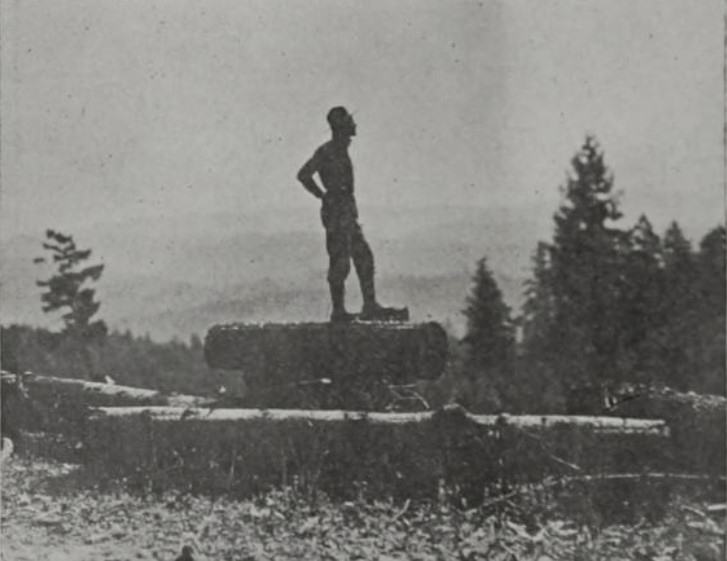
It is within this rugged environment that James Jr. begins to shed the veneer of his upbringing. He learns not just the mechanics of the business, but the value of hard work, the camaraderie forged in shared labor, and the pragmatic wisdom of the men who dedicate their lives to this demanding profession. This process of maturation is deftly handled by Charles Ray, whose expressions subtly shift from initial bewilderment and mild disdain to a growing sense of competence and respect. His transformation is not instantaneous, but a gradual chipping away of arrogance and an embrace of responsibility, echoing themes of personal accountability and self-reliance found in narratives like Men of the Desert, where characters are often defined by their ability to thrive in harsh, unforgiving landscapes.
Just as James Jr. begins to find his footing in this new world, his journey takes an unforeseen romantic turn. The catalyst for this profound shift is the introduction of a local woman, portrayed with captivating spirit by Sylvia Breamer. Her character is a refreshing counterpoint to James Jr.’s initially sheltered worldview. She is not a delicate flower of urban society, but a woman of strength, independence, and an unpretentious charm that immediately captivates our protagonist. Breamer infuses her role with an authentic vitality, making her a believable and alluring figure amidst the rough-and-tumble setting.

Their burgeoning relationship is depicted with a tender authenticity that transcends the limitations of silent film. Through expressive glances, subtle gestures, and heartfelt intertitles, the audience witnesses the blossoming of a genuine connection. This romance is not merely a subplot; it is integral to James Jr.'s transformation. The girl represents a different kind of wealth, a richness of spirit and an unvarnished honesty that challenges his inherited notions of status and suitability. Her influence encourages him to look beyond the superficialities of his background and to value character over pedigree. This kind of transformative love, where one partner helps the other see the world anew, is a timeless cinematic trope, found in various forms from the dramatic intensity of Tigre reale to the more subtle romantic awakenings in films like Money Magic, although Sudden Jim imbues it with a distinctly American, frontier-esque sensibility.
Beyond the central performances of Charles Ray and Sylvia Breamer, the supporting cast lends considerable depth to the narrative. Georgie Stone, Frank Whitson, and Lydia Knott contribute to the rich tapestry of characters inhabiting the mill town, each performance adding texture and believability to the world. Joseph J. Dowling’s portrayal of James Ashe Sr. is particularly noteworthy; he manages to convey stern authority without devolving into caricature, allowing the audience to understand the underlying love and concern that motivates his seemingly harsh actions. This nuanced portrayal of a powerful, yet complex, patriarch is crucial to the film’s emotional resonance. The ensemble truly shines, creating a believable community that reacts to and influences James Jr.'s journey.
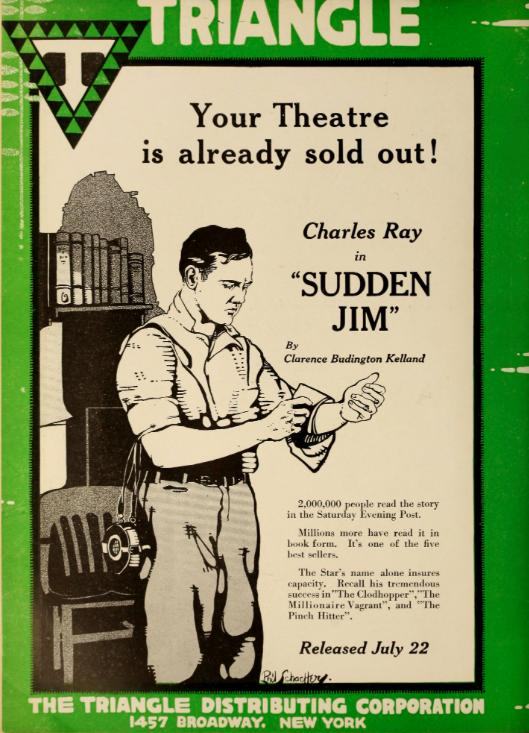
Clarence Budington Kelland’s original story, adapted for the screen, provides a robust framework for this character-driven drama. Kelland, known for his tales of American grit and ingenuity, imbues the plot with a sense of authentic struggle and eventual triumph. The director, whose name is often overshadowed by the stars of the era, deserves commendation for his astute handling of the material. Navigating the challenges of silent film, the director skillfully uses visual cues, facial expressions, and body language to convey complex emotions and propel the plot forward. The pacing is deliberate, allowing moments of quiet introspection to breathe amidst the more dramatic confrontations. This thoughtful direction ensures that the audience remains deeply invested in James Jr.’s emotional and professional evolution, a testament to the power of visual storytelling when executed with precision and empathy.
Sudden Jim is more than a simple romance or a coming-of-age story; it’s a profound meditation on the interplay of duty, class, and individual identity. James Jr.’s journey is a microcosm of the American dream, albeit one filtered through the lens of inherited privilege. He is forced to confront the source of his family’s wealth, to understand the labor that underpins his comfortable existence, and in doing so, he develops a newfound respect for himself and for others. This thematic depth elevates the film beyond a mere melodrama, positioning it as a thoughtful commentary on the responsibilities that accompany privilege and the inherent dignity of honest work.
The clash between urban sophistication and rural pragmatism is another powerful undercurrent. James Jr. arrives with the trappings of city life, but it is in the raw, elemental environment of the logging mill that he truly finds his bearings. This narrative device, where an individual from a refined background is transplanted into a harsher reality for their betterment, is a recurring motif in literature and cinema, from the transformative experiences in Where the Trail Divides to the more dramatic societal shifts explored in A Tale of Two Cities. However, Sudden Jim grounds this transformation firmly in the context of American industrialism and the burgeoning concept of self-made success, even for those born into fortune.
While Sudden Jim may not possess the epic scope of a historical drama like Rupert of Hentzau or the fantastical allure of Sleeping Beauty, its enduring appeal lies in its intimate portrayal of human experience. It’s a film that speaks to the universal desire for purpose, belonging, and authentic connection. Charles Ray’s performance is a masterclass in silent acting, conveying a wealth of emotion and character development through subtle gestures and expressive eyes. Sylvia Breamer provides a strong, independent female lead, a refreshing departure from some of the more passive heroines of the era.
For contemporary audiences, Sudden Jim offers a fascinating glimpse into the social dynamics and moral compass of the early 20th century. It reminds us that fundamental human struggles – the quest for identity, the balance between personal desire and familial duty, the transformative power of love – remain timeless. The film’s narrative, while straightforward, is imbued with a sincerity that resonates. It lacks the overt villainy or dramatic twists often found in films like Out of the Darkness or Slave of Sin, instead relying on the internal conflicts and external pressures faced by its protagonist. This focus on internal growth and the quiet heroism of self-improvement is perhaps its greatest strength.
In conclusion, Sudden Jim is a cinematic gem that deserves wider recognition. It’s a testament to the power of compelling storytelling, nuanced performances, and thoughtful direction. It stands as a powerful reminder that true wealth lies not in inherited fortunes, but in the lessons learned, the character forged, and the genuine connections made along life’s unpredictable journey. For enthusiasts of classic cinema, or anyone interested in the evolution of narrative film, this picture offers a rich and rewarding experience, a quiet triumph in the vibrant tapestry of silent-era productions. Its themes resonate as strongly today as they did a century ago, proving that the human heart, in its pursuit of love and purpose, remains eternally modern.

IMDb 5.2
1936
Community
Log in to comment.