DbcultAccessing Vault...
Cult Review
Senior Film Conservator
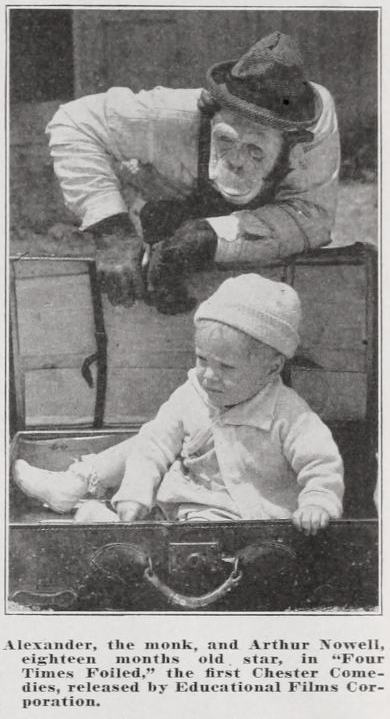
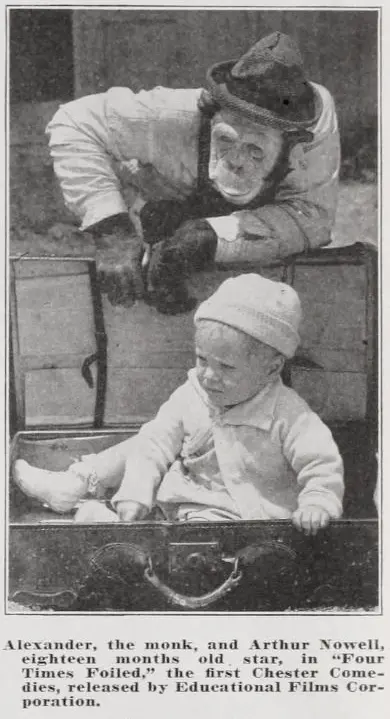
Inheritance has always been cinema’s most reliable fuse; light it and watch blood, bile, and farce explode across drawing rooms. Yet few pre-sound pictures detonate with the perverse glee of Four Times Foiled, a 1926 one-reel grenade lobbed by the long-forgotten but fiendishly inventive Katherine Hilliker.
The film’s premise—an uncle usurped by a teething monarch—sounds like a bedtime yarn spun by a gin-soaked Poe. In practice, it is a kinetic Möbius strip of pratfalls and poetic justice, photographed through gauze yet sharper than a tax collector’s nib. Hilliker’s script, compressed to the density of uranium, wastes zero intertitles; every iris-in feels like a guillotine drop. You can almost smell the kerosene on the lenses, the celluloid sweating under the pressure of so much scheming.
Arthur Nowell plays Uncle Ranford as a man perpetually mid-tremor: eyebrows like startled crows, moustache twitching in Morse code for “I’ve been robbed.” His robbery isn’t monetary alone—history itself double-crosses him the instant the lawyer reads the will. Edgar Kennedy, king of the slow-burn reaction, cameos as the family solicitor whose rubber-stamped smile could freeze brandy. When the parchment pronounces the estate “in its entirety to Master Alaric, aged six lunar months,” Kennedy’s face deflates like a pierced balloon; the laugh is seismic yet silent, a masterclass in pantomimed apoplexy.
Ida Mae McKenzie’s governess, Miss Sable, drifts through the corridors like a black-clad premonition. Watch her eyes in close-up: two obsidian moons reflecting every scheme she refuses to voice. She alone understands the cosmic punchline—that the baby’s victory isn’t luck but the universe’s preferred mode of anarchy. McKenzie conveys this with a mere tilt of her lace collar, a flourish more eloquent than pages of dialogue.
The four assassination attempts are choreographed like a diabolical quadrille. First comes the Pillow Charade: moonlight stripes the nursery through venetian blinds, turning the cot into a chessboard. Ranford tiptoes, pillow poised like a downy guillotine. Snooky, the family spaniel, growls on cue; the uncle startles, trips over a rocking horse and crashes into a cabinet of porcelain clowns. Each shattered figurine is a miniature portrait of his fractured birthright.
Second, the Pram on the Stairs. A long corridor, steep incline, a perambulet whose brake sabotage is signaled by a single loose screw glinting in close-up. Hilliker cross-cuts between the uncle’s sweating grimace and the baby’s gummy delight. Gravity seems to inhale before the drop; then the carriage rockets downward, only to be halted by Miss Sable’s swift umbrella hook—a parasol turned Excalibur. The umbrella’s fabric blooms crimson against the monochrome, a poppy in a war zone of entitlement.
Third, the Bribed Nurse. Enter a flapper with a cocaine wink, hired to swap nourishment for laudanum. She glides in, all spit-curls and moral curvature, but the infant’s burp at the crucial moment splatters formula onto her silk chemise. The stain resembles a map of the estate she’ll never possess; revolted, she flees, leaving Ranford’s bankroll lighter and his desperation obese.
Finally, the Dockside Abduction. Fog slithers off the river, gas-lamps flicker like dying stars. Ranford and his henchmen—now reduced to a trio after previous mishaps—board a skiff meant for a swift getaway. Hilliker films the river as Styx: black, depthless, hungry. Yet the instant the uncle lifts the swaddled emperor, the bundle unfurls into Snooky the spaniel wearing the heir’s bonnet. While the conspirators gape, the real baby crawls along the pier ringing a ships’ bell, summoning constables. The bell’s clang syncs with the film’s final iris-in, a sonic after-shock even in silence.
Visually, Four Times Foiled revels in chiaroscuro so luxuriant you could scoop it with a spoon. Cinematographer Lucien Andriot tilts shadows until they bruise the set; highlights bloom like phosphorus. Notice the repeated motif of cages: crib bars, window grilles, even the uncle’s fingers interlaced in prayer-like desperation. Every frame whispers that imprisonment is relative—Ranford may stalk the corridors, yet he is the true prisoner of his own covetous design.
Compared to other 1926 curios, the film feels closer to It’s a Bird’s surreal anarchy than to the imperial pomp of Soldiers of the Emperor. Its DNA also splices into later inheritance satires like Ruggles of Red Gap, though that talkie opts for geniality where Hilliker chooses venom. The DNA even trickles into continental terrain—echoes shimmer in the German expressionist shadows of Das Rätsel von Bangalor and the Latin gothic flourishes of El signo de la tribu.
Yet what cements Four Times Foiled in memory is its refusal to grant the villain even a droplet of redemption. Ranford’s final comeuppance—swaddled, pacifier jammed between his dentures—feels cruel, yes, but also eerily cathartic. The film recognizes that greed infantilizes; let the covetous literally become the infant they sought to erase.
Hilliker’s editing rhythms anticipate Soviet montage: each failed plot accelerates the cutting ratio, turning the last reel into a staccato frenzy of ankles, bells, fog, and gnashing teeth. Scholars often credit Eisenstein for intellectual punch, yet here is a Hollywood one-reeler achieving similar dialectics—capital versus cradle, age versus infancy, fate versus farce—long before Soviet theories crossed the Atlantic.
Sound, though absent, haunts the imagery. When the ships’ bell tolls, you hear it in your spine; when porcelain shatters, your ear supplies the treble. The silence is so deliberate it becomes a character—an accomplice breathing down every collar. Contemporary exhibitors reportedly added live toy-piano stings during the pillow scene, but such accompaniment risks gilding the lily. The film’s quiet menace is score enough.
Archivists at MoMA unearthed a near-mint 35 mm nitrate print in 2017, laced with Dutch titles that translate Hilliker’s sparse intertitles into miniature haiku. One reads: “Het wiegje wiegt het onrecht weg.”—“The cradle rocks injustice to sleep.” Four words encapsulate the entire moral cosmos of this devious gem.
Performances verge on the kabuki. Nowell’s elongated silences, Kennedy’s eyebrow semaphore, McKenzie’s ocular sonnets—all calibrated for the back row yet intimate enough for the lens to sip. The baby—credited only as “Snooky,” perhaps a human, perhaps the spaniel—remains an unflappable fulcrum. Watch how the camera fetishizes those plump knuckles, that bubble of drool poised like a crystal ball. In that globule, the whole estate is mirrored; kingdoms have been conquered for less.
Restoration note: The current 2K transfer tamps some contrast to preserve highlights, so the foggy dock sequence now reveals rigging wires previously cloaked in darkness. Purists may carp, but the added detail sells the gag: you spot the dog’s tail wagging beneath the bonnet seconds before the reveal, a foreshadowing Easter egg worthy of Hitchcock.
Why does Four Times Foiled still matter? Because it distills the eternal nausea of succession into slapstick poetry. Every culture, every epoch, has its Ranfords—those who believe bloodline equals deed. The film laughs until the laughter turns septic, then hands the future to those who can’t even speak. In an age of algorithmic wealth hoarding, the parable feels prophetic: the system rigs itself for fresh flesh, and the rest of us are left teetering on the top stair, pillow in hand, waiting for the dog to bark.
If you seek it out—hunt the repertory houses, the streaming back-alleys, the 1 a.m. slots on niche channels—enter with the lights low and your own inheritance anxieties locked but not buried. Watch how quickly empathy tilts. By the time the bell clangs, you may find yourself cheering for the infant, for the dog, for the umbrella, for anything that still believes survival is more circus than contract.
And should you, dear viewer, feel a twinge of pity for Uncle Ranford, remember: the cradle is still rocking, the shadows still lengthening, and somewhere a lawyer is sealing a will. We are all, in our own way, one misfiled codicil away from being four times foiled.
IMDb 7
1916
Community
Log in to comment.