DbcultAccessing Vault...
6.4/10
Senior Film Conservator
A definitive 6.4/10 rating for a film that redefined the boundaries of cult cinema. Below the Surface remains a cornerstone of transgressive art.
The silent era, often erroneously dismissed as primitive by contemporary audiences, frequently produced cinematic works of profound psychological depth and narrative complexity. Among these, the 1920 drama Below the Surface stands as a testament to the period's capacity for intricate storytelling, particularly when exploring the darker currents of human nature. Directed by Irvin Willat, and penned by the collaborative talents of Luther Reed and E. Magnus Ingleton, the film plunges into a narrative that is as compelling as the ocean depths it portrays, presenting a stark examination of integrity besieged by avarice and manipulation. It's a tale that resonates with the timeless struggle between good and evil, played out against a backdrop of professional respectability and personal vulnerability.
The core of the film’s dramatic tension resides in the character of John Brown, portrayed with a compelling gravitas by George Clair. Brown is not merely a deep-sea diver; he is an institution, a figure whose reputation for honesty and unparalleled skill in salvage operations precedes him. He embodies a certain stoic heroism, a man of the sea whose principles are as unyielding as the ocean floor. This very unimpeachable character, however, becomes the target of a ruthless syndicate of con artists, whose scheme to defraud investors hinges on using Brown as their unsuspecting, yet essential, front man. Their plan is simple in its audacious villainy: concoct a bogus treasure recovery operation and leverage Brown’s name to lend it an air of legitimacy. It's a classic setup that echoes the manipulative machinations seen in thrillers like Fantômas: In the Shadow of the Guillotine, where criminal masterminds orchestrate elaborate deceptions.

Brown’s initial refusal, a testament to his ingrained moral compass, sets the stage for the narrative’s descent into darker territory. The syndicate, led by the calculating Mark Shelley (J.P. Lockney) and his insidious associates, is not easily deterred. Their subsequent move is a chilling demonstration of their ethical bankruptcy: rather than abandon their lucrative fraud, they decide to exploit Brown’s most profound vulnerability – his family. They dispatch a young, alluring woman, Alice Staples, brought to life with a nuanced blend of innocence and cunning by Grace Darmond, to seduce Brown’s son. This act of calculated seduction is not merely a romantic subplot; it is a weapon, a meticulously crafted trap designed to ensnare the son and, by extension, to blackmail the father into complicity. The transformation of a potential love interest into an instrument of coercion is a particularly cruel twist, highlighting the moral depravity of the antagonists and the profound ethical quagmire into which Brown is relentlessly drawn. This kind of insidious manipulation, where personal relationships are weaponized, can be seen in other silent dramas exploring moral compromise, such as The Love Cheat, though perhaps with a different flavor of deceit.
The performances in Below the Surface are, by necessity, highly physical and emotionally expressive. George Clair as John Brown, carries the weight of the film on his shoulders, his stoic demeanor gradually cracking under the immense pressure. His eyes, his posture, the subtle tremors of his hands – all communicate a man battling an internal storm, forced to choose between his integrity and the welfare of his son. It’s a masterclass in silent acting, demonstrating how raw emotion can be conveyed without a single spoken word. The audience feels his torment, his reluctant descent into a world he despises, purely through his masterful non-verbal communication.

Grace Darmond, as Alice Staples, navigates a complex role. Initially, she is the temptress, a tool of the villains, but her character is imbued with a subtle ambiguity that suggests internal conflict or perhaps even a latent capacity for redemption. Her portrayal avoids the simplistic villainy often found in such roles, hinting at the potential for a moral awakening. The dynamic between her and Brown’s son, played by Lloyd Hughes, is crucial, as their burgeoning romance becomes the linchpin of the blackmail plot. Hughes, too, brings a youthful vulnerability to his character, making his fall into Alice’s trap believable and, consequently, the father’s anguish palpable.
The supporting cast further enriches the narrative tapestry. J.P. Lockney, as the chief antagonist Mark Shelley, is suitably menacing, portraying a villain whose calm exterior masks a ruthless intellect. His interactions with Brown are charged with a quiet menace, a constant reminder of the power he holds over the diver. George Webb, Edith Yorke, Hobart Bosworth, and Gladys George fill out the ensemble, each contributing to the film's atmospheric tension and character development. Their collective efforts create a believable world where moral lines are blurred and the stakes are exceptionally high. The ensemble's ability to communicate complex motivations and emotional states without dialogue is a testament to the craft of silent cinema, a skill that often gets overlooked in modern film discourse.
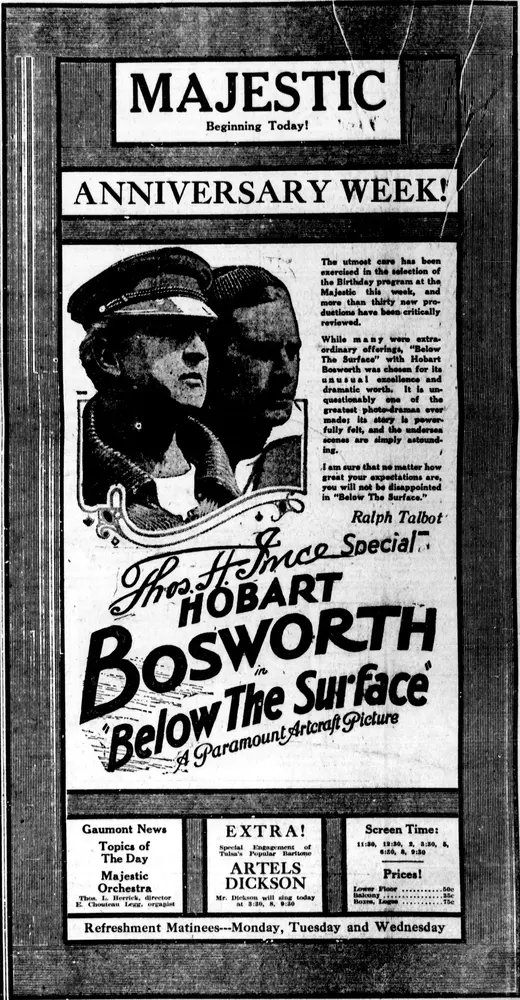
The thematic richness of Below the Surface is one of its enduring strengths. At its heart, the film is a searing indictment of unchecked greed and the corrosive power of blackmail. The con artists represent the dark underbelly of ambition, willing to destroy lives and reputations for financial gain. Their methods are a stark portrayal of the moral decay that can accompany the pursuit of wealth, a theme that remains disturbingly relevant in any era. The film serves as a cautionary tale, illustrating how easily even the most upstanding individuals can be drawn into a vortex of corruption when their loved ones are threatened. This theme of an individual struggling against overwhelming, tyrannical forces for the sake of family can be paralleled with films like The Price of Tyranny, where external pressures dictate personal choices.
Moreover, the film delves into the profound complexities of familial love and loyalty. John Brown’s agonizing decision to compromise his integrity is driven by an unconditional love for his son. This moral dilemma forms the emotional core of the narrative, forcing the audience to grapple with the question: how far would one go to protect their own? It’s a powerful exploration of parental sacrifice, albeit one tainted by the shadow of coercion. The film doesn't shy away from depicting the psychological toll this takes on Brown, illustrating the internal conflict through his increasingly anguished expressions and actions. The silent medium, in this instance, amplifies the internal struggle, making it a visceral experience for the viewer.
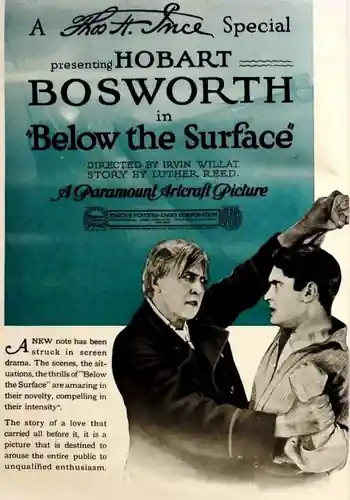
The screenplay by Luther Reed and E. Magnus Ingleton is remarkably tight, building suspense methodically and allowing character motivations to unfold organically. They craft a narrative that, despite its melodramatic elements, feels grounded in believable human reactions to extraordinary pressures. The pacing is deliberate, allowing moments of quiet tension to simmer before erupting into dramatic confrontations. The writers understand the power of implication and suggestion, leveraging the silent format to its fullest potential by relying on visual cues and the actors' expressive abilities to carry the emotional weight.
Irvin Willat’s direction is marked by a keen eye for visual storytelling. The film effectively uses its deep-sea setting not merely as a backdrop but as a metaphor for the perilous moral depths into which its characters descend. The scenes involving diving, though perhaps rudimentary by today's standards, convey a sense of claustrophobia and danger, enhancing the overall atmosphere of tension. The visual language of the film is crucial, with close-ups emphasizing the emotional states of the characters and wider shots establishing the grandeur and indifference of the ocean. The contrast between the sunlit world above and the shadowy, dangerous realm below the surface is a recurring visual motif, subtly reinforcing the film's central themes.
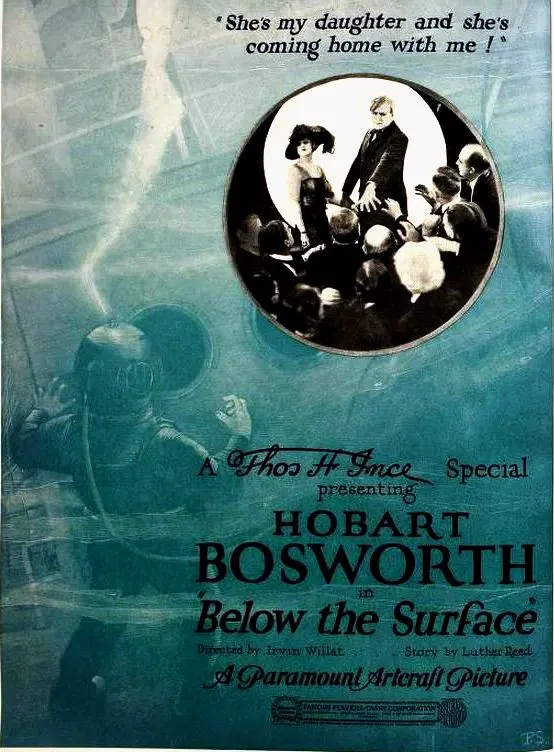
Willat understands how to build suspense without relying on dialogue, utilizing cross-cutting, dramatic lighting, and the expressive power of his actors. The sequences detailing the con artists' machinations are particularly well-executed, showcasing their insidious planning and the ripple effects of their actions. The film's visual composition, though perhaps not as avant-garde as some of its contemporaries, is consistently effective in conveying mood and advancing the plot. It demonstrates a mastery of the cinematic grammar that was rapidly evolving during the early 20th century, proving that even without synchronized sound, a film could be a deeply immersive and thrilling experience.
The use of intertitles is judicious, providing essential dialogue and narrative exposition without overwhelming the visual flow. They are integrated seamlessly, serving to clarify motivations or advance the plot when visual cues alone might be insufficient. This balance between visual narrative and textual explanation is a hallmark of well-crafted silent films, and Below the Surface excels in this regard. It keeps the audience engaged, allowing them to participate in the narrative rather than merely observe it passively, a quality that is sometimes lost in more explicitly didactic modern storytelling.
Released in 1920, Below the Surface arrived during a fertile period for American cinema, where narrative conventions were being solidified and the artistic potential of the medium was being vigorously explored. It stands alongside other compelling dramas of its time, such as The Soul Master, in its exploration of moral quandaries and the human spirit's resilience (or sometimes, its breaking point) under duress. While perhaps not as widely known today as some of its more celebrated contemporaries, its intricate plot and strong performances mark it as a significant contribution to the silent film canon.
The film’s focus on deep-sea diving also adds a layer of adventurous appeal, tapping into the public’s fascination with the unknown depths of the ocean. This element of thrilling exploration, combined with the high-stakes human drama, creates a potent concoction that keeps viewers invested. It is a reminder that even without the technological marvels of modern special effects, early cinema could effectively transport audiences to exotic and dangerous environments, making the unseen visible and the impossible believable. The pioneering spirit of such filmmaking is palpable throughout, offering a glimpse into the nascent stages of cinematic escapism and dramatic realism.
In conclusion, Below the Surface is far more than a historical curiosity. It is a robust and emotionally charged drama that speaks to universal themes of integrity, temptation, and the lengths to which one will go for family. Its narrative, crafted with skill by Luther Reed and E. Magnus Ingleton, remains gripping, and the performances, particularly that of George Clair, are remarkably effective in conveying complex emotions without the aid of dialogue. For enthusiasts of silent cinema, or anyone interested in the foundational narratives that shaped the art form, this film offers a compelling and often overlooked journey into the depths of human character and the treacherous currents of moral compromise. It serves as a powerful reminder that compelling storytelling, regardless of the technological constraints of its era, transcends time, continuing to provoke thought and stir emotion in audiences decades later.

IMDb 5.3
1936
Community
Log in to comment.