DbcultAccessing Vault...
Cult Review
Senior Film Conservator
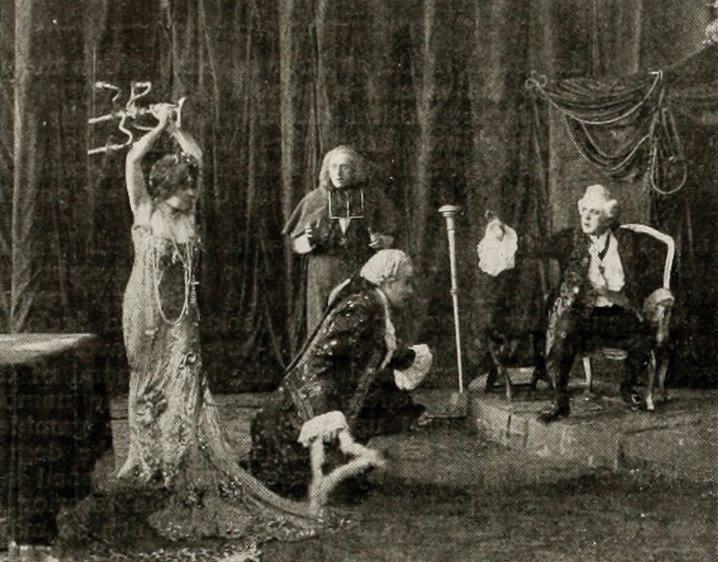
The year 1914 stands as a watershed moment in the evolution of visual storytelling, a period when the cinematic medium began to shed its nickelodeon skin and embrace the operatic weight of historical tragedy. Edoardo Bencivenga’s 1914 rendition of Du Barry is not merely a chronicle of a royal mistress; it is a sprawling, celluloid fresco that captures the suffocating opulence of the Ancien Régime and the visceral tremors of its inevitable collapse. Unlike the more episodic nature of contemporaries like The Life of Moses, Bencivenga’s work leans into the psychological claustrophobia of its protagonist, Jeannette, portraying her not as a simple social climber, but as a woman caught in a hydraulic press of patriarchal ambition and political volatility.
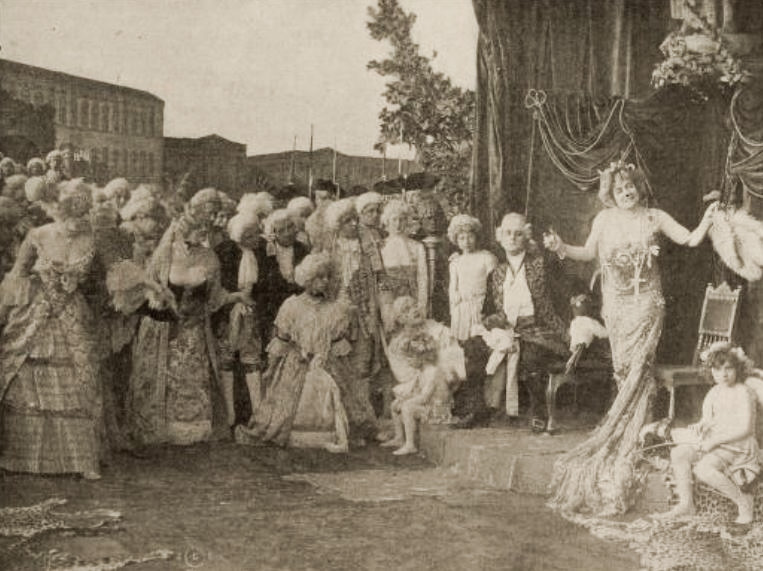
The film’s opening movements are a masterclass in establishing social hierarchies. Jean Du Barry, portrayed with a sinister, impecunious desperation, functions as the narrative’s architect of doom. His gambling house is more than a setting; it is a metaphor for the entire French court—a place where lives are wagered, and virtue is the first currency to be spent. When Jeannette is first glimpsed at the Rampaumaux ball, the camera (through Bencivenga’s meticulous staging) treats her as a specimen of purity about to be preserved in the amber of royal decadence. The juxtaposition of the "woods and violets"—the promise of a simple life with De Cosse Brissac—against the spectacle of the King’s passing is the film’s central moral pivot. It highlights a recurring theme in early silent cinema: the vulnerability of the pastoral ideal when confronted by the crushing gravity of urban and royal power, a theme echoed in the rugged landscapes of The Valley of the Moon.
The transactional nature of Jeannette’s elevation is handled with a bluntness that remains shocking. The payment of one hundred thousand francs to Du Barry’s brother to facilitate a sham marriage is a sequence that strips away any romanticized notions of courtly love. Here, Bencivenga anticipates the gritty realism that would later define European social dramas. The film doesn't shy away from the transactional reality of the era, positioning Jeannette as both a beneficiary and a victim of a system that commodifies beauty to stabilize debt. This narrative grit provides a sharp contrast to the more adventure-focused pacing of films like The Beloved Adventurer.
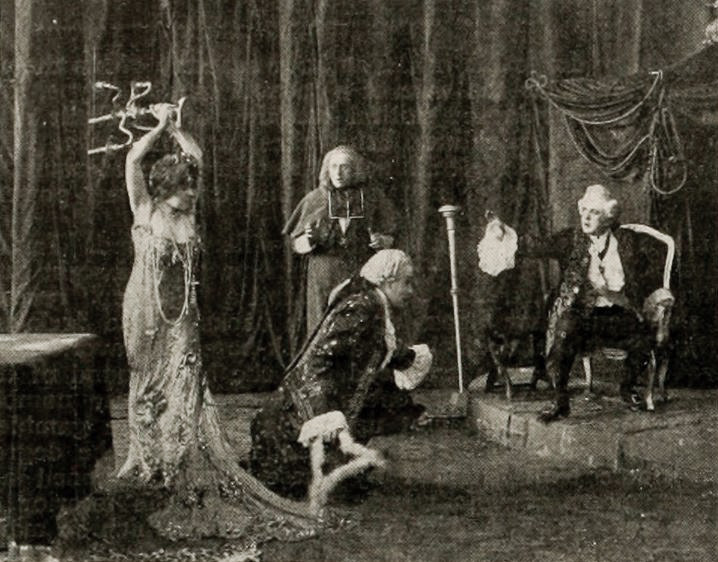
As the narrative shifts into the hallowed, yet hollow, halls of the Royal Palace, the film’s visual language becomes increasingly ornate. The sea blue (#0E7490) hues of the period-appropriate tinting (in restored versions) emphasize the coldness of the stone walls that now imprison Jeannette more effectively than any dungeon. The tragedy of De Cosse Brissac, the captain of the Guards, serves as the emotional anchor. His imprisonment and the subsequent interception of his messages by the elder Du Barry create a tension that is almost unbearable. It is a classic melodramatic trope, yet handled here with a gravitas that suggests the impending doom of a whole class. The film explores the concept of the "unseen prisoner," a motif that resonates with the suspenseful maneuvers found in Fantômas: The False Magistrate, though Bencivenga trades pulp thrills for historical pathos.
The sequence in which Jeannette attempts to appease the King with a festival while hiding the wounded Brissac in her bedchamber is perhaps the most high-stakes moment in 1914 cinema. The use of space—the bed as a sanctuary within a palace that has become a panopticon—is brilliant. When Du Barry finally betrays her, the film moves into its most harrowing phase. The King’s ultimatum—that Jeannette must publicly humiliate herself and Brissac by claiming she only hid him to turn him over—is a stroke of psychological cruelty that transcends the era's typical villainy. Her sacrifice, the public renunciation of her soul’s truth to ensure the physical survival of her lover, is a performance of profound sorrow. It mirrors the moral complexities explored in The Naked Truth, where the facade of social standing demands the annihilation of personal integrity.
The film’s final act, leaping eighteen years forward, is a jarring but necessary transition. The revolution is not just a backdrop; it is a character that has been growing in the shadows of the King’s extravagance. The irony of Brissac, now a leader of the very people who seek Jeannette’s head, is a masterstroke of tragic symmetry. The woman who sacrificed her reputation to save his life is now hunted by the man she saved, who is himself a prisoner of his new political identity. The revolution, in this sense, is shown as an indifferent machine, much like the strike depicted in Strejken, where individual loves are crushed by the gears of collective rage.
The execution scene is handled with a somber restraint that avoids the sensationalism often found in later historical epics. There is a haunting quality to Jeannette’s walk to the guillotine. The film suggests that her death was not written in the stars, but in the ledger books of Jean Du Barry and the decadent menus of the King. She dies not for her sins, but for the sins of a system she was forced to decorate. The lexical diversity of the visual storytelling here—the way the crowd’s faces are framed against the stark wood of the scaffold—speaks volumes more than any intertitle could. It is a finale that leaves the viewer with a sense of profound exhaustion and reflection, much like the ending of Le diamant noir.
Technically, Du Barry is a triumph of early Italian craftsmanship. The lighting, though primitive by modern standards, effectively uses shadow to delineate the moral ambiguity of the gambling den versus the harsh, unforgiving light of the palace. The costumes are not merely attire; they are armor and cages. The way Jeannette is progressively weighed down by heavier, more ornate fabrics as she rises in rank is a subtle visual cue for her loss of agency. This attention to detail is far superior to the more theatrical staging of Come Robinet sposò Robinette, proving that Bencivenga was aiming for a more cinematic language.
Furthermore, the film’s pacing, while deliberate, avoids the stagnation that plagues many three-act silent features. The transition from the intimate romance of the guardsman and the commoner to the macro-political upheaval of the French Revolution is handled with a fluidity that suggests a deep understanding of narrative arc. The inclusion of the Papal Nuncio as a failed mediator adds a layer of religious critique, suggesting that even divine institutions were impotent against the tide of Du Barry’s corruption and the King’s apathy. This multifaceted approach to storytelling places the film alongside the complex character studies seen in Jess or the rugged individualism of Pierre of the Plains.
Ultimately, Du Barry is a haunting exploration of the cost of survival in an era where the individual was perpetually subordinate to the state and the whim of the elite. Jeannette’s journey is a tragic loop—beginning in a gambling house and ending on a scaffold—both places where the stakes are life and death, and the house always wins. It remains a vital piece of early cinema, a somber reminder of the fragility of beauty and the relentless march of history. For those seeking the origins of the historical epic, this 1914 gem is an essential, if heartbreaking, destination.
IMDb 7.1
1935
Community
Log in to comment.