DbcultAccessing Vault...
Cult Review
Senior Film Conservator
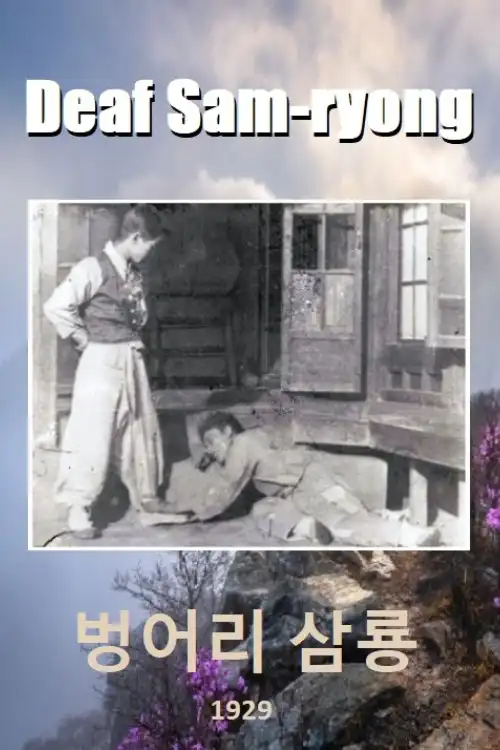
The first thing you gotta know about *Beongeoli Sam-ryong* is that it’s from 1929. Yeah, **1929**. That means silent. That means old.
If you’re into digging up cinema history, especially Korean cinema before the war, you should absolutely give this a look. But if you’re just looking for a casual Friday night flick, something to zone out to? Probably not, mate. You’ll be bored stiff. It's a bit of a niche watch, for sure.
It’s about Samyon, a mute servant on a big estate. He’s totally smitten with the landowner’s daughter-in-law. And she’s, well, pretty much stuck in a bad situation, like so many women were back then. The movie really tries to show you this deep, honest love against some pretty strict old rules.
Honestly, the **muteness** of Samyon really hits you. You see him trying so hard to express things. There’s a scene where he’s just *looking* at her, and his eyes... you really feel his whole world is right there in that gaze. No words, just this raw feeling. It's pretty powerful, actually. 🥺
The daughter-in-law, she's not a loud character either. But her subtle gestures, the way she moves or looks away, it speaks volumes. It's almost like they communicate in this whole other language, away from everyone else. A kind of secret understanding.
You can tell the director, Woon-gyu Na, really wanted to focus on their inner lives. It’s not about big, sweeping actions. It’s more about the quiet suffering and hope.
Sometimes it’s a bit slow, yeah, the pace can drag. But then a small moment pops up, and it grabs you again.
There’s this one part, Samyon is just doing some chores, carrying something heavy. And he glances up, and she’s there. And for a split second, everything just *stops* for him. It's a simple shot, but it tells you everything you need to know about his feelings. That’s good filmmaking, even from way back then.
The landowners, though, they’re pretty much what you’d expect from an old-timey rich family. Kinda stiff, obsessed with appearances. They don't really *see* Samyon as a person. Just a worker. It makes his devotion even more poignant, I think. Like, he’s invisible to them, but his feelings are huge.
The cinematography is... well, it’s 1929. Don’t expect sweeping drone shots or anything. But there are some surprisingly clear close-ups. And a few shots of the Korean landscape that are pretty nice. Nothing groundbreaking, but it gets the job done. It really grounds you in that specific time and place.
Sometimes, the melodrama feels a little… much. You know how silent films can be. The acting can get a bit big, a bit over-the-top. But then you remember the context, and it makes sense. You gotta adjust your expectations a little bit for that.
I kept wondering about the "old conventions" plot point. It’s mostly shown through the family's rigid expectations. How the daughter-in-law is trapped. Samyon's love is *so* outside those conventions. It’s almost revolutionary for its time, just by existing.
The ending, without giving anything away, really solidifies the tragic nature of it all. It’s not a happy-go-lucky kind of movie. It’s a pretty heavy watch, actually. But it leaves you thinking about what it means to truly care for someone, even when the world is against you. 🤔
It’s not perfect. The editing sometimes feels a bit jumpy. And some scenes could have been trimmed, honestly. But for what it is, a surviving piece of early Korean cinema, it’s **quite a thing**. It reminds you that human emotions, that struggle for connection, they’ve always been there, no matter the era. So if you're curious, give it a shot. Just bring some patience. 🕰️

IMDb 6.4
1919
Community
Log in to comment.